
BuddhistCatholicContemplativeEvangelicalGeneral ChristianHinduJewishLatter-day SaintMuslimNew VisionsProgressive Christian
Beliefs
- Buddhist
- Catholic
- Contemplative
- Evangelical
- General Christian
- Hindu
- Jewish
- Latter-day Saint
- More Voices
- Muslim
- New Visions
- Pagan
- Progressive Christian
Topics
- Religion News
- Food and Religion
- Sports and Religion
- Religious Art
- Religious Music and Entertainment
- Religious Events
- History and Religion
- Style and Religion
- Politics and Religion
- Women in Religion
- Recreation Outdoors and Religion
- Business Finance and Religion
- Careers Workplace and Religion
- Education and Religion
- Family Parenting and Religion
- Health Fitness and Religion
- Home and Religion
- Relationships and Religion
- Technology and Religion
- Travel and Religion
Columnists
- Buddhist Columnists
- Business Finance and Religion Columnists
- Careers Workplace and Religion Columnists
- Catholic Columnists
- Contemplative Columnists
- Education and Religion Columnists
- Evangelists Columnists
- Family Parenting and Religion Columnists
- General Christian Columnists
- Health Fitness and Religion Columnists
- Hindu Columnists
- History and Religion Columnists
- Home and Religion Columnists
- Jewish Columnists
- More Voices Columnists
- Latter Day Columnists
- Muslim Columnists
- New Visions Columnists
- Nonreligious Columnists
- Pagan Columnists
- Politics and Religion Columnists
- Progressive Columnists
- Recreation Outdoors and Religion Columnists
- Relationships and Religion Columnists
- Religion News Columnists
- Religious Art Columnists
- Religious Events Columnists
- Religious Music and Entertainment Columnists
- Sports and Religion Columnists
- Style and Religion Columnists
- Technology and Religion Columnists
- Travel and Religion Columnists
- Women in Religion Columnists
Resource Library
- 2026 Calendar
- Library of World Religions
- The 100 Most Holy Places on Earth
- Patheos Answers
- Podcasts
- Videos
- Faith Leaders Database
- Anglican Episcopalian
- Bahai
- Baptist
- Buddhism
- Christianity
- Confucianism
- Eastern Orthodoxy
- Hinduism
- Holiness and Pentecostal
- ISKCON
- Islam
- Judaism
- Lutheran
- Methodist
- The Church of Jesus Christ of Latter-day Saints
- New Age
- Paganism
- Presbytarian and Reformed
- Protestantism
- Religion Behind the Scenes
- Roman Catholic
- Scientology
- Shia Islam
- Sikhism
- Sufism
- Sunni Islam
- Taoism
- Zen
- See all religions
Research Tools
 Ad-Free & Subscriber Log-In Subscription Support
Ad-Free & Subscriber Log-In Subscription Support
Follow Patheos 

- Trending:
- Forgiveness
- |
- Marriage
- |
- Consciousness
- |
- Death Penalty
- |
- Election
- |
- Halloween

- Home
- Progressive Christian
- Some Footnotes on Hell: Responding to Jack Graham’s Angels, Satan, Heaven, Hell, and Winning the War for Eternity
Some Footnotes on Hell: Responding to Jack Graham’s Angels, Satan, Heaven, Hell, and Winning the War for Eternity
Last updated on: September 6, 2013 at 1:13 pm by Deborah Arca
Some Footnotes on Hell: Responding to Jack Graham’s Angels, Satan, Heaven, Hell, and Winning the War for Eternity 2013-09-06T13:13:13-04:00 Deborah Arca
Patheos Explore the world's faith through different perspectives on religion and spirituality! Patheos has the views of the prevalent religions and spiritualities of the world.
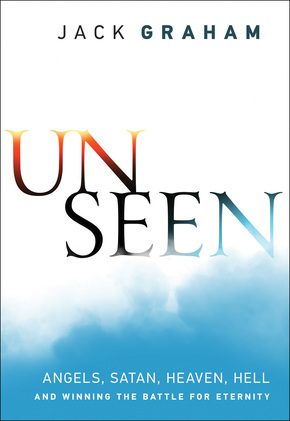 Jack Graham’s Unseen: Angels, Satan, Heaven, Hell, and Winning the War for Eternity is a must-read for anyone who wishes to learn about traditional images of the afterlife and the spiritual world. Although I take a very different theological and biblical bath, Graham well represents a literalist understanding of scripture, and that in itself is worth the read, purely to gain awareness of a certain type of Christian thinking. I use the term “certain type of Christian thinking,” because neither scripture nor tradition are as monolithic as some, including Graham, think. There have been historically and biblically a variety of Christian understandings of the afterlife, each justifiable from its own perspective. Like most literalist readings, Graham’s work avoids nuance, serious theological questioning, wrestling with the many biblical voices, and the insights of contemporary contextual biblical scholarship. His clarity is breathtaking: if the Bible (somewhere) says it, we must follow it. The clarity of Unseen about the spiritual world is its strong point, but it also raises numerous questions, especially in relationship to Graham’s vision of Hell.
According to Graham, studies note that the majority of people believe in the existence of Hell, but virtually none of them see themselves as going there. In their minds, it’s clear that Osama bin Laden will be there, but with all their imperfections, they see themselves and their children going to Heaven, regardless of their explicit relationship to Christ. Graham sees this as a problem and it is. The question raised by this disparity is: Is the problem with people’s fuzzy and conflicting beliefs about the afterlife? Or, is the problem raised by the vagueness – and corresponding clarity- in some peoples’ minds regarding the notion of Hell itself? I am not sure a “back to the Bible” approach will work, since the Bible itself not only has different perspectives on the afterlife, including the possibility that there is no afterlife at all.
The literalist Christian viewpoint is that unless you accept Jesus Christ as Lord and Savior you will be going to hell. This leads to some interesting issues: I once had a conversation with a college student who stated without equivocation, “My parents are good people, but they aren’t Christians. If they don’t accept Jesus, they are going to hell along with Gandhi, Mohammed, and Buddha.” Now every teenager wants to tell their parents to “go to hell” on occasion but this youngster took this literally!
Hell raises questions, that create a variety of footnotes or exceptions even among literalists, who often speak as if the nature of the afterlife is solely an issue of saved and unsaved, with clearly demarcated pathways to find salvation. Here are a few questions I’ve heard over the years, based on comments by Biblical literalists seeking to open the gates of heaven to a select few, based on their unique situation:
- Hell becomes an issue for us only when you reach the “age of accountability.” Infants are saved, if they die prematurely. But, what constitutes the age of accountability and how do we know? How old or mature do you need to be to an object of God’s wrath? To say, “this is for God to decide,” dodges any reasonable understanding of faith.
- Persons with severe learning disabilities do not need to make an intellectual affirmation of Jesus as Lord, some literalists assert; but again, what is the intellectual dividing line? What is the IQ level beyond which you are subject to condemnation?
- While many see non-Christians, who have never heard the message of Christ as receiving an intellectual pass, the criteria of their salvation is ethical – to be determined by whether or not they align themselves with God’s truths revealed to natural reason? But, couldn’t this also apply to North Americans who hear the message in distorted ways, greatly misunderstand the gospel, or come from “Christian” families in which they are beaten or sexually abused? Do they also receive a confessional pass, being judged only by how they respond to God’s moral presence in nature?
- What constitutes accepting Christ as your Savior? At one time, the unbaptized were Hell-bound. Others saw excommunication and being barred from the sacraments as putting one’s soul in jeopardy. Still others saw dying apart from confession and absolution as a sure sign of damnation.
- Continuing the question of requirements for salvation: What words are necessary to be saved and is there a time limit for making a profession of faith? What is the efficacy of a death bed confession? Does a death bed confession overcome a lifetime of evil action? (for example, Hitler or Pol Pot)
- What about the moral calculus? Does a mass murderer, sociopath, terrorist, and ruthless tyrant find salvation by accepting Jesus, while a loving agnostic experience eternal condemnation as a result of doubt?
- If people who grow up outside the Christian orbit can find salvation by following the wisdom of God in nature, are we doing them any favors by sharing the good news of Jesus? Our missionary work puts their souls in jeopardy, especially if they hear it in unfamiliar or paternalistic ways or see Christianity identified with North American imperialism? Wouldn’t it be more Christ-like to leave them alone?
There are more questions:
- Does the scripture only give one account of the pathway to salvation? There are also universalist and ethical visions the afterlife in scripture, that do not rely on a specific affirmation of Jesus as Lord and Savior.
- Free will is emphasized in our choice for or against God, but how free are we? Our environment can turn us toward or away from God. Family of origin, presentation of scripture, or the moral state of the church shape our attitudes toward Jesus in significant ways?
- Where do psychological issues fit in? Do persons who commit suicide receive a special grace? In previous eras, it was assumed that they were lost forever, having committed the unpardonable sin? This issues was recently raised in response to the suicide of Rick Warren’s son Matthew. Literalist as well as medieval Roman Catholic theology are sure that suicide leads to damnation. But, is this the only response that comes from theology or the biblical tradition? (I, for one, believe that Matthew Warren is in God’s hands – nothing can separate us from the love of God.)
- How does free will square with the notion of omnipotence or omniscience? If God determines all things and/or knows everything in advance, is our free will and quest for salvation an illusion?
Moral and theological issues:
- Can we really affirm with any sense of morality an infinite punishment for finite crimes, everlasting hell for the sins and unbelief of our short lifespan? What does this say about divine compassion and morality? Is God graceful or a hanging judge?
- The reality of Hell points out the powerlessness of God: God either does not or cannot reprieve the sinner. God’s justice limits God’s love; God’s wrath limits God’s love. Is death stronger than God? Is God prohibited from seeking our wholeness by our deaths?
- Heaven-hell images make God out to be borderline or narcissistic: God must be praised or believed or God will reject you. God loves you until you exercise freedom of thought and take a path different from what God intended. Is God’s love so brittle that God can’t deal with rejection?
- Does the dichotomy of heaven-hell fit with the message of Jesus? Jesus did not demand belief to love or heal others. Jesus accepted those deemed unacceptable. Jesus’ hospitality embraced marginalized and outcasts. Shouldn’t God be as loving as Jesus?
While we cannot fully intuit heaven – or hell, if it exists, I think we have to question theological absolutes. My own sense is that the afterlife involves sanctification, or spiritual evolution, for all of us. We must in the process deal with our life history, we must experience God’s healing touch, as well as learn to forgive and be forgiven. Eventually every lost sheep will come home and Christ will be all in all.
Fore more conversation on Unseen, visit the Patheos Book Club here.

Next Post

September 6, 2013 Celebrating Grandparent's Day
Browse Our Archives
Select a Category Book Reviews The Adventurous Lectionary Uncategorized
Select a Month October 2026 September 2026 August 2026 July 2026 June 2026 May 2026 April 2026 March 2026 February 2026 January 2026 December 2025 November 2025 October 2025 September 2025 August 2025 July 2025 June 2025 May 2025 April 2025 March 2025 February 2025 January 2025 December 2024 November 2024 October 2024 September 2024 August 2024 July 2024 June 2024 May 2024 April 2024 March 2024 February 2024 January 2024 December 2023 November 2023 October 2023 September 2023 August 2023 July 2023 June 2023 May 2023 March 2023 February 2023 January 2023 December 2022 November 2022 October 2022 September 2022 August 2022 July 2022 June 2022 May 2022 April 2022 March 2022 February 2022 January 2022 December 2021 November 2021 October 2021 September 2021 August 2021 July 2021 June 2021 May 2021 April 2021 March 2021 February 2021 January 2021 December 2020 November 2020 October 2020 September 2020 August 2020 July 2020 June 2020 May 2020 April 2020 March 2020 February 2020 January 2020 December 2019 November 2019 October 2019 September 2019 August 2019 July 2019 June 2019 May 2019 April 2019 March 2019 February 2019 January 2019 December 2018 November 2018 October 2018 September 2018 August 2018 July 2018 June 2018 May 2018 April 2018 March 2018 February 2018 January 2018 December 2017 November 2017 October 2017 September 2017 August 2017 July 2017 June 2017 May 2017 April 2017 March 2017 February 2017 January 2017 December 2016 November 2016 October 2016 September 2016 August 2016 July 2016 June 2016 May 2016 April 2016 March 2016 February 2016 January 2016 December 2015 November 2015 October 2015 September 2015 August 2015 July 2015 June 2015 May 2015 April 2015 March 2015 February 2015 January 2015 December 2014 November 2014 October 2014 September 2014 August 2014 July 2014 June 2014 May 2014 April 2014 March 2014 February 2014 January 2014 December 2013 November 2013 October 2013 September 2013 August 2013 July 2013 June 2013 May 2013 April 2013 March 2013 February 2013 January 2013 December 2012 November 2012 October 2012 September 2012 August 2012 July 2012 June 2012 May 2012 April 2012 March 2012 February 2012 December 2011 May 2011 April 2011 March 2011 February 2011 January 2011
TAKE THE
Religious Wisdom Quiz
Which book of the Bible contains the Ten Commandments?
Select your answer to see how you score.
Genesis Leviticus Numbers Exodus
Books by This Author Books by Living A Holy Adventure
Related posts from Living A Holy Adventure
Become Fire: A New Pentecost for Progressive Christians

The Adventurous Lectionary - The Third Sunday after...

The Adventurous Lectionary - The Second Sunday of...

HOLY WEEK IN A TIME OF COVID-19
TRENDING AT PATHEOS Progressive Christian

Looking at the Largest Orthodox Cathedral on Earth
There is often a considerable amount of anger and, shall we...

The Problem with False Prophets
Miller’s Station UMC| 10/18/26| Anchor Verse: Jeremiah 23: 1, 9-23 I...

Emotion in Early Christianity by Andrew Crislip
Andrew Crislip’s Emotion in Early Christianity examines an often overlooked dimension of...

16 Spiritual Touchstones for a More Grounded Life
After decades of spiritual study, here are 16 principles I try...

Catholic Evangelization: Sharing Your Faith Every Day
Welcome back to the Graceful Awakening mini-series called, “From Faith to Mission.” ...

The Pillar of the Boatmen: the Ancient Monument...
The Pillar of the Boatmen is a Romano-Gaulish sculpture that dates from...
view all Progressive Christian blogs
Ad-Free & Subscriber Log-In Subscription Support
- About Us
- 2026 Calendar
- Videos
- Podcasts
- Library of World Religions
- Faith In Media Tracker
- Advertise With Us
- Write for Us
- Privacy Policy
- Terms of Service
- Do Not Sell My Data
- Contact Us
- Radiant Digital
- Manage Newsletter Subscriptions
- Unsubscribe From Notifications
- Sitemap
Copyright 2008-2026, Patheos. All rights reserved.
Subscription Support Ad-Free & Subscriber Log-In
Follow Patheos