
BuddhistCatholicContemplativeEvangelicalGeneral ChristianHinduJewishLatter-day SaintMuslimNew VisionsProgressive Christian
Beliefs
- Buddhist
- Catholic
- Contemplative
- Evangelical
- General Christian
- Hindu
- Jewish
- Latter-day Saint
- More Voices
- Muslim
- New Visions
- Pagan
- Progressive Christian
Topics
- Religion News
- Food and Religion
- Sports and Religion
- Religious Art
- Religious Music and Entertainment
- Religious Events
- History and Religion
- Style and Religion
- Politics and Religion
- Women in Religion
- Recreation Outdoors and Religion
- Business Finance and Religion
- Careers Workplace and Religion
- Education and Religion
- Family Parenting and Religion
- Health Fitness and Religion
- Home and Religion
- Relationships and Religion
- Technology and Religion
- Travel and Religion
Columnists
- Buddhist Columnists
- Business Finance and Religion Columnists
- Careers Workplace and Religion Columnists
- Catholic Columnists
- Contemplative Columnists
- Education and Religion Columnists
- Evangelists Columnists
- Family Parenting and Religion Columnists
- General Christian Columnists
- Health Fitness and Religion Columnists
- Hindu Columnists
- History and Religion Columnists
- Home and Religion Columnists
- Jewish Columnists
- More Voices Columnists
- Latter Day Columnists
- Muslim Columnists
- New Visions Columnists
- Nonreligious Columnists
- Pagan Columnists
- Politics and Religion Columnists
- Progressive Columnists
- Recreation Outdoors and Religion Columnists
- Relationships and Religion Columnists
- Religion News Columnists
- Religious Art Columnists
- Religious Events Columnists
- Religious Music and Entertainment Columnists
- Sports and Religion Columnists
- Style and Religion Columnists
- Technology and Religion Columnists
- Travel and Religion Columnists
- Women in Religion Columnists
Resource Library
- 2026 Calendar
- Library of World Religions
- The 100 Most Holy Places on Earth
- Patheos Answers
- Podcasts
- Videos
- Faith Leaders Database
- Anglican Episcopalian
- Bahai
- Baptist
- Buddhism
- Christianity
- Confucianism
- Eastern Orthodoxy
- Hinduism
- Holiness and Pentecostal
- ISKCON
- Islam
- Judaism
- Lutheran
- Methodist
- The Church of Jesus Christ of Latter-day Saints
- New Age
- Paganism
- Presbytarian and Reformed
- Protestantism
- Religion Behind the Scenes
- Roman Catholic
- Scientology
- Shia Islam
- Sikhism
- Sufism
- Sunni Islam
- Taoism
- Zen
- See all religions
Research Tools
 Ad-Free & Subscriber Log-In Subscription Support
Follow Patheos 

- Trending:
- Advent
- |
- Forgiveness
- |
- Thanksgiving
- |
- Election
- |
- Seasonal Holidays
- |
- Marriage

- Home
- Progressive Christian
- Simplicity, Spirituality, and Sacrifice: Some Thoughts on Jeff Shinabarger’s “More or Less”
Simplicity, Spirituality, and Sacrifice: Some Thoughts on Jeff Shinabarger’s “More or Less”
Last updated on: April 25, 2013 at 7:04 pm by Bruce Epperly
Simplicity, Spirituality, and Sacrifice: Some Thoughts on Jeff Shinabarger’s “More or Less” 2013-04-25T19:04:31-04:00 Bruce Epperly
Patheos Explore the world's faith through different perspectives on religion and spirituality! Patheos has the views of the prevalent religions and spiritualities of the world.
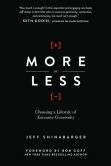 The events of our lives often present us with the starkest intellectual and ethical contrasts. After finishing Jeff Shinabarger’s More or Less: Choosing a Lifestyle of Excessive Generosity, I adjourned to the bedroom to join my wife Kate who was watching “House Hunters” on HGTV. After a few minutes, the next program came on, entitled “Outrageous Baths.” For the next half hour, before we switched channels due to architectural overload, we feasted on presentations of bathrooms the size of one bedroom apartments with gold-plated showers, amethyst floors and ceilings, panoramic views, one hundred square foot Jacuzzis, and opulent appointments, including televisions, surround sound, refrigerators, and heated towel racks. Several of the bathrooms had fixtures, purchased for over $50,000 each and at least two boasted a financial outlay of over a million dollars. Their owners waxed exuberantly over the joys of such opulence. Paraphrasing the exclamations of one owner, he felt empowered, ready for success, and fifteen years younger after taking a shower, surrounded by gold-plated walls and fixtures. All this took place in a bathroom, larger than many studio apartments, whose construction costs easily passed a million dollars.
I enjoy comfort and a pleasant domestic environment. This morning, I’m sitting in a southwest, leather reclining chair, with big oak arms on which I place my books and coffee. When I purchased it, I went for quality and while it was on sale, I still spent $1,000 on a recliner where I would spent a few hours each day, writing, reading, planning, and communicating over the phone and internet. I don’t feel any guilt over this purchase. The comfort is necessary for me to do good work. But, I realize that even though I am far from affluent by USA standards, the lifestyle represented by my recliner chair and my ability to work at home on a regularly basis is the envy of most of the world. Living in a high rise in Chevy Chase/Friendship Heights, Maryland, with twenty-four hour concierge services and two hundred restaurants and ten coffee houses in walking distance is unheard of in most of the world.
Even though we recently downsized and watch our family’s spending, we are part of the world’s 1%, according to Jeff Shinabarger’s statistics. My wife and I look for clothes and furnishings on sale, but we have the luxury of taking holidays at the beach, going to local bookstores, and ordering books on Amazon.com. It is a good and comfortable life, unavailable – and in some cases, undesirable – to most of the peoples of the planet.
Jeff Shinabarger advocates a turn to simplicity among the planet’s 1%. He sees this as an act of spiritual generosity, a commitment to the world’s impoverished hundreds of millions, and as a pathway to following Christ. His words convict even those of us who live modest lifestyles as they ask, “What is enough?” A recent Princeton University study noted that while a certain level of economic security contributes to our happiness, persons who make over $75,000 a year (I would estimate $100,000 in more expensive urban areas) experience no more happiness than their fellow USA citizens whose income is only $75,000. According to a Washington Post article, “people have a threshold of financial security and material well-being and once they’ve reached it, there are diminishing returns on salaries exceeding that amount. Financial security is certainly an aspect of happiness. That is — paying mortgage or rent, utilities, food, and then whatever is left over for savings–but beyond that, money has little bearing on our outlook and overall happiness.” This statement reminds me of something many Depression era persons asserted, “We weren’t poor; we just didn’t have any money.” Money doesn’t buy happiness, although a minimal level of income, housing, education, work, and accessibility is necessary for contentment and the sense that we are providing for our families.
Spirituality involves a level of lifestyle simplicity that is often lost in the quest for “more.” Jesus tells us to consider the lilies and the birds of the air and compares their beauty to the opulence of Solomon. The Shakers sing, “It’s a gift to be simple.” Buddhists speak of “right livelihood” and today we speak of spiritual sustainability. Often our quest for “more” gets in the way of the experiences of calm, peace, and contentment we seek. Moreover, sustaining the “necessities” of upper middle-class lifestyle often get in the way of why we are working to begin with – to fulfill our vocation, contribute to the well-being of others, and be with friends and family. In our busyness, we often forget a wise saying from Rabbi Harold Kushner, “few people on their death beds regret missing a meeting.”
Shinabarger’s book raises a plethora of questions. While I can’t address them all, I want to talk about time, interdependence, and a sacrificial lifestyle of generosity. Much of our consumption requires time: we may need to work long hours and our quest for the latest fashion or best bargain may lead us to “shop till we drop.” A primary spiritual question involves: How will we spend the time of our lives? In Jesus’ message about lilies and birds of the air, he reminds us not to be anxious and counsels us to trust that God will provide for our deepest needs. We don’t need to be on duty all the time. We can work hard, commit ourselves to important causes, and also have time for relationships, spiritual practices, self-care, and social involvement. The key question regarding time is: Do our activities bring us joy as we look at our lives as a whole? While not every aspect of our work and domestic lives is inherently joyful, do we seek a lifestyle that provides us with a sense of spaciousness, the ability to simply play with children and loved ones, and rejoice in simple things such as flowing the flight of geese across the sky or observing a grasshopper on a summer day?
Shinabarger reminds us that we are all connected. Do you recall the phrase “live simply, so that others may simply live?” Our lifestyles contribute to the joys and sorrows of others. In an interdependent world, what we do matters to the planet Earth and to our earthly companions, both human and non-human. This being the case, it is imperative to recognize that our simpler lifestyles alone are not enough; they must be complemented by political involvement to change governmental, economic, and business practices and structures that contribute to poverty and planetary destruction.
Finally, we must see sacrifice and generosity as interconnected. John Wesley once preached, “Having first, gained all you can, and secondly, saved all you can, then give all you can.” Shinabarger might amend Wesley’s words to “gain all you can, save all you can, give all you can.” In both cases, social responsibility, sacrifice, and generosity is essential to faithful living. Despite the USA penchant for absolute property and gun rights, the Biblical tradition asserts that God is the ultimate owner and that our care for our brothers and sisters is as important as our own security. In fact, we are responding to Christ in our treatment of the vulnerable other. Sacrifice is not burdensome when it is for the greater good: think of the “sacrifices” we make for spouses, partners, children, and grandchildren. They enrich us and open our hearts. In an interdependent universe there is no “other.” In fact, we find peace, as the philosopher Alfred North Whitehead says, when our interest widens from self-concern to the well-being of the larger whole; we gain in spiritual size and stature.
Shinabarger provides us with a “good word.” While we may modify his approach in terms of our own life situation, he challenges us to be persons of spiritual stature and embrace a holy consumerism that balances self-concern with care for others and this good Earth.
Previous Post

April 24, 2013
The Adventurous Lectionary: The Fifth Sunday of Easter
Next Post
May 1, 2013 The Adventurous Lectionary - The Sixth Sunday of Easter
Browse Our Archives
Select a Category Book Reviews The Adventurous Lectionary Uncategorized
Select a Month November 2026 October 2026 September 2026 August 2026 July 2026 June 2026 May 2026 April 2026 March 2026 February 2026 January 2026 December 2025 November 2025 October 2025 September 2025 August 2025 July 2025 June 2025 May 2025 April 2025 March 2025 February 2025 January 2025 December 2024 November 2024 October 2024 September 2024 August 2024 July 2024 June 2024 May 2024 April 2024 March 2024 February 2024 January 2024 December 2023 November 2023 October 2023 September 2023 August 2023 July 2023 June 2023 May 2023 March 2023 February 2023 January 2023 December 2022 November 2022 October 2022 September 2022 August 2022 July 2022 June 2022 May 2022 April 2022 March 2022 February 2022 January 2022 December 2021 November 2021 October 2021 September 2021 August 2021 July 2021 June 2021 May 2021 April 2021 March 2021 February 2021 January 2021 December 2020 November 2020 October 2020 September 2020 August 2020 July 2020 June 2020 May 2020 April 2020 March 2020 February 2020 January 2020 December 2019 November 2019 October 2019 September 2019 August 2019 July 2019 June 2019 May 2019 April 2019 March 2019 February 2019 January 2019 December 2018 November 2018 October 2018 September 2018 August 2018 July 2018 June 2018 May 2018 April 2018 March 2018 February 2018 January 2018 December 2017 November 2017 October 2017 September 2017 August 2017 July 2017 June 2017 May 2017 April 2017 March 2017 February 2017 January 2017 December 2016 November 2016 October 2016 September 2016 August 2016 July 2016 June 2016 May 2016 April 2016 March 2016 February 2016 January 2016 December 2015 November 2015 October 2015 September 2015 August 2015 July 2015 June 2015 May 2015 April 2015 March 2015 February 2015 January 2015 December 2014 November 2014 October 2014 September 2014 August 2014 July 2014 June 2014 May 2014 April 2014 March 2014 February 2014 January 2014 December 2013 November 2013 October 2013 September 2013 August 2013 July 2013 June 2013 May 2013 April 2013 March 2013 February 2013 January 2013 December 2012 November 2012 October 2012 September 2012 August 2012 July 2012 June 2012 May 2012 April 2012 March 2012 February 2012 December 2011 May 2011 April 2011 March 2011 February 2011 January 2011
TAKE THE
Religious Wisdom Quiz
How many people did Jesus feed with five loaves and two fish?
Select your answer to see how you score.
About 5000 men About 7000 About 100 About 12
Books by This Author Books by Living A Holy Adventure
Related posts from Living A Holy Adventure

Adventurous Lectionary -1st. Sunday of Advent - November...

Reign of Christ Sunday - November 22, 2026

The Adventurous Lectionary: Pentecost 25 - November 15,...

Adventurous Lectionary - Pentecost 4 - November 8,...
TRENDING AT PATHEOS Progressive Christian

Adventurous Lectionary -1st. Sunday of Advent - November...
The Adventurous Lectionary - The First Sunday of Advent – November 29,...

Will Islam become the world's biggest religion by 2035? Congo will replace...

The resilience of the Christian faith in the english speaking world of...

An Advent Calendar, and a Tree full of...
I've spent the weekend deeply invested in internet drama about a $150...

How to Have Financial Transparency in Marriage
Despite the fact that financial issues and money problems are the number...
The Healing Power of Forgiveness in Marriage
Learning how to give and accept apologies are essential ingredients of a...
view all Progressive Christian blogs
Ad-Free & Subscriber Log-In Subscription Support
- About Us
- 2026 Calendar
- Videos
- Podcasts
- Library of World Religions
- Faith In Media Tracker
- Advertise With Us
- Write for Us
- Privacy Policy
- Terms of Service
- Do Not Sell My Data
- Contact Us
- Radiant Digital
- Manage Newsletter Subscriptions
- Unsubscribe From Notifications
- Sitemap
Copyright 2008-2026, Patheos. All rights reserved.
Subscription Support Ad-Free & Subscriber Log-In
Follow Patheos