
BuddhistCatholicContemplativeEvangelicalGeneral ChristianHinduJewishLatter-day SaintMuslimNew VisionsProgressive Christian
Beliefs
- Buddhist
- Catholic
- Contemplative
- Evangelical
- General Christian
- Hindu
- Jewish
- Latter-day Saint
- More Voices
- Muslim
- New Visions
- Pagan
- Progressive Christian
Topics
- Religion News
- Food and Religion
- Sports and Religion
- Religious Art
- Religious Music and Entertainment
- Religious Events
- History and Religion
- Style and Religion
- Politics and Religion
- Women in Religion
- Recreation Outdoors and Religion
- Business Finance and Religion
- Careers Workplace and Religion
- Education and Religion
- Family Parenting and Religion
- Health Fitness and Religion
- Home and Religion
- Relationships and Religion
- Technology and Religion
- Travel and Religion
Columnists
- Buddhist Columnists
- Business Finance and Religion Columnists
- Careers Workplace and Religion Columnists
- Catholic Columnists
- Contemplative Columnists
- Education and Religion Columnists
- Evangelists Columnists
- Family Parenting and Religion Columnists
- General Christian Columnists
- Health Fitness and Religion Columnists
- Hindu Columnists
- History and Religion Columnists
- Home and Religion Columnists
- Jewish Columnists
- More Voices Columnists
- Latter Day Columnists
- Muslim Columnists
- New Visions Columnists
- Nonreligious Columnists
- Pagan Columnists
- Politics and Religion Columnists
- Progressive Columnists
- Recreation Outdoors and Religion Columnists
- Relationships and Religion Columnists
- Religion News Columnists
- Religious Art Columnists
- Religious Events Columnists
- Religious Music and Entertainment Columnists
- Sports and Religion Columnists
- Style and Religion Columnists
- Technology and Religion Columnists
- Travel and Religion Columnists
- Women in Religion Columnists
Resource Library
- 2026 Calendar
- Library of World Religions
- The 100 Most Holy Places on Earth
- Patheos Answers
- Podcasts
- Videos
- Faith Leaders Database
- Anglican Episcopalian
- Bahai
- Baptist
- Buddhism
- Christianity
- Confucianism
- Eastern Orthodoxy
- Hinduism
- Holiness and Pentecostal
- ISKCON
- Islam
- Judaism
- Lutheran
- Methodist
- The Church of Jesus Christ of Latter-day Saints
- New Age
- Paganism
- Presbytarian and Reformed
- Protestantism
- Religion Behind the Scenes
- Roman Catholic
- Scientology
- Shia Islam
- Sikhism
- Sufism
- Sunni Islam
- Taoism
- Zen
- See all religions
Research Tools
 Ad-Free & Subscriber Log-In Subscription Support
Follow Patheos 

- Trending:
- Advent
- |
- Forgiveness
- |
- Thanksgiving
- |
- Election
- |
- Seasonal Holidays
- |
- Marriage

- Home
- Progressive Christian
- Mary as Spiritual Companion: Reflections on Pat Gohn’s Blessed, Beautiful, and Bodacious
Mary as Spiritual Companion: Reflections on Pat Gohn’s Blessed, Beautiful, and Bodacious
Last updated on: April 18, 2013 at 12:52 pm by Bruce Epperly
Mary as Spiritual Companion: Reflections on Pat Gohn’s Blessed, Beautiful, and Bodacious 2013-04-18T12:52:56-04:00 Bruce Epperly
Patheos Explore the world's faith through different perspectives on religion and spirituality! Patheos has the views of the prevalent religions and spiritualities of the world.
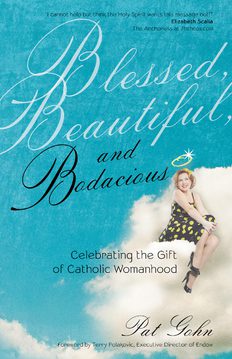 Pat Gohn’s Blessed, Beautiful, and Bodacious is a hymn to Mary of Nazareth, the mother of Jesus. She is, according to Gohn, a model for faithful womanhood and I would also suggest a fallible icon for personhood, for males and females alike. With my description of Mary as a “fallible icon,” I am not diminishing her importance, but actually enhancing her role as a guide for our own spiritual journeys. As a Protestant, for whom the importance of Mary as a spiritual figure is a relatively recent discovery, I have come to see Mary’s spiritual journey as an invitation to our own spiritual adventures. Mary represents one vision of what some are calling the sacred feminine, the feminine aspect of the universe and the divine, essential to spiritual wholeness for women and men alike.
I must admit that I have a great difficulty with the metaphysics of Mary – her perpetual virginity, her “assumption” into heaven prior to her death, and her immaculate conception. These images are grounded in a theology for which sexuality and embodiment, even mortality, are problematic. A more human Mary, who gave birth to other children, experienced the imperfections of life, and trusted her living and dying to God, is a fallible but significant guide to human spirituality, indeed, a mortal human fully open in all her limitations to God’s invitations to partnership in birthing beauty. As such, she is one of us and an invitation to birth beauty ourselves.
Scripture suggests that Mary had other children, at least two of which were males. (Matthew 12:46-49) It also suggests that Mary on occasion, like most parents, often did not fully understand her own son. She was neither omniscient or infallible as a person or parent, and neither are we! This doesn’t diminish her, but presents her as a person who followed God’s way in all the complexities and imperfections of life. The fact that Mary and Joseph were whole persons, who bore children in the good old fashioned way, in no way detracts from her blessedness and nearness to God. Anything less than a whole-bodied Mary renders our own sexuality and domestic lives superfluous and an impediment to our relationship with God.
In my reflections on Mary, inspired by Gohn’s book, I want to focus on one snapshot from her life: the legend of the Annunciation. Whether or not this event happened as narrated, it is nevertheless true as a portrait of spiritual openness to God. Mary is one of us and her greatest virtue is her willingness to say “yes” with all her feelings of perplexity to God’s call. As the story goes, Mary is going about her business, when she is confronted by an angelic visitor with an outrageous, life-changing request – the call to become the mother of a world-shaper, God’s beloved messenger to humankind.
In her encounter with Gabriel, Mary is open to mystery and possibility. She recognizes that she has no particular qualifications for the task: she probably wonders why another young woman wasn’t asked, and – indeed – perhaps Mary wasn’t God’s only choice. But, Mary does something essential to following God’s vision: she says “yes” and on that yes, the future of humankind depends.
Mary’s yes is concrete, historical, and political. She is not one of the rich, famous, or powerful. She is, by her own admission, of “low estate,” a teenage girl from the working classes. She is a citizen of an oppressed nation. Still, she recognizes that God’s revelations – divine incarnations – are surprising, unexpected, and often unlikely. Yesterday, we might suspect, she was gossiping with girlfriends and making marriage plans. Today, she is a bearer of divine revelation.
And, with that revelation, she discovers that her child will be an agent of divine justice and hospitality, who turns typical social and political values upside down.
Mary is an invitation for us to say “yes” to life and to God’s visions for us. Mary is beloved, beautiful, and bodacious, and so are we. Mary is “every woman” and an invitation for “every man” to open to the wisdom of God where he finds himself. We are all – male and female – beloved by God, given a beautiful spirit, and invited on bodacious adventures as God’s companions in healing the Earth. While we may not be invited to give birth to a world-shaper, a savior, we are invited to give birth to divinity in our everyday lives. We are invited to bring forth beauty and justice and love.
I believe that Mary had agency. She could have said “no” to her angelic visitor. Instead, she said “yes” even though it is clear that she had little idea of what that yes might mean for her future and the future of her child. We too have agency in relationship to God’s moment by moment visitations in our lives. We can turn away from possibility; we can choose alienation over love; we can choose safety over adventure. Our choices make a difference in our futures and the futures of those around us, and when we say “yes” to God’s possibilities, we open the door to greater energy, insight, and wonder.
Mary says “yes” and this “yes,” more than any doctrinal assertions regarding sexuality, sin, or immortality, is what makes Mary special. On her “yes” and ours, the future depends. Will we choose the pathways of life for our relationships, for little children and their parents, for economic justice, and Earth care? Will we share in God’s world-shaping vision in our time and place? Will we with Mary embrace the divine “yes” upon which the world depends? When we do, whether we are male or female, will find discover our lives to be beautiful, beloved, and bodacious.
Previous Post

April 16, 2013
The Adventurous Lectionary – The Fourth Sunday of Easter
Next Post
April 24, 2013 The Adventurous Lectionary: The Fifth Sunday of Easter
Browse Our Archives
Select a Category Book Reviews The Adventurous Lectionary Uncategorized
Select a Month November 2026 October 2026 September 2026 August 2026 July 2026 June 2026 May 2026 April 2026 March 2026 February 2026 January 2026 December 2025 November 2025 October 2025 September 2025 August 2025 July 2025 June 2025 May 2025 April 2025 March 2025 February 2025 January 2025 December 2024 November 2024 October 2024 September 2024 August 2024 July 2024 June 2024 May 2024 April 2024 March 2024 February 2024 January 2024 December 2023 November 2023 October 2023 September 2023 August 2023 July 2023 June 2023 May 2023 March 2023 February 2023 January 2023 December 2022 November 2022 October 2022 September 2022 August 2022 July 2022 June 2022 May 2022 April 2022 March 2022 February 2022 January 2022 December 2021 November 2021 October 2021 September 2021 August 2021 July 2021 June 2021 May 2021 April 2021 March 2021 February 2021 January 2021 December 2020 November 2020 October 2020 September 2020 August 2020 July 2020 June 2020 May 2020 April 2020 March 2020 February 2020 January 2020 December 2019 November 2019 October 2019 September 2019 August 2019 July 2019 June 2019 May 2019 April 2019 March 2019 February 2019 January 2019 December 2018 November 2018 October 2018 September 2018 August 2018 July 2018 June 2018 May 2018 April 2018 March 2018 February 2018 January 2018 December 2017 November 2017 October 2017 September 2017 August 2017 July 2017 June 2017 May 2017 April 2017 March 2017 February 2017 January 2017 December 2016 November 2016 October 2016 September 2016 August 2016 July 2016 June 2016 May 2016 April 2016 March 2016 February 2016 January 2016 December 2015 November 2015 October 2015 September 2015 August 2015 July 2015 June 2015 May 2015 April 2015 March 2015 February 2015 January 2015 December 2014 November 2014 October 2014 September 2014 August 2014 July 2014 June 2014 May 2014 April 2014 March 2014 February 2014 January 2014 December 2013 November 2013 October 2013 September 2013 August 2013 July 2013 June 2013 May 2013 April 2013 March 2013 February 2013 January 2013 December 2012 November 2012 October 2012 September 2012 August 2012 July 2012 June 2012 May 2012 April 2012 March 2012 February 2012 December 2011 May 2011 April 2011 March 2011 February 2011 January 2011
TAKE THE
Religious Wisdom Quiz
True or False: Hebrews states that it is appointed for men to die once, and after this comes judgment.
Select your answer to see how you score.
TRUE FALSE
Books by This Author Books by Living A Holy Adventure
Related posts from Living A Holy Adventure

Adventurous Lectionary -1st. Sunday of Advent - November...

Reign of Christ Sunday - November 22, 2026

The Adventurous Lectionary: Pentecost 25 - November 15,...

Adventurous Lectionary - Pentecost 4 - November 8,...
TRENDING AT PATHEOS Progressive Christian

Adventurous Lectionary -1st. Sunday of Advent - November...
The Adventurous Lectionary - The First Sunday of Advent – November 29,...

Will Islam become the world's biggest religion by 2035? Congo will replace...

The resilience of the Christian faith in the english speaking world of...

An Advent Calendar, and a Tree full of...
I've spent the weekend deeply invested in internet drama about a $150...

How to Have Financial Transparency in Marriage
Despite the fact that financial issues and money problems are the number...
The Healing Power of Forgiveness in Marriage
Learning how to give and accept apologies are essential ingredients of a...
view all Progressive Christian blogs
Ad-Free & Subscriber Log-In Subscription Support
- About Us
- 2026 Calendar
- Videos
- Podcasts
- Library of World Religions
- Faith In Media Tracker
- Advertise With Us
- Write for Us
- Privacy Policy
- Terms of Service
- Do Not Sell My Data
- Contact Us
- Radiant Digital
- Manage Newsletter Subscriptions
- Unsubscribe From Notifications
- Sitemap
Copyright 2008-2026, Patheos. All rights reserved.
Subscription Support Ad-Free & Subscriber Log-In
Follow Patheos