
BuddhistCatholicContemplativeEvangelicalGeneral ChristianHinduJewishLatter-day SaintMuslimNew VisionsProgressive Christian
Beliefs
- Buddhist
- Catholic
- Contemplative
- Evangelical
- General Christian
- Hindu
- Jewish
- Latter-day Saint
- More Voices
- Muslim
- New Visions
- Pagan
- Progressive Christian
Topics
- Religion News
- Food and Religion
- Sports and Religion
- Religious Art
- Religious Music and Entertainment
- Religious Events
- History and Religion
- Style and Religion
- Politics and Religion
- Women in Religion
- Recreation Outdoors and Religion
- Business Finance and Religion
- Careers Workplace and Religion
- Education and Religion
- Family Parenting and Religion
- Health Fitness and Religion
- Home and Religion
- Relationships and Religion
- Technology and Religion
- Travel and Religion
Columnists
- Buddhist Columnists
- Business Finance and Religion Columnists
- Careers Workplace and Religion Columnists
- Catholic Columnists
- Contemplative Columnists
- Education and Religion Columnists
- Evangelists Columnists
- Family Parenting and Religion Columnists
- General Christian Columnists
- Health Fitness and Religion Columnists
- Hindu Columnists
- History and Religion Columnists
- Home and Religion Columnists
- Jewish Columnists
- More Voices Columnists
- Latter Day Columnists
- Muslim Columnists
- New Visions Columnists
- Nonreligious Columnists
- Pagan Columnists
- Politics and Religion Columnists
- Progressive Columnists
- Recreation Outdoors and Religion Columnists
- Relationships and Religion Columnists
- Religion News Columnists
- Religious Art Columnists
- Religious Events Columnists
- Religious Music and Entertainment Columnists
- Sports and Religion Columnists
- Style and Religion Columnists
- Technology and Religion Columnists
- Travel and Religion Columnists
- Women in Religion Columnists
Resource Library
- 2026 Calendar
- Library of World Religions
- The 100 Most Holy Places on Earth
- Patheos Answers
- Podcasts
- Videos
- Faith Leaders Database
- Anglican Episcopalian
- Bahai
- Baptist
- Buddhism
- Christianity
- Confucianism
- Eastern Orthodoxy
- Hinduism
- Holiness and Pentecostal
- ISKCON
- Islam
- Judaism
- Lutheran
- Methodist
- The Church of Jesus Christ of Latter-day Saints
- New Age
- Paganism
- Presbytarian and Reformed
- Protestantism
- Religion Behind the Scenes
- Roman Catholic
- Scientology
- Shia Islam
- Sikhism
- Sufism
- Sunni Islam
- Taoism
- Zen
- See all religions
Research Tools
 Ad-Free & Subscriber Log-In Subscription Support
Ad-Free & Subscriber Log-In Subscription Support
Follow Patheos 

- Trending:
- Forgiveness
- |
- Marriage
- |
- Consciousness
- |
- Death Penalty
- |
- Election
- |
- Halloween
 Living Our Labor
- Home
- Careers, Workplace and Religion
- Rally point
Rally point
Last updated on: January 28, 2014 at 7:57 pm by Patheos Faith and Work Channel
Rally point 2014-01-28T19:57:15+00:00 Patheos Faith and Work Channel
Patheos Explore the world's faith through different perspectives on religion and spirituality! Patheos has the views of the prevalent religions and spiritualities of the world.
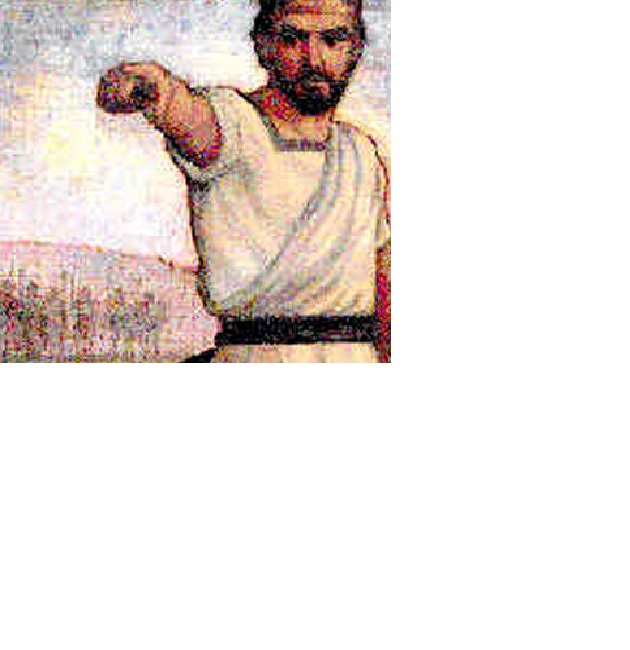 By Dan King
Remember the scene in Braveheart when Mel Gibson’s character, William Wallace, gives the freedom speech just before the big battle? Wouldn’t it be really cool to be able to rally people the way he did? Imagine the influence it would require to motivate people to give their lives for a cause.
It’s not often in the workplace today that we’re faced with a need for that strong of a commitment. However, we often fight for our lives, or at least careers, against competition who would love nothing more than to see us fail. It reminds me of a nation struggling to survive and find its identity.
In the history of Israel after the occupation of the land of Canaan, there was a time that the nation was virtually leaderless and vulnerable to oppression. There was little to no governing authority. People simply lived in the territories of each of the 12 tribes that had formerly made up Israel. And before that, the “nation” had been in bondage in Egypt for hundreds of years.
Most of their identity was wrapped up in the promise made ages before that they would be a great nation. All the while they were living under the rule of another “world power”. Eventually, they were delivered from bondage, and witnessed great miracles in the process (like the crossing of the Red Sea). However, this newly delivered nation wandered in the desert for 40 years before taking over the promised land.
Think about this fact for a moment. All of the men of fighting age were either dead or too old to fight by the time they got to enter the promised land. So all of the great warriors were the young men that were born in the desert and missed witnessing the miracle of the Exodus.
So this new generation enters the promised land, takes over, and settles into their new homes. Remember, this is mostly a generation who is inheriting the promise from their forefathers, and have only heard stories about some of the greatest miracles that ever happened.
Have you ever been a part of an organization that has gotten “comfortable?” Often some of our biggest problems come from accepting the status quo.
As the nation of Israel got comfortable, they started fulfilling their own will rather than seeking the will of God (their ultimate authority). In today’s workplace this would look like people chasing their own agendas, rather than pursuing what’s best for the organization. Well, this was pretty much the situation in Israel, and it got them taken over by a foreign ruler for about eight years until someone got fed up with it.
Enter Othniel.
God raised up a man to judge Israel and kick out the foreign king from Aram-Naharaim. If you look closely at the record of this time, you’ll notice that two major things happened, and in a specific order.
First, Othniel, with “the Spirit of the Lord upon him” (or the power of God’s authority delegated to him) he “judged Israel.” In other words, as a representative of the leader, he enforced the plans of the organization. He held people accountable to the tasks that they were responsible for.
Part of me cannot help but to think of Sylvester Stallone’s character Judge Dredd, where the “judges” acted as police, judge, jury, and executioner. I don’t know that it was that extreme in Othniel’s time, but I do know that he had a little housecleaning to do before he could get anywhere. Sometimes we need to enforce (or reinforce) expectations before any other foreign enemy can be dealt with.
After that, he “went out to war”. Some of the traditions about him recorded by the historian Josephus indicate that, “with a few other brave men, he massacred one of the Assyrian garrisons.” For the non-military types reading this, a garrison is a fortified military unit. So basically a few brave men took on an Army unit in a well-protected fort. This must have been a pretty formidable task, and a major feat to accomplish.
Josephus continues, “When the Israelites saw that he had been successful in his first attempt, they rallied around him in great numbers.” Once complete victory had been achieved, there was peace and rest in the land for the next 40 years, until Othniel’s death. I can’t help but to think that Othniel led the people with his actions. He moved in power, and proved to the people that he was not afraid to get his hands dirty for the cause of the nation.
There are several modern day business-world implications here. Most importantly, we need to recognize (and hopefully prevent) complacency from setting in. If we are to continue to win the fight for business survival, then comfort and self-seeking motives have no place in our organizations. If complacency is setting in, then what can you do as a leader to remind people of the mission? And hold them accountable for their part in it? Further, how can you get your hands dirty and lead by example to show people not only that it can be done, but also how it can be done?
William Wallace proved himself in the smaller battles as being worth following in the big ones. In the same way Othniel made his presence known, and as long as he was alive his presence was also felt.
From BibleDude.net. Image: Dan King.
Previous Post

January 25, 2014
Workplace ethics: reconciling faith with work realities
Next Post
February 15, 2014 When life has killed the American dream
Browse Our Archives
Select a Category Faith and Family Faith and the Marketplace Faith and the Workplace
Select a Month September 2014 April 2014 March 2014 February 2014 January 2014 December 2013
TAKE THE
Religious Wisdom Quiz
Which tribe first accepted David as king after Saul's death?
Select your answer to see how you score.
Dan Benjamin Ephraim Judah
Related posts from Living Our Labor


The best kind of redistribution

Work must serve more than the bottom line

TRENDING AT PATHEOS Careers, Workplace and Religion

St. Francis by Bill Droel Pope Leo XIV declares 2026 as “Year...

Catholics are schooled in the faith by memorizing dogmatic points and lots...

The Good News of Our Human Limitations -...
After another day of trying to meet deadlines and working on projects,...

Quiet Holy Attentiveness (podcast) with Sarah Clarkson
We know that quiet is an essential aspect of the spiritual life,...

Every Vocation Everywhere All At Once
What is a vocation? How does it endure through the years? Can...

I promise this is not going to become a Taylor Swift Studies...
view all Careers, Workplace and Religion blogs
Ad-Free & Subscriber Log-In Subscription Support
- About Us
- 2026 Calendar
- Videos
- Podcasts
- Library of World Religions
- Faith In Media Tracker
- Advertise With Us
- Write for Us
- Privacy Policy
- Terms of Service
- Do Not Sell My Data
- Contact Us
- Radiant Digital
- Manage Newsletter Subscriptions
- Unsubscribe From Notifications
- Sitemap
Copyright 2008-2026, Patheos. All rights reserved.
Subscription Support Ad-Free & Subscriber Log-In
Follow Patheos