
BuddhistCatholicContemplativeEvangelicalGeneral ChristianHinduJewishLatter-day SaintMuslimNew VisionsProgressive Christian
Beliefs
- Buddhist
- Catholic
- Contemplative
- Evangelical
- General Christian
- Hindu
- Jewish
- Latter-day Saint
- More Voices
- Muslim
- New Visions
- Pagan
- Progressive Christian
Topics
- Religion News
- Food and Religion
- Sports and Religion
- Religious Art
- Religious Music and Entertainment
- Religious Events
- History and Religion
- Style and Religion
- Politics and Religion
- Women in Religion
- Recreation Outdoors and Religion
- Business Finance and Religion
- Careers Workplace and Religion
- Education and Religion
- Family Parenting and Religion
- Health Fitness and Religion
- Home and Religion
- Relationships and Religion
- Technology and Religion
- Travel and Religion
Columnists
- Buddhist Columnists
- Business Finance and Religion Columnists
- Careers Workplace and Religion Columnists
- Catholic Columnists
- Contemplative Columnists
- Education and Religion Columnists
- Evangelists Columnists
- Family Parenting and Religion Columnists
- General Christian Columnists
- Health Fitness and Religion Columnists
- Hindu Columnists
- History and Religion Columnists
- Home and Religion Columnists
- Jewish Columnists
- More Voices Columnists
- Latter Day Columnists
- Muslim Columnists
- New Visions Columnists
- Nonreligious Columnists
- Pagan Columnists
- Politics and Religion Columnists
- Progressive Columnists
- Recreation Outdoors and Religion Columnists
- Relationships and Religion Columnists
- Religion News Columnists
- Religious Art Columnists
- Religious Events Columnists
- Religious Music and Entertainment Columnists
- Sports and Religion Columnists
- Style and Religion Columnists
- Technology and Religion Columnists
- Travel and Religion Columnists
- Women in Religion Columnists
Resource Library
- 2026 Calendar
- Library of World Religions
- The 100 Most Holy Places on Earth
- Patheos Answers
- Podcasts
- Videos
- Faith Leaders Database
- Anglican Episcopalian
- Bahai
- Baptist
- Buddhism
- Christianity
- Confucianism
- Eastern Orthodoxy
- Hinduism
- Holiness and Pentecostal
- ISKCON
- Islam
- Judaism
- Lutheran
- Methodist
- The Church of Jesus Christ of Latter-day Saints
- New Age
- Paganism
- Presbytarian and Reformed
- Protestantism
- Religion Behind the Scenes
- Roman Catholic
- Scientology
- Shia Islam
- Sikhism
- Sufism
- Sunni Islam
- Taoism
- Zen
- See all religions
Research Tools
 Ad-Free & Subscriber Log-In Subscription Support
Ad-Free & Subscriber Log-In Subscription Support
Follow Patheos 

- Trending:
- Forgiveness
- |
- Marriage
- |
- Consciousness
- |
- Death Penalty
- |
- Election
- |
- Halloween
 Lisa Hendey
- Home
- Catholic
- Late but Great: My Conversation with Eve Tushnet
Late but Great: My Conversation with Eve Tushnet
Last updated on: March 12, 2015 at 4:42 pm by Lisa M. Hendey
Late but Great: My Conversation with Eve Tushnet 2015-03-12T16:42:53-07:00 Lisa M. Hendey
Patheos Explore the world's faith through different perspectives on religion and spirituality! Patheos has the views of the prevalent religions and spiritualities of the world.
One of my regrets over having been caught up in the craziness of “book launch mania” over the past few weeks is the fact that I’m very tardy sharing the following conversation with my fellow Ave Maria Press author and Patheos blogger Eve Tushnet. Eve’s new book, Gay and Catholic: Accepting My Sexuality, Finding Community, Living My Faith, was the focus of a November Patheos book club conversation and continues to be a major force in conversations surrounding an important topic for families. I hope you enjoy our recent email interview and that you’ll consider adding this tremendous resource to your December reading queue.
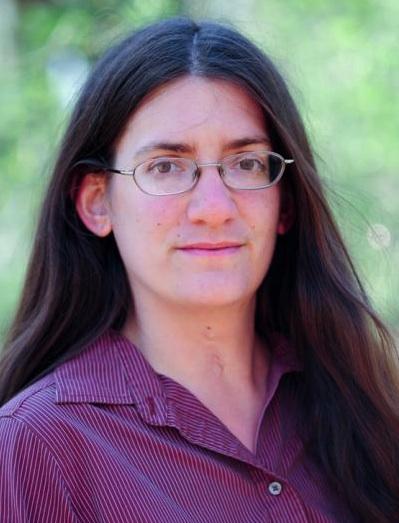
Eve Tushnet
Q: Eve, kudos for the beautiful, tender and courageous book you’ve written. Please begin by introducing yourself to our Patheos readers.
Thank you! I’m a thirtysomething freelance writer–I mostly do arts reviews for publications like Commonweal, The American Conservative, and the Weekly Standard–living in Washington, DC. I came out as gay when I was about thirteen, and converted to Catholicism in college. I volunteer at a crisis pregnancy center. I blog at http://www.patheos.com/blogs/evetushnet/; I blog about the themes of the book, like renewing friendship and discerning your vocation, but I also blog a lot about prisoners’ rights, addiction and recovery, horror movies, figure skating, and a few other recurring obsessions.
Q: While you do a brilliant job in the book of sharing the story of your maturing and conversion, could you share very briefly how you yourself would describe your current vocational calling.
My friendships are one path where God has called me to give and receive love. I didn’t really “discern” a vocation to friendship; I more or less just woke up and realized that these were the relationships around which I was structuring my life. So I sought to accept and deepen them. Service at the pregnancy center is a vocation I did discern. I had a longing to work with women, to stand in solidarity with women in need, and the center is a great place to do that. And my writing seems to be a calling in the sense that it’s a way God has allowed me to serve other people.
Those are “horizontal” relationships with other people; my “vertical” relationship with God is mostly expressed (as far as I can tell) through prayer of the very colloquial, “God, here’s what I’m thinking and feeling–help!” kind, a daily rosary, and not as much Eucharistic adoration as I should do.
Q: Having just released a “memoir-ish” book of my own, I have to ask a personal question here. Was it frightening in any way to share so openly in this book? Did you experience any moments of reconsideration, panic or remorse about being so honest in your writing?
I definitely wondered how other people would respond to their appearances in the memoir portions of the book. So far people have been incredibly generous about it. In terms of my descriptions of my own life and problems, I didn’t really feel like I had much of a choice: If I wasn’t at least somewhat more honest than I would like to be, the book wouldn’t get written. I’d tried to write a book of this kind a couple of times before I quit drinking, but because I wasn’t able to be honest with myself or potential readers about my alcoholism, I couldn’t write about faith or vocation. Which is lucky–I feel pretty grateful that I didn’t put anything out there that was steeped in denial and dishonesty.
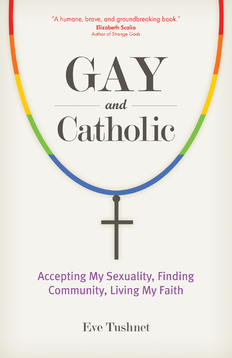 Q: Your book offers some very practical and helpful advice for gay Catholics who desire a full and fruitful relationship with the Church. If you could offer one major point of advice (along with my advice that they BUY the BOOK!), what would it be.
You can kind of hear it in my answer above: honesty. It’s really hard to be honest with yourself and with God. We often confuse self-criticism and even self-hatred with humility and honesty. But in fact self-loathing is self-*centered*, and often based in fantasy, in unrealistic demands of perfection. So to me honesty is just acknowledging what you’re really thinking, feeling, and experiencing–not what you think you *should* think or feel–and offering that to God to do with it what He will.
Sharing that with another person is also so important and life-giving; if you possibly can, find someone whom you trust, who is living out their faith in a way you admire, and be honest with that person as well.
That’s at least somewhat action-oriented advice. But the underlying message of the book is even more basic: The book’s thesis is that gay Christians are called to give and receive love; our task in life, like everyone else’s, is to find ways to love and be loved, to increase the tenderness and beauty in the world.
Q: I love that you’ve included resources for fellow Catholics and parishes to create a more welcoming and inclusive parish environment. Can you share any examples of parish communities that you feel are doing this extremely well?
Ha, I’m not sure. It’s very hard to truly welcome everyone. My own church tries–I’m on the steering committee of our gay and lesbian ministry, which really strives to be open to everybody no matter where they are in terms of church membership, belief, or practice–but it’s hard.
I spoke fairly recently at a Catholic high school where they hoped to offer support to gay teens as a part of a broader commitment to Catholic ethics, and that was a hopeful sign to me: They viewed support for gay students as part of a holistic Catholic way of life, which includes the sexual ethic but also includes the ethic of welcoming one another. They also had me present St Aelred’s discussion of “spiritual friendship” to a philosophy class. To me, this showed that they agree with me that returning to the resources already present within our faith will help us respond to modern challenges: We become *more* Catholic, not less, as we seek to uncover the vocations open to those who are not called to marriage or religious vows.
Q: Without being too personal, what type of feedback about the book are you receiving from others in the Church who are endeavoring to fully live out their vocation as you are?
Maybe the most common surprising feedback has been, “I’m married, but this book spoke to me, too.” I expected the book to be at least somewhat useful to unmarried straight people–it’s mostly a guide to discerning and supporting vocations outside of marriage and religious vows–and I tried to suggest ways in which their path is similar to and different from mine. But several married people have told me that the book was useful to them, which heartened me.
It’s still a little too early for me to receive a lot of critical feedback. Most of the people who read a book first are the ones who really wanted it! I’m aware that I left a ton of things out of the book, either because I hadn’t worked out what I wanted to say or because I wasn’t even really aware that these issues were out there, and I’ve tried to fill those gaps on my blog: Look for the posts labeled “Book Extra” here http://www.patheos.com/blogs/evetushnet/category/gay-catholic-whatnot
Q: I love the appendix resources you offer in the book. What one piece of advice would you give to Catholic parents of young adults (of any sexual orientation) whose children are feeling a separation from the Church because of their perceived (and sometimes incorrect) notions of the Churches teachings on sexuality?
Honestly the biggest piece of advice is just that there’s not necessarily much you can do. I mean, obviously, you need to be loving, welcoming, patient, and humble, because those are good things in themselves–but they’re not a “technique” or a recipe for producing obedient Catholic kids. Even the best parents have to do this incredibly painful task of letting their kids go.
Maybe the other thing is focusing on what you love in the faith, and sharing that with your children to the extent that they’re willing to share it with you. But even that falls under the umbrella of “you can’t control what they’re willing to do.”
This is yet another place where honesty with oneself, with God, and with a trusted friend or mentor is necessary.
Q: Eve, again, thank you for this book and for your work. Are there any closing thoughts you would like to share with our readers?
I wrote the book to correct a mistake I made when I first became Catholic. At that time I thought what I was supposed to do, as a gay Christian, was work really hard to understand the theology behind Church teaching, and avoid sexual sin. That’s fine as far as it goes, but you can’t make a life out of intellect and abstinence. You need a vocation of “yes,” not a vocation of “no.” So the book is about making a fruitful, loving life: finding the “yes” that God is speaking to you.
- Follow the Patheos Book Club Conversation
- Purchase Gay and Catholic: Accepting My Sexuality, Finding Community, Living My Faith
- Visit Eve Tushnet at Patheos
Previous Post
November 25, 2014
Giving Thanks Amidst the Pain
Next Post

December 1, 2014 Sharing My Prayer of Thanksgiving
Browse Our Archives
Select a Category @Pontifex Books Catholic Geek Stuff Catholic Moments Family Life Good Measures Liturgical Calendar New Evangelization News Reviews Rwanda Saints Speaking Tanzania Journal Top Catholic Tweets Travel Uncategorized Vocations Yes
Select a Month August 2015 July 2015 June 2015 May 2015 April 2015 March 2015 February 2015 January 2015 December 2014 November 2014 October 2014 September 2014 August 2014 July 2014 June 2014 May 2014 April 2014 March 2014 February 2014 January 2014 December 2013 November 2013 October 2013 September 2013 August 2013 July 2013 June 2013 May 2013 April 2013 March 2013 February 2013 January 2013 December 2012 November 2012 October 2012
Follow Us!
TAKE THE
Religious Wisdom Quiz
What is the Christian teaching about caring for the poor?
Select your answer to see how you score.
Seek only own wealth Never give Help those in need Ignore the poor
Related posts from Lisa Hendey
My New #ChimeTravelers Series for Kids Hits the...

Introducing My New Book Series: "Chime Travelers"!
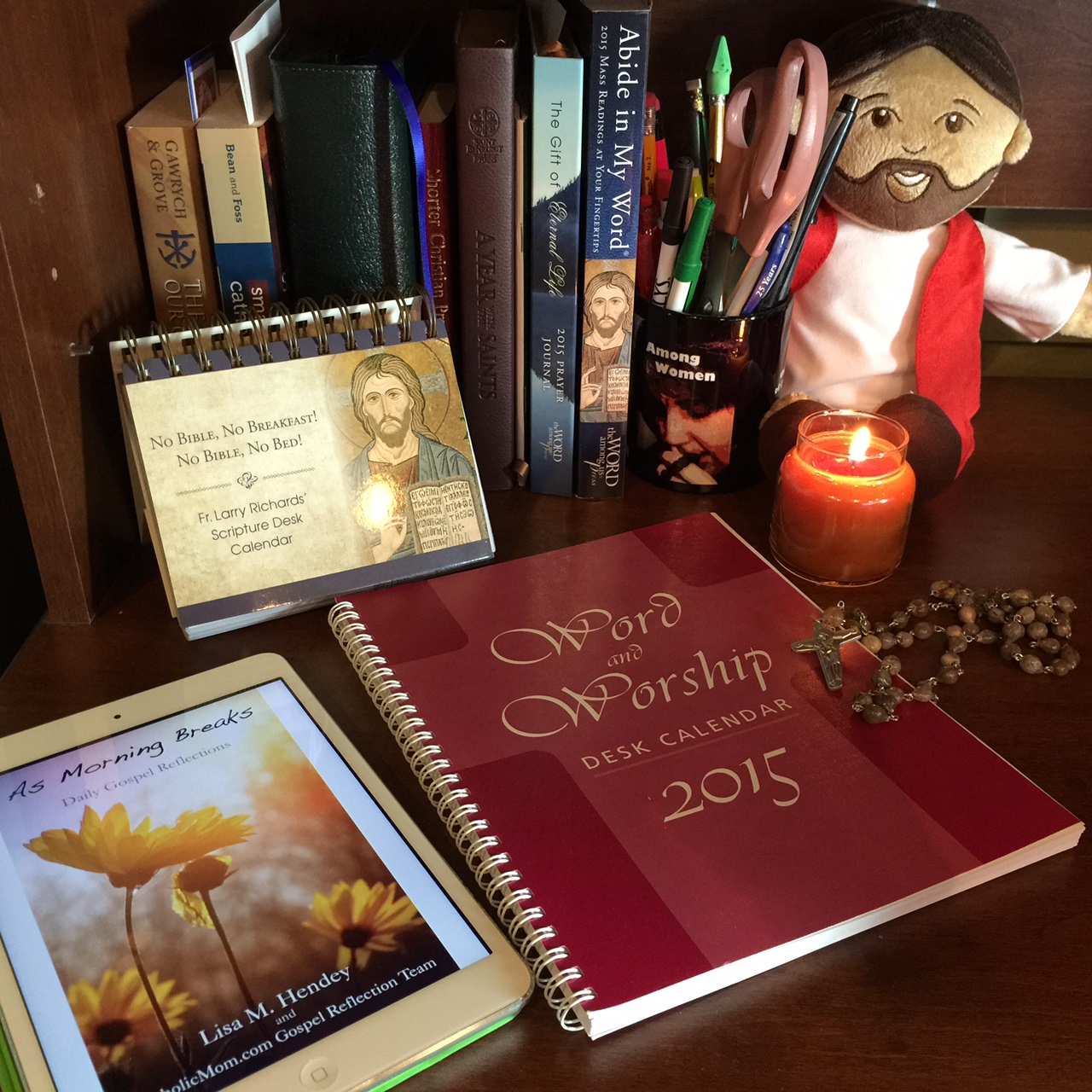
A Peek at My Prayer Corner: What I'm...
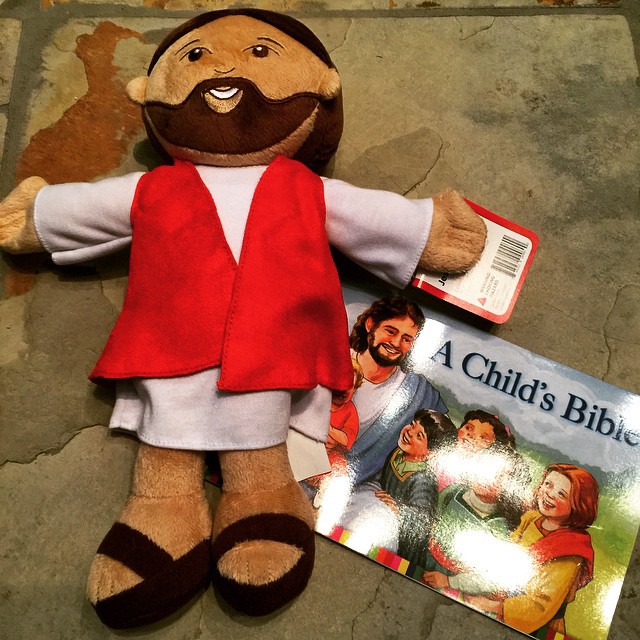
My New Buddy: Plush Jesus from @LoyolaPress
TRENDING AT PATHEOS Catholic

The Parable Of The Sower And The Word...
One of Christ’s most famous parables is that of the sower who...

Rejecting Doom: Christian Hope And Human Action
Christianity is a religion of hope. We are to have hope and...

Why I Choose the Eucharist Over the Sermon
Choose the Eucharist, Not the Sermon What are we supposed to get...

5 Design Elements Found in Spiritually Rooted Homes
Putting Spirituality Into Home Decor Our homes are more than our living...

Credo: A Story of God Told with the...
About 10 years ago, I began to imagine a personal "Credo" that...

The Anatomy of Divine Revelation in Catholic Thought
The claim that God has made Himself known to human beings is...
view all Catholic blogs
Ad-Free & Subscriber Log-In Subscription Support
- About Us
- 2026 Calendar
- Videos
- Podcasts
- Library of World Religions
- Faith In Media Tracker
- Advertise With Us
- Write for Us
- Privacy Policy
- Terms of Service
- Do Not Sell My Data
- Contact Us
- Radiant Digital
- Manage Newsletter Subscriptions
- Unsubscribe From Notifications
- Sitemap
Copyright 2008-2026, Patheos. All rights reserved.
Subscription Support Ad-Free & Subscriber Log-In
Follow Patheos