
BuddhistCatholicContemplativeEvangelicalGeneral ChristianHinduJewishLatter-day SaintMuslimNew VisionsProgressive Christian
Beliefs
- Buddhist
- Catholic
- Contemplative
- Evangelical
- General Christian
- Hindu
- Jewish
- Latter-day Saint
- More Voices
- Muslim
- New Visions
- Pagan
- Progressive Christian
Topics
- Religion News
- Food and Religion
- Sports and Religion
- Religious Art
- Religious Music and Entertainment
- Religious Events
- History and Religion
- Style and Religion
- Politics and Religion
- Women in Religion
- Recreation Outdoors and Religion
- Business Finance and Religion
- Careers Workplace and Religion
- Education and Religion
- Family Parenting and Religion
- Health Fitness and Religion
- Home and Religion
- Relationships and Religion
- Technology and Religion
- Travel and Religion
Columnists
- Buddhist Columnists
- Business Finance and Religion Columnists
- Careers Workplace and Religion Columnists
- Catholic Columnists
- Contemplative Columnists
- Education and Religion Columnists
- Evangelists Columnists
- Family Parenting and Religion Columnists
- General Christian Columnists
- Health Fitness and Religion Columnists
- Hindu Columnists
- History and Religion Columnists
- Home and Religion Columnists
- Jewish Columnists
- More Voices Columnists
- Latter Day Columnists
- Muslim Columnists
- New Visions Columnists
- Nonreligious Columnists
- Pagan Columnists
- Politics and Religion Columnists
- Progressive Columnists
- Recreation Outdoors and Religion Columnists
- Relationships and Religion Columnists
- Religion News Columnists
- Religious Art Columnists
- Religious Events Columnists
- Religious Music and Entertainment Columnists
- Sports and Religion Columnists
- Style and Religion Columnists
- Technology and Religion Columnists
- Travel and Religion Columnists
- Women in Religion Columnists
Resource Library
- 2026 Calendar
- Library of World Religions
- The 100 Most Holy Places on Earth
- Patheos Answers
- Podcasts
- Videos
- Faith Leaders Database
- Anglican Episcopalian
- Bahai
- Baptist
- Buddhism
- Christianity
- Confucianism
- Eastern Orthodoxy
- Hinduism
- Holiness and Pentecostal
- ISKCON
- Islam
- Judaism
- Lutheran
- Methodist
- The Church of Jesus Christ of Latter-day Saints
- New Age
- Paganism
- Presbytarian and Reformed
- Protestantism
- Religion Behind the Scenes
- Roman Catholic
- Scientology
- Shia Islam
- Sikhism
- Sufism
- Sunni Islam
- Taoism
- Zen
- See all religions
Research Tools
 Ad-Free & Subscriber Log-In Subscription Support
Ad-Free & Subscriber Log-In Subscription Support
Follow Patheos 

- Trending:
- Forgiveness
- |
- Marriage
- |
- Consciousness
- |
- Death Penalty
- |
- Election
- |
- Halloween
 Lisa Hendey
- Home
- Catholic
- Mercy, Rwanda, & “To Do” Lists — My Conversation with Kerry Weber
Mercy, Rwanda, & “To Do” Lists — My Conversation with Kerry Weber
Last updated on: March 12, 2015 at 4:47 pm by Lisa M. Hendey
Mercy, Rwanda, & “To Do” Lists — My Conversation with Kerry Weber 2015-03-12T16:47:33-07:00 Lisa M. Hendey
Patheos Explore the world's faith through different perspectives on religion and spirituality! Patheos has the views of the prevalent religions and spiritualities of the world.

Kerry Weber
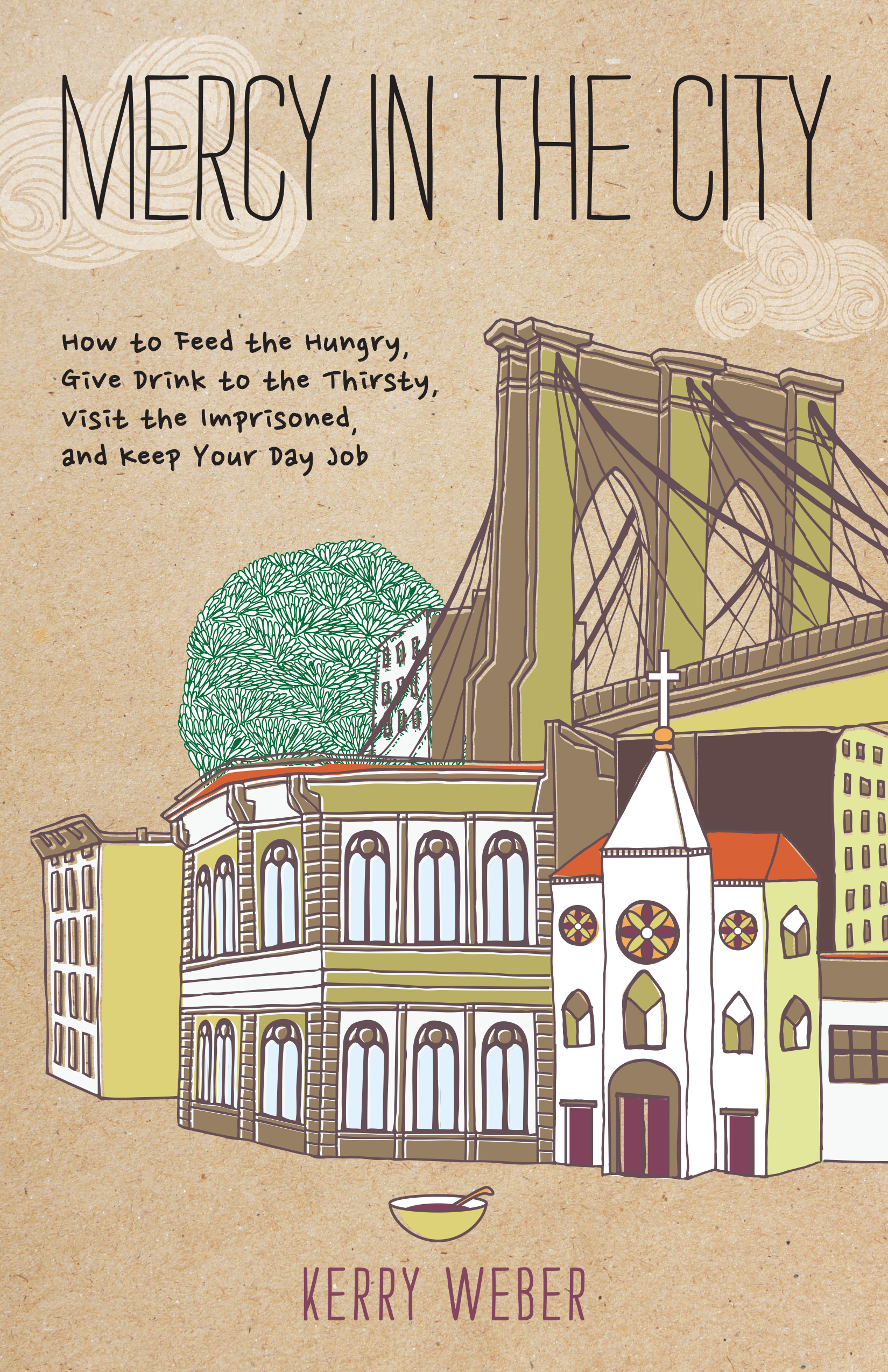
You might recognize the adorable face on the young lady in this picture if you paid attention to any of my photos from last Fall’s trip to Rwanda. Kerry Weber, author of the fantastic new book Mercy in the City: How to Feed the Hungry, Give Drink to the Thirsty, Visit the Imprisoned, and Keep Your Day Job, became not only a good friend on that trip, but also someone I look to as a spiritual mentor. There is a genuineness to Kerry, but also a joy and a zest, that makes me want more of what she’s got in her life. In a recent endorsement of Kerry’s book, I said:
“If ‘change the world’ is on your to do list, then Mercy in the City should be on your reading list. Kerry Weber’s work is instructive, inspirational, filled with heart, and — perhaps most importantly — destined to rock your world. If you’ve ever desired to be Christ to those in need, but didn’t quite know how to make it happen in the context of a busy schedule, this is the book for you!”
Today, I’m happy to share my recent interview conversation with this amazingly talented young author. And for a taste of this fantastic book, head over to CatholicMom.com, where I’ve shared a super excerpt from the manuscript. And if you really want more and you live anywhere near Chicopee, MA, consider joining us in April for an awesome women’s conference. But before that event, go read this book! You can thank me in person while you’re having Kerry sign your copy!
Q: Kerry, before we launch into our conversation about your book, could you please share a bit about yourself and why this particular book at this point in your personal and professional life?
I’ve had a connection with the charism of Mercy for ten years, starting with the Mercy Volunteer Corps, a full-time, yearlong volunteer program I participated in after college. However, more recently I realized that, despite this long-time connection, I wasn’t doing as much as I could to work toward actually living out that Mercy in my daily life.
One day, while researching an article about a prison chaplain at San Quentin for America magazine, I came across the list of the Corporal Works of Mercy and decided it was time to pursue them more deliberately. Around the same time Loyola Press asked me if I would be interested in writing about Lent. The season seemed like a perfect context for my challenge of being more merciful, so I started my experiment and then processed the experience through my writing, and the book evolved from there.
 Q: I’ll admit that owing to the time we spent together in Rwanda, when I read your book I hear your voice in my head (which is a good thing!). Any qualms about sharing your own faith journey and mercy experiences so personally? What types of reactions is the book getting from family and friends who’ve known and loved you over the years?
Thanks! A number of friends and family members who have read it have said, “It just sounds like you.” I hope this means that there is a sense of authenticity to it, but it is also a bit nerve-wracking because the statement reveals how personal the book is. The book actually has sparked some nice conversations with friends who have read it and then shared with me their own experience about the things they struggle with in their own spiritual lives. I hadn’t realized how many of my friends also have struggled with how to react to people in need in their daily lives. We all want to know exactly the right thing to do, and sometimes just allowing ourselves to be open about the fact that sometimes we don’t know what to do at all is enough to move the conversation forward. This openness allows us to consider new ideas of how we might do more for people in need and do a better job of looking out for each other.
Q: Of the experiences you share in the book, do you have any favorite chapters or mercy moments?
I was particularly moved by my experience in San Quentin State Prison. It was a unique experience, and it forced me to reconsider the types of labels our society puts on people. We tend to define people by a single characteristic, good or bad. A person becomes defined by a word—a criminal or a burglar or a murderer—and we forget about their humanity, which is our shared humanity. It’s not easy to think of people outside of those labels, but that is what the Gospel calls us to do.
Q: I know the book was likely largely finished by the time we visited Rwanda with Catholic Relief Services. But did this book writing experience have any impact on the eyes through which you saw that corner of the world?
Having meditated on the Works of Mercy before the trip allowed me to recognize the spiritual depth of the work being done by Catholic Relief Services. It was beautiful to see CRS doing these works of Mercy on a large scale. And not only were they “feeding the hungry” they were teaching farmers sophisticated methods by which to feed themselves. The trip also helped me to consider how I might better fight against systemic or large-scale injustices, as well as how I can contribute to that fight through my own individual actions.
Q: For those of us who struggle to balance our desire to be of service to those in need worldwide (for example in the situation unfolding now in both the Central African Republic and in South Sudan) with our commitment to our own communities and neighborhoods and their unique needs, can you share a word or two of wisdom or your own personal way of handling this?
Ideally, small-scale action inspires you to work toward systemic change, and vice versa. The powerful thing about starting with small actions is that it makes you aware of the individual lives impacted by the systemic injustices in our society. It forces you to see a person, often not unlike ourselves, who needs help of some sort. And while it’s easy to shake your head and sigh when we hear about huge numbers of dead or suffering people on TV, it’s harder to turn away when you see this suffering face to face. When you think of the genocide in Rwanda, not as one million dead, but as mothers and fathers and brothers and sisters, little girls who liked to dance, and boys who liked to drink milk, you can’t help but be moved.
Small Works of Mercy at home help us to understand the context in which these larger issues take place. They are not insignificant. We inform ourselves through these actions, and build up the Kingdom of God in the process. The Corporal Works of Mercy, on any scale, are about building relationships, and we need to remember how closely we’re all connected.
Prior to going to Rwanda, I was making a to-do list of things that needed to get done in the near future. It was overwhelmingly long, so I divided it up into two lists based on level of urgency. One was labeled things to do “Before Rwanda” and the other was “After Rwanda.” Since I’ve returned, I’ve left that “After Rwanda” label on my general to-do list as a reminder of my experience there. It’s a reminder that I can’t allow myself to forget the stories of suffering that we heard, or the conversations about forgiveness and reconciliation. I can’t expect to come back to New York and just go about unchanged.
Q: What’s next for you on the writing front?
Right now I’m working on an article about reconciliation in Rwanda to be published in the April 7 issue of America, for the 20th anniversary of the start of the genocide there. In terms of book-writing, a few friends have suggested I do a sequel in which I try to perform the seven Spiritual Works of Mercy. But I think I’ll skip that one for now. While it sounds like a worthy challenge, I think I might have a harder time finding a group of “sinners” willing to be “admonished” than I did finding people who were hungry and looking to be fed.
Q: Any closing thoughts to share with our readers?
My goal in writing the book was just to use stories of my own imperfections, experiences, successes and failures to help people think more deliberately about how they want to live out the Works of Mercy in their own lives. I think it’s clear in the book that I’m not some platonic form of a merciful Catholic. I hope my story helps people to understand that we likely will do these works imperfectly, but that fear of making a mistake shouldn’t prevent us from beginning the work. The Corporal Works of Mercy are so vital to our individual spiritual journeys, to our communal church, and to our society as a whole. They allow us to open ourselves up, to help the poor and vulnerable by allowing ourselves to be vulnerable, and to be changed in the process.
Previous Post

February 26, 2014
What Do You Want from Your Parish? Religious Education
Next Post
February 26, 2014 What's Your Favorite Movie? See What Pope Francis Said!
Browse Our Archives
Select a Category @Pontifex Books Catholic Geek Stuff Catholic Moments Family Life Good Measures Liturgical Calendar New Evangelization News Reviews Rwanda Saints Speaking Tanzania Journal Top Catholic Tweets Travel Uncategorized Vocations Yes
Select a Month August 2015 July 2015 June 2015 May 2015 April 2015 March 2015 February 2015 January 2015 December 2014 November 2014 October 2014 September 2014 August 2014 July 2014 June 2014 May 2014 April 2014 March 2014 February 2014 January 2014 December 2013 November 2013 October 2013 September 2013 August 2013 July 2013 June 2013 May 2013 April 2013 March 2013 February 2013 January 2013 December 2012 November 2012 October 2012
Follow Us!
TAKE THE
Religious Wisdom Quiz
Peter was staying where when he saw the vision of the great sheet with all the animals?
Select your answer to see how you score.
Bethabara With Cornelius With Simon the Tanner Joppa
Related posts from Lisa Hendey
Starvation in South Sudan: 2 Ways We Can...

My New #ChimeTravelers Series for Kids Hits the...
Wouldn't You Want to Touch Christ? #NepalEarthquake Gives...

Introducing My New Book Series: "Chime Travelers"!
TRENDING AT PATHEOS Catholic

Rejecting Doom: Christian Hope And Human Action
Christianity is a religion of hope. We are to have hope and...

It’s What Comes From Within Which Matters
One of the most difficult things for us to understand is why...

Why I Choose the Eucharist Over the Sermon
Choose the Eucharist, Not the Sermon What are we supposed to get...

5 Design Elements Found in Spiritually Rooted Homes
Putting Spirituality Into Home Decor Our homes are more than our living...

Credo: A Story of God Told with the...
About 10 years ago, I began to imagine a personal "Credo" that...

The Anatomy of Divine Revelation in Catholic Thought
The claim that God has made Himself known to human beings is...
view all Catholic blogs
Ad-Free & Subscriber Log-In Subscription Support
- About Us
- 2026 Calendar
- Videos
- Podcasts
- Library of World Religions
- Faith In Media Tracker
- Advertise With Us
- Write for Us
- Privacy Policy
- Terms of Service
- Do Not Sell My Data
- Contact Us
- Radiant Digital
- Manage Newsletter Subscriptions
- Unsubscribe From Notifications
- Sitemap
Copyright 2008-2026, Patheos. All rights reserved.
Subscription Support Ad-Free & Subscriber Log-In
Follow Patheos