
BuddhistCatholicContemplativeEvangelicalGeneral ChristianHinduJewishLatter-day SaintMuslimNew VisionsProgressive Christian
Beliefs
- Buddhist
- Catholic
- Contemplative
- Evangelical
- General Christian
- Hindu
- Jewish
- Latter-day Saint
- More Voices
- Muslim
- New Visions
- Pagan
- Progressive Christian
Topics
- Religion News
- Food and Religion
- Sports and Religion
- Religious Art
- Religious Music and Entertainment
- Religious Events
- History and Religion
- Style and Religion
- Politics and Religion
- Women in Religion
- Recreation Outdoors and Religion
- Business Finance and Religion
- Careers Workplace and Religion
- Education and Religion
- Family Parenting and Religion
- Health Fitness and Religion
- Home and Religion
- Relationships and Religion
- Technology and Religion
- Travel and Religion
Columnists
- Buddhist Columnists
- Business Finance and Religion Columnists
- Careers Workplace and Religion Columnists
- Catholic Columnists
- Contemplative Columnists
- Education and Religion Columnists
- Evangelists Columnists
- Family Parenting and Religion Columnists
- General Christian Columnists
- Health Fitness and Religion Columnists
- Hindu Columnists
- History and Religion Columnists
- Home and Religion Columnists
- Jewish Columnists
- More Voices Columnists
- Latter Day Columnists
- Muslim Columnists
- New Visions Columnists
- Nonreligious Columnists
- Pagan Columnists
- Politics and Religion Columnists
- Progressive Columnists
- Recreation Outdoors and Religion Columnists
- Relationships and Religion Columnists
- Religion News Columnists
- Religious Art Columnists
- Religious Events Columnists
- Religious Music and Entertainment Columnists
- Sports and Religion Columnists
- Style and Religion Columnists
- Technology and Religion Columnists
- Travel and Religion Columnists
- Women in Religion Columnists
Resource Library
- 2026 Calendar
- Library of World Religions
- The 100 Most Holy Places on Earth
- Patheos Answers
- Podcasts
- Videos
- Faith Leaders Database
- Anglican Episcopalian
- Bahai
- Baptist
- Buddhism
- Christianity
- Confucianism
- Eastern Orthodoxy
- Hinduism
- Holiness and Pentecostal
- ISKCON
- Islam
- Judaism
- Lutheran
- Methodist
- The Church of Jesus Christ of Latter-day Saints
- New Age
- Paganism
- Presbytarian and Reformed
- Protestantism
- Religion Behind the Scenes
- Roman Catholic
- Scientology
- Shia Islam
- Sikhism
- Sufism
- Sunni Islam
- Taoism
- Zen
- See all religions
Research Tools
 Ad-Free & Subscriber Log-In Subscription Support
Ad-Free & Subscriber Log-In Subscription Support
Follow Patheos 

- Trending:
- Forgiveness
- |
- Marriage
- |
- Consciousness
- |
- Death Penalty
- |
- Election
- |
- Halloween

- Home
- Pagan
- Education and Religion
- Artemis II: A Pagan Reflection on the Return to the Moon
Artemis II: A Pagan Reflection on the Return to the Moon
Last updated on: April 8, 2026 at 12:44 pm by Rev. Emily Guenther
Artemis II: A Pagan Reflection on the Return to the Moon 2026-04-08T12:44:58-05:00 Rev. Emily Guenther
Patheos Explore the world's faith through different perspectives on religion and spirituality! Patheos has the views of the prevalent religions and spiritualities of the world.
When NASA named its new lunar program Artemis, some of us in the Pagan community felt a spark of recognition. After decades of space missions named for gods, heroes, and mythic figures, this one landed differently. Artemis isn’t just a name — she’s a living archetype, a presence many of us honor in ritual, devotion, or quiet personal practice. She is the Moon’s guardian, the liminal huntress, the protector of the wild and the vulnerable. She is independence, intuition, and fierce clarity. And now, humanity has sent a crew back toward the Moon under her banner.
This isn’t a blog about the science of Artemis II (though the science is extraordinary). This is a reflection on the deeper themes — the Pagan threads woven into this moment in human history, whether NASA intended them or not.

Artemis II Preflight. Wikimedia
The Moon as Threshold
In myth, the Moon is never just a celestial body. It is a doorway, a mirror, a boundary between worlds. It governs tides, cycles, intuition, and the mysteries that unfold in darkness. Artemis, as the Moon’s guardian, stands at that threshold — not blocking it, but guiding those who dare to cross.
Artemis II is, in many ways, a liminal mission. It is neither the beginning nor the culmination of the Artemis program. It is the crossing point, the moment when humanity steps out of low Earth orbit for the first time in more than fifty years and enters the deeper dark again.
In Pagan practice, liminality is powerful. It is the space where transformation happens. The moment before the spell takes hold. The breath before the vow. The pause between the old self and the new. Artemis II embodies that moment. It is the collective inhale before the next great exhale of exploration.
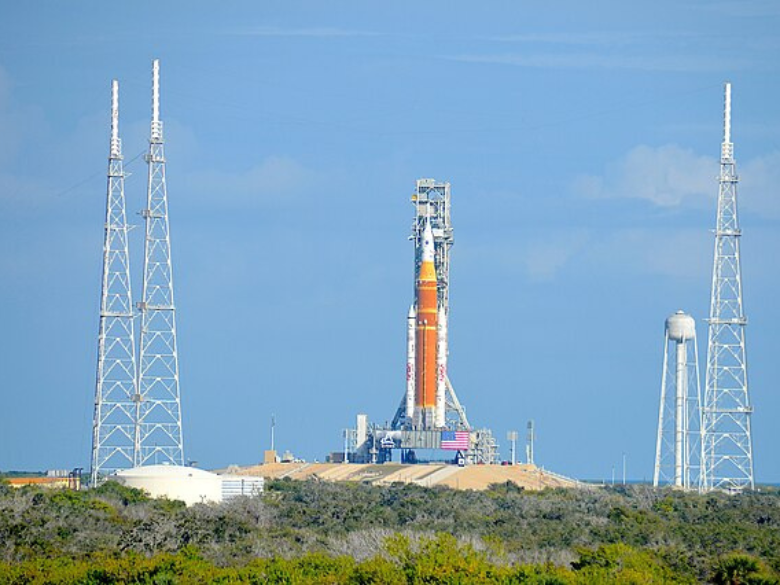
Artemis II at Launch Complex 39B on 18 January 2026, seen from The Gantry (observation tower). Wikimedia
The Divine Feminine Returns to the Stars
For decades, space exploration has been framed through the lens of Apollo — the Sun god, the bringer of clarity, reason, and technological triumph. The Apollo missions were dazzling, brilliant, and undeniably masculine in their symbolism. Artemis shifts the narrative.
She is the twin of Apollo, yes, but she is not his shadow. She is the counterbalance. Where Apollo is solar, she is lunar. Where he is civilization, she is wilderness. Where he is logic, she is intuition. Where he is outward brilliance, she is inward knowing.
NASA’s choice of Artemis was intentional: this new era of exploration includes women, people of color, and a broader vision of who belongs in the story of human achievement. The divine feminine — long sidelined in the mythic language of science — is stepping forward. For Pagans, this is more than symbolic. It is a cultural shift toward balance. A recognition that exploration is not only about conquest or discovery, but about relationship, stewardship, and curiosity. Artemis II carries that energy with it.
Ethical Exploration in a New Era
Artemis is not just a Moon goddess — she is the protector of the wild, the young, and the vulnerable. She is the one who stands between the innocent and the forces that would harm them. She is the fierce guardian who demands respect for the natural world.
As humanity prepares to return to the Moon, questions of stewardship become more important than ever. How do we explore without exploiting? How do we expand our presence in space without repeating the mistakes we’ve made on Earth? How do we honor the “wildness” of the cosmos — the untouched, the ancient, the sacred? Artemis II invites us to consider these questions.
In Pagan traditions, the wild is not something to be tamed. It is something to be honored. The Moon, in all her phases, is a reminder of that. She is ancient, powerful, and beyond our control. She does not belong to us. As we send humans back into her orbit, we are entering sacred territory. And perhaps, under Artemis’s name, we will remember to tread lightly.

Painting of Diana (AKA Artemis) by Simon Vouet, 1637. Wikimedia
Cycles and the Long Arc of Human Curiosity
The Moon teaches us about cycles — waxing, waning, returning. For more than fifty years, humanity has been in a waning phase of lunar exploration. After the Apollo missions ended, we turned our attention elsewhere. The Moon remained, patient and unchanged, but we stopped reaching for her. Now, with Artemis II, we begin the waxing again.
This return is not just technological; it is symbolic. It mirrors the cycles of human ambition, curiosity, and spiritual longing. We are creatures who look up. We always have been. The Moon has guided our calendars, our rituals, our myths, and our dreams for eons.
Artemis II is a reminder that cycles do not end, they turn. For Pagans, this is a familiar truth. Whether we follow the Wheel of the Year, lunar phases, or personal spiritual rhythms, we understand that return is not repetition. It is renewal. It is the next spiral of the same ancient pattern. Humanity is returning to the Moon, but we are not the same as we were in 1972. We carry new knowledge, new values, new hopes. The cycle continues, but the story evolves.
Balancing Apollo and Artemis
One of the most compelling Pagan themes in the Artemis program is the interplay between Apollo and Artemis — the twins who represent complementary forces. Apollo is clarity, reason, sunlight, structure. Artemis is intuition, mystery, moonlight, wildness. Together, they form a whole.
Artemis II is not a rejection of Apollo’s legacy — it is its continuation, but with balance restored. The masculine and feminine, the solar and lunar, the logical and the intuitive, the known and the unknown, all are present in this mission.
In Pagan practice, we often work with dualities not as opposites, but as partners. Light and shadow. Order and chaos. Growth and rest. The twins remind us that harmony comes not from choosing one, but from honoring both. Artemis II is a bridge between eras, energies, and archetypes.
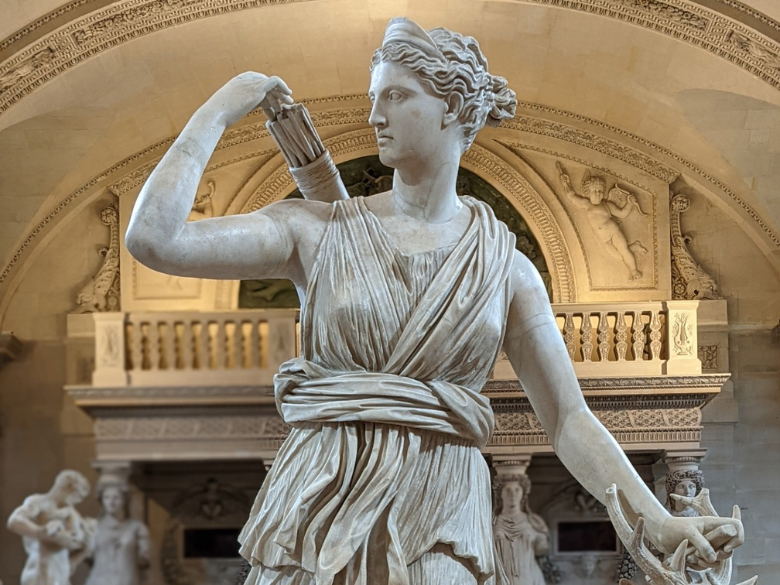
Diana of Versailles. Wikimedia
The Journey as Rite of Passage
In ancient Greece, Artemis presided over rites of passage — especially those marking the transition from childhood to adulthood. She guided initiates through the liminal space between who they were and who they were becoming. Artemis II is, symbolically, humanity’s rite of passage.
It is the test before the deeper mystery. The threshold before the descent. The moment of preparation before the true initiation of Artemis III, when humans will once again set foot on the lunar surface.
In many Pagan traditions, initiation is not about mastery, it is about readiness. It is the moment when you step forward and say, “I am willing to learn. I am willing to grow. I am willing to face the unknown.” Artemis II carries that energy. It is the willingness to return to the Moon not with the swagger of conquest, but with the humility of a seeker.
Myth as a Living Force in Modern Exploration
NASA could have named this program anything. They chose Artemis. And in doing so, they acknowledged something profound: myth still shapes us. Myth still inspires us. Myth still gives us language for the things that are too big, too beautiful, or too mysterious for ordinary words.
For Pagans, this is not surprising. We know that myth is not a relic — it is a living current. It evolves as we evolve. It adapts to new landscapes, new technologies, new dreams. Artemis II is a perfect example of how ancient stories continue to guide modern endeavors. The goddess of the Moon now lends her name to spacecraft, astronauts, and the collective imagination of a species reaching once more toward the stars.
Myth is not behind us. It is beside us.
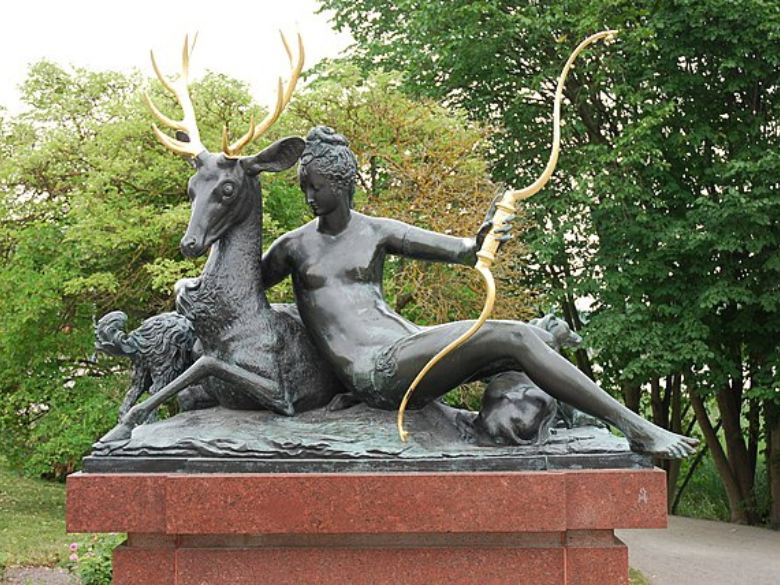
Diana with a Stag by Jean Goujon c. 1549 in Nobelparken in Stockholm, Sweden. Wikimedia
A Goddess at the Edge of the Future
As Artemis II prepares to return to earth, I find myself thinking about the goddess herself — the huntress standing at the forest’s edge, bow in hand, eyes bright with moonlight. She is not a figure of the past. She is a guide for the future. Artemis teaches us to move with intention. To honor the wild. To embrace liminality. To balance intuition with reason. To return, again and again, to what is sacred.
Humanity is stepping once more into the lunar light. And whether we name her or not, Artemis walks with us, protecting us but also protecting the Mysteries of the cosmos.
Technology and Religion
Previous Post

March 8, 2026
What Happens to Pagans When We Die?
Next Post
April 23, 2026 The Dark Goddesses and Why They’re Rising Now
Browse Our Archives
Select a Category Dark Goddess Divination Divine Masculine Just for Fun Sabbats Spells Tarot Teaching Thoughts Uncategorized
Select a Month October 2026 August 2026 July 2026 June 2026 May 2026 April 2026 March 2026 February 2026 January 2026 December 2025 November 2025 October 2025 September 2025 August 2025 July 2025 June 2025 May 2025 April 2025 March 2025 February 2025 January 2025 December 2024 November 2024 October 2024 September 2024 August 2024 July 2024 June 2024 May 2024 April 2024 March 2024 February 2024 January 2024 December 2023 November 2023 October 2023 September 2023
Follow Us!
TAKE THE
Religious Wisdom Quiz
What does the Hebrew word 'Adonai' mean?
Select your answer to see how you score.
Savior Holy One Messiah Lord/Master
Related posts from Light Your Path

The Ethics of Magical Reciprocity in Modern Life
Zeus's Law, The Odyssey and Modern Politics

The Solar Feminine, the Mirror, and the Path...
Our Ancestors Can Help Us Through This
TRENDING AT PATHEOS Pagan

Top Three Anti-Catholic Lies About Catholicism
This is my initial transcript for the video, "THE 3 WORST...

Pope Leo Celebrates Mass for Nurses & Docs...
I don't have any idea how he did it, but Pope Leo...

The Sermon on the Mount, Part I: Matthew...
The Sermon on the Mount, Part I (Matthew 4:12-5:12) St. Matthew moves...

What's up from Crossway: Reviewing some of their latest A few weeks...

Janie Learns the Way of the Cross: A...
Teaching children about Jesus' Passion can be challenging. Many parents and educators...

Looking For Good Catholic Writing - October 2026
He alone extends the heavens, and he walks upon the waves of...
view all Pagan blogs
Ad-Free & Subscriber Log-In Subscription Support
- About Us
- 2026 Calendar
- Videos
- Podcasts
- Library of World Religions
- Faith In Media Tracker
- Advertise With Us
- Write for Us
- Privacy Policy
- Terms of Service
- Do Not Sell My Data
- Contact Us
- Radiant Digital
- Manage Newsletter Subscriptions
- Unsubscribe From Notifications
- Sitemap
Copyright 2008-2026, Patheos. All rights reserved.
Subscription Support Ad-Free & Subscriber Log-In
Follow Patheos