
BuddhistCatholicContemplativeEvangelicalGeneral ChristianHinduJewishLatter-day SaintMuslimNew VisionsProgressive Christian
Beliefs
- Buddhist
- Catholic
- Contemplative
- Evangelical
- General Christian
- Hindu
- Jewish
- Latter-day Saint
- More Voices
- Muslim
- New Visions
- Pagan
- Progressive Christian
Topics
- Religion News
- Food and Religion
- Sports and Religion
- Religious Art
- Religious Music and Entertainment
- Religious Events
- History and Religion
- Style and Religion
- Politics and Religion
- Women in Religion
- Recreation Outdoors and Religion
- Business Finance and Religion
- Careers Workplace and Religion
- Education and Religion
- Family Parenting and Religion
- Health Fitness and Religion
- Home and Religion
- Relationships and Religion
- Technology and Religion
- Travel and Religion
Columnists
- Buddhist Columnists
- Business Finance and Religion Columnists
- Careers Workplace and Religion Columnists
- Catholic Columnists
- Contemplative Columnists
- Education and Religion Columnists
- Evangelists Columnists
- Family Parenting and Religion Columnists
- General Christian Columnists
- Health Fitness and Religion Columnists
- Hindu Columnists
- History and Religion Columnists
- Home and Religion Columnists
- Jewish Columnists
- More Voices Columnists
- Latter Day Columnists
- Muslim Columnists
- New Visions Columnists
- Nonreligious Columnists
- Pagan Columnists
- Politics and Religion Columnists
- Progressive Columnists
- Recreation Outdoors and Religion Columnists
- Relationships and Religion Columnists
- Religion News Columnists
- Religious Art Columnists
- Religious Events Columnists
- Religious Music and Entertainment Columnists
- Sports and Religion Columnists
- Style and Religion Columnists
- Technology and Religion Columnists
- Travel and Religion Columnists
- Women in Religion Columnists
Resource Library
- 2026 Calendar
- Library of World Religions
- The 100 Most Holy Places on Earth
- Patheos Answers
- Podcasts
- Videos
- Faith Leaders Database
- Anglican Episcopalian
- Bahai
- Baptist
- Buddhism
- Christianity
- Confucianism
- Eastern Orthodoxy
- Hinduism
- Holiness and Pentecostal
- ISKCON
- Islam
- Judaism
- Lutheran
- Methodist
- The Church of Jesus Christ of Latter-day Saints
- New Age
- Paganism
- Presbytarian and Reformed
- Protestantism
- Religion Behind the Scenes
- Roman Catholic
- Scientology
- Shia Islam
- Sikhism
- Sufism
- Sunni Islam
- Taoism
- Zen
- See all religions
Research Tools
 Ad-Free & Subscriber Log-In Subscription Support
Ad-Free & Subscriber Log-In Subscription Support
Follow Patheos 

- Trending:
- Forgiveness
- |
- Marriage
- |
- Consciousness
- |
- Death Penalty
- |
- Election
- |
- Halloween

- Home
- Pagan
- Education and Religion
- A Tour of February’s Lesser Known Pagan Festivals
A Tour of February’s Lesser Known Pagan Festivals
Last updated on: February 9, 2026 at 10:07 am by Rev. Emily Guenther
A Tour of February’s Lesser Known Pagan Festivals 2026-01-31T14:19:11-06:00 Rev. Emily Guenther
Patheos Explore the world's faith through different perspectives on religion and spirituality! Patheos has the views of the prevalent religions and spiritualities of the world.
When February arrives, many modern Pagans immediately think of Imbolc. It’s a beautiful sabbat full of light, hope, and the first whispers of spring. But if we widen our gaze beyond the Wheel of the Year, we discover a landscape rich with other ancient festivals that once shaped this time of year. These celebrations—Roman, Norse, and Anglo‑Saxon—reveal a deeper story about February: a month of thresholds, purification, protection, and preparing the land for the growing season ahead.
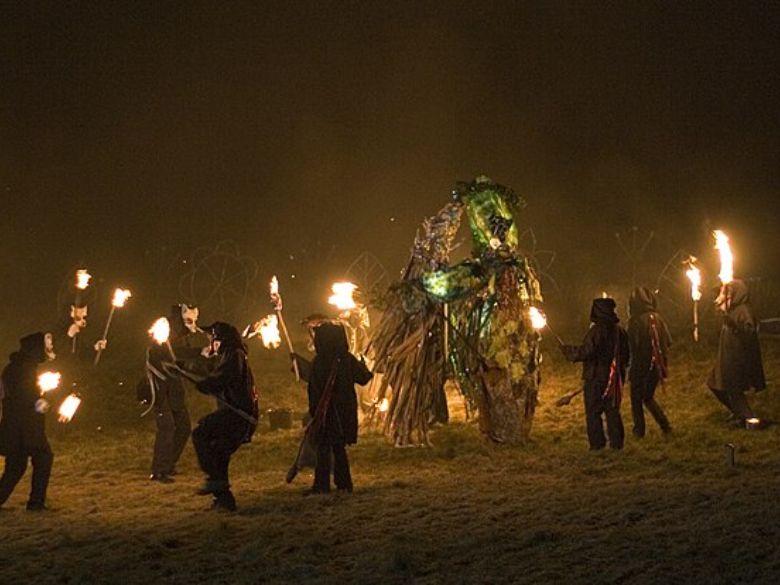
Imbolc celebration in Marsden, West Yorkshire, February 2007 – Wikimedia
Let’s take a walk through three of these lesser‑known festivals: Lupercalia, Dísablót, and Charming of the Plough. Each one offers its own wisdom and magic, and together they paint a vivid picture of how our ancestors navigated the late‑winter season.
Lupercalia: Purification, Fertility, and the Wild Edge of Spring
Celebrated in ancient Rome on February 15, Lupercalia was one of the city’s oldest festivals—older than the empire itself. While modern pop culture often reduces it to a “pagan Valentine’s Day,” the original celebration was far more primal and complex.
Lupercalia honored Faunus (or Lupercus), a rustic god of the wild, shepherds, and fertility. The festival began at the Lupercal cave—mythic birthplace of Romulus and Remus—where priests known as the Luperci performed purification rites. These rituals were meant to cleanse the city, bless the flocks, and encourage fertility in the coming year.
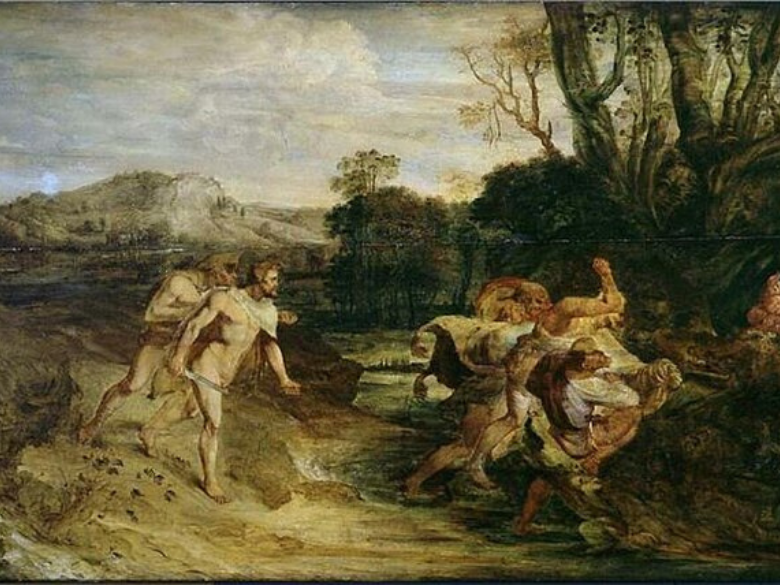
Het ontstaan van de Lupercalia by Peter Paul Reubens – Wikimedia
One of the most famous elements of Lupercalia was the ritual running, where the Luperci dashed through the streets lightly striking bystanders with strips of goat hide. Far from being seen as violent, these touches were believed to bring luck, ease childbirth, and promote conception.
At its heart, Lupercalia was about clearing away the stagnant energy of winter and awakening the life force that would soon surge through the land. It carried themes of purification, fertility, protection of livestock and the renewal of vitality.
For modern practitioners, Lupercalia can inspire rituals of cleansing, self‑renewal, and reconnecting with the body after the long stillness of winter. It invites us to shake off the heaviness of the cold months and welcome the wild, rising energy of early spring.
Dísablót: Honoring the Disir and Seeking Protection
Traveling northward, we find a very different February festival: Dísablót, a Norse celebration dedicated to the dísir—powerful female ancestral spirits and protective beings. While the exact timing varied by region, many sources place Dísablót in late winter, often around February.
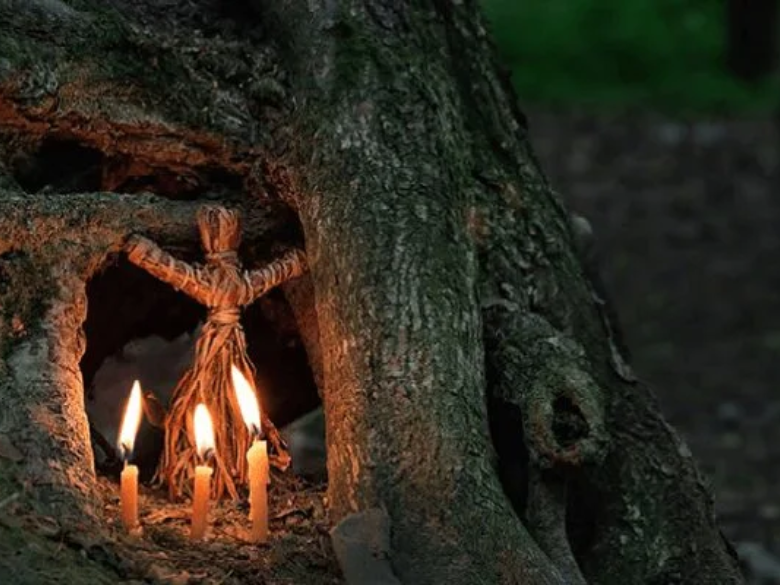
Disablòt photo courtesy of Asgard Alaska Inc
The dísir were seen as guardians of families, clans, and communities. They were not distant deities but intimate presences—ancestral mothers, foremothers, and feminine spirits who watched over the living. Dísablót was a time to honor them, seek their guidance, and ask for protection during the harshest stretch of winter.
In some regions, Dísablót coincided with the Disting, a public assembly and market held in Uppsala, Sweden. This blending of sacred and communal life reflects how deeply the dísir were woven into everyday existence.
Themes of Dísablót include ancestor veneration, protection during winter’s dangers, blessings for the household and strengthening community bonds.
For modern Norse‑inspired practitioners, Dísablót offers a beautiful opportunity to connect with ancestors—especially the women who shaped our lineages. It’s a time to light candles for them, offer food or drink, and ask for their wisdom as we navigate our own thresholds. In a season when the world still feels cold and uncertain, Dísablót reminds us that we are never alone. We walk with those who came before us.
Charming of the Plough: Blessing the Land Before Spring
Our final stop brings us to the Anglo‑Saxon tradition of Charming of the Plough, typically celebrated in early February. This festival marked the moment when the agricultural year began—not with planting, but with preparing the tools that would break the soil.
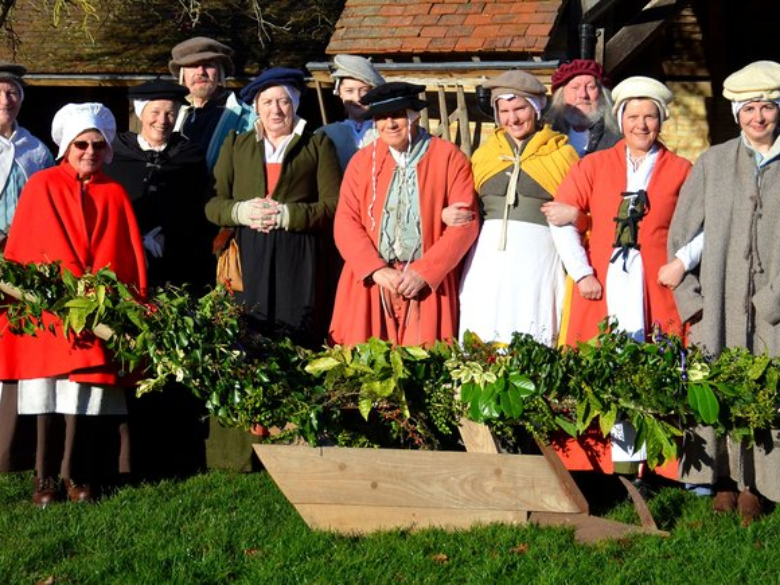
Charming of the Plough – photo courtesy of Shakespeare Birthplace Trust
Before the first furrow was cut, farmers would bless their ploughs, oxen, and fields. Offerings of bread, ale, or milk were sometimes left on the land to encourage fertility and ensure a prosperous growing season. In some regions, people decorated their tools or carried them in procession, celebrating the return of work and the promise of abundance.
Charming of the Plough centers on blessing the land, honoring agricultural spirits, preparing for the work of spring and inviting prosperity and growth. For modern Pagans, this festival resonates beautifully with intention‑setting. It’s a time to bless our tools—literal or metaphorical—and prepare ourselves for the projects and dreams we hope to cultivate in the coming months. It’s a reminder that growth begins long before the first seed is planted.
A Season of Thresholds and Preparation
When we look at Lupercalia, Dísablót, and Charming of the Plough together, a pattern emerges. February, across cultures, was never just about waiting for spring, it was about preparing for it.
All of these festivals share themes of purification and renewal, protection and ancestral support, blessing the land and tools of survival and honoring the forces that sustain life.
They show us that February is a month of thresholds. Winter is loosening its grip, spring not yet arrived, but communities doing the spiritual and practical work needed to bridge the gap. For modern practitioners, exploring these festivals can enrich our understanding of the season. They invite us to cleanse, honor, bless, and prepare—to step into spring not passively, but with intention and connection.
February holds far more magic than we often realize. All we have to do is look beyond the familiar and let the old stories guide us forward.
Previous Post

January 21, 2026
Welcome to The Year of the Fire Horse
Next Post
February 22, 2026 Honoring the Final Days of Winter
Browse Our Archives
Select a Category Dark Goddess Divination Divine Masculine Just for Fun Sabbats Spells Tarot Teaching Thoughts Uncategorized
Select a Month October 2026 August 2026 July 2026 June 2026 May 2026 April 2026 March 2026 February 2026 January 2026 December 2025 November 2025 October 2025 September 2025 August 2025 July 2025 June 2025 May 2025 April 2025 March 2025 February 2025 January 2025 December 2024 November 2024 October 2024 September 2024 August 2024 July 2024 June 2024 May 2024 April 2024 March 2024 February 2024 January 2024 December 2023 November 2023 October 2023 September 2023
Follow Us!
TAKE THE
Religious Wisdom Quiz
Which Christian denomination places great emphasis on "justification by faith alone"?
Select your answer to see how you score.
Orthodox Catholics Methodists Lutherans
Related posts from Light Your Path
Full Circle for 2026: The Wheel and the...
TRENDING AT PATHEOS Pagan

In one sense walking into Westminster Abbey is like walking down the...

'Super Scam Me' Exposes AI Jon Bon Jovi...
Leslie Pickett believed she was in a relationship with Jon Bon Jovi....

The Brazilian Remake of Kendricks' 'Flywheel' Opens in...
“Flywheel,” the story that launched the Kendrick Brothers’ filmmaking career is getting...

The Dangers of Gradual Accommodation (Winking at Sin)
Recently, the “law of gradualness” resurfaced during the opening of a weeklong,...

The Iron Gates and the Lion of the...
Yesterday, I didn't finish my report about, well, yesterday. So I'll...

The Image: On the Horror of Capitalism and...
The Image Then went the Pharisees, and took counsel how they might...
view all Pagan blogs
Ad-Free & Subscriber Log-In Subscription Support
- About Us
- 2026 Calendar
- Videos
- Podcasts
- Library of World Religions
- Faith In Media Tracker
- Advertise With Us
- Write for Us
- Privacy Policy
- Terms of Service
- Do Not Sell My Data
- Contact Us
- Radiant Digital
- Manage Newsletter Subscriptions
- Unsubscribe From Notifications
- Sitemap
Copyright 2008-2026, Patheos. All rights reserved.
Subscription Support Ad-Free & Subscriber Log-In
Follow Patheos