
BuddhistCatholicContemplativeEvangelicalGeneral ChristianHinduJewishLatter-day SaintMuslimNew VisionsProgressive Christian
Beliefs
- Buddhist
- Catholic
- Contemplative
- Evangelical
- General Christian
- Hindu
- Jewish
- Latter-day Saint
- More Voices
- Muslim
- New Visions
- Pagan
- Progressive Christian
Topics
- Religion News
- Food and Religion
- Sports and Religion
- Religious Art
- Religious Music and Entertainment
- Religious Events
- History and Religion
- Style and Religion
- Politics and Religion
- Women in Religion
- Recreation Outdoors and Religion
- Business Finance and Religion
- Careers Workplace and Religion
- Education and Religion
- Family Parenting and Religion
- Health Fitness and Religion
- Home and Religion
- Relationships and Religion
- Technology and Religion
- Travel and Religion
Columnists
- Buddhist Columnists
- Business Finance and Religion Columnists
- Careers Workplace and Religion Columnists
- Catholic Columnists
- Contemplative Columnists
- Education and Religion Columnists
- Evangelists Columnists
- Family Parenting and Religion Columnists
- General Christian Columnists
- Health Fitness and Religion Columnists
- Hindu Columnists
- History and Religion Columnists
- Home and Religion Columnists
- Jewish Columnists
- More Voices Columnists
- Latter Day Columnists
- Muslim Columnists
- New Visions Columnists
- Nonreligious Columnists
- Pagan Columnists
- Politics and Religion Columnists
- Progressive Columnists
- Recreation Outdoors and Religion Columnists
- Relationships and Religion Columnists
- Religion News Columnists
- Religious Art Columnists
- Religious Events Columnists
- Religious Music and Entertainment Columnists
- Sports and Religion Columnists
- Style and Religion Columnists
- Technology and Religion Columnists
- Travel and Religion Columnists
- Women in Religion Columnists
Resource Library
- 2026 Calendar
- Library of World Religions
- The 100 Most Holy Places on Earth
- Patheos Answers
- Podcasts
- Videos
- Faith Leaders Database
- Anglican Episcopalian
- Bahai
- Baptist
- Buddhism
- Christianity
- Confucianism
- Eastern Orthodoxy
- Hinduism
- Holiness and Pentecostal
- ISKCON
- Islam
- Judaism
- Lutheran
- Methodist
- The Church of Jesus Christ of Latter-day Saints
- New Age
- Paganism
- Presbytarian and Reformed
- Protestantism
- Religion Behind the Scenes
- Roman Catholic
- Scientology
- Shia Islam
- Sikhism
- Sufism
- Sunni Islam
- Taoism
- Zen
- See all religions
Research Tools
 Ad-Free & Subscriber Log-In Subscription Support
Ad-Free & Subscriber Log-In Subscription Support
Follow Patheos 

- Trending:
- Forgiveness
- |
- Marriage
- |
- Consciousness
- |
- Death Penalty
- |
- Election
- |
- Halloween

- Home
- Pagan
- Education and Religion
- Goddess Archetypes in Our Lives
Goddess Archetypes in Our Lives
Last updated on: July 11, 2024 at 2:19 pm by Rev. Emily Guenther
Goddess Archetypes in Our Lives 2024-07-11T14:19:52-05:00 Rev. Emily Guenther
Patheos Explore the world's faith through different perspectives on religion and spirituality! Patheos has the views of the prevalent religions and spiritualities of the world.
A few months ago I wrote about goddess archetypes in two different blog posts. One post was The Dark Goddess Archetype and the other was Who is the Goddess? Many writers of fiction will tell you that sometimes the stories write themselves, regardless of the author’s plans. I think this can be said of many other types of writers, myself included. The Who is the Goddess blog was supposed to go in a different direction and also have a second part. But I am just now sitting down to write the second part of that blog.
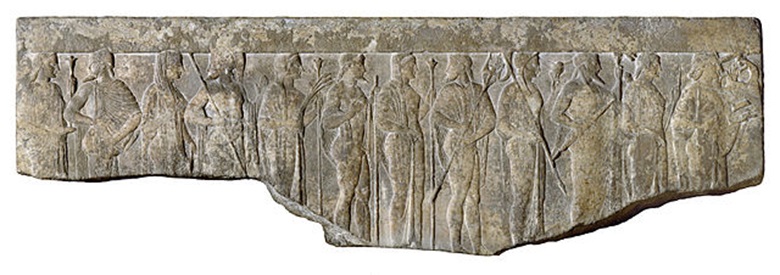
Procession of Twelve Gods and Goddesses – Wikimedia
No one blog post can encompass the depth and magnitude of The Goddess (or The God and many other religious and spiritual beliefs). And sometimes these large ideas can be hard to define and sometimes hard to comprehend. Doing my research for my workshops, presentations and blogs reminded me that specific examples can help us better understand some of these concepts.
She is Everyone
Before reading any farther, I want to clarify my use of the pronouns she. If you are a reader of this blog, I have talked often lately about everyone having Divine Masculine and Divine Feminine energy in us, regardless of gender identity or sexual preference. Because I am talking about Divine Feminine archetypes using specific goddesses, I often use the pronoun she. However, if you do not identify with “she,” I am still talking to you. We all have these archetypes within us. Soon I will do a post about the Divine Masculine archetypes and show how we all have those within us too.
Archetypes in Psychology
Some people and a few internet memes joke that Pagan spirituality (and all spirituality for that matter) is more like spicy psychology than religion. Psychology does play a large part in all religious beliefs. This brought me back to Carl Jung, the father of analytical psychology. Jung created archetypes of the feminine based on Greek goddesses.
Carl Jung believed that Greek gods and goddesses could represent archetypes, or basic patterns in the human psyche, that are common to all people and independent of personal experience. Jung believed that myths are expressions of the collective unconscious, and that the core ideas and figures in mythology reflect universal truths about the human experience. Perhaps using these archetypes can help us understand the breadth of The Goddess.
Hera- the Queen of Heaven, the Matriarch
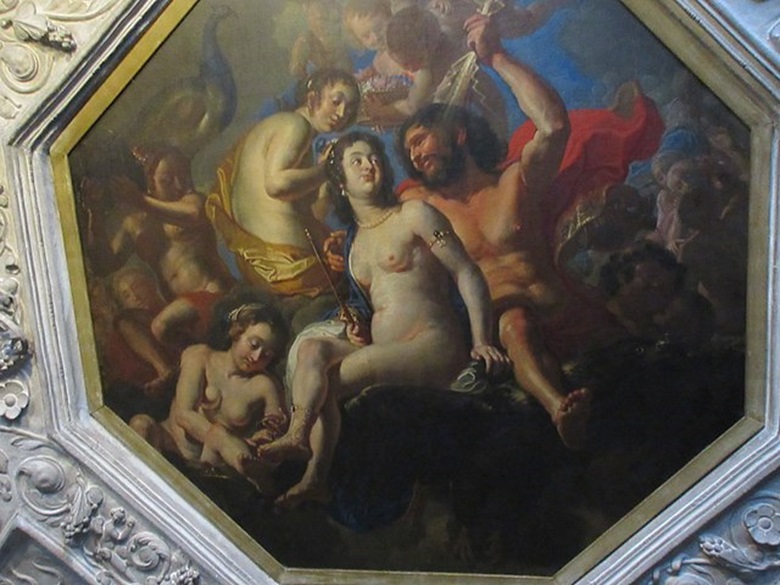
Painting of Hera and Zeus on Olympus – Wikimedia
Power is Hera’s power word. Hera is a queen, a ruler, and she has her own power. She is a believer in tradition. The Hera archetype likely forms relationships and bonds that will be beneficial to her in some way. Hera’s vulnerabilities lie in the fact that this archetype is likely to find validation and fulfillment from relationships and not through her own self. In some mythology, Hera is thought to be manipulative as well.
Athena- the Giver of Wisdom and Goddess of Civilization

Statue of Athena – Pixabay
Civilization is Athena’s power word. Athena is a strategist. She is organized and she is rational. Athena pursues professional achievement and success with determination. The archetype Athena is the motivational energy that guides the personality of a woman to establish relationships of brotherhood, alliance and mutual esteem with people whose success and intellectual qualities she admires.
However, because Athena is so focused, she can experience detachment from the needs and pleasures of her own body. She may also have issues reconciling the fact that she did not choose motherhood and may be confused about who she wants to be, regardless of whether or not she has children.
Aphrodite- the Goddess of Love and the Arts
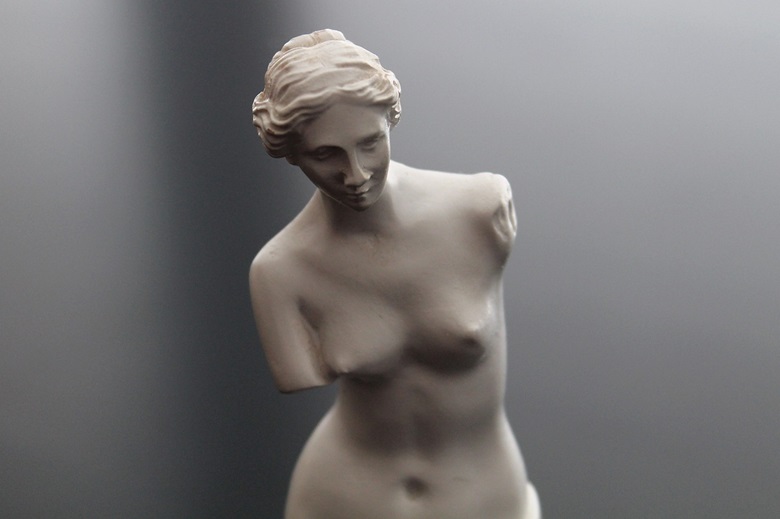
Statue of Aphrodite – Pixabay
Passion is Aphrodite’s power word. Some define Aphrodite as the “alchemical” goddess, the one who presides over falling in love, creative passion, and love for beauty. The Aphrodite woman lives in the immediate present, in the here and now of the experience of the senses and the idealized ecstasy of passion. She does this without worrying about the future consequences. Many women who connect with the Aphrodite archetype can be engaged in artistic and expressive fields such as dance, music, painting, theater or other creative endeavors. All of these activities demand that they be lived with an intense and passionate involvement in the here and now. Much like the passion that comes in the realm of relationships. In both cases the Aphrodite woman exerts a “special” charm on others. She is charismatic and engaging. We are attracted to her because living in the here and now feels authentic and freeing.
But the sensory and “immediate” nature of the archetype Aphrodite can lead a woman to bind herself to unhappy and destructive situations where she remains unreasonably in love with someone who devalues or rejects her. She continues to beg for “crumbs” of what is a one way passion. The Aphrodite archetype can also experience the fall out of her choices.
Persephone- the Queen of Spirit, Death and Healing

Statue of Persephone – Wikimedia
Intuition is Persephone’s power word. Persephone is an archetype of the female with a double meaning. It refers to both a solar, “young” and uncontaminated aspect of the psyche, and a “dark” aspect linked to the depths of the unconscious. The woman who is in contact with this archetype can transit towards one polarity or the other. One is to risk remaining an eternal girl. The other is to get lost in the madness. A fully matured Persephone can ideally combine both of these aspects.
A Persephone woman possesses strong intuitive skills that allow her to access the depth of her own psyche. Women with this archetype may be elusive, difficult to define, or inconspicuous because she does not express her own personality. Rather she tries to be as the other wants her to be. Persephone as a girl is therefore the archetype of the complacent girl. Someone who is unaware of the power of her seductiveness. She may be lost and confused as to what to do with herself and her life, making her unable to really engage in anything. This Persephone will perpetually wait for something or someone to define the course of her life for her.
In the myth, however, Persephone did not return from the underworld in the same conditions in which she left. She decided to eat pomegranate seeds and thus remain the bride of Hades and queen of his kingdom. The Persephone who returns from the realm of the dead is no longer a passive and unaware victim of events. She is now one who has crossed the depths of her own psyche and who has gained an inner wisdom that allows her to govern that world and help others to cross it.
Early and traumatic losses suffered in childhood or transitory mourning periods of adulthood can activate, permanently or temporarily, the archetypal Persephone in the psyche of a woman who will experience a retreat from the external world by taking refuge in her own interior.
Demeter- Goddess of Fertility, Childbirth and the Mother of all
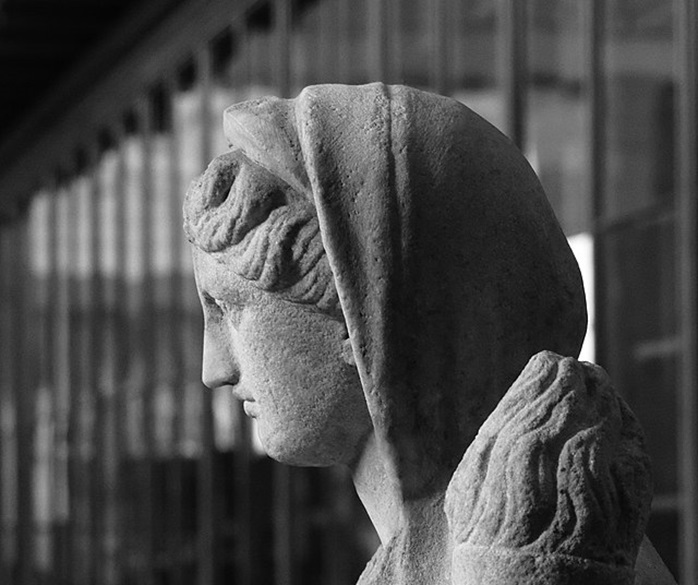
Statue of Demeter – Wikimedia
Motherhood is Demeter’s power word. Being a mother, feeding others materially or spiritually are all characteristics of Demeter’s archetype. Like all archetypes, the Demeter archetype can show up at any point in one’s life and does not have anything to do with that person’s ability or desire to have children. The Demeter archetype is about nurturing and caring for loved ones and those around us. This happens in many ways and we are all capable of channeling this energy.
Demeter, as goddess of crops and motherhood, represents the female archetype connected to pregnancy, care and nourishment for children. In a broad sense, this archetype refers to that energy of the woman’s psyche that comes into play in every area in which she expresses her personal fulfillment through the care of others by bringing them nourishment, be it physical, emotional or spiritual.
The Demeter archetype is known to put so much time and attention and so much of their own fulfillment into those they care for, that if the person they care for leaves, or dies, they may fall into despair and become depressed.
Artemis- Goddess of Nature
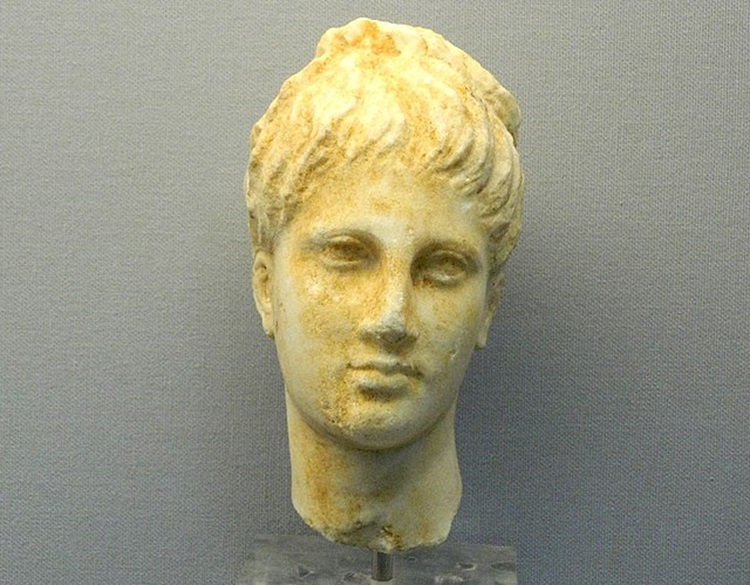
Statue of Artemis – Wikimedia
Sovereignty is Artemis’s power word. Artemis is the female archetype that guides people in cultivating their personal fulfillment and self-sufficiency. She pursues with idealism and determination the causes in which she believes. The Artemis archetype can be invested in many things, but true to the goddess, oftentimes these causes revolve around women’s and minorities’ rights. Her energy may be truly capable of “climbing the mountains” and making a difference.
The Artemis archetype refers to all those aspects of self-sufficiency and autonomy that allows a person to cultivate their femininity as a value in itself, regardless of their relationship with anyone. This archetypal energy refers to the wildest nature of the feminine. It is the feminine archetype that guides a person in their personal fulfillment, in being able to feel good alone with themselves and in being able to have interest in the fields that they choose.
Blind anger and competitiveness can prove to be two destructive aspects of the Artemis archetype. A person in whom this archetype dominates too much can inadvertently make others suffer, even those they care about. She can be ruthless in making judgments. She is likely to see everything as either good or bad. This rigidness can make her unable to forgive the mistakes of others, to contemplate nuances in the intentions of others or to feel empathy. This can be accompanied by unbridled competitiveness and a substantial contempt for vulnerability. An Artemis archetype may scare off a relationship with someone she loves by constantly rejecting and debilitating every manifestation of their love and affection.
The Archetypes Live in Us
As you can see, these archetypes involve not only the things we love about these goddesses but also their darker aspects. As they should. We know from our myths that our gods are not perfect. They have their personal issues and hang-ups. They have their feuds, likes and dislikes just like humans do. And we humans also have the nicer, brighter aspects of our personalities as well as the darker ones.
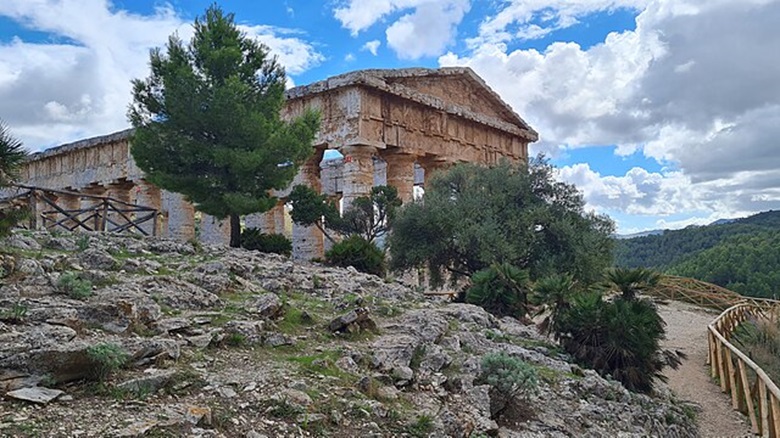
Greek Temple – Wikimedia
Our gods are not one dimensional stories and we are not one dimensional beings either. It is likely that you identify with more than one of these archetypes. You may see different aspects of yourself at different parts of your life in these categorizations. And as we grow, we will cycle through some of these phases. It is likely you will come back to being one, or more, of these archetypes many times in your life.
While these feminine archetypes can be guard rails for our lives, they do not make up it’s entirety. We are all multifaceted and it is hard to define ourselves, just as it is hard to define The Goddess. So don’t be afraid to embrace your inner Hera for networking, or your inner Persephone on your spiritual path. And don’t panic if you see some of your shadow in their negative aspects. This just means you have an opportunity to change and grow into the Divinity that you are.
Previous Post

June 13, 2024
Paganism is for Men Too
Next Post

July 28, 2024 I'm Pagan and I Vote
Browse Our Archives
Select a Category Dark Goddess Divination Divine Masculine Just for Fun Sabbats Spells Tarot Teaching Thoughts Uncategorized
Select a Month October 2026 August 2026 July 2026 June 2026 May 2026 April 2026 March 2026 February 2026 January 2026 December 2025 November 2025 October 2025 September 2025 August 2025 July 2025 June 2025 May 2025 April 2025 March 2025 February 2025 January 2025 December 2024 November 2024 October 2024 September 2024 August 2024 July 2024 June 2024 May 2024 April 2024 March 2024 February 2024 January 2024 December 2023 November 2023 October 2023 September 2023
Follow Us!
TAKE THE
Religious Wisdom Quiz
What is the term for a Christian song of praise or worship?
Select your answer to see how you score.
Psalm Hymn Sonnet Chant
Related posts from Light Your Path


A Tour of February's Lesser Known Pagan Festivals
Full Circle for 2026: The Wheel and the...
TRENDING AT PATHEOS Pagan

Letters on Living the Faith by C.S. Lewis
Most of us met C.S. Lewis as a public intellectual. Mere Christianity....

When Halloween Unmasks Married Hearts
Written by Dr. David K. Ewen from Eternal Truth Bible College Behind...

Aristotle. He’s been called the father of logic, the father of the...

Methodist Central Hall and Westminster Abbey
Situated on the same square is Methodist Central Hall and Westminster Abbey. ...

57th Dove Awards Honor Dolly Parton, Crown New...
On gospel music’s biggest night, the 57th annual GMA Dove Awards honored...

The First Eucharistic Controversy: Christ’s Real Presence
For Catholics, the Eucharist is the source and summit of the Christian...
view all Pagan blogs
Ad-Free & Subscriber Log-In Subscription Support
- About Us
- 2026 Calendar
- Videos
- Podcasts
- Library of World Religions
- Faith In Media Tracker
- Advertise With Us
- Write for Us
- Privacy Policy
- Terms of Service
- Do Not Sell My Data
- Contact Us
- Radiant Digital
- Manage Newsletter Subscriptions
- Unsubscribe From Notifications
- Sitemap
Copyright 2008-2026, Patheos. All rights reserved.
Subscription Support Ad-Free & Subscriber Log-In
Follow Patheos