
BuddhistCatholicContemplativeEvangelicalGeneral ChristianHinduJewishLatter-day SaintMuslimNew VisionsProgressive Christian
Beliefs
- Buddhist
- Catholic
- Contemplative
- Evangelical
- General Christian
- Hindu
- Jewish
- Latter-day Saint
- More Voices
- Muslim
- New Visions
- Pagan
- Progressive Christian
Topics
- Religion News
- Food and Religion
- Sports and Religion
- Religious Art
- Religious Music and Entertainment
- Religious Events
- History and Religion
- Style and Religion
- Politics and Religion
- Women in Religion
- Recreation Outdoors and Religion
- Business Finance and Religion
- Careers Workplace and Religion
- Education and Religion
- Family Parenting and Religion
- Health Fitness and Religion
- Home and Religion
- Relationships and Religion
- Technology and Religion
- Travel and Religion
Columnists
- Buddhist Columnists
- Business Finance and Religion Columnists
- Careers Workplace and Religion Columnists
- Catholic Columnists
- Contemplative Columnists
- Education and Religion Columnists
- Evangelists Columnists
- Family Parenting and Religion Columnists
- General Christian Columnists
- Health Fitness and Religion Columnists
- Hindu Columnists
- History and Religion Columnists
- Home and Religion Columnists
- Jewish Columnists
- More Voices Columnists
- Latter Day Columnists
- Muslim Columnists
- New Visions Columnists
- Nonreligious Columnists
- Pagan Columnists
- Politics and Religion Columnists
- Progressive Columnists
- Recreation Outdoors and Religion Columnists
- Relationships and Religion Columnists
- Religion News Columnists
- Religious Art Columnists
- Religious Events Columnists
- Religious Music and Entertainment Columnists
- Sports and Religion Columnists
- Style and Religion Columnists
- Technology and Religion Columnists
- Travel and Religion Columnists
- Women in Religion Columnists
Resource Library
- 2026 Calendar
- Library of World Religions
- The 100 Most Holy Places on Earth
- Patheos Answers
- Podcasts
- Videos
- Faith Leaders Database
- Anglican Episcopalian
- Bahai
- Baptist
- Buddhism
- Christianity
- Confucianism
- Eastern Orthodoxy
- Hinduism
- Holiness and Pentecostal
- ISKCON
- Islam
- Judaism
- Lutheran
- Methodist
- The Church of Jesus Christ of Latter-day Saints
- New Age
- Paganism
- Presbytarian and Reformed
- Protestantism
- Religion Behind the Scenes
- Roman Catholic
- Scientology
- Shia Islam
- Sikhism
- Sufism
- Sunni Islam
- Taoism
- Zen
- See all religions
Research Tools
 Ad-Free & Subscriber Log-In Subscription Support
Ad-Free & Subscriber Log-In Subscription Support
Follow Patheos 

- Trending:
- Forgiveness
- |
- Marriage
- |
- Consciousness
- |
- Death Penalty
- |
- Election
- |
- Halloween

- Home
- Catholic
- A Bum with No Connections
A Bum with No Connections
Last updated on: June 30, 2026 at 6:43 pm by Edwin Woodruff Tait
A Bum with No Connections 2026-06-30T18:43:43-05:00 Edwin Woodruff Tait
Patheos Explore the world's faith through different perspectives on religion and spirituality! Patheos has the views of the prevalent religions and spiritualities of the world.
Slaughter-House Five
This past Good Friday I did not intend to work as a substitute teacher, as I often do. I had two church services in the evening and many other things I was behind on, as usual. And, of course, ideally one would spend Good Friday in prayer and contemplation, not work anyway. But a little after 11 I got a call that they needed someone to sub for the person who usually oversees detention. That seemed important so I got on my bike and headed over to the school. For the second time recently, they had put someone else on the job by the time I got there. So, instead, I wound up subbing for half a day for a teacher whose job it was to co-teach with other teachers. And so I found myself in an English class that was just starting Kurt Vonnegut’s Slaughter-House Five.
This is one of the many books I’ve meant to read for a long time but haven’t got around to. I did read Vonnegut’s first novel, Player Piano, years ago in college, which is a rather unusual first Vonnegut novel to read. (It was an independent study and my professor was constrained by my family’s objections to novels with sex in them, which may explain the choice.) So naturally I started reading the book right there, during the class. I finished it next day, a day I had hoped to get some of those many other things done (including writing a blog post). Which, of course, was Holy Saturday.
The well-connected victim?
Slaughter-House Five is actually a great novel to read during the Triduum. At least it was this year, with a mad President threatening genocide and a host of righteous Christians cheering him on because the prospective victims were Muslims who have had the effrontery to oppose us for decades. The novel’s subject is the horrific fire-bombing of Dresden, one of the greatest Allied atrocities of WWII. (To be fair, Vonnegut’s figures for the casualties do seem to have been inflated–it was not, as he claimed, a greater slaughter than Hiroshima. But it was bad enough and if anything even less justifiable in terms of any legitimate military purpose.)
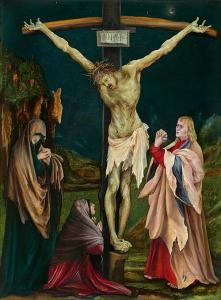
Around this historical tragedy, Vonnegut creates an absurdist sci-fi narrative involving time travel and alien abduction. The story includes a fictional sci-fi writer, Kilgore Trout, whose novels help the protagonist make sense of his own experiences. One of these novels includes an alien criticism of Christianity. According to the alien, Christians “find it so easy to be cruel” because the lesson we take from the crucifixion story is that the people who crucified Jesus “picked the wrong guy to lynch.” People “less well connected” are legitimate victims. The alien writes an alternative Gospel in which Jesus “really was a nobody,” and at the moment of his death God adopts Jesus as his son and announced that “from this moment on, he will punish horribly anyone who torments a bum with no connections.”
A brief lapse into apologetics
If I wanted to go into apologetics mode I could argue, against Vonnegut, that this is actually what the Gospels as we have them say. After all, Jesus explicitly says in Matthew 25 that how we treat the poor and wretched is how we are treating him. In fact, this is one of only three passages in the NT (and one of only two in the Gospels) where the phrase “eternal fire” or “everlasting fire” is used. And the other Gospel passage using the phrase (Matthew, 18:8) is, in context, also about how we treat the “little ones.”
Historically, a good case can be made that the cruelty of Christians is pretty similar to the cruelty of humans in general, and that the main effect of the story of Jesus is to introduce a new (or at least a much more powerful) impulse to identify with victims of oppression and persecution. (I’m currently reading Tom Holland’s Dominion, which does make that argument, while also recognizing the persecution and violence that has been inspired by Christianity.)
Icons of Jesus
But Vonnegut, or Kilgore Trout, or the alien in Kilgore Trout’s nonexistent novel, has a point. Even if it were true that Christians haven’t been any worse than anyone else, and have sometimes been quite a bit better, it would still be worth asking how people who worship a victim of persecution have been persecutors so often themselves. And essentially it does seem to boil down to the idea that Jesus’ “connections” matter. Christians in the Middle Ages committed atrocities against Jews because they saw Jews as the killers of Jesus. Instead of seeing Jews as victims, icons of Jesus, they saw them as the evil people who had killed someone “well connected” and thus deserved punishment.
Vonnegut, like Tolstoy, thought that Christian beliefs about the divinity of Jesus undercut the power of Jesus’ teachings. I disagree. I think that to claim that a crucified nobody was truly God of God and Light of Light is far more revolutionary than simply saying that he was a guy with a lot of great ideas about how we should treat each other. But there is, no doubt, a certain kind of reverence for Jesus as divine that assimilates him to our existing models of power and authority and sacred awe. And we have defaulted to that over and over again.
Renewing the revolution: Easter in July
The Christian revolution, as Holland calls it, has to be renewed constantly. And sympathetic critics like Vonnegut contribute powerfully to that renewal.
I began this post several months ago, right after reading the book. It was supposed to be an Easter post. And now here we are almost in July. So I suppose we can call this “Easter in July.”
There is never a time when it is not good to be reminded that to be a Christian is to worship a bum with no connections.
Image: Mathis Grunewald, The Small Crucifixion. National Gallery of Art, Washington, DC. Public Domain via Wikimedia Commons.
Previous Post

January 23, 2026
The Order of Love
Next Post
August 5, 2026 Love Ordered and Disordered
Browse Our Archives
Select a Category apologetics Bible Catholicism Christianity economics history Middle Ages personal Reformation Rodney Stark Uncategorized
Select a Month August 2026 June 2026 January 2026 December 2025 October 2025 June 2025 February 2025 December 2024 November 2024 June 2024 May 2024 January 2024 December 2023 April 2023 December 2022 November 2022 September 2022 July 2022 June 2022 April 2022 November 2021 September 2021 March 2021 February 2021 January 2021 December 2020 November 2020 October 2020 August 2020 July 2020 June 2020 May 2020 December 2018 October 2018 June 2018 March 2018 December 2017 November 2017 October 2017 September 2017 May 2017 April 2017 March 2017 February 2017 January 2017 December 2016 November 2016 October 2016 September 2016 August 2016 July 2016 June 2016 May 2016 April 2016 March 2016 January 2016 December 2015 November 2015 September 2015 June 2015 May 2015 April 2015 March 2015 February 2015 January 2015 December 2014 November 2014 October 2014 August 2014 June 2014 March 2014 January 2014 September 2013 August 2013 June 2013 August 2012 July 2012 October 2011 June 2011 March 2011 July 2010 March 2010 January 2008 May 2007 April 2007 February 2007 October 2006 August 2006 March 2006 January 2006 November 2005 October 2005 September 2005 August 2005 June 2005 May 2005 April 2005 March 2005 February 2005 January 2005 December 2004 November 2004 September 2004
Follow Us!
TAKE THE
Religious Wisdom Quiz
What miracle did Elisha perform for a widow?
Select your answer to see how you score.
Multiplied oil Made fire fall Fed 5,000 Raised her son
Related posts from Light in the West

What is "Christian Nationalism"? A Reply to Dennis...



The Dragon's War and the Virgin's Dreams
TRENDING AT PATHEOS Catholic

Rejecting Doom: Christian Hope And Human Action
Christianity is a religion of hope. We are to have hope and...

It’s What Comes From Within Which Matters
One of the most difficult things for us to understand is why...

Why I Choose the Eucharist Over the Sermon
Choose the Eucharist, Not the Sermon What are we supposed to get...

5 Design Elements Found in Spiritually Rooted Homes
Putting Spirituality Into Home Decor Our homes are more than our living...

Credo: A Story of God Told with the...
About 10 years ago, I began to imagine a personal "Credo" that...

The Anatomy of Divine Revelation in Catholic Thought
The claim that God has made Himself known to human beings is...
view all Catholic blogs
Ad-Free & Subscriber Log-In Subscription Support
- About Us
- 2026 Calendar
- Videos
- Podcasts
- Library of World Religions
- Faith In Media Tracker
- Advertise With Us
- Write for Us
- Privacy Policy
- Terms of Service
- Do Not Sell My Data
- Contact Us
- Radiant Digital
- Manage Newsletter Subscriptions
- Unsubscribe From Notifications
- Sitemap
Copyright 2008-2026, Patheos. All rights reserved.
Subscription Support Ad-Free & Subscriber Log-In
Follow Patheos