
BuddhistCatholicContemplativeEvangelicalGeneral ChristianHinduJewishLatter-day SaintMuslimNew VisionsProgressive Christian
Beliefs
- Buddhist
- Catholic
- Contemplative
- Evangelical
- General Christian
- Hindu
- Jewish
- Latter-day Saint
- More Voices
- Muslim
- New Visions
- Pagan
- Progressive Christian
Topics
- Religion News
- Food and Religion
- Sports and Religion
- Religious Art
- Religious Music and Entertainment
- Religious Events
- History and Religion
- Style and Religion
- Politics and Religion
- Women in Religion
- Recreation Outdoors and Religion
- Business Finance and Religion
- Careers Workplace and Religion
- Education and Religion
- Family Parenting and Religion
- Health Fitness and Religion
- Home and Religion
- Relationships and Religion
- Technology and Religion
- Travel and Religion
Columnists
- Buddhist Columnists
- Business Finance and Religion Columnists
- Careers Workplace and Religion Columnists
- Catholic Columnists
- Contemplative Columnists
- Education and Religion Columnists
- Evangelists Columnists
- Family Parenting and Religion Columnists
- General Christian Columnists
- Health Fitness and Religion Columnists
- Hindu Columnists
- History and Religion Columnists
- Home and Religion Columnists
- Jewish Columnists
- More Voices Columnists
- Latter Day Columnists
- Muslim Columnists
- New Visions Columnists
- Nonreligious Columnists
- Pagan Columnists
- Politics and Religion Columnists
- Progressive Columnists
- Recreation Outdoors and Religion Columnists
- Relationships and Religion Columnists
- Religion News Columnists
- Religious Art Columnists
- Religious Events Columnists
- Religious Music and Entertainment Columnists
- Sports and Religion Columnists
- Style and Religion Columnists
- Technology and Religion Columnists
- Travel and Religion Columnists
- Women in Religion Columnists
Resource Library
- 2026 Calendar
- Library of World Religions
- The 100 Most Holy Places on Earth
- Patheos Answers
- Podcasts
- Videos
- Faith Leaders Database
- Anglican Episcopalian
- Bahai
- Baptist
- Buddhism
- Christianity
- Confucianism
- Eastern Orthodoxy
- Hinduism
- Holiness and Pentecostal
- ISKCON
- Islam
- Judaism
- Lutheran
- Methodist
- The Church of Jesus Christ of Latter-day Saints
- New Age
- Paganism
- Presbytarian and Reformed
- Protestantism
- Religion Behind the Scenes
- Roman Catholic
- Scientology
- Shia Islam
- Sikhism
- Sufism
- Sunni Islam
- Taoism
- Zen
- See all religions
Research Tools
 Ad-Free & Subscriber Log-In Subscription Support
Ad-Free & Subscriber Log-In Subscription Support
Follow Patheos 

- Trending:
- Forgiveness
- |
- Marriage
- |
- Consciousness
- |
- Death Penalty
- |
- Election
- |
- Halloween

- Home
- Catholic
- The Weakness of God: A Catholic Response to Tom Oord
The Weakness of God: A Catholic Response to Tom Oord
Last updated on: February 16, 2025 at 9:52 pm by Edwin Woodruff Tait
The Weakness of God: A Catholic Response to Tom Oord 2025-02-16T21:52:08-05:00 Edwin Woodruff Tait
Patheos Explore the world's faith through different perspectives on religion and spirituality! Patheos has the views of the prevalent religions and spiritualities of the world.
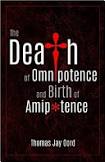
I’ve written a number of posts in the past addressing the evangelical theological movement known as “open theism.” Last year I wrote a general evaluation of open theism from a Catholic perspective. Some years ago, I wrote a series of blog posts on the theology of Greg Boyd, one of the major open theists. I’ve been intending for a while to write about Tom Oord, whose work I find particularly interesting and challenging. He’s a bit different from other open theists such as John Sanders inasmuch as he’s much more influenced by process theology and is willing to challenge conventional ideas about God a bit more radically. And yet in doing so, paradoxically, he is in some ways closer to traditional theology as I understand it than other open theists are. (I’ll get to that later.)
Oord has drawn a lot of fire for his views, losing his job at Northwest Nazarene University and, more recently, being expelled from the Church of the Nazarene. (The latter was for his views on LGBTQ inclusion, not open theism per se.) That alone makes him someone worthy of careful and respectful attention. Obviously people with bad theology can still be persecuted. Persecution isn’t a guarantee of theological merit. But undergoing persecution for one’s views does give an additional reason to take those views seriously, apart from their inherent merits.
Obviously as Catholic, I belong to a church that has frequently excommunicated people and in the past even called on the civil government to punish them, sometimes with death. So I’m in no position to point fingers at the Nazarenes here. But I think Erasmus was right in his initial response to Luther: if people are theologically wrong, they need to be refuted, not simply silenced. I don’t imagine that I can refute Oord decisively, and many of his views I have no desire to refute. But since I’m interested in the questions he raises I want to provide him and other open theists with as thoughtful and respectful a dialogue as I’m capable of.
I’m going to start by describing the core of his theology as laid out in the two works of his I’ve read: The Uncontrolling Love of God and The Death of Omnipotence and the Birth of Amipotence. I’ll be focusing on the second book which is fresher in my mind, but the two books complement each other and I recommend both. Then I’ll discuss my major disagreement with him, which is his rejection of traditional ideas about the fundamentally mysterious nature of God’s being and action.
Omnipotence and amipotence
All open theists believe that God is time-bound more or less as we are. All of them believe that God does not know what will happen in the future with certainty, when that depends on the free choices of creatures. However, Oord goes farther than the others I’ve read in arguing that God cannot compel creatures in any way. In Uncontrolling Love Oord argues that God’s nature is “essential kenosis”–self-emptying love. Many other open theists believe that God could have created a world without free beings, a world God could fully know and control. Oord thinks not. God’s nature of uncontrolling love would make it impossible for him to do any such thing.
In Death of Omnipotence, Oord argues that we should stop using the word “omnipotence” for God. He thinks that the term has become so qualified as to lose its meaning. This is true not just for Oord’s conception of God but even, he argues, for what most people would think of as the “traditional” or “orthodox” conception of God. Pretty much all theologians, even Calvinists (who typically stress divine sovereignty), qualify omnipotence in a host of ways. Theologians fairly consistently agree that God’s nature makes it impossible for him to lie and to do other evil things, for instance. Oord’s theology of uncontrolling love, of course, adds many additional reasons to avoid the term “omnipotent.”
Instead, Oord argues, we should speak of God as “amipotent” (a term Oord has coined). God’s power is the power of love, and only the power of love. This power will eventually triumph over evil. But God cannot control how and when creatures respond to God’s love. God’s power is a patient power, the power of witness and persuasion and beauty. God is constantly present in the world moving us to love, but all of creation (not just humans) has the ability to cooperate with or resist God’s love.
Is mystery a cop-out?
Like all the open theists I’ve read, Oord is very suspicious of appeals to mystery in theology. Traditionally, Christian theologians have spoken of God in both “kataphatic” and “apophatic” terms. That is to say, we have affirmed that God is meaningfully like creation in many ways (kataphatic) but also radically unlike creation, transcending it infinitely (apophatic).
Different theologians have emphasized one side or the other. Thomas Aquinas is, to my mind, as “kataphatic” a theologian as one can be and be fully orthodox. He affirms that we can meaningfully speak of God through analogy with creation, but that nothing we say about God is “univocally” true of both God and creatures. That is to say, what it means for God to be good or wise or powerful is not going to be identical with what it means for a creature. Our language for God always derives from our observation of creatures and thus never applies exactly to God. God’s attributes are related to their creaturely counterparts in three ways: God’s attributes are greater than the creaturely counterparts, they are the cause of those creaturely attributes, and they are the opposite of the negations of the creaturely attributes.
So God is good first of all because he causes the goodness of creatures, secondarily because the goodness of creatures genuinely reflects God’s nature though in an imperfect way, and thirdly because God is entirely free from what we call “evil” in creatures. The same would be true, for Aquinas, with power: God is the source of all creaturely power, God’s power is, to so speak, “more powerful” than human power, and God is free from weakness of any kind.
Oord grants in principle that our language about God needs to be both kataphatic and apophatic. He agrees that God is both like and unlike us. He criticizes what he calls “absolute apophatic theology” (Death of Omnipotence, 68-69), on the reasonable grounds that if we can’t say anything about God at all then there is no basis for doing theology. But in fact “absolute apophatic theology” is a straw man. The most famous Christian apophatic theologian, Pseudo-Dionysius, has room for both apophatic and kataphatic theology, but with the former having priority.
Where to play the mystery card?
To my mind, Oord’s account of God is far too confident in the adequacy of human conceptual and linguistic categories to explain God. Oord typically begins with a commonsense definition of a concept, drawn from how that concept normally applies to creatures, and then simply declares that this concept must also apply to God. Maybe the most important example of this is Oord’s discussion of divine action on pp. 128-29 of Death. Oord says that God acts “somewhat like creatures act,” but in fact he doesn’t give any meaningful way in which divine action differs from creaturely action except that God doesn’t have a “localized body.”
Oord is so committed to God’s being “like us” that he suggests that God must have some kind of “material dimension” (133), though not one that can be perceived by the senses. This is one example (the only one that immediately comes to mind, though there may be others I failed to notice) where Oord embraces a kind of apophaticism. But to me this seems an extremely odd place to play “the mystery card” which Oord rejects so scornfully elsewhere.
Classical Christian theology begins by affirming God’s fundamental “otherness,” claiming that what it means for God to exist and to act is always going to be more unlike our modes of existence and action than like them. Oord rejects this because he thinks it makes meaningful theological analysis impossible. But he winds up with a “material dimension” that lacks any of the normal properties of materiality. How is this an improvement?
An apophatic path to the same goal
In spite of this and other disagreements, I agree with Oord’s fundamental contention that God’s nature should be defined primarily in terms of love. Oord’s theology is a helpful challenge to those of us with more traditional theological commitments, because his rejection of many “classical” affirmations about God allows him to create a concept of God driven entirely by the premise that “God is love.” He doesn’t have to “balance” the claim that God is love with apparently contradictory evidence, because he simply jettisons those parts of a traditional concept of God that seem incompatible with love (including the claim that God is omnipotent).
I believe that, in fact, traditional Christian apophatic/analogical theology offers a better path to the same goal. In the approach of theologians such as Dionysius and Aquinas, the “names” we apply to God all come from creatures and thus none of them fully “fits.” But it’s quite conceivable on these premises that some fit better than others. We have Biblical warrant for believing that love is the creaturely “name” that fits God best (1 John 4:8). In John Wesley’s terms (quoted by Oord), love is God’s “reigning attribute.”
The weakness of the Cross
We also have good reason to believe that power, on the other hand, is the creaturely “name” that requires most qualification before we apply it to God. Paul proclaims in 1 Corinthians 1 that God’s power and wisdom are made known in the “foolishness” and “weakness” of the Cross. If the Cross is the manifestation of God’s power, then we have every reason to think that God’s power is particularly unlike what we call “power” in creatures. And experientially, this makes sense. Power, as exerted by creatures over each other, is typically about coercion. It is often manipulative and exploitative.
Here’s where I think Aquinas and other traditional theologians (particularly, but not only, in Western Christianity) can be criticized. Aquinas does often speak as if God’s power is very much like that of an earthly ruler but even greater. Oord is quite right to say that omnipotence as construed in much traditional Christian thought has buttressed oppressive forms of human power. Whatever God’s “power” means, it is far more unlike than like the kind of power that Vladimir Putin is seeking to exercise over Ukraine or Benjamin Netanyahu over Gaza.
Is omnipotence dead?
So should we simply stop speaking of omnipotence, as Oord argues? Even before reading the book (though I have been aware of Oord’s arguments for years in some form so I wouldn’t rule out his influence) I had stopped listing omnipotence as a basic part of my understanding of God in discussions with non-believers. As Oord argues at length in Death, no one in fact believes in omnipotence without serious qualifications. For Oord, that’s an obvious oxymoron, since “omnipotence” would seem to be a concept that by definition can’t be qualified or limited.
I’ve run out of space to explain why I disagree with this (again, it has to do with my “classical theist” commitments which Oord does not accept). I think a case can be made for keeping the concept once we establish what we mean when we speak of God’s “power” in the first place. But in a “commonsense” discussion with people who don’t share classical theist commitments, I think it’s probably best to admit that we do not believe that God is what most people would think of when they use the word “omnipotent.” And I entirely agree with Oord that whatever word we use for God’s power, we must be clear that God’s power is always the power of love.
Previous Post

February 6, 2025
Reclaiming Natural Law in the Second Trump Era
Next Post
June 11, 2025 Where can I run from your Spirit?
Browse Our Archives
Select a Category apologetics Bible Catholicism Christianity economics history Middle Ages personal Reformation Rodney Stark Uncategorized
Select a Month August 2026 June 2026 January 2026 December 2025 October 2025 June 2025 February 2025 December 2024 November 2024 June 2024 May 2024 January 2024 December 2023 April 2023 December 2022 November 2022 September 2022 July 2022 June 2022 April 2022 November 2021 September 2021 March 2021 February 2021 January 2021 December 2020 November 2020 October 2020 August 2020 July 2020 June 2020 May 2020 December 2018 October 2018 June 2018 March 2018 December 2017 November 2017 October 2017 September 2017 May 2017 April 2017 March 2017 February 2017 January 2017 December 2016 November 2016 October 2016 September 2016 August 2016 July 2016 June 2016 May 2016 April 2016 March 2016 January 2016 December 2015 November 2015 September 2015 June 2015 May 2015 April 2015 March 2015 February 2015 January 2015 December 2014 November 2014 October 2014 August 2014 June 2014 March 2014 January 2014 September 2013 August 2013 June 2013 August 2012 July 2012 October 2011 June 2011 March 2011 July 2010 March 2010 January 2008 May 2007 April 2007 February 2007 October 2006 August 2006 March 2006 January 2006 November 2005 October 2005 September 2005 August 2005 June 2005 May 2005 April 2005 March 2005 February 2005 January 2005 December 2004 November 2004 September 2004
Follow Us!
TAKE THE
Religious Wisdom Quiz
Who said, "The Lord said to my Lord, ‘Sit at my right hand’"?
Select your answer to see how you score.
Moses Solomon David Isaiah
Related posts from Light in the West

What is "Christian Nationalism"? A Reply to Dennis...



TRENDING AT PATHEOS Catholic

The Parable Of The Sower And The Word...
One of Christ’s most famous parables is that of the sower who...

Rejecting Doom: Christian Hope And Human Action
Christianity is a religion of hope. We are to have hope and...

Why I Choose the Eucharist Over the Sermon
Choose the Eucharist, Not the Sermon What are we supposed to get...

5 Design Elements Found in Spiritually Rooted Homes
Putting Spirituality Into Home Decor Our homes are more than our living...

Credo: A Story of God Told with the...
About 10 years ago, I began to imagine a personal "Credo" that...

The Anatomy of Divine Revelation in Catholic Thought
The claim that God has made Himself known to human beings is...
view all Catholic blogs
Ad-Free & Subscriber Log-In Subscription Support
- About Us
- 2026 Calendar
- Videos
- Podcasts
- Library of World Religions
- Faith In Media Tracker
- Advertise With Us
- Write for Us
- Privacy Policy
- Terms of Service
- Do Not Sell My Data
- Contact Us
- Radiant Digital
- Manage Newsletter Subscriptions
- Unsubscribe From Notifications
- Sitemap
Copyright 2008-2026, Patheos. All rights reserved.
Subscription Support Ad-Free & Subscriber Log-In
Follow Patheos