
BuddhistCatholicContemplativeEvangelicalGeneral ChristianHinduJewishLatter-day SaintMuslimNew VisionsProgressive Christian
Beliefs
- Buddhist
- Catholic
- Contemplative
- Evangelical
- General Christian
- Hindu
- Jewish
- Latter-day Saint
- More Voices
- Muslim
- New Visions
- Pagan
- Progressive Christian
Topics
- Religion News
- Food and Religion
- Sports and Religion
- Religious Art
- Religious Music and Entertainment
- Religious Events
- History and Religion
- Style and Religion
- Politics and Religion
- Women in Religion
- Recreation Outdoors and Religion
- Business Finance and Religion
- Careers Workplace and Religion
- Education and Religion
- Family Parenting and Religion
- Health Fitness and Religion
- Home and Religion
- Relationships and Religion
- Technology and Religion
- Travel and Religion
Columnists
- Buddhist Columnists
- Business Finance and Religion Columnists
- Careers Workplace and Religion Columnists
- Catholic Columnists
- Contemplative Columnists
- Education and Religion Columnists
- Evangelists Columnists
- Family Parenting and Religion Columnists
- General Christian Columnists
- Health Fitness and Religion Columnists
- Hindu Columnists
- History and Religion Columnists
- Home and Religion Columnists
- Jewish Columnists
- More Voices Columnists
- Latter Day Columnists
- Muslim Columnists
- New Visions Columnists
- Nonreligious Columnists
- Pagan Columnists
- Politics and Religion Columnists
- Progressive Columnists
- Recreation Outdoors and Religion Columnists
- Relationships and Religion Columnists
- Religion News Columnists
- Religious Art Columnists
- Religious Events Columnists
- Religious Music and Entertainment Columnists
- Sports and Religion Columnists
- Style and Religion Columnists
- Technology and Religion Columnists
- Travel and Religion Columnists
- Women in Religion Columnists
Resource Library
- 2026 Calendar
- Library of World Religions
- The 100 Most Holy Places on Earth
- Patheos Answers
- Podcasts
- Videos
- Faith Leaders Database
- Anglican Episcopalian
- Bahai
- Baptist
- Buddhism
- Christianity
- Confucianism
- Eastern Orthodoxy
- Hinduism
- Holiness and Pentecostal
- ISKCON
- Islam
- Judaism
- Lutheran
- Methodist
- The Church of Jesus Christ of Latter-day Saints
- New Age
- Paganism
- Presbytarian and Reformed
- Protestantism
- Religion Behind the Scenes
- Roman Catholic
- Scientology
- Shia Islam
- Sikhism
- Sufism
- Sunni Islam
- Taoism
- Zen
- See all religions
Research Tools
 Ad-Free & Subscriber Log-In Subscription Support
Ad-Free & Subscriber Log-In Subscription Support
Follow Patheos 

- Trending:
- Forgiveness
- |
- Marriage
- |
- Consciousness
- |
- Death Penalty
- |
- Election
- |
- Halloween

- Home
- Catholic
- Not One Dead Remains in the Grave: Easter and Universalism
Not One Dead Remains in the Grave: Easter and Universalism
Last updated on: May 5, 2024 at 11:08 pm by Edwin Woodruff Tait
Not One Dead Remains in the Grave: Easter and Universalism 2024-05-05T23:08:05-05:00 Edwin Woodruff Tait
Patheos Explore the world's faith through different perspectives on religion and spirituality! Patheos has the views of the prevalent religions and spiritualities of the world.
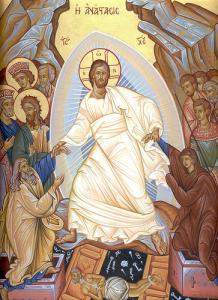 This Easter season I’ve been thinking about the message of the Resurrection in light of my recent reading of David Bentley Hart’s That All Shall Be Saved. This pugnaciously beautiful book has challenged my longstanding “hopeful universalism.” Hart claims that the kind of hope for universal salvation championed by Hans Urs von Balthasar is a weak compromise. Rather, he believes that Christians should affirm confidently that Jesus will save everyone. Anything less, Hart thinks, makes Christian theology incoherent and even immoral.
Hart never shrinks from overstating a point. I can’t agree with him that any non-universalist Christianity is reprehensible and untenable. Primarily this is because of the obvious fact that horrific evil exists in the world. To believe that God is good is to believe that God’s goodness is compatible with the existence of horrific evil. This is a question Hart has long wrestled with himself, rejecting traditional “theodicy.”
Hart’s answer is that God will completely overcome evil some day. But we don’t live in that day. We live in a world where evil continues to rage. It seems presumptuous to say that the only hope for the overcoming of evil we will entertain is one in which all evil people are redeemed. That seems to prioritize the redemption of the evil person over the harm done to their victims.
Making the best sense of the story
However, in a somewhat weaker form Hart’s argument is deeply compelling. Universal salvation makes the most sense of the Christian story. In light of Hart’s book and its converging lines of argument, I think that’s a hard conclusion to deny. At least, it’s hard to deny if we take the early Greek Fathers as our starting point.
Not all the Greek Fathers were universalists. Gregory of Nyssa, of course, was (in spite of the attempts of some conservative Orthodox to deny this). But even those who weren’t, or at least didn’t clearly affirm universalism, speak of salvation in a way that makes most sense if everyone is saved. They consistently speak of salvation in terms of the restoration of all creation to God and the redemption of all humanity from evil and death.
A universalist sermon by a non-universalist?
John Chryspstom’s famous Easter homily is a great example of this. Chrysostom is one of the Church Fathers whom practically nobody claims to have been a universalist. The homily may not have been written by him, to be sure, in which case perhaps the author was a universalist. But since it’s a part of the Easter liturgy of the Byzantine Rite (Orthodox or Catholic) and is commonly cited as a classic statement of the meaning of the Paschal mystery in the Western Church as well, whether Chrysostom actually wrote it isn’t the important point here. It’s clearly a text that the mainstream Catholic and Orthodox traditions regard highly and it expresses themes common throughout the Fathers. I’m sharing the version from the Orthodox Church in America‘s website:
If any man be devout and love God, let him enjoy this fair and radiant triumphal feast. If any man be a wise servant, let him rejoicing enter into the joy of his Lord. If any have labored long in fasting, let him now receive his recompense. If any have wrought from the first hour, let him today receive his just reward. If any have come at the third hour, let him with thankfulness keep the feast. If any have arrived at the sixth hour, let him have no misgivings; because he shall in nowise be deprived thereof. If any have delayed until the ninth hour, let him draw near, fearing nothing. If any have tarried even until the eleventh hour, let him, also, be not alarmed at his tardiness; for the Lord, who is jealous of his honor, will accept the last even as the first; He gives rest unto him who comes at the eleventh hour, even as unto him who has wrought from the first hour.
And He shows mercy upon the last, and cares for the first; and to the one He gives, and upon the other He bestows gifts. And He both accepts the deeds, and welcomes the intention, and honors the acts and praises the offering. Wherefore, enter you all into the joy of your Lord; and receive your reward, both the first, and likewise the second. You rich and poor together, hold high festival. You sober and you heedless, honor the day. Rejoice today, both you who have fasted and you who have disregarded the fast. The table is full-laden; feast ye all sumptuously. The calf is fatted; let no one go hungry away.
Enjoy ye all the feast of faith: Receive ye all the riches of loving-kindness. let no one bewail his poverty, for the universal kingdom has been revealed. Let no one weep for his iniquities, for pardon has shown forth from the grave. Let no one fear death, for the Savior’s death has set us free. He that was held prisoner of it has annihilated it. By descending into Hell, He made Hell captive. He embittered it when it tasted of His flesh. And Isaiah, foretelling this, did cry: Hell, said he, was embittered, when it encountered Thee in the lower regions. It was embittered, for it was abolished. It was embittered, for it was mocked. It was embittered, for it was slain. It was embittered, for it was overthrown. It was embittered, for it was fettered in chains. It took a body, and met God face to face. It took earth, and encountered Heaven. It took that which was seen, and fell upon the unseen.
O Death, where is your sting? O Hell, where is your victory? Christ is risen, and you are overthrown. Christ is risen, and the demons are fallen. Christ is risen, and the angels rejoice. Christ is risen, and life reigns. Christ is risen, and not one dead remains in the grave. For Christ, being risen from the dead, is become the first fruits of those who have fallen asleep. To Him be glory and dominion unto ages of ages. Amen.
I quote the whole thing because it’s relatively short and only by reading the whole do you get the universalist logic of the sermon. The first part of the sermon invites all to share in the feast, those who have prepared and those who haven’t. The second part explains why all are being invited so indiscriminately. Jesus’ death and resurrection have destroyed death for everyone and opened heaven to everyone. “Not one dead remains in the grave.”
Threats and promises
This is typical of the teaching and preaching of the Greek Fathers. When they talk about morality and exhort people, they thunder and threaten and speak of the flames of hell. But when they talk about the nature of salvation, they pretty consistently speak as if Jesus’ saving work affects the human race as a whole.
Of course it’s possible to read this as Western non-universalist “Arminians” do. And this is probably how most Orthodox do read it. Jesus has made salvation possible for everyone, but not everyone will choose to accept it. But it’s hard, once one has read Hart’s pungent arguments, not to see this as a weakening of the power of the Paschal Homily and other similar texts. If it really means “only the people who insist on being left in the grave are left there”–well, that’s not quite as triumphant, is it?
Still a hopeful universalist?
So I think I’m still a hopeful universalist after reading Hart (which will annoy his hardcore fans and would annoy him if he knew about it, but he’s only met me once and I don’t think he remembers me). But I’m a much more hopeful one. I used to say, “I believe in an eternal hell but I hope no one will chose to go there.” I would now say, “I believe the Christian story makes most sense if everyone is eventually saved, but it’s possible there’s something I’m missing.”
Given the existence of horrific evil, I hesitate to be too confident in my extrapolations from my belief in the goodness of God. No one would expect that a universe created by a good God would include such horrors as genocide and rape. (This is of course the main reason to question whether God exists.) So it’s possible, given that reality, that somehow some people will manage to reject the salvation Jesus has brought to the whole world. But unlike the existence of horrific evil, this isn’t an obvious empirical fact. And it’s easier to see how temporal acts of evil could be swallowed up in ultimate victory than how a final rejection of God could be.
All of this is skating past one of Hart’s key arguments, which is that it’s metaphysically impossible, given traditional Christian premises, for a person to reject God knowingly and finally. I find this a highly persuasive argument though not, as some do, a logically certain one. But that is best left to another post.
Icon of the Resurr
Previous Post

January 21, 2024
Open Theism, Free Will, and Catholicism
Next Post
June 6, 2024 Disruptions of Tradition: Tradition and Apocalypse, Part I
Browse Our Archives
Select a Category apologetics Bible Catholicism Christianity economics history Middle Ages personal Reformation Rodney Stark Uncategorized
Select a Month August 2026 June 2026 January 2026 December 2025 October 2025 June 2025 February 2025 December 2024 November 2024 June 2024 May 2024 January 2024 December 2023 April 2023 December 2022 November 2022 September 2022 July 2022 June 2022 April 2022 November 2021 September 2021 March 2021 February 2021 January 2021 December 2020 November 2020 October 2020 August 2020 July 2020 June 2020 May 2020 December 2018 October 2018 June 2018 March 2018 December 2017 November 2017 October 2017 September 2017 May 2017 April 2017 March 2017 February 2017 January 2017 December 2016 November 2016 October 2016 September 2016 August 2016 July 2016 June 2016 May 2016 April 2016 March 2016 January 2016 December 2015 November 2015 September 2015 June 2015 May 2015 April 2015 March 2015 February 2015 January 2015 December 2014 November 2014 October 2014 August 2014 June 2014 March 2014 January 2014 September 2013 August 2013 June 2013 August 2012 July 2012 October 2011 June 2011 March 2011 July 2010 March 2010 January 2008 May 2007 April 2007 February 2007 October 2006 August 2006 March 2006 January 2006 November 2005 October 2005 September 2005 August 2005 June 2005 May 2005 April 2005 March 2005 February 2005 January 2005 December 2004 November 2004 September 2004
Follow Us!
TAKE THE
Religious Wisdom Quiz
In which letter does Paul say "love is patient, love is kind"?
Select your answer to see how you score.
Ephesians 1 Corinthians 2 Corinthians Galatians
Related posts from Light in the West

What is "Christian Nationalism"? A Reply to Dennis...



TRENDING AT PATHEOS Catholic

Rejecting Doom: Christian Hope And Human Action
Christianity is a religion of hope. We are to have hope and...

It’s What Comes From Within Which Matters
One of the most difficult things for us to understand is why...

Why I Choose the Eucharist Over the Sermon
Choose the Eucharist, Not the Sermon What are we supposed to get...

5 Design Elements Found in Spiritually Rooted Homes
Putting Spirituality Into Home Decor Our homes are more than our living...

Credo: A Story of God Told with the...
About 10 years ago, I began to imagine a personal "Credo" that...

The Anatomy of Divine Revelation in Catholic Thought
The claim that God has made Himself known to human beings is...
view all Catholic blogs
Ad-Free & Subscriber Log-In Subscription Support
- About Us
- 2026 Calendar
- Videos
- Podcasts
- Library of World Religions
- Faith In Media Tracker
- Advertise With Us
- Write for Us
- Privacy Policy
- Terms of Service
- Do Not Sell My Data
- Contact Us
- Radiant Digital
- Manage Newsletter Subscriptions
- Unsubscribe From Notifications
- Sitemap
Copyright 2008-2026, Patheos. All rights reserved.
Subscription Support Ad-Free & Subscriber Log-In
Follow Patheos