
BuddhistCatholicContemplativeEvangelicalGeneral ChristianHinduJewishLatter-day SaintMuslimNew VisionsProgressive Christian
Beliefs
- Buddhist
- Catholic
- Contemplative
- Evangelical
- General Christian
- Hindu
- Jewish
- Latter-day Saint
- More Voices
- Muslim
- New Visions
- Pagan
- Progressive Christian
Topics
- Religion News
- Food and Religion
- Sports and Religion
- Religious Art
- Religious Music and Entertainment
- Religious Events
- History and Religion
- Style and Religion
- Politics and Religion
- Women in Religion
- Recreation Outdoors and Religion
- Business Finance and Religion
- Careers Workplace and Religion
- Education and Religion
- Family Parenting and Religion
- Health Fitness and Religion
- Home and Religion
- Relationships and Religion
- Technology and Religion
- Travel and Religion
Columnists
- Buddhist Columnists
- Business Finance and Religion Columnists
- Careers Workplace and Religion Columnists
- Catholic Columnists
- Contemplative Columnists
- Education and Religion Columnists
- Evangelists Columnists
- Family Parenting and Religion Columnists
- General Christian Columnists
- Health Fitness and Religion Columnists
- Hindu Columnists
- History and Religion Columnists
- Home and Religion Columnists
- Jewish Columnists
- More Voices Columnists
- Latter Day Columnists
- Muslim Columnists
- New Visions Columnists
- Nonreligious Columnists
- Pagan Columnists
- Politics and Religion Columnists
- Progressive Columnists
- Recreation Outdoors and Religion Columnists
- Relationships and Religion Columnists
- Religion News Columnists
- Religious Art Columnists
- Religious Events Columnists
- Religious Music and Entertainment Columnists
- Sports and Religion Columnists
- Style and Religion Columnists
- Technology and Religion Columnists
- Travel and Religion Columnists
- Women in Religion Columnists
Resource Library
- 2026 Calendar
- Library of World Religions
- The 100 Most Holy Places on Earth
- Patheos Answers
- Podcasts
- Videos
- Faith Leaders Database
- Anglican Episcopalian
- Bahai
- Baptist
- Buddhism
- Christianity
- Confucianism
- Eastern Orthodoxy
- Hinduism
- Holiness and Pentecostal
- ISKCON
- Islam
- Judaism
- Lutheran
- Methodist
- The Church of Jesus Christ of Latter-day Saints
- New Age
- Paganism
- Presbytarian and Reformed
- Protestantism
- Religion Behind the Scenes
- Roman Catholic
- Scientology
- Shia Islam
- Sikhism
- Sufism
- Sunni Islam
- Taoism
- Zen
- See all religions
Research Tools
 Ad-Free & Subscriber Log-In Subscription Support
Ad-Free & Subscriber Log-In Subscription Support
Follow Patheos 

- Trending:
- Forgiveness
- |
- Marriage
- |
- Consciousness
- |
- Death Penalty
- |
- Election
- |
- Halloween

- Home
- Catholic
- The Unique Beauty of Advent
The Unique Beauty of Advent
Last updated on: December 16, 2023 at 3:52 pm by Edwin Woodruff Tait
The Unique Beauty of Advent 2023-12-16T15:52:53-05:00 Edwin Woodruff Tait
Patheos Explore the world's faith through different perspectives on religion and spirituality! Patheos has the views of the prevalent religions and spiritualities of the world.
In the shadow of Lent
Advent has always stood in the shadow of Lent. As the “other” season of fasting and solemnity and “paring back,” it has often been treated as a milder version of the Great Fast. In the Byzantine tradition, it is practiced for forty days like Lent, and Lent is often referred to as “Great Lent” with the implication that Advent (and the two other fasting periods of the Byzantine tradition) are lesser examples of the same sort of thing. (For reasons I’ll get into, this may not be as much of a problem in the Eastern traditions as it would be in the Western.)
In contemporary Western Catholicism, there’s been a laudable attempt to get Advent out from Lent’s shadow and emphasize its unique character. Indeed, Advent liturgical decisions in contemporary Catholicism are often embattled by discussions of whether a particular practice or even a particular song will make Advent “a little Lent.” (Conversely, one priest criticized me and the other layperson making song choices at our parish’s Spanish Mass for choosing a Lenten song that sounded too much like an Advent song.)
This year, for instance, I and the choir at our parish (where I’m the organist) discussed whether we wanted to use the chant Mass setting this Advent as we typically do during Lent. Would it make Advent too much like Lent? Or did restricting chant to Lent associate chant too much with penitence and mortification? In the end, we didn’t switch to chant for Advent, largely because the choir wanted to set aside some time to practice the chant setting and the organist, who is very much a part-time organist and has a new job this semester teaching Latin at a Catholic high school, never scheduled one. (Yes, that’s also one reason why it’s been so long since I’ve posted on this blog.)
What are we saved from?
These liturgical choices are fraught with a certain anxiety because, I think, we are all a bit hazy on what really makes the difference between Advent and Lent. For what it’s worth, I myself love Advent and would much rather make Lent a “big Advent” than Advent a “little Lent.” But I have nothing against Lent either. Each season, rightly understood, can I think enrich the other.
This Advent, I’ve been thinking about what really does characterize Advent as a unique season and distinguish it from Lent, at least Lent as we typically think about it in the Western tradition. And I think it’s this: Lent is primarily about repentance from sin. Advent, we always say, is about “waiting.” But waiting for what exactly? The salvation brought by Christ. But what is this salvation? The obvious answer is salvation from sin–which brings us back to Lent and repentance.
Death and corruption
In the Greek Fathers and the Eastern Christian tradition, salvation is often said to be fundamentally from death and “corruption,” with sin as one particularly vicious expression of that broader pattern of decay. Many of us in the West are seeking to recover that broader, more holistic understanding of salvation. And I think some of the “Lent/Advent” tension has to do with the discomfort many of us feel (for good reason) with the primarily moralistic “feel bad about your sins” approach that has often characterized Lent.
Salvation from death and salvation from sin aren’t, of course, opposed. They are concepts that depend on and illuminate each other. And Easter is certainly about salvation from death and not just from sin. (This is particularly emphasized in the Eastern traditions, which is why, as I suggested earlier, maybe treating Advent as a “little Lent” isn’t as much of a problem for them as it has been for us.) In the West, we begin Lent with Ash Wednesday in which we remember our mortality and not just our sinfulness.
A time of darkness
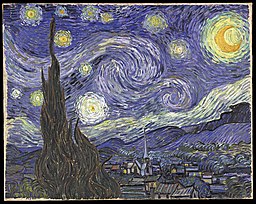
And yet, I think Advent is uniquely able to reorient us to that broader understanding of the human condition and the salvation offered by Jesus. The overwhelming characteristic of Advent, in terms of our experience, is that it’s a time of increasing darkness. The days are getting shorter. The tooth of all-devouring time is felt more keenly. In the face of darkness and rain (or snow) and winter winds, we become aware of our fragility.
Lent, on the other hand, derives its very name from the word “lengthen.” It’s a time of longer days and increasing light. Somber though it is, it’s a time when the world around us is coming alive. This is one of the great beauties of Lent–it’s a time to tighten our belts and redouble our efforts as we march toward the great burst of light and life that awaits us, whose first rays we can already see and feel all around us in the natural world.
The helplessness of Advent
But in Advent we are helpless. We are tied to the wheel of the year rolling toward the darkness. Yes, we know that the light will return, just as, in spring, we know that the darkness will return. But our own experience (as opposed to the deliverances of the Faith) gives us little reason to be confident that our lives will follow the same pattern. At times of darkness like these, it is easier to say with Catullus:
soles occidere et redire possunt;
nobis, cum semel occidit brevis lux,
nox est perpetua una dormienda.
Or in Thomas Campion’s English rendering:
Heaven’s great lamps do dive
Into their west, and straight again revive,
But soon as once set is our little light,
Then must we sleep one ever-during night.
Lent calls us to repent, which is hard. Advent calls us to wait and hope, which is even harder. Or, more precisely, it calls us to a form of repentance that is more about waiting and hoping than about doing anything. And it also offers us a different perspective on the sin from which we are called to turn.
Rebellion of the pitiful mammals
The Western approach to sin, since Augustine (and still more since the various reform movements of the late Middle Ages), has often been “you are a rebel and must submit to the rightful authority.” Growing up, I heard myself described this way many times. I was told that simply by virtue of being born I was in a state of rebellion from which only God’s grace could deliver me. My heart was “deceitful and desperately wicked.” By nature I hated God and hated goodness. Only by an agonizing process of repentance and surrender to God could I cease to be a person fundamentally committed to spit in God’s face in the service of my own sinful desires.
I’ve come to realize that this description simply doesn’t fit my experience. I don’t think that I have ever, to my knowledge, been the person my grandmother’s heavily Puritan-leaning version of Wesleyan theology told me I was. I experience sin not so much as rebellion but as weakness–a persistent tug toward death and darkness and decay, a helplessness that swallows hope. And yes, one of the temptations in the face of that all-encroaching darkness that flickers around the edge of my vision is to indulge in futile and absurd gestures of rebellion, to try to persuade myself that I’m really in control, to deny the darkness instead of confronting it.
The “rebellion” narrative of human sinfulness makes our sin more grandiose than it is. Our most notorious and obvious sinners–the great tyrants and mass murderers of history–are pathetic little mammals trying to deny the inevitability of death by making themselves the source of destruction. The much-quoted line from Breaking Bad, “I am the danger,” comes from a man whose whole story arc begins with a cancer diagnosis and the loss of his job.
Waiting in the darkness
Sometimes, in the face of our fragility, all we can do of any value is wait in the darkness. That is repentance–a turning from the acts of wrath that call wrath upon us. And it is an act of hope: that the God who made the stars of night will indeed be our everlasting light.
Previous Post

April 8, 2023
Save me from the dogs: A translation of Psalm 22
Next Post
December 31, 2023 Persons, not Individuals: The Legacy of Pope Benedict
Browse Our Archives
Select a Category apologetics Bible Catholicism Christianity economics history Middle Ages personal Reformation Rodney Stark Uncategorized
Select a Month August 2026 June 2026 January 2026 December 2025 October 2025 June 2025 February 2025 December 2024 November 2024 June 2024 May 2024 January 2024 December 2023 April 2023 December 2022 November 2022 September 2022 July 2022 June 2022 April 2022 November 2021 September 2021 March 2021 February 2021 January 2021 December 2020 November 2020 October 2020 August 2020 July 2020 June 2020 May 2020 December 2018 October 2018 June 2018 March 2018 December 2017 November 2017 October 2017 September 2017 May 2017 April 2017 March 2017 February 2017 January 2017 December 2016 November 2016 October 2016 September 2016 August 2016 July 2016 June 2016 May 2016 April 2016 March 2016 January 2016 December 2015 November 2015 September 2015 June 2015 May 2015 April 2015 March 2015 February 2015 January 2015 December 2014 November 2014 October 2014 August 2014 June 2014 March 2014 January 2014 September 2013 August 2013 June 2013 August 2012 July 2012 October 2011 June 2011 March 2011 July 2010 March 2010 January 2008 May 2007 April 2007 February 2007 October 2006 August 2006 March 2006 January 2006 November 2005 October 2005 September 2005 August 2005 June 2005 May 2005 April 2005 March 2005 February 2005 January 2005 December 2004 November 2004 September 2004
Follow Us!
TAKE THE
Religious Wisdom Quiz
What does the name "Jesus" mean?
Select your answer to see how you score.
The Lord Saves Prince of Peace Chosen One Son of Man
Related posts from Light in the West

What is "Christian Nationalism"? A Reply to Dennis...



TRENDING AT PATHEOS Catholic

Rejecting Doom: Christian Hope And Human Action
Christianity is a religion of hope. We are to have hope and...

It’s What Comes From Within Which Matters
One of the most difficult things for us to understand is why...

Why I Choose the Eucharist Over the Sermon
Choose the Eucharist, Not the Sermon What are we supposed to get...

5 Design Elements Found in Spiritually Rooted Homes
Putting Spirituality Into Home Decor Our homes are more than our living...

Credo: A Story of God Told with the...
About 10 years ago, I began to imagine a personal "Credo" that...

The Anatomy of Divine Revelation in Catholic Thought
The claim that God has made Himself known to human beings is...
view all Catholic blogs
Ad-Free & Subscriber Log-In Subscription Support
- About Us
- 2026 Calendar
- Videos
- Podcasts
- Library of World Religions
- Faith In Media Tracker
- Advertise With Us
- Write for Us
- Privacy Policy
- Terms of Service
- Do Not Sell My Data
- Contact Us
- Radiant Digital
- Manage Newsletter Subscriptions
- Unsubscribe From Notifications
- Sitemap
Copyright 2008-2026, Patheos. All rights reserved.
Subscription Support Ad-Free & Subscriber Log-In
Follow Patheos