
BuddhistCatholicContemplativeEvangelicalGeneral ChristianHinduJewishLatter-day SaintMuslimNew VisionsProgressive Christian
Beliefs
- Buddhist
- Catholic
- Contemplative
- Evangelical
- General Christian
- Hindu
- Jewish
- Latter-day Saint
- More Voices
- Muslim
- New Visions
- Pagan
- Progressive Christian
Topics
- Religion News
- Food and Religion
- Sports and Religion
- Religious Art
- Religious Music and Entertainment
- Religious Events
- History and Religion
- Style and Religion
- Politics and Religion
- Women in Religion
- Recreation Outdoors and Religion
- Business Finance and Religion
- Careers Workplace and Religion
- Education and Religion
- Family Parenting and Religion
- Health Fitness and Religion
- Home and Religion
- Relationships and Religion
- Technology and Religion
- Travel and Religion
Columnists
- Buddhist Columnists
- Business Finance and Religion Columnists
- Careers Workplace and Religion Columnists
- Catholic Columnists
- Contemplative Columnists
- Education and Religion Columnists
- Evangelists Columnists
- Family Parenting and Religion Columnists
- General Christian Columnists
- Health Fitness and Religion Columnists
- Hindu Columnists
- History and Religion Columnists
- Home and Religion Columnists
- Jewish Columnists
- More Voices Columnists
- Latter Day Columnists
- Muslim Columnists
- New Visions Columnists
- Nonreligious Columnists
- Pagan Columnists
- Politics and Religion Columnists
- Progressive Columnists
- Recreation Outdoors and Religion Columnists
- Relationships and Religion Columnists
- Religion News Columnists
- Religious Art Columnists
- Religious Events Columnists
- Religious Music and Entertainment Columnists
- Sports and Religion Columnists
- Style and Religion Columnists
- Technology and Religion Columnists
- Travel and Religion Columnists
- Women in Religion Columnists
Resource Library
- 2026 Calendar
- Library of World Religions
- The 100 Most Holy Places on Earth
- Patheos Answers
- Podcasts
- Videos
- Faith Leaders Database
- Anglican Episcopalian
- Bahai
- Baptist
- Buddhism
- Christianity
- Confucianism
- Eastern Orthodoxy
- Hinduism
- Holiness and Pentecostal
- ISKCON
- Islam
- Judaism
- Lutheran
- Methodist
- The Church of Jesus Christ of Latter-day Saints
- New Age
- Paganism
- Presbytarian and Reformed
- Protestantism
- Religion Behind the Scenes
- Roman Catholic
- Scientology
- Shia Islam
- Sikhism
- Sufism
- Sunni Islam
- Taoism
- Zen
- See all religions
Research Tools
 Ad-Free & Subscriber Log-In Subscription Support
Ad-Free & Subscriber Log-In Subscription Support
Follow Patheos 

- Trending:
- Forgiveness
- |
- Marriage
- |
- Consciousness
- |
- Death Penalty
- |
- Election
- |
- Halloween

- Home
- Catholic
- The Girl on the Coin: Reflections on Queen Elizabeth
The Girl on the Coin: Reflections on Queen Elizabeth
Last updated on: September 25, 2022 at 9:50 pm by Edwin Woodruff Tait
The Girl on the Coin: Reflections on Queen Elizabeth 2022-09-25T21:50:31-05:00 Edwin Woodruff Tait
Patheos Explore the world's faith through different perspectives on religion and spirituality! Patheos has the views of the prevalent religions and spiritualities of the world.
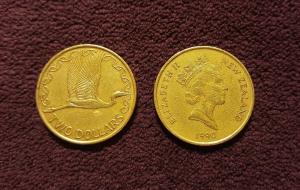
When I was about nine years old, a few years after having moved to the United States from England, I was at a meeting of AWANA. (AWANA is a fundamentalist imitation of Scouts and mostly consists of learning Bible verses, but that’s not important right now.) A girl at a table near mine was looking at a Canadian coin with her friends and I heard her exclaim, “Who is that girl?” I marched right over, looked at the coin, and announced loudly, “That, I’ll have you know, is Her Majesty Queen Elizabeth the Second, whose loyal subject I am.” (Or words to that effect.)
And no, this post isn’t about my limited social skills as a homeschooled nine-year-old, though much could be said about that.
Lost paradise
After a brief period of enthusiasm for my new home, I settled into a mood of nostalgia for the lost paradise of England that has never entirely left me. The image of the Queen on the coin became a symbol of my childhood memories–large shady trees in impossibly green fields, quiet cows, stone fences on the high moors, a red brick farmhouse with a large horse chestnut tree next to the driveway, rows of terraced houses lining city streets, an old village church with a rather strange-looking octagonal tower, the sound of the Staffordshire dialect, the feel of a crisp autumn morning after days of rain. We all have our Edens. This was mine.

My education and developing aesthetic sensibilities only deepened these attachments. I was homeschooled by my mother, who was educated in Britain in the 1950s. Shakespeare and Dickens and George Herbert and Wordsworth and Tennyson were staples. To this day I have never read some of the books that Americans take for granted as part of their education, such as The Catcher in the Rye. I read To Kill a Mockingbird for the first time at about 20–in Romania as it happens. But by the time I was about 14 I could rattle off long sections of Milton and Shakespeare and Wordsworth and Shelley.
Narnia and the Shire
Narnia–that apotheosis of a mythical medieval England–was one of the chief imaginative influences on me from the time I was about five. In my teens, Tolkien’s Shire joined it. (I read the Hobbit when I was very young but Lord of the Rings only at 15.) Tolkien too had his Eden in the English Midlands from which he was torn away too young. His was about fifty miles south of mine, on the edge of Birmingham as mine was on the edge of Stoke-on-Trent. (When I last visited Dilhorne, the village of my childhood, I was astounded at how close it was to the city, given my memories of it as a rural paradise forty years earlier. Tolkien’s Sarehole, to judge from the map, is more thoroughly engulfed, and Tolkien wrote about how the countryside he loved was already vanishing even in his own childhood more than a century ago.) In Lewis and Tolkien and Chesterton I found a confirmation of my feelings of nostalgic patriotism.
When, in my late 20s, I began rediscovering my father’s ancestral homeland of Shetland, I gained another set of powerful images to set beside the lush English farmland of my childhood: the hills of tufty grass and purple heather underneath a steely sky, ending in sudden cliffs over which birds wheeled and against which the great breakers of the Atlantic endlessly clashed. In Shetland I found a complex network of second and third cousins–the one place in the world where any given person I meet is likely to be able to explain to me exactly how we are related, even if we’re fourth cousins once removed. It truly is like the Shire. Peter Guy’s wonderful guidebook to walking the South Mainland of Shetland includes an anecdotal account of an argument the author had with a woman about picking mushrooms and the different customs on that subject on his own island of Yell as opposed to the South Mainland. One of my relatives on my grandfather’s side, also from the South Mainland, has remarked on how odd the folk from my grandmother’s island (Burra) are–this is an island roughly five miles from him as the crow flies, though longer by road.
So now I have two sets of memories and associations to bind me to my British heritage–the childhood imagery of the English Midlands and the ancestral associations, renewed in adulthood, of Shetland. Between them, these two landscapes and cultures encompass much of what makes Britain Britain. I have plenty of objections to the way in which the thing called the “United Kingdom” was forged, and I have considerable sympathy with the idea of Scottish independence. But my heart has roots in two very different parts of Britain, and my own sense of identity draws on both. And the queen on the coin stands for both.
What unity? Whose heritage?
The sober argument for the monarchy is that it functions symbolically as a source of unity and heritage that transcends politics. Does it work that way in practice? I don’t know. From where I sit, across the Atlantic, it looks rather like it. The very fact that the opposition party is called “His/Her Majesty’s Opposition,” and that leaders of both parties regularly consult with the monarch, seems to me to work against the sharp political polarization that is ripping the country of my residence apart. But many British people–including many of my own relatives, I think–would be much more dubious.
And against any such value we have to set the long list of negatives. Since the Queen’s death, the loudest and sharpest voices speaking against the wave of nostalgia and reverence that has swept through much of the Western media have come from people whose cultures were trampled on by British colonialism. The Queen’s death has been a much-needed, if to many of us unpleasant, occasion for accountability in this regard. Far too often those of us of British heritage console ourselves with the idea that British colonialism wasn’t quite as bad as some other kinds. It turns out that one reason this consoling paradigm has lasted so long is that the British government systematically sought to suppress evidence to the contrary.
Within Britain itself, many critics argue that the monarchy is an important linchpin of ongoing social inequality and the concentration of wealth. Apart from the monarchy’s own wealth, the sacred aura that clings to it provides cover for a class system in which land ownership and social and political privilege are still concentrated among a relatively few people. I’m not myself convinced that the monarchy is primarily to blame, given the different mechanisms by which a perhaps even greater level of social inequality and injustice has come to exist in the large republic to the West of the Atlantic in which I live. But it’s an argument that has to be taken seriously, for sure.
Poisonous mirage or tragic splendour?
The more fundamental question, I think, is whether the sentiments of “sacredness” which for some of us surround the monarchy have any positive value. Are such sentiments useless? Are they, in general (not just in the case of the British monarchy), primarily justifications for injustice and violence? (Girard’s sacred sacrificial order, say, or Marx’ “opiate.”) This of course affects other forms of sacredness as well, such as the Catholicism I embraced in adulthood after years of longing not unlike the longing that I felt for my lost childhood home. (The fundamental difference, of course, is that Catholicism isn’t my childhood religion.) Is it all a sort of poisonous mirage? Or can we make a case for some forms being healthier than others? (Catholicism over against nationalism, for instance.)
For many years I’ve responded to criticisms of the monarchy with the sentiments C. S. Lewis expressed in his 1943 essay “Equality.” Lewis argues there that equality is a form of “medicine” human beings need because of their tendency to dominate and abuse one another, but that “medicine is not food.” Lewis supports the relative political democracy he sees in the Britain of his day and calls for greater economic equality, while also celebrating the monarchy as an expression of a fundamental human craving for hierarchy.
Monarchy can easily be “debunked”, but watch the faces, mark well the accents of the debunkers. These are the men whose taproot in Eden has been cut — whom no rumor of the polyphony, the dance, can reach – men to whom pebbles laid in a row are more beautiful than an arch. Yet even if they desire mere equality they cannot reach it. Where men are forbidden to honor a king they honor millionaires, athletes, or film-stars instead — even famous prostitutes or gangsters. For spiritual nature, like bodily nature, will be served — deny it food and it will gobble poison.”
Living as I do in the United States, I have always found Lewis’ warnings about the substitutes for monarchy convincing. But of course one could respond that the British monarchy has essentially become a form of celebrity just as trivial as any other, and people who believe that the monarchy serves real injustice are unlikely to be impressed by being told that their “faces” and “accents” (an unfortunate term given the history of linking accent to class in Britain) show that they have un-Edenic, prosaic souls.
And Lewis, in this essay and elsewhere, uses the same arguments to defend gender hierarchy, something that I can see much more clearly (compared to monarchy) to be an active, malign force in the world I live in.
The key question, I think, is whether monarchy (and other forms of symbolic inequality) is a symbolic statement of the superiority of some people over others or of the dignity that inheres in all people. In another passage much quoted recently (from a letter to an American friend), Lewis reflects on the coronation of Queen Elizabeth, tellingly contrasting American and British reactions to the event:
You know, over here people did not get that fairy-tale feeling about the coronation. What impressed most who saw it was the fact that the Queen herself appeared to be quite overwhelmed by the sacramental side of it. Hence, in the spectators, a feeling of (one hardly knows how to describe it) — awe — pity — pathos — mystery.
The pressing of that huge, heavy crown on that small, young head becomes a sort of symbol of the situation of humanity itself: humanity called by God to be his vice-regent and high priest on earth, yet feeling so inadequate. As if he said, “In my inexorable love I shall lay upon the dust that you are glories and dangers and responsibilities beyond your understanding.”
Do you see what I mean? One has missed the whole point unless one feels that we have all been crowned and that coronation is somehow, if splendid, a tragic splendor.
I don’t have clear answers to the question of whether monarchy in general, and the British monarchy in particular, functions as an effective sign of the “tragic splendor” of the human condition. It does for me, certainly. But I am just one foolish, sentimental human being clinging to childhood memories. My own feeling that something would be lost if the monarchy were to be abolished is not of great importance in determining how a nation I have not lived in since I was six should order its public life.
But I do know that we all have our Edens. May our taproots grow long.
Title image by Brett Hondow from Pixabay.
Photo of All Saints, Dilhorne, © Copyright Jerry Evans and licensed for reuse under this Creative Commons Licence.
Previous Post
September 3, 2022
St. Augustine and Humility
Next Post
November 1, 2022 The One Thing the Reformation Isn't
Browse Our Archives
Select a Category apologetics Bible Catholicism Christianity economics history Middle Ages personal Reformation Rodney Stark Uncategorized
Select a Month August 2026 June 2026 January 2026 December 2025 October 2025 June 2025 February 2025 December 2024 November 2024 June 2024 May 2024 January 2024 December 2023 April 2023 December 2022 November 2022 September 2022 July 2022 June 2022 April 2022 November 2021 September 2021 March 2021 February 2021 January 2021 December 2020 November 2020 October 2020 August 2020 July 2020 June 2020 May 2020 December 2018 October 2018 June 2018 March 2018 December 2017 November 2017 October 2017 September 2017 May 2017 April 2017 March 2017 February 2017 January 2017 December 2016 November 2016 October 2016 September 2016 August 2016 July 2016 June 2016 May 2016 April 2016 March 2016 January 2016 December 2015 November 2015 September 2015 June 2015 May 2015 April 2015 March 2015 February 2015 January 2015 December 2014 November 2014 October 2014 August 2014 June 2014 March 2014 January 2014 September 2013 August 2013 June 2013 August 2012 July 2012 October 2011 June 2011 March 2011 July 2010 March 2010 January 2008 May 2007 April 2007 February 2007 October 2006 August 2006 March 2006 January 2006 November 2005 October 2005 September 2005 August 2005 June 2005 May 2005 April 2005 March 2005 February 2005 January 2005 December 2004 November 2004 September 2004
Follow Us!
TAKE THE
Religious Wisdom Quiz
Why did God reject Saul as king?
Select your answer to see how you score.
He lost in battle He was too old He disobeyed God He was tricked by David
Related posts from Light in the West

What is "Christian Nationalism"? A Reply to Dennis...



TRENDING AT PATHEOS Catholic

Rejecting Doom: Christian Hope And Human Action
Christianity is a religion of hope. We are to have hope and...

It’s What Comes From Within Which Matters
One of the most difficult things for us to understand is why...

Why I Choose the Eucharist Over the Sermon
Choose the Eucharist, Not the Sermon What are we supposed to get...

5 Design Elements Found in Spiritually Rooted Homes
Putting Spirituality Into Home Decor Our homes are more than our living...

Credo: A Story of God Told with the...
About 10 years ago, I began to imagine a personal "Credo" that...

The Anatomy of Divine Revelation in Catholic Thought
The claim that God has made Himself known to human beings is...
view all Catholic blogs
Ad-Free & Subscriber Log-In Subscription Support
- About Us
- 2026 Calendar
- Videos
- Podcasts
- Library of World Religions
- Faith In Media Tracker
- Advertise With Us
- Write for Us
- Privacy Policy
- Terms of Service
- Do Not Sell My Data
- Contact Us
- Radiant Digital
- Manage Newsletter Subscriptions
- Unsubscribe From Notifications
- Sitemap
Copyright 2008-2026, Patheos. All rights reserved.
Subscription Support Ad-Free & Subscriber Log-In
Follow Patheos