
BuddhistCatholicContemplativeEvangelicalGeneral ChristianHinduJewishLatter-day SaintMuslimNew VisionsProgressive Christian
Beliefs
- Buddhist
- Catholic
- Contemplative
- Evangelical
- General Christian
- Hindu
- Jewish
- Latter-day Saint
- More Voices
- Muslim
- New Visions
- Pagan
- Progressive Christian
Topics
- Religion News
- Food and Religion
- Sports and Religion
- Religious Art
- Religious Music and Entertainment
- Religious Events
- History and Religion
- Style and Religion
- Politics and Religion
- Women in Religion
- Recreation Outdoors and Religion
- Business Finance and Religion
- Careers Workplace and Religion
- Education and Religion
- Family Parenting and Religion
- Health Fitness and Religion
- Home and Religion
- Relationships and Religion
- Technology and Religion
- Travel and Religion
Columnists
- Buddhist Columnists
- Business Finance and Religion Columnists
- Careers Workplace and Religion Columnists
- Catholic Columnists
- Contemplative Columnists
- Education and Religion Columnists
- Evangelists Columnists
- Family Parenting and Religion Columnists
- General Christian Columnists
- Health Fitness and Religion Columnists
- Hindu Columnists
- History and Religion Columnists
- Home and Religion Columnists
- Jewish Columnists
- More Voices Columnists
- Latter Day Columnists
- Muslim Columnists
- New Visions Columnists
- Nonreligious Columnists
- Pagan Columnists
- Politics and Religion Columnists
- Progressive Columnists
- Recreation Outdoors and Religion Columnists
- Relationships and Religion Columnists
- Religion News Columnists
- Religious Art Columnists
- Religious Events Columnists
- Religious Music and Entertainment Columnists
- Sports and Religion Columnists
- Style and Religion Columnists
- Technology and Religion Columnists
- Travel and Religion Columnists
- Women in Religion Columnists
Resource Library
- 2026 Calendar
- Library of World Religions
- The 100 Most Holy Places on Earth
- Patheos Answers
- Podcasts
- Videos
- Faith Leaders Database
- Anglican Episcopalian
- Bahai
- Baptist
- Buddhism
- Christianity
- Confucianism
- Eastern Orthodoxy
- Hinduism
- Holiness and Pentecostal
- ISKCON
- Islam
- Judaism
- Lutheran
- Methodist
- The Church of Jesus Christ of Latter-day Saints
- New Age
- Paganism
- Presbytarian and Reformed
- Protestantism
- Religion Behind the Scenes
- Roman Catholic
- Scientology
- Shia Islam
- Sikhism
- Sufism
- Sunni Islam
- Taoism
- Zen
- See all religions
Research Tools
 Ad-Free & Subscriber Log-In Subscription Support
Ad-Free & Subscriber Log-In Subscription Support
Follow Patheos 

- Trending:
- Forgiveness
- |
- Marriage
- |
- Consciousness
- |
- Death Penalty
- |
- Election
- |
- Halloween

- Home
- Catholic
- Why the Trinity saves monotheism
Why the Trinity saves monotheism
Last updated on: November 1, 2022 at 10:37 am by Edwin Woodruff Tait
Why the Trinity saves monotheism 2022-11-01T10:37:38-05:00 Edwin Woodruff Tait
Patheos Explore the world's faith through different perspectives on religion and spirituality! Patheos has the views of the prevalent religions and spiritualities of the world.
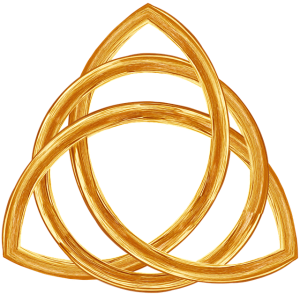
Is the Trinity an embarrassment?
One of the many reasons why Christians should talk to Muslims is that doing so makes us think more seriously about the distinctives of our faith, particularly the Incarnation and the Trinity. It was in conversation with a Muslim at the age of 20 that I first really came to an understanding of the importance of the Incarnation for my own faith. And similarly, Muslims’ persistent belief that the Trinity must be some kind of embarrassing concept for us that we sweep under the rug and can’t really defend can provoke us to deeper consideration of this doctrine.
For many Christians, it’s true that the Trinity is something we believe because we’ve been taught we’re supposed to. And while it’s true that the Trinity is a mystery we can’t fully understand, far too often this is used as an excuse to avoid thinking through what we mean when we use this language and how it affects the structure of our faith. As I suggested in my last post, a lot of Christianity is in fact functionally “Arian.” People speak as if “Jesus” is the one who mediates between us and “God,” often as the kind and loving savior who somehow persuades God to forgive us. In practice, a lot of Christians think of God as a powerful monarch on a throne who makes rules and is angry with us if we disobey them.
“Abrahamic” monotheism
Indeed, often this is what the broader concept of “monotheism” means for both those who embrace it and those who reject it. Or, at least, for what is often called “Abrahamic monotheism”–the version rooted in the ancient Hebrew Scriptures and shared, with variations, by Judaism, Christianity, and Islam. Practitioners of the Abrahamic faiths will express it in positive terms and critics in negative, but both believers and non-believers tend to think of the “Abrahamic God” as a personal, monarch-like being who created and rules the universe and interacts with human beings through commands and promises.
This generic “Abrahamic monotheism,” if taken in a fairly literal way, doesn’t seem compelling to me. I have no reason to believe that the ultimate reality in the universe is best described as powerful person (even a loving and gracious one) who makes rules as an expression of personal will. The rational reasons for believing in God don’t seem to point to anything like that. And if God is understood as an almighty and perfectly good person, then it seems to me that the problem of evil becomes completely insoluble. The “open theists,” who among intellectually serious Christians take the concept of God as a person the farthest, recognize this difficulty and thus compromise traditional understandings of God’s omnipotence and omniscience in order to save his goodness. In fact, I think that their reworking of the concept of God’s omnipotence has a lot of merit, but their extremely personal, anthropomorphic understanding of God doesn’t.
Personal or impersonal?
At the same time, the personal language used of God in Scripture and tradition is powerful and compelling. “The Lord reigns, he is clothed in splendor”; “The Lord has bared his mighty arm”; “The Lord is slow to anger and plenteous in mercy,” or non-Biblically, “God moves in a mysterious way his wonders to perform.” I believe that this language speaks to something profoundly true. But so does the language of Neo-Platonism and Vedantic philosophy: God as the One, the being of all beings, the true Self, the eternal Beauty.
Those of us who have been bruised by the more ferocious forms of monotheistic religion tend to flee to that latter set of language for refuge. But both rationally and emotionally, it is unwise I think to abandon the claim of “Abrahamic” monotheism that in the Hebrew tradition and its derivatives something profoundly like what we call a “person” is communicating with us. And if, in fact, God is the source of all reality and all reality mirrors God in some way, it is rational to believe that in some profound way what we call “personhood” also reflects God. As C. S. Lewis pointed out, thinking of God as “impersonal” may seem more profound than thinking of God as “personal,” but it actually leads to our thinking of God as something like electricity or gas, which is even more absurd, if followed through, than thinking of God as a person.
If God is real at all, God is both like and unlike all the reality that He has made and that reflects His infinite perfection, including (perhaps especially including) persons. Therefore, any true conception of God will be “personal” but also (to use a Lewis coinage), “transpersonal.” Certainly not “impersonal.”
The concept of God as Trinity fits this description. We speak of God as three Persons, not one. Yet we do not mean by this three distinct “persons” in the sense that it would bear if we were speaking of human beings. What then do we mean by it? Is it just a “mystery” in the sense of a set of words that has no real meaning?
Person as relationship
Joseph Ratzinger, in Introduction to Christianity, argues that the Trinity is in fact the source of our concept of persons as we know it. Because, as Ratzinger defines it, a person is fundamentally relational, not an autonomous individual. What the Fathers called the “perichoresis” of the Trinity–their mutual indwelling–models a way of being a person that transcends the dichotomy of individual and collective. When I say with Lewis that God is “transpersonal” or “beyond personality,” I mean emphatically that God is more than a person, not less. Or even that God is more fully personal than we are precisely because God is not “a person.” Because we cannot be fully personal in isolation from each other.
So it’s not just that the Trinity fits the need for a language about God that is personal but not “merely personal.” The Trinity reshapes our understanding of what it means to be a person, our entire understanding of reality in fact.
And in particular, if taken seriously enough, the Trinity completely upends the monarchical, authoritarian conception of God that has plagued “Abrahamic monotheism.” We tend to think of God as the “top dog” in the universe, the most powerful among the powers. But if the Trinity is true, then the fundamental reality of God is indeed love–but not primarily love for creation. To say that God first and foremost loves Himself seems repellent to many people because they are thinking of God, again, as “a person” in the individual sense. But if the Trinity is true, then God is an eternal life of love, and creation is God’s generous extension of that life and that love to beings whom He has created from nothing. The moral law is not best thought of as a set of rules conceived by a mind and enacted by a will, though we can speak of it that way. Rather, it is most fundamentally the way in which created beings reflect that eternal love that is the being of the Trinity.
If the Trinity is true. . . .
If the Trinity is true, then behind and beyond all hierarchy is the eternal love of three equal Persons who are one indivisible God, so that human relationships are most fully divine when they are most fully equal. If the Trinity is true, then the competition and violence that characterize created life are not a reflection of ultimate reality but a relic of the nothingness from which we are called, a privation and limitation characteristic of our present state of existence but to be transcended as far as possible. The three Persons live from one another’s life without any of them dominating or destroying or overcoming the others. So, as those baptized in the name of the Trinity, are we called to do.
Far from being a corruption of some simple and pure original Christianity, the Trinity is a radical development of the core insights of Biblical faith (yes, in light of the encounter with Greek philosophy) whose transformative implications we have not yet taken on board fully enough. The Trinity is not the problem. It is the solution, as yet imperfectly realized, of the problems with “simple” monarchical monotheism. Instead of a despot on a throne, the Trinity gives us an eternally relational God whose nature and whose name is indeed love. Once the imagination and heart and mind are seized by even a glimpse of that vision, all other understandings of God, for all their beauty and power, seem thin and pale by comparison. All that is good and true in both “Abrahamic monotheism” and the various forms of “pagan” philosophy and mysticism (including even Vedantic philosophy) can be reconciled and harmonized and perfected in the confession of the one God who is Father, Son, and Holy Spirit. Yes, it is a mystery, but a mystery that does not stifle inquiry and question but rather invites us to an eternal progression of deeper understanding and awe and love.
Image pixabay
Previous Post
April 19, 2022
Punch Or Be Punched? The Crucified God and Nicea's Long Shadow
Next Post
July 8, 2022 What Is Communion in Catholicism?
Browse Our Archives
Select a Category apologetics Bible Catholicism Christianity economics history Middle Ages personal Reformation Rodney Stark Uncategorized
Select a Month August 2026 June 2026 January 2026 December 2025 October 2025 June 2025 February 2025 December 2024 November 2024 June 2024 May 2024 January 2024 December 2023 April 2023 December 2022 November 2022 September 2022 July 2022 June 2022 April 2022 November 2021 September 2021 March 2021 February 2021 January 2021 December 2020 November 2020 October 2020 August 2020 July 2020 June 2020 May 2020 December 2018 October 2018 June 2018 March 2018 December 2017 November 2017 October 2017 September 2017 May 2017 April 2017 March 2017 February 2017 January 2017 December 2016 November 2016 October 2016 September 2016 August 2016 July 2016 June 2016 May 2016 April 2016 March 2016 January 2016 December 2015 November 2015 September 2015 June 2015 May 2015 April 2015 March 2015 February 2015 January 2015 December 2014 November 2014 October 2014 August 2014 June 2014 March 2014 January 2014 September 2013 August 2013 June 2013 August 2012 July 2012 October 2011 June 2011 March 2011 July 2010 March 2010 January 2008 May 2007 April 2007 February 2007 October 2006 August 2006 March 2006 January 2006 November 2005 October 2005 September 2005 August 2005 June 2005 May 2005 April 2005 March 2005 February 2005 January 2005 December 2004 November 2004 September 2004
Follow Us!
TAKE THE
Religious Wisdom Quiz
James says that trials of many kinds test what, producing perseverance?
Select your answer to see how you score.
Your character Your faith Your love Your patience
Related posts from Light in the West

What is "Christian Nationalism"? A Reply to Dennis...



TRENDING AT PATHEOS Catholic

Rejecting Doom: Christian Hope And Human Action
Christianity is a religion of hope. We are to have hope and...

It’s What Comes From Within Which Matters
One of the most difficult things for us to understand is why...

Why I Choose the Eucharist Over the Sermon
Choose the Eucharist, Not the Sermon What are we supposed to get...

5 Design Elements Found in Spiritually Rooted Homes
Putting Spirituality Into Home Decor Our homes are more than our living...

Credo: A Story of God Told with the...
About 10 years ago, I began to imagine a personal "Credo" that...

The Anatomy of Divine Revelation in Catholic Thought
The claim that God has made Himself known to human beings is...
view all Catholic blogs
Ad-Free & Subscriber Log-In Subscription Support
- About Us
- 2026 Calendar
- Videos
- Podcasts
- Library of World Religions
- Faith In Media Tracker
- Advertise With Us
- Write for Us
- Privacy Policy
- Terms of Service
- Do Not Sell My Data
- Contact Us
- Radiant Digital
- Manage Newsletter Subscriptions
- Unsubscribe From Notifications
- Sitemap
Copyright 2008-2026, Patheos. All rights reserved.
Subscription Support Ad-Free & Subscriber Log-In
Follow Patheos