
BuddhistCatholicContemplativeEvangelicalGeneral ChristianHinduJewishLatter-day SaintMuslimNew VisionsProgressive Christian
Beliefs
- Buddhist
- Catholic
- Contemplative
- Evangelical
- General Christian
- Hindu
- Jewish
- Latter-day Saint
- More Voices
- Muslim
- New Visions
- Pagan
- Progressive Christian
Topics
- Religion News
- Food and Religion
- Sports and Religion
- Religious Art
- Religious Music and Entertainment
- Religious Events
- History and Religion
- Style and Religion
- Politics and Religion
- Women in Religion
- Recreation Outdoors and Religion
- Business Finance and Religion
- Careers Workplace and Religion
- Education and Religion
- Family Parenting and Religion
- Health Fitness and Religion
- Home and Religion
- Relationships and Religion
- Technology and Religion
- Travel and Religion
Columnists
- Buddhist Columnists
- Business Finance and Religion Columnists
- Careers Workplace and Religion Columnists
- Catholic Columnists
- Contemplative Columnists
- Education and Religion Columnists
- Evangelists Columnists
- Family Parenting and Religion Columnists
- General Christian Columnists
- Health Fitness and Religion Columnists
- Hindu Columnists
- History and Religion Columnists
- Home and Religion Columnists
- Jewish Columnists
- More Voices Columnists
- Latter Day Columnists
- Muslim Columnists
- New Visions Columnists
- Nonreligious Columnists
- Pagan Columnists
- Politics and Religion Columnists
- Progressive Columnists
- Recreation Outdoors and Religion Columnists
- Relationships and Religion Columnists
- Religion News Columnists
- Religious Art Columnists
- Religious Events Columnists
- Religious Music and Entertainment Columnists
- Sports and Religion Columnists
- Style and Religion Columnists
- Technology and Religion Columnists
- Travel and Religion Columnists
- Women in Religion Columnists
Resource Library
- 2026 Calendar
- Library of World Religions
- The 100 Most Holy Places on Earth
- Patheos Answers
- Podcasts
- Videos
- Faith Leaders Database
- Anglican Episcopalian
- Bahai
- Baptist
- Buddhism
- Christianity
- Confucianism
- Eastern Orthodoxy
- Hinduism
- Holiness and Pentecostal
- ISKCON
- Islam
- Judaism
- Lutheran
- Methodist
- The Church of Jesus Christ of Latter-day Saints
- New Age
- Paganism
- Presbytarian and Reformed
- Protestantism
- Religion Behind the Scenes
- Roman Catholic
- Scientology
- Shia Islam
- Sikhism
- Sufism
- Sunni Islam
- Taoism
- Zen
- See all religions
Research Tools
 Ad-Free & Subscriber Log-In Subscription Support
Ad-Free & Subscriber Log-In Subscription Support
Follow Patheos 

- Trending:
- Forgiveness
- |
- Marriage
- |
- Consciousness
- |
- Death Penalty
- |
- Election
- |
- Halloween

- Home
- Catholic
- Ascension and the Pandemic
Ascension and the Pandemic
Last updated on: May 27, 2020 at 5:00 pm by Edwin Woodruff Tait
Ascension and the Pandemic 2020-05-27T17:00:22-05:00 Edwin Woodruff Tait
Patheos Explore the world's faith through different perspectives on religion and spirituality! Patheos has the views of the prevalent religions and spiritualities of the world.
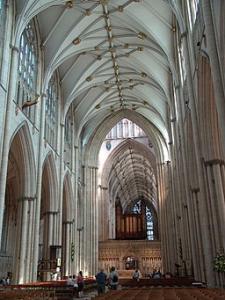
This past Sunday, many American Catholics celebrated the Ascension of the Lord into heaven. The proper time for it, of course, was actually last Thursday, but many dioceses have transferred it to the following Sunday.
This past weekend also marked the reopening of the small parish in Kentucky where I play the organ. The governor has said that churches can reopen, and the bishop has given permission also with a number of stringent guidelines. Our first Mass was actually last Wednesday. I’m only playing prelude and communion music at this point because, of course, singing is one of the most effective ways to spread the virus, so we have no vocal music other than chanting the Sanctus and Agnus Dei. But it’s been good to get back to church after two months. I’m well aware that reopening is controversial, and I’m frankly happy that it wasn’t my call. But I am not convinced it’s so obviously the wrong call that I should refuse to participate.
In Lent, when the shutdown started, it felt appropriate. It was a penitential season, and it felt like “the Lentiest Lent ever,” as someone commented on Facebook. But for those of us who live by the liturgical year, spending Easter in such a Lenten manner felt wrong.
Of course it isn’t wrong. Charity and respect for the common good demand it. But even beyond that, having Lent invade Easter in this way has reminded us forcefully of the “not yet” that lurks under even our most joyful celebrations in this fallen world. It reminds us that we have not yet arrived at the goal of our pilgrimage. Of the four classic senses of the Exodus in the Christian tradition, the fourth, anagogical sense–the passing over from this life to the fullness of the Kingdom–remains before us.
I’m glad, nonetheless, that I’ve been able to celebrate the end of the Easter season in community–to hear the words of the Mass, to go to confession, and to receive the Eucharist. Our joy in this is all the more intense for being subdued. We have always known that we see dimly in this life and not yet face to face. The masks we wear remind us of this more forcefully than usual. What binds us together, in this mortal life, is not clear vision but charity. And charity, under present circumstances, commands us to wear masks. It’s a paradox, to be sure, to distance ourselves out of charity and to hide our faces from one another in order to show our love. But the Christian faith is full of these paradoxes.
The Ascension, which we have just celebrated, is paradoxical in much the same way. Someone posted a joke on Facebook that the Ascension is when Jesus started “working from home.” The basic imagery is of disappearance, absence, return to some “other realm” beyond the sky. In York Minster there’s a ceiling boss showing the soles of Jesus’ feet surrounded by the heads of Mary and the apostles. That’s one way to think of it–Jesus is no longer with us face to face, and all we see of him are his disappearing feet.
But that’s not really what the Ascension is about. In the Gospel of John Jesus comforts the disciples by telling them that it is better for him to go away so he can send the Spirit to them. The letter to the Ephesians tells us that Jesus ascends into heaven “in order to fill all things.” He is with us more fully because he is no longer with us “under his natural dimensions.” Through the hypostatic union, the human Jesus is also the divine Logos, present from eternity and speaking to us in very atom of this world which came into being in him and through him. Yet, for Catholics, this is not a purely spiritual presence. In the Eucharist we eat and drink the true, glorified body and blood of the Lord. In the reserved Sacrament in the tabernacle, or the Host elevated in Mass and Benediction, we see Christ present with us in a material way, but not a way evident to the senses. One might almost say that He wears a mask.
It’s not so simple as “spirit matters and body doesn’t.” But I also don’t think it’s so simple as “let’s get rid of all that Platonic nonsense and celebrate our embodied Faith.” Rather, it’s an example of what Owen Barfield called “polarity.” (Warning: if you go on reading my blog you will hear about polarity a lot, and about Barfield too.) Each of the poles always leads us back to the other in a deeper way. We celebrate that God became flesh, a real body nailed to a real Cross. We also celebrate that this Incarnate God ascended into heaven and is present in every particle of creation. And yet we further celebrate that He is present “in his natural dimensions” in heaven and most fully present to us, here and now, in the form of physical bread and wine. Yet by the time we have finished explaining what this Real Presence means, most modern people’s heads are spinning and they aren’t quite sure what we are saying if it isn’t just fancy language for ritual cannibalism.
The one thing we can be sure of is that we must somehow hold on to both poles. In times of deprivation such as we have passed through, and many are still passing through, we console ourselves with spiritual communion while never letting ourselves think that this is all that really matters. We look forward longingly to a return to fully embodied worship and fully embodied community. But when we do return to it, we must remember those who cannot. We remember those who are present with us invisibly as members of the Communion of Saints. We become acutely aware of the defects and dangers and limitations of our physical community as a local expression of the Body of Christ.
To use the hoary theological cliche, we hold together the “already” and the “not yet.” Or in the words of Charles Wesley’s great Ascension hymn:
Him tho’ highest Heaven receives,
Still he loves the Earth he leaves;
Tho’ returning to his Throne,
Still he calls Mankind his own.See! He lifts his Hands above!
See! He shews the Prints of Love!
Hark! His gracious Lips bestow
Blessings on his Church below!
. . .
Master, (will we ever say)
Taken from our Head To-day;
See thy faithful Servants, see!
Ever gazing up to Thee.
Grant, tho’ parted from our Sight,
High above yon azure Height,
Grant our Hearts may thither rise,
Following Thee beyond the Skies.
Ever upward let us move,
Wafted on the Wings of Love,
Looking when our LORD shall come,
Longing, gasping after Home.
There we shall with Thee remain,
Partners of thy endless Reign,
There thy Face unclouded see,
Find our Heav’n of Heav’ns in Thee!
Previous Post

May 20, 2020
My Search for the Perfect Church
Next Post

June 5, 2020 Black Lives Matter: In Defense of Shibboleths
Browse Our Archives
Select a Category apologetics Bible Catholicism Christianity economics history Middle Ages personal Reformation Rodney Stark Uncategorized
Select a Month August 2026 June 2026 January 2026 December 2025 October 2025 June 2025 February 2025 December 2024 November 2024 June 2024 May 2024 January 2024 December 2023 April 2023 December 2022 November 2022 September 2022 July 2022 June 2022 April 2022 November 2021 September 2021 March 2021 February 2021 January 2021 December 2020 November 2020 October 2020 August 2020 July 2020 June 2020 May 2020 December 2018 October 2018 June 2018 March 2018 December 2017 November 2017 October 2017 September 2017 May 2017 April 2017 March 2017 February 2017 January 2017 December 2016 November 2016 October 2016 September 2016 August 2016 July 2016 June 2016 May 2016 April 2016 March 2016 January 2016 December 2015 November 2015 September 2015 June 2015 May 2015 April 2015 March 2015 February 2015 January 2015 December 2014 November 2014 October 2014 August 2014 June 2014 March 2014 January 2014 September 2013 August 2013 June 2013 August 2012 July 2012 October 2011 June 2011 March 2011 July 2010 March 2010 January 2008 May 2007 April 2007 February 2007 October 2006 August 2006 March 2006 January 2006 November 2005 October 2005 September 2005 August 2005 June 2005 May 2005 April 2005 March 2005 February 2005 January 2005 December 2004 November 2004 September 2004
Follow Us!
TAKE THE
Religious Wisdom Quiz
Which king of Judah destroyed Nehushtan, the bronze serpent?
Select your answer to see how you score.
Manasseh Josiah Hezekiah Uzziah
Related posts from Light in the West

What is "Christian Nationalism"? A Reply to Dennis...



TRENDING AT PATHEOS Catholic

Rejecting Doom: Christian Hope And Human Action
Christianity is a religion of hope. We are to have hope and...

It’s What Comes From Within Which Matters
One of the most difficult things for us to understand is why...

Why I Choose the Eucharist Over the Sermon
Choose the Eucharist, Not the Sermon What are we supposed to get...

5 Design Elements Found in Spiritually Rooted Homes
Putting Spirituality Into Home Decor Our homes are more than our living...

Credo: A Story of God Told with the...
About 10 years ago, I began to imagine a personal "Credo" that...

The Anatomy of Divine Revelation in Catholic Thought
The claim that God has made Himself known to human beings is...
view all Catholic blogs
Ad-Free & Subscriber Log-In Subscription Support
- About Us
- 2026 Calendar
- Videos
- Podcasts
- Library of World Religions
- Faith In Media Tracker
- Advertise With Us
- Write for Us
- Privacy Policy
- Terms of Service
- Do Not Sell My Data
- Contact Us
- Radiant Digital
- Manage Newsletter Subscriptions
- Unsubscribe From Notifications
- Sitemap
Copyright 2008-2026, Patheos. All rights reserved.
Subscription Support Ad-Free & Subscriber Log-In
Follow Patheos