
BuddhistCatholicContemplativeEvangelicalGeneral ChristianHinduJewishLatter-day SaintMuslimNew VisionsProgressive Christian
Beliefs
- Buddhist
- Catholic
- Contemplative
- Evangelical
- General Christian
- Hindu
- Jewish
- Latter-day Saint
- More Voices
- Muslim
- New Visions
- Pagan
- Progressive Christian
Topics
- Religion News
- Food and Religion
- Sports and Religion
- Religious Art
- Religious Music and Entertainment
- Religious Events
- History and Religion
- Style and Religion
- Politics and Religion
- Women in Religion
- Recreation Outdoors and Religion
- Business Finance and Religion
- Careers Workplace and Religion
- Education and Religion
- Family Parenting and Religion
- Health Fitness and Religion
- Home and Religion
- Relationships and Religion
- Technology and Religion
- Travel and Religion
Columnists
- Buddhist Columnists
- Business Finance and Religion Columnists
- Careers Workplace and Religion Columnists
- Catholic Columnists
- Contemplative Columnists
- Education and Religion Columnists
- Evangelists Columnists
- Family Parenting and Religion Columnists
- General Christian Columnists
- Health Fitness and Religion Columnists
- Hindu Columnists
- History and Religion Columnists
- Home and Religion Columnists
- Jewish Columnists
- More Voices Columnists
- Latter Day Columnists
- Muslim Columnists
- New Visions Columnists
- Nonreligious Columnists
- Pagan Columnists
- Politics and Religion Columnists
- Progressive Columnists
- Recreation Outdoors and Religion Columnists
- Relationships and Religion Columnists
- Religion News Columnists
- Religious Art Columnists
- Religious Events Columnists
- Religious Music and Entertainment Columnists
- Sports and Religion Columnists
- Style and Religion Columnists
- Technology and Religion Columnists
- Travel and Religion Columnists
- Women in Religion Columnists
Resource Library
- 2026 Calendar
- Library of World Religions
- The 100 Most Holy Places on Earth
- Patheos Answers
- Podcasts
- Videos
- Faith Leaders Database
- Anglican Episcopalian
- Bahai
- Baptist
- Buddhism
- Christianity
- Confucianism
- Eastern Orthodoxy
- Hinduism
- Holiness and Pentecostal
- ISKCON
- Islam
- Judaism
- Lutheran
- Methodist
- The Church of Jesus Christ of Latter-day Saints
- New Age
- Paganism
- Presbytarian and Reformed
- Protestantism
- Religion Behind the Scenes
- Roman Catholic
- Scientology
- Shia Islam
- Sikhism
- Sufism
- Sunni Islam
- Taoism
- Zen
- See all religions
Research Tools
 Ad-Free & Subscriber Log-In Subscription Support
Ad-Free & Subscriber Log-In Subscription Support
Follow Patheos 

- Trending:
- Forgiveness
- |
- Marriage
- |
- Consciousness
- |
- Death Penalty
- |
- Election
- |
- Halloween
 Life Transparent
- Home
- Catholic
- My Manifesto on Prenatal Genetic Testing
My Manifesto on Prenatal Genetic Testing
Last updated on: October 8, 2026 at 10:50 pm by M. Severson
My Manifesto on Prenatal Genetic Testing 2026-10-08T22:50:41-04:00 M. Severson
Patheos Explore the world's faith through different perspectives on religion and spirituality! Patheos has the views of the prevalent religions and spiritualities of the world.
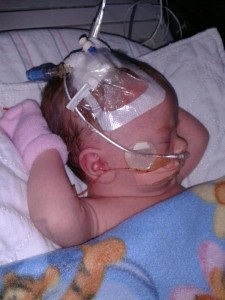
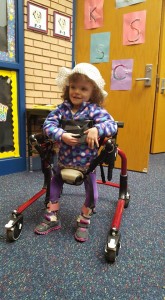
Last fall I was at my daughter’s yearly appointment with her geneticist. A geneticist is a medical doctor who specializes in the diagnosis and management of chromosomal syndromes and genetics. Martha is diagnosed with a rare syndrome known as an “Unbalanced Translocation,” in which genetic material trades places within the chromosomes. Martha is missing the end of her 5th chromosome, and in its place are additional parts of her 8th chromosome. This type of abnormality is so rare that there is no documentation of any other case. There are infinite ways that genetic material can become unbalanced, and Martha’s arrangement falls into the category of “rare and unique.”
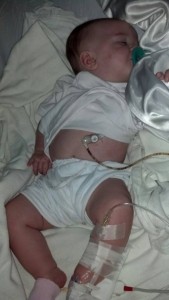
When she was born, no one knew she was different. Because there is no one to compare Martha to, her symptoms and facial features didn’t fall into a diagnosis. The three months between her birth and diagnosis were very difficult, watching her health deteriorate with no diagnosis. Talking to her geneticist three years later, I was reeling from the trauma of not knowing for those three months, and that nothing was picked up at birth or shortly after.
You see, having a disabled baby does something to you. Thinking your baby might die, needing multiple hospital stays and surgeries, and not having a single clue as to what the future holds, hardens you a bit. As a mother, you no longer think that the odds apply to you. You change a little, because you’ve seen the sick kids. You know that you’re not immune to anything anymore. The naivety is lifted, and you look at the world through a lens where if your child has been born under unspeakable odds, nothing else is off limits.
Property of M. Severson
This genetics visit was bringing all these emotions back to life, because I was pregnant. And I wanted to do things differently this time.
For my first four pregnancies I hadn’t considered any genetic testing. Refusing seemed like the right thing to do. I’d say what I heard others say,
“We’ve refused all testing.”
“An abnormal result wouldn’t change our decision, so there’s no point.”
“We are happy with any baby, girl or boy, healthy or not.”
And so on.
I’ll admit, too, that there was definitely a hint of moral superiority in our decision to deny prenatal testing. A sort of, “By Golly, we’ll show the world how to welcome unborn children,” attitude. And when our only ultrasounds came back normal at 20-weeks, we sighed with deep relief and assumed smooth sailing. Most people have healthy kids, we thought, and we wouldn’t be in that number that didn’t.
Ignorance is bliss.
Property of M. Severson
Talking to the geneticist about my options for my 5th pregnancy, I explained, “I don’t want to do any testing that is a risk to the baby. But, what can we do to get close to a diagnosis without being invasive? I’d take another Martha in a heartbeat. But I want to know as much as I can ahead of time. We could have spared her so much trauma and illness had we known more those early days.”
Then, myriad tests were presented. Tests with the technology to use the mother’s blood, separate it from the cells that cross the placenta into the mother’s bloodstream, then test baby’s DNA. There are tests for common chromosomal problems, and then there are more refined tests referred to as “Non-Invasive Prenatal Testing,” which can test for any kind of duplicated or deleted genetic material. In the case of my daughter, the Progenity and MaterniT21 test would have been normal, screening for common issues, but the more refined test could have shown that she was carrying extra material on chromosome 8.
As with many types of Trisomy (whole extra chromosomes, or partial extra chromosomes), there are often markers that can be tested using a Nuchal Translucency ultrasound, which measures the space of fluid at the base of the neck for a baby in the first trimester. Had I had this test done at 12-weeks with Martha, there’s a very good chance it would have been abnormal.
With so many of these tests, we hear cries of backlash. “These tests are evil. They increase abortion, and it’s just another way to exterminate babies with Down Syndrome and other birth defects.”
And I get it. I do. Because I thought the same thing, because I didn’t understand. But I have a disabled child, and I can play that card now, because of what my experience has taught me. And that’s this: I am pro-life. My children will never fear any harm from me in the womb. End of story. And so WHY do we continue to spout these lines about refusing testing and think we are doing the more noble thing?
If you don’t want to have ultrasounds and screenings, no problem. If it causes undo anxiety and you’d rather not even think about, that’s your call, and I have no criticism. Be at peace, expectant mother. But let’s not put it under the umbrella of being a prolife decision. Because gathering information about our unborn children, information, which in some cases can be both life-saving, increase positive birth outcomes, and ultimately prepare a family to best care for their child is VERY prolife. There is nothing virtuous about keeping the unborn child a mystery if it’s done under the guise of believing that to know more is somehow wrong. That the only way to accept a disabled child is to be blindsided with that news at birth.
The stigma among prenatal testing is, sadly, that with information comes termination. Nothing tears my heart more than the thought that such a huge percentage of children with syndromes and birth defects are aborted. I can’t help but picture my daughter’s face on each of these children and mourn. However, I still believe it’s very important to make clear distinctions about what is actually happening here, and the bottom line is that it’s information. Risk free, no less.
Property of M. Severson
As statistics go, I was a statistic of my own when only a week after gathering plans for my pregnancy, I miscarried. My baby #5 became the 1 out of 5 babies lost to miscarriage. I never reached the 10-week mark when I could have learned more about my baby, even their gender, and perhaps have even know why we lost him or her. As I marvel at technology and what it can provide us, I do take comfort that at some point in the near future, whether our babies make it to term or not, that we will know who they are, call them by name, and have that much more awareness of the life within, simply from what we can gather from mother’s blood.
And that’s incredible.
Previous Post

April 25, 2016
My Gluten-Free Challenge
Next Post

May 16, 2016 Stuff People Should Know: The Sharing Usurper
Browse Our Archives
Select a Category Advocacy All the Tears Autoimmune Disease Babies chronic illness cooking domestic failure Genetics Gluten-Free homeschooling motherhood OVERWHELMED parenthood Parenting Pregnancy Pro-Life Recipes Rheumatoid Arthritis school Special Needs Uncategorized Update
Select a Month June 2017 May 2017 July 2016 June 2016 May 2016 April 2016 March 2016
Follow Us!
TAKE THE
Religious Wisdom Quiz
The glory of this present house will be greater than the glory of the former house. What building is being reconstructed?
Select your answer to see how you score.
The temple The palace The city wall The whole of Jerusalem
Related posts from Life Transparent

Having Another Baby With A Special Needs Child

TRENDING AT PATHEOS Catholic

The Parable Of The Sower And The Word...
One of Christ’s most famous parables is that of the sower who...

Rejecting Doom: Christian Hope And Human Action
Christianity is a religion of hope. We are to have hope and...

Why I Choose the Eucharist Over the Sermon
Choose the Eucharist, Not the Sermon What are we supposed to get...

5 Design Elements Found in Spiritually Rooted Homes
Putting Spirituality Into Home Decor Our homes are more than our living...

Credo: A Story of God Told with the...
About 10 years ago, I began to imagine a personal "Credo" that...

The Anatomy of Divine Revelation in Catholic Thought
The claim that God has made Himself known to human beings is...
view all Catholic blogs
Ad-Free & Subscriber Log-In Subscription Support
- About Us
- 2026 Calendar
- Videos
- Podcasts
- Library of World Religions
- Faith In Media Tracker
- Advertise With Us
- Write for Us
- Privacy Policy
- Terms of Service
- Do Not Sell My Data
- Contact Us
- Radiant Digital
- Manage Newsletter Subscriptions
- Unsubscribe From Notifications
- Sitemap
Copyright 2008-2026, Patheos. All rights reserved.
Subscription Support Ad-Free & Subscriber Log-In
Follow Patheos