
BuddhistCatholicContemplativeEvangelicalGeneral ChristianHinduJewishLatter-day SaintMuslimNew VisionsProgressive Christian
Beliefs
- Buddhist
- Catholic
- Contemplative
- Evangelical
- General Christian
- Hindu
- Jewish
- Latter-day Saint
- More Voices
- Muslim
- New Visions
- Pagan
- Progressive Christian
Topics
- Religion News
- Food and Religion
- Sports and Religion
- Religious Art
- Religious Music and Entertainment
- Religious Events
- History and Religion
- Style and Religion
- Politics and Religion
- Women in Religion
- Recreation Outdoors and Religion
- Business Finance and Religion
- Careers Workplace and Religion
- Education and Religion
- Family Parenting and Religion
- Health Fitness and Religion
- Home and Religion
- Relationships and Religion
- Technology and Religion
- Travel and Religion
Columnists
- Buddhist Columnists
- Business Finance and Religion Columnists
- Careers Workplace and Religion Columnists
- Catholic Columnists
- Contemplative Columnists
- Education and Religion Columnists
- Evangelists Columnists
- Family Parenting and Religion Columnists
- General Christian Columnists
- Health Fitness and Religion Columnists
- Hindu Columnists
- History and Religion Columnists
- Home and Religion Columnists
- Jewish Columnists
- More Voices Columnists
- Latter Day Columnists
- Muslim Columnists
- New Visions Columnists
- Nonreligious Columnists
- Pagan Columnists
- Politics and Religion Columnists
- Progressive Columnists
- Recreation Outdoors and Religion Columnists
- Relationships and Religion Columnists
- Religion News Columnists
- Religious Art Columnists
- Religious Events Columnists
- Religious Music and Entertainment Columnists
- Sports and Religion Columnists
- Style and Religion Columnists
- Technology and Religion Columnists
- Travel and Religion Columnists
- Women in Religion Columnists
Resource Library
- 2026 Calendar
- Library of World Religions
- The 100 Most Holy Places on Earth
- Patheos Answers
- Podcasts
- Videos
- Faith Leaders Database
- Anglican Episcopalian
- Bahai
- Baptist
- Buddhism
- Christianity
- Confucianism
- Eastern Orthodoxy
- Hinduism
- Holiness and Pentecostal
- ISKCON
- Islam
- Judaism
- Lutheran
- Methodist
- The Church of Jesus Christ of Latter-day Saints
- New Age
- Paganism
- Presbytarian and Reformed
- Protestantism
- Religion Behind the Scenes
- Roman Catholic
- Scientology
- Shia Islam
- Sikhism
- Sufism
- Sunni Islam
- Taoism
- Zen
- See all religions
Research Tools
 Ad-Free & Subscriber Log-In Subscription Support
Follow Patheos 

- Trending:
- Advent
- |
- Forgiveness
- |
- Thanksgiving
- |
- Election
- |
- Seasonal Holidays
- |
- Marriage
 LECTIO
- Home
- Progressive Christian
- The God of Israel and the Children of Other Nations: The Lectionary for the Seventh Sunday after Pentecost
The God of Israel and the Children of Other Nations: The Lectionary for the Seventh Sunday after Pentecost
Last updated on: June 27, 2016 at 8:24 am by Eric Smith
The God of Israel and the Children of Other Nations: The Lectionary for the Seventh Sunday after Pentecost 2016-06-24T18:24:57-07:00 Eric Smith
Patheos Explore the world's faith through different perspectives on religion and spirituality! Patheos has the views of the prevalent religions and spiritualities of the world.

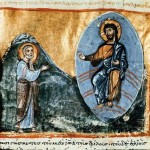
An unidentified icon of the 70 apostles. Image in the public domain, taken from Wikipedia.
2 Kings 5:1-14 and/or Isaiah 66:10-14
What It’s About: These passages really don’t have a ton to do with each other. The 2 Kings passage is about Naaman, a mighty warrior with leprosy, and a servant girl, unnamed, who suggests to him that he could be healed by a prophet of her homeland, Israel. The Isaiah text is a classic text of consolation–casting both Jerusalem and God’s self as mothering, feminine figures. The common thread is the feminine–in the girl’s case faithful awareness, and in the Isaiah case the protective and providing care of a mother.
What It’s Really About: The 2 Kings text is a complicated one. It combines a few different variables into a single story, but at its heart it is a fairly standard belief/disbelief story. People who like to imagine that the New Testament is somehow fundamentally different from the Hebrew Bible should take note of this story; it’s easy to imagine Jesus telling something like this as a parable. It’s a kind of enacted story about the girl’s knowledge of the truth in the face of foreign ignorance of Israel’s God.
What It’s Not About: The girl’s name isn’t mentioned, giving the impression that that bit of information was irrelevant. And it probably was, in that patriarchal place and time. We’d prefer to know it, though, because we recognize that the girl has made the most important contribution of the story. Her namelessness adds to our sense that this story is somewhat parable-like; a young servant girl stands in for “the most unlikely figure” in the catalog of anonymous narrative characters.
Maybe You Should Think About: Maybe think about telling this story from the girl’s perspective. Why is she suggesting an Israelite prophet to heal her captor’s leprosy? Is it altruism or hope? Is it a way to curry favor, or get word back home that she’s alive, or something else? There are a lot of possible reasons, but “I am a faithful Israelite and I know that the prophets of Israel and the God of Israel are the only ones that can heal you, dear master” seems like one of the least plausible ones. Why is this girl bringing this to the attention of higher-ups?
What It’s About: This passage from near the end of Galatians is part of Paul’s final exhortation to the Galatians. The letter that has preceded this passage has been contentious and angry; Paul is defensive about his own ministry and the status of the Galatians in the letter, and here at the end he might be talking a bit to himself. “You do you” might be the best translation for the age of Facebook memes. Take care of your own business. Don’t mind others’ business so much. (Paul is one to talk, given what’s come before in the letter).
What It’s Really About: Like so much in this letter, here at the end Paul is concerned with gentile immorality. This whole section is a reminder to the gentile Galatians that they need to take seriously their responsibility to be morally upright. Like most Jews, Paul thought of most gentiles as incorrigibly corrupt, given to sin and generally unsavory things. At the end of his letter, Paul is one more time trying to remind his congregation to stay on the wagon. There is a little bit of a sense here that Paul is trading on some shared history and language–I would bet that “God will not be mocked” is a phrase the Galatians had heard before. In any case this is a reminder, not a new teaching. This is a “don’t forget” at the end of the sermon.
What It’s Not About: This is not the point of the passage, but verse 11 is one of my favorite verses in the New Testament. It’s a little insight into Paul’s writing process; he had a scribe write the bulk of the letter, but at the end he took the pen and added his own greetings. And his handwriting was not as good as the scribe’s. What a marvelous little detail!
Maybe You Should Think About: Verses 12-15 are interesting. If Paul is here writing in his own hand, in large untidy letters, and if he’s closing the letter out that way, then the stuff he writes there must be really important. He must think that it’s a kind of synopsis of the rest that’s come before. And what does he talk about? Circumcision and boasting. That’s a good indication of Paul thinks the letter has been about, and what he wants the Galatians to remember about when they no longer have the letter in their hands.
What It’s About: Here we have Jesus sending out “seventy others” to preach the gospel. This is an interesting moment; it’s a pretty dramatic strategy change for the historical Jesus, who seemed to mostly teach to crowds who followed him. This looks more like an evangelism program–like something that might have belonged to the later church, and not to Jesus’ own time. The instructions are interesting; they anticipate rejection and hostility. Why? And they also anticipate acceptance and welcome in other places. Why is that? Keeping in mind Luke’s audience (Roman generally, and possibly a Roman official named Theophilus in particular), what could this story be communicating?
What It’s Really About: This is a story about what happens with Jesus-followers move beyond the friendly boundaries of the communities in which Jesus had been operating, and begin to spread the message. There are other stories like this one–the Samaritan Woman comes to mind as someone who spreads the word beyond Jesus’ normal context, and the Syro-Phoenician woman also brings up this question of the boundaries of Jesus’ ministry. It seems like different gospel writers contended in different ways with the question of how and when and why the Jesus movement slipped out of its banks and began to move into the broader world. This story is one of that genre.
What It’s Not About: This is not really a blueprint for evangelism, no matter how much some people try to make it into one. For starters, the story presupposes a world that’s fairly split between hostility and acceptance, with not much in between; our world is a lot more subtle than that. And one of the most salient facts about the world today is that there are very few people for whom Jesus is news–Jesus is a pretty well-known guy. Some people just don’t like him. That’s a very different evangelism task than the one described in the text. Shaking the dust off your feet doesn’t seem like a good response. Better to take this story in its context, perhaps as a way of explaining how Christianity began to go global.
Maybe You Should Think About: Think about verse 19 as a caution against taking scripture too literally.
Previous Post
June 21, 2016
Fire and the Fruits: The Lectionary for the Sixth Sunday after Pentecost
Browse Our Archives
Select a Category Uncategorized
Select a Month November 2016 October 2016 September 2016 August 2016 July 2016 June 2016 May 2016 April 2016 March 2016 February 2016 January 2016 December 2015 November 2015 October 2015 September 2015 August 2015 July 2015 June 2015 May 2015 April 2015 March 2015 February 2015
Follow Us!
TAKE THE
Religious Wisdom Quiz
What was the first plague on Egypt?
Select your answer to see how you score.
Nile turned to Blood Hail Lice Death of the Firstborn
Related posts from LECTIO
Shepherds and Crucified Kings: The Lectionary for Reign...
The Days Will Come: The Lectionary for the...
Suffering and God: The Lectionary for the 25th...

Collaboration and Destruction: The Lectionary for the 24th...
TRENDING AT PATHEOS Progressive Christian

Personal Devotion After Deconstruction
It’s pretty standard for progressive believers to reject aspects of their religious...

The Secret behind A Charlie Brown Thanksgiving
Where Franklin Sat at Charlie Brown's Thanksgiving Table Sparky was sticking to...

Bridging the Gap Between God and Man
From Far Off to the Ultimate Embrace “God is a Spirit: and...

Let Matthew 25 Guide You to a Greater...
With the crisp feel of fall in the air, our minds quickly...

Can a Chatbot Touch Your Soul?
Can a chatbot offer genuine spiritual counsel? One conversation brought me to...

Religion and Politics: How Should We Then Live?
Two cultural axioms get repeated in polite company. Don't mix religion and...
view all Progressive Christian blogs
Ad-Free & Subscriber Log-In Subscription Support
- About Us
- 2026 Calendar
- Videos
- Podcasts
- Library of World Religions
- Faith In Media Tracker
- Advertise With Us
- Write for Us
- Privacy Policy
- Terms of Service
- Do Not Sell My Data
- Contact Us
- Radiant Digital
- Manage Newsletter Subscriptions
- Unsubscribe From Notifications
- Sitemap
Copyright 2008-2026, Patheos, part of the Radiant Digital network of media brands. All rights reserved.
Subscription Support Ad-Free & Subscriber Log-In
Follow Patheos