
BuddhistCatholicContemplativeEvangelicalGeneral ChristianHinduJewishLatter-day SaintMuslimNew VisionsProgressive Christian
Beliefs
- Buddhist
- Catholic
- Contemplative
- Evangelical
- General Christian
- Hindu
- Jewish
- Latter-day Saint
- More Voices
- Muslim
- New Visions
- Pagan
- Progressive Christian
Topics
- Religion News
- Food and Religion
- Sports and Religion
- Religious Art
- Religious Music and Entertainment
- Religious Events
- History and Religion
- Style and Religion
- Politics and Religion
- Women in Religion
- Recreation Outdoors and Religion
- Business Finance and Religion
- Careers Workplace and Religion
- Education and Religion
- Family Parenting and Religion
- Health Fitness and Religion
- Home and Religion
- Relationships and Religion
- Technology and Religion
- Travel and Religion
Columnists
- Buddhist Columnists
- Business Finance and Religion Columnists
- Careers Workplace and Religion Columnists
- Catholic Columnists
- Contemplative Columnists
- Education and Religion Columnists
- Evangelists Columnists
- Family Parenting and Religion Columnists
- General Christian Columnists
- Health Fitness and Religion Columnists
- Hindu Columnists
- History and Religion Columnists
- Home and Religion Columnists
- Jewish Columnists
- More Voices Columnists
- Latter Day Columnists
- Muslim Columnists
- New Visions Columnists
- Nonreligious Columnists
- Pagan Columnists
- Politics and Religion Columnists
- Progressive Columnists
- Recreation Outdoors and Religion Columnists
- Relationships and Religion Columnists
- Religion News Columnists
- Religious Art Columnists
- Religious Events Columnists
- Religious Music and Entertainment Columnists
- Sports and Religion Columnists
- Style and Religion Columnists
- Technology and Religion Columnists
- Travel and Religion Columnists
- Women in Religion Columnists
Resource Library
- 2026 Calendar
- Library of World Religions
- The 100 Most Holy Places on Earth
- Patheos Answers
- Podcasts
- Videos
- Faith Leaders Database
- Anglican Episcopalian
- Bahai
- Baptist
- Buddhism
- Christianity
- Confucianism
- Eastern Orthodoxy
- Hinduism
- Holiness and Pentecostal
- ISKCON
- Islam
- Judaism
- Lutheran
- Methodist
- The Church of Jesus Christ of Latter-day Saints
- New Age
- Paganism
- Presbytarian and Reformed
- Protestantism
- Religion Behind the Scenes
- Roman Catholic
- Scientology
- Shia Islam
- Sikhism
- Sufism
- Sunni Islam
- Taoism
- Zen
- See all religions
Research Tools
 Ad-Free & Subscriber Log-In Subscription Support
Ad-Free & Subscriber Log-In Subscription Support
Follow Patheos 

- Trending:
- Forgiveness
- |
- Marriage
- |
- Consciousness
- |
- Death Penalty
- |
- Election
- |
- Halloween
 LECTIO
- Home
- Progressive Christian
- Apocalpyses and Kings: The Lectionary for Reign of Christ Sunday
Apocalpyses and Kings: The Lectionary for Reign of Christ Sunday
Last updated on: November 15, 2015 at 11:01 am by Eric Smith
Apocalpyses and Kings: The Lectionary for Reign of Christ Sunday 2015-11-14T11:01:51-07:00 Eric Smith
Patheos Explore the world's faith through different perspectives on religion and spirituality! Patheos has the views of the prevalent religions and spiritualities of the world.
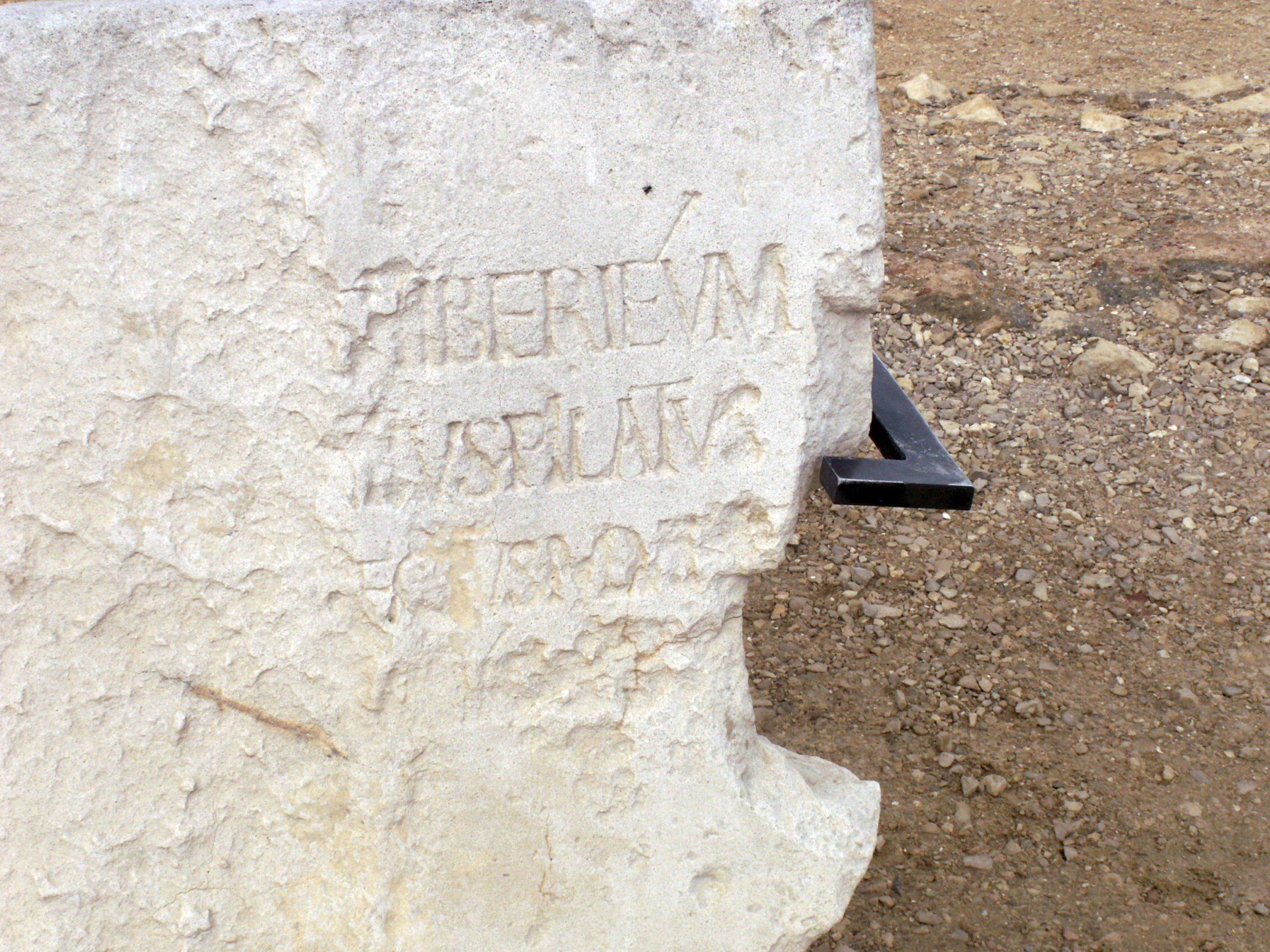
An inscription, discovered in 1961, with Pontius Pilate’s name included. Used under license CC BY-SA 2.0
2 Samuel 23:1-7 and/or Daniel 7:9-10, 13-14
What It’s About: These passages are both about triumph, rule, and power. The 2 Samuel passage records David’s last words, which are a kind of reflection on the power of the Israelite kingship and the power of the Israelite God. The Daniel passage is more apocalyptic, giving a glimpse of the future reign of God. Both envision a kind of Godly rule, on earth or in heaven or both, in a way that puts things right with the world.
What It’s Really About: The 2 Samuel passage is a kind of self-eulogizing on the part of David, and a setting-out of the terms of the kingship in the future. David is putting forward what he thinks an ideal king will be. Of course, with the benefit of hindsight, we can say that his advice was not much good; the kings that followed David almost invariably failed to live up to either his example or his word. Christians, then, take his words as a kind of description of the messiah as Jesus fit the mold, as a godly king who reigns justly. The Daniel passage is more cosmological, but it’s also one that’s easily appropriated to talk about Jesus. In its original context, it’s a kind of apocalyptic vision of God’s final victory, with God reigning unchallenged over all creation. As Christians use it, though, it becomes less theological and more Christological, serving to describe what the church means by “reign of Christ.”
What It’s Not About: Christians have to always remember, with this and other texts from the Old Testament/Hebrew Bible, that they are not really about Jesus. No one who wrote them or heard them in their original contexts had any notion of Jesus, and they would have been confused and offended by these texts being applied to someone like Jesus. Christians, though, have read these texts this way, and that’s fine, so long as we recognize that they are second-hand. These texts are useful to Christians insofar as we are piggybacking on someone else’s vision. It’s a good vision, and worthy of adoption by Christians, but we should remember where it comes from.
Maybe You Should Think About: This Sunday is traditionally called “Christ the King” Sunday. I prefer the less gendered language of “Reign of Christ” Sunday. But either way, we have to think about what kind of “king” or “reign” is in view here. The 2 Samuel text is about Israelite kingship. The Daniel text is about the eternal rule of God. Neither one is quite about Jesus. But: in what sense does Jesus reign? What do we mean by that? Is it like a king? Is it like a God? Both? Something else? Metaphorical speech is useful, but it is always limited. What does a “king” mean to us in 2015?
What It’s About: Notice that Reign of Christ Sunday’s lectionary is full of apocalyptic texts. Why is that? Perhaps it’s because the vision of the future always involves some sort of triumph, in which our side rules absolutely, like a king would rule. That’s true in Daniel (God reigns eternal), and it’s true in Revelation. Here, John isn’t speaking directly about kingship (until the end), but it is a vision of triumph and power. Apocalyptic texts are invariably written by people who do not possess power, and cannot soon hope to hold reign over others. They usually assert power in the future, then; “someday,” they say, “we will win out.” Whether that is the right message for 21st western Christianity is for you to decide.
What It’s Really About: The longer I study the bible, the more convinced I become that Revelation is the least appreciated book in the collection. I don’t mean that it’s misunderstood–although it is woefully, terribly misunderstood–but I mean that it has not usually been recognized for its messages of hopefulness and an irenic future. That future, of course, stands on the bones of enemies. But we need not give our assent to that in order to see the hopefulness of this passage, and of others like chapter 21. This must have been an intensely hopeful text for its ancient readers and hearers; it can be for us too.
What It’s Not About: This isn’t the reason this text is included on Reign of Christ Sunday, but stop for a second and ask whether these verses can function as a kind of proto-creed. It ticks off a few claims about Jesus–faithful witness, firstborn of the dead, ruler of the kings of the earth, who loves us, and freed us from sin by his blood, made us to be a kingdom, made us to be priests–that really make a nice shorthand for late 1st and early 2nd century ideas about who Jesus was. In the Greek, it might be even more nuanced than that, as both the word for “faithful” and the word for “witness” get their own definite articles. You could almost translate it something like “the faithful one, the witness/martyr…” That would fit really nicely with some New Perspective insights into the word “faith” in the New Testament.
Maybe You Should Think About: This text was written by very early Christians who were being persecuted within a larger political context, the Roman Empire. This is from a time before widespread and systematic persecutions, but it’s clear from the rest of Revelation that these communities felt like they were under the thumb of oppression. In a time when most of you will be reading this post live in the greatest superpower on earth (or in one of its allies), how do we read these kinds of apocalyptic texts that promise to overcome enemies with an eternal reign?
What It’s About: This is Jesus’ audience with Pontius Pilate, which revolves around kingship. Pilate wants to know if Jesus thinks of himself as king of the Jews–and Pilate certainly has his reasons for wanting to know. Jesus, for his part, seems reluctant to say anything. He is not a cooperative witness or suspect. The exchange, though, allows Jesus to nuance his identity. He is a king, maybe, not in a different kind of way.
What It’s Really About: The gospels’ treatment of Pilate is the subject of much debate; I know a graduate student writing on the subject right now. Pilate comes off as a thoughtful and deliberative person, and not as a notoriously harsh ruler even by the standards of the Roman Empire (which he was according to a few ancient sources). You can see here, though, the way Pilate simply wants to get at the question of who Jesus thinks he is. If he’s a king, he has to die; if he’s not, he probably still has to die, but under a different calculation.
What It’s Not About: This isn’t quite the earthly city/heavenly city idea that would develop and flourish under Augustine, but there are the beginnings of something like that here. Jesus is clear that his kingdom “is not from here,” but doesn’t elaborate much. Where is it from? He moves on from there to talk about truth. No easy answers.
Maybe You Should Think About: Compare this passage to the 2 Samuel above, where David describes an ideal king. Is this kind of kingship recognizable in the terms David set out? Why or why not? What has changed?
Next Post

November 22, 2015 Prophets and Fig Trees: The Lectionary for the First Sunday of Advent
Browse Our Archives
Select a Category Uncategorized
Select a Month November 2016 October 2016 September 2016 August 2016 July 2016 June 2016 May 2016 April 2016 March 2016 February 2016 January 2016 December 2015 November 2015 October 2015 September 2015 August 2015 July 2015 June 2015 May 2015 April 2015 March 2015 February 2015
Follow Us!
TAKE THE
Religious Wisdom Quiz
The Lord is close to the brokenhearted and saves those who are crushed in ____.
Select your answer to see how you score.
Fear Grief Spirit Pain
Related posts from LECTIO
Shepherds and Crucified Kings: The Lectionary for Reign...
The Days Will Come: The Lectionary for the...
Suffering and God: The Lectionary for the 25th...

Collaboration and Destruction: The Lectionary for the 24th...
TRENDING AT PATHEOS Progressive Christian

Why Christians Have a Sacred Duty to Vote:...
The Bible offers strong support for the sacred duty to vote. Here...

What Being a Modern-Day Apostle Means to Me
In my last column, I discussed the ins and outs of modern-day...

Did Ancient China Once Worship the God of...
Across human history, a common thread weaves through the origins of the...

Love Your Neighbor – Including Earth-Kin: Lev. 19,...
God’s command to love your neighbor means acting in an ethical and...

Lead a Church Study of “Jesus and Lao...
Guest writer Jack Thomas (The Irreverent Reverend) reflects on leading his church...

Principles for Understanding the Apostolic Ministry Today
Whenever people discover that my formal ministry title is "apostle," as in...
view all Progressive Christian blogs
Ad-Free & Subscriber Log-In Subscription Support
- About Us
- 2026 Calendar
- Videos
- Podcasts
- Library of World Religions
- Faith In Media Tracker
- Advertise With Us
- Write for Us
- Privacy Policy
- Terms of Service
- Do Not Sell My Data
- Contact Us
- Radiant Digital
- Manage Newsletter Subscriptions
- Unsubscribe From Notifications
- Sitemap
Copyright 2008-2026, Patheos. All rights reserved.
Subscription Support Ad-Free & Subscriber Log-In
Follow Patheos