
BuddhistCatholicContemplativeEvangelicalGeneral ChristianHinduJewishLatter-day SaintMuslimNew VisionsProgressive Christian
Beliefs
- Buddhist
- Catholic
- Contemplative
- Evangelical
- General Christian
- Hindu
- Jewish
- Latter-day Saint
- More Voices
- Muslim
- New Visions
- Pagan
- Progressive Christian
Topics
- Religion News
- Food and Religion
- Sports and Religion
- Religious Art
- Religious Music and Entertainment
- Religious Events
- History and Religion
- Style and Religion
- Politics and Religion
- Women in Religion
- Recreation Outdoors and Religion
- Business Finance and Religion
- Careers Workplace and Religion
- Education and Religion
- Family Parenting and Religion
- Health Fitness and Religion
- Home and Religion
- Relationships and Religion
- Technology and Religion
- Travel and Religion
Columnists
- Buddhist Columnists
- Business Finance and Religion Columnists
- Careers Workplace and Religion Columnists
- Catholic Columnists
- Contemplative Columnists
- Education and Religion Columnists
- Evangelists Columnists
- Family Parenting and Religion Columnists
- General Christian Columnists
- Health Fitness and Religion Columnists
- Hindu Columnists
- History and Religion Columnists
- Home and Religion Columnists
- Jewish Columnists
- More Voices Columnists
- Latter Day Columnists
- Muslim Columnists
- New Visions Columnists
- Nonreligious Columnists
- Pagan Columnists
- Politics and Religion Columnists
- Progressive Columnists
- Recreation Outdoors and Religion Columnists
- Relationships and Religion Columnists
- Religion News Columnists
- Religious Art Columnists
- Religious Events Columnists
- Religious Music and Entertainment Columnists
- Sports and Religion Columnists
- Style and Religion Columnists
- Technology and Religion Columnists
- Travel and Religion Columnists
- Women in Religion Columnists
Resource Library
- 2026 Calendar
- Library of World Religions
- The 100 Most Holy Places on Earth
- Patheos Answers
- Podcasts
- Videos
- Faith Leaders Database
- Anglican Episcopalian
- Bahai
- Baptist
- Buddhism
- Christianity
- Confucianism
- Eastern Orthodoxy
- Hinduism
- Holiness and Pentecostal
- ISKCON
- Islam
- Judaism
- Lutheran
- Methodist
- The Church of Jesus Christ of Latter-day Saints
- New Age
- Paganism
- Presbytarian and Reformed
- Protestantism
- Religion Behind the Scenes
- Roman Catholic
- Scientology
- Shia Islam
- Sikhism
- Sufism
- Sunni Islam
- Taoism
- Zen
- See all religions
Research Tools
 Ad-Free & Subscriber Log-In Subscription Support
Ad-Free & Subscriber Log-In Subscription Support
Follow Patheos 

- Trending:
- Forgiveness
- |
- Marriage
- |
- Consciousness
- |
- Death Penalty
- |
- Election
- |
- Halloween
 Leaning Into Mystery
- Home
- Pagan
- Practices: stillness
Practices: stillness
Last updated on: April 12, 2013 at 8:00 am by Sarah Twichell
Practices: stillness 2013-04-07T21:04:18-04:00 Sarah Twichell
Patheos Explore the world's faith through different perspectives on religion and spirituality! Patheos has the views of the prevalent religions and spiritualities of the world.

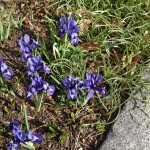
Photo by Cordelia Kopp
In the world we share, stillness is an exception much more than a rule. We are busy, hurried, overcommitted, overextended. For the simple reason of catching a break, a practice of stillness and silence would be worth cultivating. But too often, we also use the sound and fury of our lives as a screen to hide behind. Without really intending it, we cultivate disconnection from things that we find uncomfortable: emotions, fears, and doubts. Sometimes I also use it to escape things that are uncomfortable on a deeper level: my own mistakes or failures, or places where my integrity or deepest desires call me away from what seems normal or expected or safe.
None of these, of course, are things that it helps us to avoid, but doing so is easy and choosing otherwise usually isn’t — at least, up until the point where we have no other choice. So cultivating regular space in which you are not trying to do anything is a tremendously valuable practice.
I’ve personally found value in both the practice of focusing on a single thing — a mantra, counting breaths, chanting — and in letting my mind soften into presence and connection without trying to guide my thoughts. Some forms of practice work better for one than the other, while others work equally well for both. Similarly, some kinds of magic and ritual rely more on focus while others rely more on openness, so your other practices can be a useful guide in deciding how to pursue this one.
Sitting meditation is one of the best known ways to cultivate stillness. You can learn to sit in a traditional Buddhist style of meditation (I’m fond of Susan Piver’s Open Heart Project, which teaches Shambala Buddhist meditation), through a secular approach like mindfulness meditation, or with a specifically Pagan focus. I’ve only introduced sitting seriously into my own practice in the last few months, so I can’t report conclusively on how it works, but I know of no one who has done it for years and then declared it worthless, and I’m willing to commend it to your consideration on that basis alone.
If sitting isn’t your style, or if that kind of practice doesn’t fit well into your life, I think other things can offer some of the same benefits. A boss of mine once told me that the secret to happiness was to take long walks daily and let your mind wander, and I have indeed found this to be a useful way to invite clarity and spaciousness into my life. Friends who love to run or cycle tell me that these forms of exercise can be a medtiation, and I find simple, repetitive actions like swimming or knitting can also work.
For me, the experience of doing something repetitive is valuable because I get a break from my thinking, story-telling, life-explaining brain; the experience of literally doing nothing and listening is valuable because it nurtures my deepest connections.
Chime in: what’s your experience with stillness and silence? How are they helpful? When do you resist them the most?
Previous Post

April 10, 2013
On love
Next Post
April 15, 2013 Practicing Together #12
Browse Our Archives
Select a Category about practice formal practice how to life as practice practicing together reviews Uncategorized
Select a Month January 2014 December 2013 November 2013 June 2013 May 2013 April 2013 March 2013 February 2013 January 2013
Follow Us!
TAKE THE
Religious Wisdom Quiz
What prominent city did Paul visit, known for its altar to "an unknown god"?
Select your answer to see how you score.
Corinth Athens Rome Ephesus
Related posts from Leaning Into Mystery

Practice: connecting to the self


Fall Down Seven Times, Get Up Eight
TRENDING AT PATHEOS Pagan

When we talk about Greek religion, we often begin with the dodekatheion—the...

I was recently chatting with someone on Instagram. She asked me what...

While there are many people who share their results, the end of...

On July 23, I saw Christopher Nolan's The Odyssey which is Homer’s...

As I write this two big events have just finished up. One...

Restoring the Watershed of Divine Love
Perhaps cooperation is not something we manufacture through legislation, ideology, or moral...
view all Pagan blogs
Ad-Free & Subscriber Log-In Subscription Support
- About Us
- 2026 Calendar
- Videos
- Podcasts
- Library of World Religions
- Faith In Media Tracker
- Advertise With Us
- Write for Us
- Privacy Policy
- Terms of Service
- Do Not Sell My Data
- Contact Us
- Radiant Digital
- Manage Newsletter Subscriptions
- Unsubscribe From Notifications
- Sitemap
Copyright 2008-2026, Patheos. All rights reserved.
Subscription Support Ad-Free & Subscriber Log-In
Follow Patheos