
BuddhistCatholicContemplativeEvangelicalGeneral ChristianHinduJewishLatter-day SaintMuslimNew VisionsProgressive Christian
Beliefs
- Buddhist
- Catholic
- Contemplative
- Evangelical
- General Christian
- Hindu
- Jewish
- Latter-day Saint
- More Voices
- Muslim
- New Visions
- Pagan
- Progressive Christian
Topics
- Religion News
- Food and Religion
- Sports and Religion
- Religious Art
- Religious Music and Entertainment
- Religious Events
- History and Religion
- Style and Religion
- Politics and Religion
- Women in Religion
- Recreation Outdoors and Religion
- Business Finance and Religion
- Careers Workplace and Religion
- Education and Religion
- Family Parenting and Religion
- Health Fitness and Religion
- Home and Religion
- Relationships and Religion
- Technology and Religion
- Travel and Religion
Columnists
- Buddhist Columnists
- Business Finance and Religion Columnists
- Careers Workplace and Religion Columnists
- Catholic Columnists
- Contemplative Columnists
- Education and Religion Columnists
- Evangelists Columnists
- Family Parenting and Religion Columnists
- General Christian Columnists
- Health Fitness and Religion Columnists
- Hindu Columnists
- History and Religion Columnists
- Home and Religion Columnists
- Jewish Columnists
- More Voices Columnists
- Latter Day Columnists
- Muslim Columnists
- New Visions Columnists
- Nonreligious Columnists
- Pagan Columnists
- Politics and Religion Columnists
- Progressive Columnists
- Recreation Outdoors and Religion Columnists
- Relationships and Religion Columnists
- Religion News Columnists
- Religious Art Columnists
- Religious Events Columnists
- Religious Music and Entertainment Columnists
- Sports and Religion Columnists
- Style and Religion Columnists
- Technology and Religion Columnists
- Travel and Religion Columnists
- Women in Religion Columnists
Resource Library
- 2026 Calendar
- Library of World Religions
- The 100 Most Holy Places on Earth
- Patheos Answers
- Podcasts
- Videos
- Faith Leaders Database
- Anglican Episcopalian
- Bahai
- Baptist
- Buddhism
- Christianity
- Confucianism
- Eastern Orthodoxy
- Hinduism
- Holiness and Pentecostal
- ISKCON
- Islam
- Judaism
- Lutheran
- Methodist
- The Church of Jesus Christ of Latter-day Saints
- New Age
- Paganism
- Presbytarian and Reformed
- Protestantism
- Religion Behind the Scenes
- Roman Catholic
- Scientology
- Shia Islam
- Sikhism
- Sufism
- Sunni Islam
- Taoism
- Zen
- See all religions
Research Tools
 Ad-Free & Subscriber Log-In Subscription Support
Ad-Free & Subscriber Log-In Subscription Support
Follow Patheos 

- Trending:
- Forgiveness
- |
- Marriage
- |
- Consciousness
- |
- Death Penalty
- |
- Election
- |
- Halloween

- Home
- Progressive Christian
- Education and Religion
- Enjoying Ten Unusual December Holidays
Enjoying Ten Unusual December Holidays
Last updated on: December 11, 2024 at 12:00 pm by Lee Ann B. Marino
Enjoying Ten Unusual December Holidays 2024-10-31T10:18:13-04:00 Lee Ann B. Marino
Patheos Explore the world's faith through different perspectives on religion and spirituality! Patheos has the views of the prevalent religions and spiritualities of the world.
It’s that time of year again! Most people are familiar with the Christmas holiday, even if celebrating it isn’t their thing. Christmas, however, isn’t the only thing going on at this time of the year. As I explored in my column last year, there are a number of unusual December holidays that many don’t know much about. The end of the year is about a number of different observances, including those that relate to life, death, spirituality, self-expression, and cultural celebration. In this column, we will explore ten of these unusual December holidays. Perhaps you’ll find a new observance for this special time of year!
A note: We are labeling these December holidays as unusual because they aren’t commonly known to much of the world. That’s not to say there is anything wrong with them, or that they are of any less relevance than mainline holidays. They’re just not as well-known, and this makes them very special!
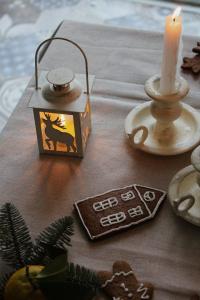
Holiday decor. Photo by Nati: https://www.pexels.com/photo/still-life-with-christmas-lantern-gingerbread-and-lit-candle-10343292/
International Shareware Day (Second Saturday in December)
A tribute to computer programmers everywhere, International Shareware Day celebrates programmers and programs available to the world for free or at a very low price. Founded by tech talk show host David Lawrence in 1995, this day celebrates the unsung heroes of freeware. This includes virus protection software, audio and video file players, audio and video editors, and more.
Worldwide Candle Lighting Day (Second Sunday in December)
On the second Sunday of December, people around the world light candles in memory of children who died from cancer. It is a non-religious, 24-hour continuous global event. Founded by The Compassionate Friends (a grief support network), it exists to help with grief and memory of deceased children.
Festival for the Souls of Dead Whales (December 10)
If you’ve never heard of the Festival for the Souls of Dead Whales, you’re not alone. It is attributed to the Inuit, originally celebrated by Indigenous peoples of Arctic and subarctic North America. It remembers the souls of all whales who died due to whaling and other human activities that impacted them. Whaling refers to hunting whales for food and use of various body parts, such as blubber. At one time, whaling was a primary economic source for a number of countries worldwide, particularly in Europe. Whether food, oil, roofing materials, or carving tools, whales were seen as a huge economic commodity.
After years of whaling, it became difficult to find whales in the Atlantic. Improved methods of hunting (including harpooning) led to a severe decline in the whale populations. As a result, many species of whales became endangered. In 1971, the United States outlawed whaling, and many countries followed suit. Whaling is now illegal in most of the world (excluding Japan and Iceland).
The Festival for the Souls of Dead Whales acknowledges the ecological harm imposed by whaling. It also considers that if we do not think about our actions, we will ultimately destroy all life on this planet (including us). There’s no specified tradition for this day, but some observances include a ceremony for the souls of the dead whales, whale watching, and watching documentaries about conservation.
Halycon Days (Two-week period before and after the winter solstice, usually starting around December 14)
Halycon Days refers to Greek mythology. Alcyone (also called Halycone) and Ceyx were a married couple, exceedingly happy and lost in their relationship. So much so, they referred to each other as “Zeus” and “Hera,” which angered Zeus. While Ceyx was at sea, he killed him with a thunderbolt. Morpheus appeared to Alcyone in a dream as Ceyx to inform her of her husband’s fate. In her state of grief, she threw herself into the sea. Through an act of compassion, the gods changed them into halcyon birds (common kingfishers).
As part of the story’s history, halcyon days are seven (or fourteen) days in winter when storms are said to never occur. They are said to be seven days on either side of the shortest day of the year. During this time, Alcyone (as a bird) made a nest and laid eggs while her father, the god of the winds, restrained all winds and calmed the waves. The symbolism, therefore, is a period where things are calm and peaceful, avoiding adversity. Most who observe these days use them to remember good times and successful points in life. Some light candles, start or re-read journals from the year, or rest in the knowledge that peace always returns, no matter how hard situations may be.
Las Posadas (December 16-24)
Roman Catholics observe a prayer tradition known as a novena. A novena is a nine-day or nine-week prayer, recited daily throughout that period. Las Posadas is a novena, observed for nine days in Latin American countries. “Posadas” means “lodging,” and refers to both Mary’s nine-month pregnancy and the journey Mary and Joseph took to register for the census (leading up to Christ’s birth). Its traditions span over 400 years, including sketches and pageants to help teach the Nativity story. It overlaps with traditional indigenous solstice festivals in the region, including tributes to the mother of gods (Tonantzin) and the sun god (Huitzilopochtli). Today, both Catholics and Protestants observe the traditions of Las Posadas.
Since the 1500s, Masses are said every day in honor of the feast. Popular traditions also include processions throughout the city, whereby two individuals dressed as Mary and Joseph travel to one house each night for nine nights. Actors portraying angels and shepherds often join along the way. Musicians follow, singing songs and carols. Others may attend, carrying holy images, and children carry poinsettias. At each house, the householder sings a song, and allows the couple to enter. Then, the group centers around a nativity scene to pray the rosary. After, children break open pinatas and everyone celebrates with a feast.
National Emo Day (December 19)
As a celebration of personal expression, National Emo Day celebrates those who identify with the “Emo subculture.” The Emo subculture was born in the 1980s music scene, combining post-hardcore, alternative, indie, and punk rock. Bands associated with “Emo” culture include Rites of Spring, Weezer, Jimmy Eat World, Fall Out Boy, The All-American Rejects, Black Veil Brides, My Chemical Romance, Panic! at the Disco, and Taking Back Sunday. Most Emo bands – and their followers – are noted for wearing black clothing, heavy eye makeup, studded accessories, body piercings, and band t-shirts (although none of this is required to be an Emo fan or part of the subculture). More than anything else, those who identify as Emo respect the art form and the emotions expressed through both the sung and spoken word.
Festivus (December 23)
Some people assume that everyone holds the same feelings about Christmas. This isn’t true. There are many who find the holiday season to be both stressful and unpleasant. For different reasons, they might desire to forego the holiday all together. if you’re not a Christmas fan, don’t despair! Festivus is for you!
Festivus is an alternative holiday with an interesting history…one that originated entirely within pop culture! First started as a family celebration by Daniel O’Keefe in 1966, it was a “holiday memorial” for the anniversary of his first date with his future wife, Deborah. Dan O’Keefe, Daniel’s son, incorporated the idea of Festivus into a 1997 Seinfield episode titled “The Strike.” As depicted on the show, it’s celebrated on December 23. Decorations include an aluminum Festivus pole, airing out grievances and moments of strength, and labeling easily explainable happenings as “Festivus miracles.” The holiday serves as both a parody and consumer protest, and is entirely secular in nature.
Boxing Day (December 26)
Boxing Day is a holiday celebrated throughout much of the British-influenced world. It was originally a day to donate to charity (especially in the form of tangible goods). While some continue this tradition, Boxing Day is now considered an extension of the Christmas holiday. Today, Boxing Day is a huge shopping holiday in the United Kingdom, Canada, Australia, New Zealand, and Trinidad and Tobago. Many compare it to the American version of Black Friday. It’s also a big day for football (soccer) leagues in the United Kingdom. Many observe by shopping, celebrating with others, and eating leftovers from Christmas dinner.
In other European countries, December 26 is known as St. Stephen’s Day.
Kwanzaa (December 26-January 1)
Kwanzaa might not seem like a proper placement among unusual December holidays. Most of us have heard of it before. I’ve labeled it among unusual December holidays because most of us don’t know much about it. Kwanzaa is an African-American celebration from December 26-January 1. It’s based on African harvest festival traditions from West, East, and Southeast Africa. First introduced in 1966 by Maulana Karenga, it seeks to celebrate African history. It is now celebrated in different countries worldwide.
The word “Kwanzaa” is from a Swahili phrase meaning “first fruits.” Celebrated for seven days, each of the seven days is associated with one of seven principles:
- Umoja (unity)
- Kujichagulia (self-determination)
- Ujima (collective work and responsibility)
- Ujamma (cooperative economics)
- Nia (purpose)
- Kuumba (creativity)
- Imani (faith)
Kwanzaa symbols include:
- Mkeka (mat to place other kwanzaa items)
- Kinara (candle holder)
- Mishumaa saba (seven candles)
- Mazao (crops)
- Mahindi (corn)
- Kikombe cha Umoja (unity cup)
- Zawadi (gifts)
Homes are usually decorated with African art and cloth (such as kente), the wearing of kaftans, and fresh fruits. Ancestors are remembered and honored, and libations shared through the unity cup. In keeping with the season, it’s not uncommon for African-American families to celebrate it along with Christmas and New Year’s. Some non-Africans also observe the holiday today.
Omisoka (December 31)
Omisoka is the traditional Japanese celebration commemorating the last day of the year. In modern times, it’s celebrated on December 31. In the hopes to start the new year fresh, people clean their houses, repay debts, drive out evil spirits and bad luck through purification rituals, and bathing. Many gather for parties to watch singing battles or mixed martial arts. About an hour before midnight, people gather for one last time to have a bowl of toshikoshi soba (noodles) or toshikoshi udon together. Many families make osechi, a special new year’s food to eat for the first few days of the new year to welcome household deities and welcome happiness. At midnight, many visit a shrine or temple. Among Japanese Buddhists, a large Buddhist bell is struck once for each of the 108 earthly temptations believed to cause suffering.
Your turn!
What are your favorite unusual December holidays?
General Christian
Religious Events

About Lee Ann B. Marino
Dr. Lee Ann B. Marino, Ph.D., D.Min., D.D. (”The Spitfire”) is “everyone’s favorite theologian” leading Gen X, Millennials, and Gen Z as apostle of Spitfire Apostolic Ministries. Her work encompasses study and instruction on leadership training and development, typology, Pneumatology, conceptual theology, Ephesians 4:11 ministry, and apostolic theology. She is author of over thirty-five books, host of the top twenty percentile podcast Kingdom Now, and serves as founder and overseer of Sanctuary International Fellowship Tabernacle - SIFT and Chancellor of Apostolic Covenant Theological Seminary. Dr. Marino has over twenty-five years of experience in ministry, leadership, counseling, mentoring, education, and business. You can read more about the author here.
Previous Post

December 4, 2024
Listening to the Whispers of Hope
Next Post

December 18, 2024 Ten Fun Holiday Trivia Facts to Get the Party Started!
Browse Our Archives
Select a Category BIble education Bible history Bible study bible women church history Cult education current events holidays Leadership Ministry queer events Spiritual development Uncategorized wellbeing women in christianity women in ministry world religion
Select a Month October 2026 September 2026 August 2026 July 2026 June 2026 May 2026 April 2026 March 2026 February 2026 January 2026 December 2025 November 2025 October 2025 September 2025 August 2025 July 2025 June 2025 May 2025 April 2025 March 2025 February 2025 January 2025 December 2024 November 2024 October 2024 September 2024 August 2024 July 2024 June 2024 May 2024 April 2024 March 2024 February 2024 January 2024 December 2023 November 2023 October 2023 September 2023 August 2023 July 2023 June 2023
Follow Us!
TAKE THE
Religious Wisdom Quiz
I am the first man, created from dust and given dominion over all creation. Who am I?
Select your answer to see how you score.
Abel Enoch Noah Adam
Related posts from Leadership on Fire

Principles for Understanding the Apostolic Ministry Today
This Father's Day, God Remains a Father to...
A Tribute to Spiritual Mothers for Mother's Day
The Dark Night of the Soul: A Study...
TRENDING AT PATHEOS Progressive Christian

Why Christians Have a Sacred Duty to Vote:...
The Bible offers strong support for the sacred duty to vote. Here...

What Being a Modern-Day Apostle Means to Me
In my last column, I discussed the ins and outs of modern-day...

Did Ancient China Once Worship the God of...
Across human history, a common thread weaves through the origins of the...

Love Your Neighbor – Including Earth-Kin: Lev. 19,...
God’s command to love your neighbor means acting in an ethical and...

Lead a Church Study of “Jesus and Lao...
Guest writer Jack Thomas (The Irreverent Reverend) reflects on leading his church...

Principles for Understanding the Apostolic Ministry Today
Whenever people discover that my formal ministry title is "apostle," as in...
view all Progressive Christian blogs
Ad-Free & Subscriber Log-In Subscription Support
- About Us
- 2026 Calendar
- Videos
- Podcasts
- Library of World Religions
- Faith In Media Tracker
- Advertise With Us
- Write for Us
- Privacy Policy
- Terms of Service
- Do Not Sell My Data
- Contact Us
- Radiant Digital
- Manage Newsletter Subscriptions
- Unsubscribe From Notifications
- Sitemap
Copyright 2008-2026, Patheos. All rights reserved.
Subscription Support Ad-Free & Subscriber Log-In
Follow Patheos