
BuddhistCatholicContemplativeEvangelicalGeneral ChristianHinduJewishLatter-day SaintMuslimNew VisionsProgressive Christian
Beliefs
- Buddhist
- Catholic
- Contemplative
- Evangelical
- General Christian
- Hindu
- Jewish
- Latter-day Saint
- More Voices
- Muslim
- New Visions
- Pagan
- Progressive Christian
Topics
- Religion News
- Food and Religion
- Sports and Religion
- Religious Art
- Religious Music and Entertainment
- Religious Events
- History and Religion
- Style and Religion
- Politics and Religion
- Women in Religion
- Recreation Outdoors and Religion
- Business Finance and Religion
- Careers Workplace and Religion
- Education and Religion
- Family Parenting and Religion
- Health Fitness and Religion
- Home and Religion
- Relationships and Religion
- Technology and Religion
- Travel and Religion
Columnists
- Buddhist Columnists
- Business Finance and Religion Columnists
- Careers Workplace and Religion Columnists
- Catholic Columnists
- Contemplative Columnists
- Education and Religion Columnists
- Evangelists Columnists
- Family Parenting and Religion Columnists
- General Christian Columnists
- Health Fitness and Religion Columnists
- Hindu Columnists
- History and Religion Columnists
- Home and Religion Columnists
- Jewish Columnists
- More Voices Columnists
- Latter Day Columnists
- Muslim Columnists
- New Visions Columnists
- Nonreligious Columnists
- Pagan Columnists
- Politics and Religion Columnists
- Progressive Columnists
- Recreation Outdoors and Religion Columnists
- Relationships and Religion Columnists
- Religion News Columnists
- Religious Art Columnists
- Religious Events Columnists
- Religious Music and Entertainment Columnists
- Sports and Religion Columnists
- Style and Religion Columnists
- Technology and Religion Columnists
- Travel and Religion Columnists
- Women in Religion Columnists
Resource Library
- 2026 Calendar
- Library of World Religions
- The 100 Most Holy Places on Earth
- Patheos Answers
- Podcasts
- Videos
- Faith Leaders Database
- Anglican Episcopalian
- Bahai
- Baptist
- Buddhism
- Christianity
- Confucianism
- Eastern Orthodoxy
- Hinduism
- Holiness and Pentecostal
- ISKCON
- Islam
- Judaism
- Lutheran
- Methodist
- The Church of Jesus Christ of Latter-day Saints
- New Age
- Paganism
- Presbytarian and Reformed
- Protestantism
- Religion Behind the Scenes
- Roman Catholic
- Scientology
- Shia Islam
- Sikhism
- Sufism
- Sunni Islam
- Taoism
- Zen
- See all religions
Research Tools
 Ad-Free & Subscriber Log-In Subscription Support
Ad-Free & Subscriber Log-In Subscription Support
Follow Patheos 

- Trending:
- Forgiveness
- |
- Marriage
- |
- Consciousness
- |
- Death Penalty
- |
- Election
- |
- Halloween

- Home
- Progressive Christian
- Education and Religion
- Meeting the Apostle Thomas
Meeting the Apostle Thomas
Last updated on: July 3, 2024 at 12:00 pm by Lee Ann B. Marino
Meeting the Apostle Thomas 2024-06-17T15:25:50-04:00 Lee Ann B. Marino
Patheos Explore the world's faith through different perspectives on religion and spirituality! Patheos has the views of the prevalent religions and spiritualities of the world.
Some of the Biblical apostles reveal the complicated relationship between being called by God and being a human being. We see this in Peter‘s temper and James and John desiring positions of honor in the Kingdom. Perhaps there’s no greater example of the humanness of the apostles than that of the Apostle Thomas. Known forever as “the doubter,” Thomas went on record as doubting the resurrection of Jesus. While his best-known move, this wasn’t Thomas’ only theological misstep during His time with Jesus. On at least two other occasions, he made various comments that proved he “didn’t get it,” at least at the time.
Fortunately, these missteps weren’t the end for Thomas, nor for his ministry. In this column we will examine the life of the Apostle Thomas, often known as “doubting Thomas.”
Who was Thomas?
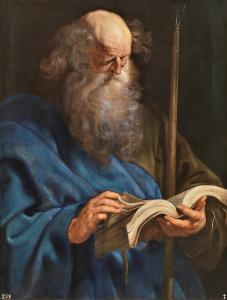
The Apostle Thomas By Peter Paul Rubens – Museo del Prado, Public Domain, https://commons.wikimedia.org/w/index.php?curid=15158936
The Apostle Thomas was most likely born in Galilee of Judea sometime in the first century. He is identified as Judas Thomas Didymus throughout apocryphal works and church history records. Both “Thomas” and “Didymus” mean “paired” or “twin.” There’s some speculation as to just whose twin Thomas was. Some traditions suspect he was a brother of Jesus (either Jesus’ twin or a twin to another sibling of Christ), that he possibly looked a lot like Jesus, or like another one of the disciples. It’s also possible this label was a nickname rather than a given name, thus indicating he was somehow “paired” or much like someone else in some other way, rather than being a biological twin.
We don’t know if Thomas was married, although there is considerable speculation on this facet of his life. We also don’t know definitively if he had siblings, children, or what he did for his profession.
The Apostle Thomas is found most prominently in the Gospel of John, where he is mentioned seven times by name (John 11:16, John 14:5, John 20:24, John 20:26-28, John 21:2). He’s also mentioned along with the rest of the apostles in the other Gospels.
Thomas’ walk with Jesus
There are three specific incidents involving Thomas in the Gospel of John. Two of these incidents were prior to Jesus’ resurrection. These include:
- The death of Lazarus: When the disciples discovered Lazarus died, Jesus told them He was glad, as it would give the disciples a chance to believe. Thomas responds with, “Let us also go, that we may die with him.” (John 11:16)
- The Way, the Truth, and the Life: As Jesus teaches the disciples they know the way to where He is going (heaven), Thomas asks a question: “Lord, we don’t know where you are going, so how can we know the way?” Jesus responds by telling them that He is the Way, the Truth, and the Life. By knowing Jesus, they knew the spiritual way for them to go; they must follow Him (John 14:1-6).
Thomas is also mentioned:
- With the other apostles: In all passages referring to the twelve as a group (Matthew 10:3, Mark 3:18, Luke 6:15).
- The Last Supper: Along with the other twelve, Thomas was present at the Last Supper (Matthew 26:17, Mark 14:12).
Thomas after the resurrection
The Apostle Thomas’ most famous incident with Jesus comes after the resurrection.
Now Thomas (also known as Didymus), one of the Twelve, was not with the disciples when Jesus came. So the other disciples told him, “We have seen the Lord!”
But he said to them, “Unless I see the nail marks in His hands and put my finger where the nails were, and put my hand into His side, I will not believe.”
A week later His disciples were in the house again, and Thomas was with them. Though the doors were locked, Jesus came and stood among them and said, “Peace be with you!” Then He said to Thomas, “Put your finger here; see My hands. Reach out your hand and put it into My side. Stop doubting and believe.”
Thomas said to him, “My Lord and my God!”
Then Jesus told him, “Because you have seen Me, you have believed; blessed are those who have not seen and yet have believed.” (John 20:24-29, NIV)
Thomas wasn’t assured of the resurrection until He saw – and inspected – Jesus for himself. For this reason, he’s dubbed “doubting Thomas.” Yet through his doubt, further proof of the resurrection came into full view.
He was also present at the miraculous catch of fish in John 21:1-14.
There’s one other mention of the Apostle Thomas in the New Testament, found in Acts 1:12-14, speaking of the election of Matthias to replace Judas.
Later accounts
The Apostle Thomas’ ministry is one of the best documented in the early church. Most accounts cite him as the “Apostle to India,” spending time in Tamil Nadu, Kerala, Mylapore, and Muziris. He established seven churches as part of his mission. The Saint Thomas Christians claim him as their patron. As descendants of the Syriac Church, these groups of Christians embrace liturgical styles of both eastern and western rite. Today, they are part of a variety of denominations, including Oriental Orthodox, Roman Catholic, Protestant, Byzantine Rite, and independent groups, resting on their own traditions.
Among the St. Thomas Christians is a legend that, in addition to work in India, Thomas also worked in China around 52 AD. In a ballad, The Song of the Lord Thomas (dating to the 17th century) describes his journey as going first to India, then China, then back to India again. Chaldean Catholics recognize this in both their canon law and breviary, through liturgical song. Other claims include a trip to Indonesia with Indian traders and that Thomas traveled to Paraguay, although this is highly unlikely.
Thomas was martyred by spear on July 3, 72 AD.
There are a number of apocryphal gospels attributed to Thomas. Whether or not he is the author is of dispute. As a figure, he was of particular interest among certain sects of Gnosticism.
Summary
The Apostle Thomas was much more than just a “doubter.” While he might have missed the mark with some of his comments, he was a thoughtful and inquisitive member of the twelve. He reminds all of us that being called isn’t about being perfect or getting things right all the time. God’s grace is sufficient for our missteps, especially as He sets us on to greater things.
Afterward Jesus appeared again to his disciples, by the Sea of Galilee. It happened this way: Simon Peter, Thomas (also known as Didymus, Nathanael from Cana in Galilee, the sons of Zebedee, and two other disciples were together. “I’m going out to fish,” Simon Peter told them, and they said, “We’ll go with you.” So they went out and got into the boat, but that night they caught nothing.
Early in the morning, Jesus stood on the shore, but the disciples did not realize that it was Jesus.
He called out to them, “Friends, haven’t you any fish?”
“No,” they answered.
He said, “Throw your net on the right side of the boat and you will find some.” When they did, they were unable to haul the net in because of the large number of fish. (John 21:1-6, NIV)
General Christian
History and Religion

About Lee Ann B. Marino
Dr. Lee Ann B. Marino, Ph.D., D.Min., D.D. (”The Spitfire”) is “everyone’s favorite theologian” leading Gen X, Millennials, and Gen Z as apostle of Spitfire Apostolic Ministries. Her work encompasses study and instruction on leadership training and development, typology, Pneumatology, conceptual theology, Ephesians 4:11 ministry, and apostolic theology. She is author of over thirty-five books, host of the top twenty percentile podcast Kingdom Now, and serves as founder and overseer of Sanctuary International Fellowship Tabernacle - SIFT and Chancellor of Apostolic University. Dr. Marino has over twenty-five years of experience in ministry, leadership, counseling, mentoring, education, and business. You can read more about the author here.
Previous Post
June 26, 2024
Meeting the Apostle James Son of Alphaeus
Next Post
July 10, 2024 Meeting the Apostle Matthew
Browse Our Archives
Select a Category BIble education Bible history Bible study bible women church history Cult education current events holidays Leadership Ministry queer events Spiritual development Uncategorized wellbeing women in christianity women in ministry world religion
Select a Month October 2026 September 2026 August 2026 July 2026 June 2026 May 2026 April 2026 March 2026 February 2026 January 2026 December 2025 November 2025 October 2025 September 2025 August 2025 July 2025 June 2025 May 2025 April 2025 March 2025 February 2025 January 2025 December 2024 November 2024 October 2024 September 2024 August 2024 July 2024 June 2024 May 2024 April 2024 March 2024 February 2024 January 2024 December 2023 November 2023 October 2023 September 2023 August 2023 July 2023 June 2023
Follow Us!
TAKE THE
Religious Wisdom Quiz
What kingdom did Isaiah prophesy would take Judah into exile?
Select your answer to see how you score.
Babylon Egypt Assyria Persia
Related posts from Leadership on Fire

What Being a Modern-Day Apostle Means to Me

Principles for Understanding the Apostolic Ministry Today

Resist the Devil, and He Will Flee

Assessing How Much You Want to Find God...
TRENDING AT PATHEOS Progressive Christian

What Being a Modern-Day Apostle Means to Me
In my last column, I discussed the ins and outs of modern-day...

Did Ancient China Once Worship the God of...
Across human history, a common thread weaves through the origins of the...

Love Your Neighbor – Including Earth-Kin: Lev. 19,...
God’s command to love your neighbor means acting in an ethical and...

Lead a Church Study of “Jesus and Lao...
Guest writer Jack Thomas (The Irreverent Reverend) reflects on leading his church...

Pastoral Wisdom for Responding to Sermon Pushback
Getting sermon pushback on your social justice sermon? Learn practical, Proverbs-based strategies...

Principles for Understanding the Apostolic Ministry Today
Whenever people discover that my formal ministry title is "apostle," as in...
view all Progressive Christian blogs
Ad-Free & Subscriber Log-In Subscription Support
- About Us
- 2026 Calendar
- Videos
- Podcasts
- Library of World Religions
- Faith In Media Tracker
- Advertise With Us
- Write for Us
- Privacy Policy
- Terms of Service
- Do Not Sell My Data
- Contact Us
- Radiant Digital
- Manage Newsletter Subscriptions
- Unsubscribe From Notifications
- Sitemap
Copyright 2008-2026, Patheos. All rights reserved.
Subscription Support Ad-Free & Subscriber Log-In
Follow Patheos