
BuddhistCatholicContemplativeEvangelicalGeneral ChristianHinduJewishLatter-day SaintMuslimNew VisionsProgressive Christian
Beliefs
- Buddhist
- Catholic
- Contemplative
- Evangelical
- General Christian
- Hindu
- Jewish
- Latter-day Saint
- More Voices
- Muslim
- New Visions
- Pagan
- Progressive Christian
Topics
- Religion News
- Food and Religion
- Sports and Religion
- Religious Art
- Religious Music and Entertainment
- Religious Events
- History and Religion
- Style and Religion
- Politics and Religion
- Women in Religion
- Recreation Outdoors and Religion
- Business Finance and Religion
- Careers Workplace and Religion
- Education and Religion
- Family Parenting and Religion
- Health Fitness and Religion
- Home and Religion
- Relationships and Religion
- Technology and Religion
- Travel and Religion
Columnists
- Buddhist Columnists
- Business Finance and Religion Columnists
- Careers Workplace and Religion Columnists
- Catholic Columnists
- Contemplative Columnists
- Education and Religion Columnists
- Evangelists Columnists
- Family Parenting and Religion Columnists
- General Christian Columnists
- Health Fitness and Religion Columnists
- Hindu Columnists
- History and Religion Columnists
- Home and Religion Columnists
- Jewish Columnists
- More Voices Columnists
- Latter Day Columnists
- Muslim Columnists
- New Visions Columnists
- Nonreligious Columnists
- Pagan Columnists
- Politics and Religion Columnists
- Progressive Columnists
- Recreation Outdoors and Religion Columnists
- Relationships and Religion Columnists
- Religion News Columnists
- Religious Art Columnists
- Religious Events Columnists
- Religious Music and Entertainment Columnists
- Sports and Religion Columnists
- Style and Religion Columnists
- Technology and Religion Columnists
- Travel and Religion Columnists
- Women in Religion Columnists
Resource Library
- 2026 Calendar
- Library of World Religions
- The 100 Most Holy Places on Earth
- Patheos Answers
- Podcasts
- Videos
- Faith Leaders Database
- Anglican Episcopalian
- Bahai
- Baptist
- Buddhism
- Christianity
- Confucianism
- Eastern Orthodoxy
- Hinduism
- Holiness and Pentecostal
- ISKCON
- Islam
- Judaism
- Lutheran
- Methodist
- The Church of Jesus Christ of Latter-day Saints
- New Age
- Paganism
- Presbytarian and Reformed
- Protestantism
- Religion Behind the Scenes
- Roman Catholic
- Scientology
- Shia Islam
- Sikhism
- Sufism
- Sunni Islam
- Taoism
- Zen
- See all religions
Research Tools
 Ad-Free & Subscriber Log-In Subscription Support
Ad-Free & Subscriber Log-In Subscription Support
Follow Patheos 

- Trending:
- Forgiveness
- |
- Marriage
- |
- Consciousness
- |
- Death Penalty
- |
- Election
- |
- Halloween

- Home
- Progressive Christian
- Education and Religion
- Ten Unusual Easter Traditions
Ten Unusual Easter Traditions
Last updated on: March 27, 2024 at 12:00 pm by Lee Ann B. Marino
Ten Unusual Easter Traditions 2024-02-21T20:21:39-05:00 Lee Ann B. Marino
Patheos Explore the world's faith through different perspectives on religion and spirituality! Patheos has the views of the prevalent religions and spiritualities of the world.
Every year, my church holds a “hymn sing” on Easter Sunday. Rather than focus on doing things according to a normal custom, we do our best to herald the resurrection of Jesus by focusing on Him in song and spiritual word. This year, we’ve decided to start an additional Easter tradition: Easter brunch. After our hymn sing, one of our other leaders and myself will prepare a special meal for anyone who comes and celebrates with us.
Since my church is newer than most (we’ve only been around a few years), we’re still sorting through our annual customs. This made me wonder about various Easter traditions worldwide. How do different groups acknowledge the day?
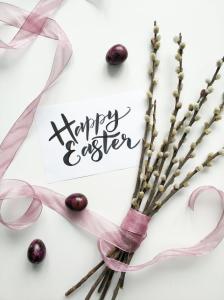
Happy Easter! Photo by Alena Koval: https://www.pexels.com/photo/white-petaled-flower-bouquet-on-white-surface-953057/
Easter is the highest holy day observance for Christians worldwide. An annual observance of the resurrection of Jesus Christ, Easter is a favorite among springtime events, fostering a sense of hope and promise among Christians across denominations. Incorporating a variety of different cultural traditions, Easter practices vary more than you might realize. Far from images of Easter bunnies, egg hunts, and lots of candy, Easter traditions vary from highly spiritual to extremely unusual.
Here we will look at ten different Easter traditions that are both a little unusual and largely unknown.
1. A giant omelette (France)
In the town of Bessieres, France, visitors flock to witness a unique culinary spectacle: a giant omelette. Since 1973, the Brotherhood of the Giant Omelette cook a yearly Easter omelette using 15,000 eggs. Over fifty volunteers cook the omelette, using giant cooking spoons over an open fire in the town square.
Legend has it that Napoleon Bonaparte passed through the town and had an omelette he loved so much, he had the entire town recreate a giant version of it for his men. This annual tradition recounts this military event in French history.
2. Easter witches (Finland)
Most of us associate witches, dress-up, and going door-to-door for candy with Halloween. In Finland, children dress up like witches before Easter and go door-to-door, reciting a wish for a healthy year, in exchange for candy or coins. According to tradition, witches would wander around the streets before Easter on their way to cavort in Germany, misbehaving the whole time. Bonfires are said to ward off the witches. Willow trees are also decorated with colorful feathers to ward off evil spirits.
3. Let’s go fly a kite (Bermuda)
The citizens of Bermuda fly kites on Good Friday, usually homemade (consisting of paper tissue, wood, and string). The theory is the tradition started thanks to a Sunday School teacher who used a kite to illustrate the idea of Christ’s ascension into heaven. Meals include codfish cakes and hot cross buns.
4. Dive into some crime fiction (Norway)
During Easter 1923, an advertisement for a new crime novel (set on the Bergen railway) took Norway by storm. So much by storm, in fact, the citizens of Norway didn’t realize it was fiction! Ever since, Easter is a time for crime stories and novels across this country. As Norwegians take more time off from work than most around Easter, they divide their time between skiing and diving into the latest crime novel or watching a crime story on television. Even milk cartons feature short detective stories every year!
5. Bilbies…not bunnies (Australia)
In Australia, rabbits aren’t native – they are an invasive species. In 1991, the group Rabbit-Free Australia petitioned to replace the Easter rabbit with a bilby. The bilby is a long-eared marsupial native to the land, but currently endangered due to habitat loss and European rabbits invading their spaces. Candy makers now craft Easter bilbies out of chocolate with a portion of the proceeds going to organizations designed to save the species, including the Save the Biliby Fund.
6. Roll out the carpet (Guatemala)
In Antigua, Guatemala, brightly-colored, ornate carpets line cobblestone streets to mark Good Friday. These incredibly intricate designs consist of vegetables, flowers, and even sawdust! Using stencils, designers craft carpets up to 2,600 feet long, serving to depict religious scenes. Some remain until Easter Sunday, as people walk over them on their way to church. Others are swept up after Good Friday processions.
7. Crucifixion, anyone? (the Philippines)
Every Good Friday, tourists gather in the Philippines to observe the crucifixion. The catch? These people don’t just pay tribute to the crucifixion of Jesus with prayers and songs, but by literally being crucified themselves. Devotees (also called penitents) willingly offer themselves for crucifixion to recreate Jesus’ suffering and death on the cross through their own bodies. Others may carry wooden crosses, whipping oneself, and crawling around on rough or jagged pavement. The locals see these acts as points of penance as they seek to repent from sin. In different parts of the country, such displays are part of passion rites, as annual Lenten rituals.
Some individuals have undergone crucifixion every year for decades, both men and women alike. The Catholic Church rejects this tradition, encouraging the devout to engage in charity work or other practices that do not promote self-harm.
8. A good, red egg (Greece)
While most of the world enjoys dyeing Easter eggs in a variety of colors, the Greek only dye Easter eggs red. Seen as the color of life, the red color represents the blood of Christ. The hard shell on the egg represents Christ’s tomb. These eggs tell the story of victory over death each Easter. On Easter Sunday, each household member cracks an egg open with another family member.
In Corfu, residents toss water-filled clay pots from their balconies at 11 AM on Holy Saturday. Such is said to bring good luck and healthy, new crops. The tradition comes from the Italian (Venice) practice of throwing old items out of one’s house to make room for new ones.
9. Women only in the kitchen (Poland)
Poland is home to a number of Easter traditions, including blessing food in Easter baskets and lamb cakes. One of the most unique involves baking Easter bread. Only women can bake this bread; no men allowed. If the men of the house participate, the bread won’t rise properly…and their mustaches will prematurely gray!
The Polish also have fun on Easter Monday with water fights. Traditionally boys seek out girls first, and then girls get their revenge the next day. According to legend, the girl who gets doused the most will marry within the next year. No one is quite sure where this tradition started, but water is associated with spring rains, relating to growth and fertility. A similar tradition is found in Hungary, where women dress in traditional costume and men throw water on them on Easter Sunday.
10. Decorate the tree with…cigarettes? (Papua New Guinea)
The tropical, humid climate of Papua New Guinea makes less-than-ideal for chocolate and candies. Instead, residents have Easter trees decked with tobacco and cigarettes. Citizens hide packets of cigarettes and tobacco in trees leading up to and around churches, as well as decorations on trees found in church buildings. Congregants look for them or receive them (if they are handed out) after service.
Conclusion
What’s your favorite Easter tradition?
General Christian
Religious Events
international christian traditions

About Lee Ann B. Marino
Dr. Lee Ann B. Marino, Ph.D., D.Min., D.D. (”The Spitfire”) is “everyone’s favorite theologian” leading Gen X, Millennials, and Gen Z as apostle of Spitfire Apostolic Ministries. Her work encompasses study and instruction on leadership training and development, typology, Pneumatology, conceptual theology, Ephesians 4:11 ministry, and apostolic theology. She is author of over thirty-five books, host of the top twenty percentile podcast Kingdom Now, and serves as founder and overseer of Sanctuary International Fellowship Tabernacle - SIFT and Chancellor of Apostolic University. Dr. Marino has over twenty-five years of experience in ministry, leadership, counseling, mentoring, education, and business. You can read more about the author here.
Previous Post

March 20, 2024
Five More Women Ordained First in Their Denominations
Next Post

April 3, 2024 Giving to God, Bible Style
Browse Our Archives
Select a Category BIble education Bible history Bible study bible women church history Cult education current events holidays Leadership Ministry queer events Spiritual development Uncategorized wellbeing women in christianity women in ministry world religion
Select a Month October 2026 September 2026 August 2026 July 2026 June 2026 May 2026 April 2026 March 2026 February 2026 January 2026 December 2025 November 2025 October 2025 September 2025 August 2025 July 2025 June 2025 May 2025 April 2025 March 2025 February 2025 January 2025 December 2024 November 2024 October 2024 September 2024 August 2024 July 2024 June 2024 May 2024 April 2024 March 2024 February 2024 January 2024 December 2023 November 2023 October 2023 September 2023 August 2023 July 2023 June 2023
Follow Us!
TAKE THE
Religious Wisdom Quiz
Who led the Israelites in battle at Jericho?
Select your answer to see how you score.
Gideon Joshua Samson David
Related posts from Leadership on Fire

Principles for Understanding the Apostolic Ministry Today
This Father's Day, God Remains a Father to...

A Tribute to Spiritual Mothers for Mother's Day
The Dark Night of the Soul: A Study...
TRENDING AT PATHEOS Progressive Christian

What Being a Modern-Day Apostle Means to Me
In my last column, I discussed the ins and outs of modern-day...

Did Ancient China Once Worship the God of...
Across human history, a common thread weaves through the origins of the...

Love Your Neighbor – Including Earth-Kin: Lev. 19,...
God’s command to love your neighbor means acting in an ethical and...

Lead a Church Study of “Jesus and Lao...
Guest writer Jack Thomas (The Irreverent Reverend) reflects on leading his church...

Pastoral Wisdom for Responding to Sermon Pushback
Getting sermon pushback on your social justice sermon? Learn practical, Proverbs-based strategies...

Principles for Understanding the Apostolic Ministry Today
Whenever people discover that my formal ministry title is "apostle," as in...
view all Progressive Christian blogs
Ad-Free & Subscriber Log-In Subscription Support
- About Us
- 2026 Calendar
- Videos
- Podcasts
- Library of World Religions
- Faith In Media Tracker
- Advertise With Us
- Write for Us
- Privacy Policy
- Terms of Service
- Do Not Sell My Data
- Contact Us
- Radiant Digital
- Manage Newsletter Subscriptions
- Unsubscribe From Notifications
- Sitemap
Copyright 2008-2026, Patheos. All rights reserved.
Subscription Support Ad-Free & Subscriber Log-In
Follow Patheos