
BuddhistCatholicContemplativeEvangelicalGeneral ChristianHinduJewishLatter-day SaintMuslimNew VisionsProgressive Christian
Beliefs
- Buddhist
- Catholic
- Contemplative
- Evangelical
- General Christian
- Hindu
- Jewish
- Latter-day Saint
- More Voices
- Muslim
- New Visions
- Pagan
- Progressive Christian
Topics
- Religion News
- Food and Religion
- Sports and Religion
- Religious Art
- Religious Music and Entertainment
- Religious Events
- History and Religion
- Style and Religion
- Politics and Religion
- Women in Religion
- Recreation Outdoors and Religion
- Business Finance and Religion
- Careers Workplace and Religion
- Education and Religion
- Family Parenting and Religion
- Health Fitness and Religion
- Home and Religion
- Relationships and Religion
- Technology and Religion
- Travel and Religion
Columnists
- Buddhist Columnists
- Business Finance and Religion Columnists
- Careers Workplace and Religion Columnists
- Catholic Columnists
- Contemplative Columnists
- Education and Religion Columnists
- Evangelists Columnists
- Family Parenting and Religion Columnists
- General Christian Columnists
- Health Fitness and Religion Columnists
- Hindu Columnists
- History and Religion Columnists
- Home and Religion Columnists
- Jewish Columnists
- More Voices Columnists
- Latter Day Columnists
- Muslim Columnists
- New Visions Columnists
- Nonreligious Columnists
- Pagan Columnists
- Politics and Religion Columnists
- Progressive Columnists
- Recreation Outdoors and Religion Columnists
- Relationships and Religion Columnists
- Religion News Columnists
- Religious Art Columnists
- Religious Events Columnists
- Religious Music and Entertainment Columnists
- Sports and Religion Columnists
- Style and Religion Columnists
- Technology and Religion Columnists
- Travel and Religion Columnists
- Women in Religion Columnists
Resource Library
- 2026 Calendar
- Library of World Religions
- The 100 Most Holy Places on Earth
- Patheos Answers
- Podcasts
- Videos
- Faith Leaders Database
- Anglican Episcopalian
- Bahai
- Baptist
- Buddhism
- Christianity
- Confucianism
- Eastern Orthodoxy
- Hinduism
- Holiness and Pentecostal
- ISKCON
- Islam
- Judaism
- Lutheran
- Methodist
- The Church of Jesus Christ of Latter-day Saints
- New Age
- Paganism
- Presbytarian and Reformed
- Protestantism
- Religion Behind the Scenes
- Roman Catholic
- Scientology
- Shia Islam
- Sikhism
- Sufism
- Sunni Islam
- Taoism
- Zen
- See all religions
Research Tools
 Ad-Free & Subscriber Log-In Subscription Support
Ad-Free & Subscriber Log-In Subscription Support
Follow Patheos 

- Trending:
- Forgiveness
- |
- Marriage
- |
- Consciousness
- |
- Death Penalty
- |
- Election
- |
- Halloween

- Home
- Progressive Christian
- Education and Religion
- A Crash Course on the Baha’i Faith
A Crash Course on the Baha’i Faith
Last updated on: January 25, 2024 at 3:00 pm by Lee Ann B. Marino
A Crash Course on the Baha’i Faith 2024-01-25T15:00:21-05:00 Lee Ann B. Marino
Patheos Explore the world's faith through different perspectives on religion and spirituality! Patheos has the views of the prevalent religions and spiritualities of the world.
January 21 is World Religion Day. If you’ve never heard of this day, you’re not alone. It’s an observance for people of the Baha’i Faith, a religion originating in Persia that now has followers worldwide. The major focus of the Baha’i Faith is religious unity, believing all religions share the same value. World Religion Day acknowledges this value, celebrating their belief in the oneness of all religion and the idea of progressive revelation found therein.
In honor of this day, we will be exploring a little about the Baha’i Faith, a group with about seven million adherents worldwide.
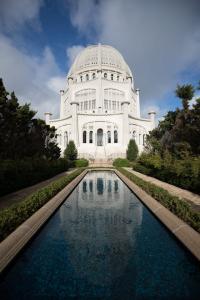
Baha’i temple, Wilmette, Il. Photo by Alex Qian: https://www.pexels.com/photo/white-building-2325882/
What is the Baha’i Faith?
The Baha’i Faith started as a sect of Babism, an Iranian Islamic sect started by a man known as the Bab (“the gate”)(1819–1850) in 1844. Babism focused on literal monotheism of the divine manifest in theophanies (manifestations). The Bab believed his work was the beginning of an apocalyptic process, one that ended an existing cycle and established a new one. As part of the new cycle, another prophet was to come, one who would fulfill the prophecies of all the world’s religions. This figure would be:
- The second coming of Jesus Christ in Christianity
- The messiah in Judaism
- Maitreye in Buddhism
- The Tenth Avatar of Hinduism
- The Day of God in Islam
The anticipation of this coming figure flourished until the execution of the Bab. Enter Baha’u’llah (1817–1892), the founder of the Baha’i Faith. According to Baha’is, Baha’u’llah was the fulfillment of the Bab’s prophecy. Focusing on religious unity through the values of Baha’u’llah, the Baha’i Faith’s focus remains unity.
What does the Baha’i Faith believe?
Theologically speaking, Baha’is believe in one specified, unifying deity manifest through various messengers in history. These messengers reflect revelation of different eras or dispensations of history. Each dispensation represents a greater deposit of revelation. The messengers, as they are known, are major figures in world religion. They include Adam, Abraham, Moses, Krishna, Zoroaster, Jesus, and Mohammed. As a result, all religions are considered essential and valuable within the context of their dispensation. Part of a bigger Baha’i picture, they teach the same message. To Baha’is, their religion is seen as a greater covenant of revelation, one that is relevant for this day and age.
Baha’is believe in religious unity and equality, with a greater vision of religious unity. Human beings have inherent value, essential in common virtue. Thus, the unity of humanity is also of interest to Baha’is. In this pursuit, they advocate for universal education, international peace, unity, social and economic equality, and brotherhood among all. They see this possible through a one-world government, language, and incorporation of all religious beliefs into one system.
They place a high value on the number nine, believing it represents completion and the splendor and glory of the divine. The Baha’i star has nine points and all Baha’i temples have nine sides. Baha’is also place value on the “Greatest Name,” a writing of the divine name in Arabic, and their unique ringstone symbol, which represents divine manifestations.
Who leads the group?
There are three central figures in the Baha’i Faith: the Bab (mentioned above), Baha’u’llah (also mentioned above), and ‘Abdu’l-Baha’ (1844–1921). The last was Baha’u’llah’s son. After imprisonment, he worked in promotion of the religion throughout Europe and the United States. After his death, leadership fell on his grandson, Shoghi Effendi (1897–1957). Today, Baha’is elect local, regional, and national leadership. Internationally, the Universal House of Justice (Haifa, Israel) oversees the Baha’i community. This nine-member supreme ruling board consists of members selected every five years by delegates of the Baha’i National Spiritual Assemblies worldwide (local governing bodies). They exist to address matters not outlined in Baha’i texts and adjust to changing times.
Do Baha’is use scripture?
In keeping with their beliefs, Baha’is believe all religious scriptures have teaching value, representative of revelation in that era. They frequently use various texts to present their own doctrinal positions, especially on points of unity. They also have their own writings. The works of the Bab and Baha’u’llah are classified as divine revelation; the writings of ‘Abdu’l-Baha and Shoghi Effendi are considered interpretation with authority; and the Universal House of Justice writes for legislation and education. There are over fifteen thousand writings in total. Most are in Persian or Arabic; only a small portion are available in English.
How do Baha’is practice their faith?
The Baha’i Faith recognizes no clergy, rituals, congregational prayer, or rites or sacraments. They gather every nineteen days (known as months) to meet for reading, meditation, study, and discussion of their faith and values. Each year is divided into nineteen months. At the beginning of each month, Baha’is gather for a feast. Feasts are held in social halls, homes, or community centers. The goals of Baha’i meetings are community unity, encouragement, and discussion of happenings of interest to the group. Participation is not required, but encouraged.
All Baha’is recite an obligatory prayer every day, according to a fixed form established by Baha’u’llah. There is a short prayer, a medium prayer, and a long prayer, all found in Baha’u’llah’s Prayers and Meditations. The short prayer reads:
I bear witness, O my God, that Thou hast created me to know Thee and to worship Thee. I testify, at this moment, to my powerlessness and to Thy might, to my poverty and to Thy wealth. There is none other God but Thee, the Help in Peril, the Self-Subsisting.
Prior to prayer, Baha’is wash their hands and face or recite the verse, In the Name of God, the Most Pure, the Most Pure if water is unavailable.
Baha’is offer daily devotional prayer, meditate, and study their Scriptures. There is a required nineteen-day fast during the month of March for all members between fifteen and seventy (except for menstruating, pregnant, or nursing women or individuals unable to do so for some reason). Gossip, backbiting, premarital sex, professional begging, and selling alcohol are forbidden. Sexual relations are permissible only between heterosexual, married couples. Marriage is a unifying principle, and monastic life forbidden. Interracial marriage is encouraged. Bahai’s prohibit homosexual relationships. A voluntary 19% of one’s income goes to the Universal House of Justice every year.
Political interests
The Baha’i Faith is politically active. Forbidden to participate in partisan politics, Baha’is see political and social action as an expression of their faith. The Baha’i International Community of New York City works to influence the United Nations with Baha’i values. It is their hope to see a one world governmental system, universal education, human rights, women’s advancement, and economic development. For this end, they work in consultation with the World Health Organization, the United Nations Children’s Fund, United Nations Development Fund for Women, untied Nations Economic and Social Council, and the United Nations Environment Programme.
Baha’i Faith temples
Baha’i temples (Baha’i houses of worship) are centers for major ceremonies and feasts. They currently host one annual nineteen-day fast, from March 2-20 (required of all Baha’is). One day, Baha’is believe their temples will be seats for economic and political matters. There are eight continental Baha’i temples currently standing:
- Wilmette, Illinois
- New South Wales, Australia
- Kampala, Uganda
- Langenhain, Germany
- Panama City, Panama
- Tiapapata, Samoa
- New Delhi, India
- Santiago, Chile
Baha’i holidays
Baha’is acknowledge nine holidays:
- March 20/21: Naw-Ruz, Baha’i New Year’s Day
- April 20/21-April 1/2: Festival of Ridvan (Baha’u’llah’s declaration as a messenger of God)
- May 23/24: Declaration of the Bab (Bab’s declaration as the “gate”)
- July 9/10: Martyrdom of the Bab (anniversary of the Bab’s execution)
- Mid-October to Mid-November: Celebration of the Bab’s birth
- Mid-October to Mid-November: Celebration of the Baha’u’llah’s birth
- November 25/26: Day of the Covenant (appointment of ‘Abdu’l-Baha as successor to Baha’u’llah)
- November 27/28: Ascension of Abdu’l-Baha in 1921 (death of ‘Abdu’l-Baha)
- Ayyam-i-Ha: Four or five days inserted between the last two months of the Baha’i year
In summary
The Baha’i Faith is a religious group interested in combining values found in all religions, believing them to be the same. Its outlook is on a day where universal peace and justice will be served under a universal government, language, and educational system. To this end, Baha’is pursue this goal through spiritual community, political advocacy, and personal development.
More Voices
Religion News

About Lee Ann B. Marino
Dr. Lee Ann B. Marino, Ph.D., D.Min., D.D. (“the Spitfire”) is “everyone’s favorite theologian” leading Gen X, Millennials, and Gen Z with expertise in leadership training, queer and feminist theology, general religion, and apostolic theology. She is founder of Spitfire Apostolic Ministries, working as founder and Overseer of Sanctuary International Fellowship Tabernacle – SIFT and Chancellor of Apostolic University. Dr. Marino is author of over thirty-five books and the Patheos column, Leadership on Fire. She is also host of the top twenty percentile Kingdom Now podcast, heard in over one hundred countries. You can read more about the author here.
Previous Post
January 10, 2024
Christian Trivia for the Trivia Fan
Next Post

January 24, 2024 The Story Behind Ten Favorite Hymns
Browse Our Archives
Select a Category BIble education Bible history Bible study bible women church history Cult education current events holidays Leadership Ministry queer events Spiritual development Uncategorized wellbeing women in christianity women in ministry world religion
Select a Month October 2026 September 2026 August 2026 July 2026 June 2026 May 2026 April 2026 March 2026 February 2026 January 2026 December 2025 November 2025 October 2025 September 2025 August 2025 July 2025 June 2025 May 2025 April 2025 March 2025 February 2025 January 2025 December 2024 November 2024 October 2024 September 2024 August 2024 July 2024 June 2024 May 2024 April 2024 March 2024 February 2024 January 2024 December 2023 November 2023 October 2023 September 2023 August 2023 July 2023 June 2023
Follow Us!
TAKE THE
Religious Wisdom Quiz
What was the purpose of the cities of refuge?
Select your answer to see how you score.
To protect those accused of manslaughter To house the sick To store food for famine To train future priests
Related posts from Leadership on Fire

Principles for Understanding the Apostolic Ministry Today
This Father's Day, God Remains a Father to...
A Tribute to Spiritual Mothers for Mother's Day
The Dark Night of the Soul: A Study...
TRENDING AT PATHEOS Progressive Christian

Why Christians Have a Sacred Duty to Vote:...
The Bible offers strong support for the sacred duty to vote. Here...

What Being a Modern-Day Apostle Means to Me
In my last column, I discussed the ins and outs of modern-day...

Did Ancient China Once Worship the God of...
Across human history, a common thread weaves through the origins of the...

Love Your Neighbor – Including Earth-Kin: Lev. 19,...
God’s command to love your neighbor means acting in an ethical and...

Lead a Church Study of “Jesus and Lao...
Guest writer Jack Thomas (The Irreverent Reverend) reflects on leading his church...

Principles for Understanding the Apostolic Ministry Today
Whenever people discover that my formal ministry title is "apostle," as in...
view all Progressive Christian blogs
Ad-Free & Subscriber Log-In Subscription Support
- About Us
- 2026 Calendar
- Videos
- Podcasts
- Library of World Religions
- Faith In Media Tracker
- Advertise With Us
- Write for Us
- Privacy Policy
- Terms of Service
- Do Not Sell My Data
- Contact Us
- Radiant Digital
- Manage Newsletter Subscriptions
- Unsubscribe From Notifications
- Sitemap
Copyright 2008-2026, Patheos. All rights reserved.
Subscription Support Ad-Free & Subscriber Log-In
Follow Patheos