
BuddhistCatholicContemplativeEvangelicalGeneral ChristianHinduJewishLatter-day SaintMuslimNew VisionsProgressive Christian
Beliefs
- Buddhist
- Catholic
- Contemplative
- Evangelical
- General Christian
- Hindu
- Jewish
- Latter-day Saint
- More Voices
- Muslim
- New Visions
- Pagan
- Progressive Christian
Topics
- Religion News
- Food and Religion
- Sports and Religion
- Religious Art
- Religious Music and Entertainment
- Religious Events
- History and Religion
- Style and Religion
- Politics and Religion
- Women in Religion
- Recreation Outdoors and Religion
- Business Finance and Religion
- Careers Workplace and Religion
- Education and Religion
- Family Parenting and Religion
- Health Fitness and Religion
- Home and Religion
- Relationships and Religion
- Technology and Religion
- Travel and Religion
Columnists
- Buddhist Columnists
- Business Finance and Religion Columnists
- Careers Workplace and Religion Columnists
- Catholic Columnists
- Contemplative Columnists
- Education and Religion Columnists
- Evangelists Columnists
- Family Parenting and Religion Columnists
- General Christian Columnists
- Health Fitness and Religion Columnists
- Hindu Columnists
- History and Religion Columnists
- Home and Religion Columnists
- Jewish Columnists
- More Voices Columnists
- Latter Day Columnists
- Muslim Columnists
- New Visions Columnists
- Nonreligious Columnists
- Pagan Columnists
- Politics and Religion Columnists
- Progressive Columnists
- Recreation Outdoors and Religion Columnists
- Relationships and Religion Columnists
- Religion News Columnists
- Religious Art Columnists
- Religious Events Columnists
- Religious Music and Entertainment Columnists
- Sports and Religion Columnists
- Style and Religion Columnists
- Technology and Religion Columnists
- Travel and Religion Columnists
- Women in Religion Columnists
Resource Library
- 2026 Calendar
- Library of World Religions
- The 100 Most Holy Places on Earth
- Patheos Answers
- Podcasts
- Videos
- Faith Leaders Database
- Anglican Episcopalian
- Bahai
- Baptist
- Buddhism
- Christianity
- Confucianism
- Eastern Orthodoxy
- Hinduism
- Holiness and Pentecostal
- ISKCON
- Islam
- Judaism
- Lutheran
- Methodist
- The Church of Jesus Christ of Latter-day Saints
- New Age
- Paganism
- Presbytarian and Reformed
- Protestantism
- Religion Behind the Scenes
- Roman Catholic
- Scientology
- Shia Islam
- Sikhism
- Sufism
- Sunni Islam
- Taoism
- Zen
- See all religions
Research Tools
 Ad-Free & Subscriber Log-In Subscription Support
Ad-Free & Subscriber Log-In Subscription Support
Follow Patheos 

- Trending:
- Forgiveness
- |
- Marriage
- |
- Consciousness
- |
- Death Penalty
- |
- Election
- |
- Halloween

- Home
- Evangelical
- History and Religion
- A Quiet Life Is Rooted Like a Tree (Psalm 1)
A Quiet Life Is Rooted Like a Tree (Psalm 1)
Last updated on: July 9, 2026 at 9:30 pm by Jeff McLain
A Quiet Life Is Rooted Like a Tree (Psalm 1) 2026-07-09T21:30:19-04:00 Jeff McLain
Patheos Explore the world's faith through different perspectives on religion and spirituality! Patheos has the views of the prevalent religions and spiritualities of the world.
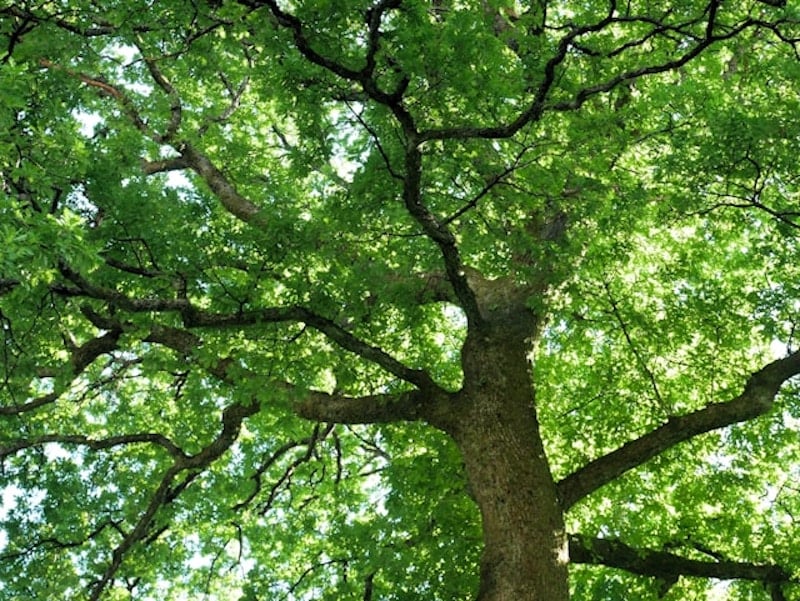
Psalm 1. Photo by Jakob Gausvik-Tvedt on Unsplash.
Growing up, you probably had a favorite tree.
Maybe it was the one you climbed in your backyard. Maybe it shaded your grandparents’ porch. Maybe it held a treehouse or became your hiding place on long summer afternoons.
For me, it was a massive maple tree at my grandfather’s house. I couldn’t wrap my arms around its trunk. One branch stretched almost perfectly horizontally, strong enough for me to crawl out and simply sit. I’d watch birds moving through the canopy, listen to the wind rustling the leaves, and feel completely at peace. That branch was a world of adventure.
Years later, when I was much older, I found another favorite tree. It stood along the edge of Silver Mine Park, leaning out over the water. You could carefully walk along one of its thick branches and look down into the creek below. It felt like the perfect place to disappear for an afternoon. Shade. Water. Quiet. It was the kind of tree that stood the test of time.
I’ve realized over the years that trees exemplify better sermons on faith than many of us do. Trees grow slowly. They stand the test of years and storms. They have the scars of the years, and they offer shade without seeking attention. They nourish others while remaining rooted in one place. The older they become, the more life they give away. Jesus used trees as central examples in a few of his teachings, and the Scriptures return to them as practical examples time after time.
The Quiet Witness of Trees
Creation has always been one of God’s first teachers. Theologians often speak of general revelation and special revelation. General revelation is God’s self-disclosure through creation. As Psalm 19 says, “The heavens declare the glory of God.” The world tells us something true about God’s beauty, wisdom, creativity, and faithfulness. It carries the fingerprints of the Creator who created it.
Then there is special revelation, which is God’s clearer self-disclosure through the scriptures, the prophets, the work of the Holy Spirit, and, most ultimately, through the personhood of Jesus Christ. Jesus is the fullest revelation of God, God in the flesh. If we want to know what God is like, we look to Jesus. Interestingly, Jesus often taught by pointing people back to creation. In his stories, parables, and teachings, Jesus spoke of seeds, birds, lilies, vineyards, fig trees, mustard trees, fruit, and more. In a world more connected to the ground than we are today, Jesus used nature as a classroom for the Kingdom of God.
In Luke 6, Jesus said every tree is recognized by its fruit. Jesus reminds us that healthy trees produce healthy fruit because something healthy is happening beneath the surface. This is not just an agricultural truth; it is a spiritual one. What is happening spiritually inside our hearts will produce fruit in keeping with the inner world we cultivate. Then, in John 15, He deepens the image: “I am the vine; you are the branches.” Life flows from remaining connected to Him.
In both of these teachings, we can trace a shared meaning to Psalm 1, one of the earliest poems in the scriptures, which conveys a similar truth.
Psalm 1 Asks One Question
Psalm 1 opens the entire Psalter with a surprisingly simple question: What kind of person are you becoming? Psalm 1 sets the tone for the whole collection of Psalms that follow. Before there are examples, songs, and teachings on how to worship, lament, confess, or praise, the psalm paints two pictures of human life. Derek Kidner remarks, “It seems likely that this psalm was specially composed as an introduction to the whole Psalter” (Psalms 1–72: An Introduction and Commentary, vol. 15, 63).
Before we pray, we receive a didactic teaching on the way of life and what it looks like to learn to worship and pray rightly as people of faith.
In this two-way-to-live psalm, we find the example of a person like chaff—light, rootless, driven wherever the wind blows. They are without anchor or fruit. In contrast and in parallel, the other is like a tree. This individual is evergreen and resilient. The Psalm confesses that “They are like a tree planted by streams of water, which yields its fruit in season and whose leaf does not wither.” There are three movements within this Psalm. Three about the right way of living, three about the wrong. Theologian Tremper Logmann III said, “The psalm has three stanzas. The first describes the blessings that come on those who are righteous (vv. 1–3), while the second presents the contrasting destiny of the wicked (vv. 4–7). The final stanza provides a summary statement concerning both the righteous and the wicked (v. 6) (Psalms: An Introduction and Commentary, 56). It is the image, rather than the movements, that I want us to wrestle with in this blog post. Psalm 1 gives us a memorable image. I picture thousands of spiritual pilgrims holding on to it’s image as a reminder of who we are to be. As Torah mentioned today, the image in Psalm 1 “sets a tone for the entire book.”
Notice the imagery the psalms use. Read it slowly and carefully. It is an image meant to be embodied in our minds, much like our favorite tree. It is a visionary and contagious image of life. We have a resilient tree, strong with legacy and connected to a life-giving source. It is a tree, sustained and uniquely unweathered, far from withering. The tree isn’t frantically searching for water or nutrients. It is not a tree that is barely surviving. This is a tree that has been intentionally planted beside a source of life and is powerfully strong because of it, and it extends and provides for others. It is not moved nor shaken; it is evergreen in all seasons. It is an image of a tree in which everything visible above the ground is sustained by something invisible beneath it.
Roots Grow Before Fruit
One of the great temptations of our age is our obsession with visible results. We celebrate platforms, productivity, influence, accomplishments, and constant activity. We measure success by what can be seen, counted, and shared. Said another way, we often admire the fruit while paying little attention to the roots that made it possible. The tree of Psalm 1 teaches us a different way of life. It is not an activity but rootedness.
Long before anyone notices branches reaching toward the sky, roots have been reaching quietly into the earth. The hidden life always comes first. A tree’s strength is not determined by what towers above the ground but by what has taken hold beneath it. Storms expose what seasons of quiet growth have already established. This Psalm serves as an informative key for reading the rest of the Psalms.
Psalm 1 is intentionally placed at the entrance to the Psalter because it teaches us what it means to be the kind of person who learns to pray. Before we learn words of praise, lament, confession, or thanksgiving, we are invited into a particular way of life. The Psalms are not merely prayers to recite; they are prayers intended to shape a people whose lives are rooted in God.
As with a tree, so it is spiritually: what lies beneath the surface produces the fruit. Character is formed in places few people ever see. Faithfulness grows through ordinary obedience. Wisdom develops over years of listening, praying, repenting, forgiving, and remaining with God the Father. We become the kind of people who bear good fruit because our lives have first been deeply rooted in the presence of God.
Perhaps this is what it means to lead a quiet life. A quiet life is not a small life or an insignificant one. It is a life that chooses depth over appearance, faithfulness over recognition, and rootedness over hurried ambition. Like a great tree, its strength is found in what remains largely unseen.
We often mistake movement for maturity. We assume that because we are busy for God, we must also be growing in God. But activity and intimacy are not the same thing. Scripture consistently teaches that fruit is not produced by striving harder but by remaining connected to the One who gives life. Before God sends people out, He first invites them to abide.
Psalm 1: Evergreen Through Every Season
We also see this tree’s evergreen nature in Psalm 1. Centuries after Psalm 1 was written, the prophet Jeremiah returned to the same image. The generation around Jeremiah was marked by political instability, injustice, spiritual compromise, and widespread anxiety. The people had trusted their own strength more than the faithfulness of God, and the consequences were becoming painfully clear.
Yet in that moment, God offered a different vision of life. We read, “Blessed is the one who trusts in the Lord… They will be like a tree planted by water that sends out its roots by the stream. It does not fear when heat comes; its leaves are always green. It has no worries in a year of drought and never fails to bear fruit.” Notice what Jeremiah’s prophetic word does not promise. It is not a way to prosperity. In his telling, the heat still comes. The drought still arrives. Difficult seasons are not removed from the life of faith. Trusting God is not a guarantee that life will become easier. The difference is where the roots are.
We spend enormous amounts of energy trying to change our circumstances. In this Psalm, God is less concerned with removing the drought than God is with deepening our trust. A life rooted in God possesses a source that the drought cannot touch. The external conditions may remain the same, but the inner source of life has changed.
Jeremiah’s tree remains evergreen because its life is not dependent on changing circumstances. While everything around it dries up, its roots continue drawing life from a source deeper than the season itself. Scripture offers us a vision of resilience rather than escape. Evergreen faith is not the absence of suffering but the presence of deep roots anchored in God’s faithfulness.
The Habits That Send Roots Down
Psalm 1 tells us that the righteous delight in the instruction of the Lord and meditate upon it day and night. Delight is not something we manufacture through determination or discipline alone. It is something the Spirit gradually cultivates within us as we continue returning to God.
That return happens through the ordinary practices of the Christian life. Prayer. Scripture. Sabbath. Worship. Confession. Gratitude. Silence. Gathering with God’s people around Christ’s table. None of these practices is particularly spectacular, yet they are the means by which our roots slowly extend toward the living water of God’s presence.
Like rain soaking into dry ground, these practices nourish us in ways we often cannot immediately perceive. We may not notice dramatic growth from one day to the next, but over months and years, our hearts are changed. Our loves are reordered. Our imaginations are renewed. We become people who increasingly reflect Christ’s character because we have learned to remain near God.
These practices that keep us are often called spiritual disciplines, because they discipline our lives. However, perhaps it is equally helpful to think of them as ways of placing ourselves beside the stream. We cannot manufacture growth any more than a tree can force itself to bear fruit. What we can do is remain where life is found. Growth is God’s work. The remaining is ours.
Roots rarely grow in dramatic moments. More often, they grow through quiet, daily dependence upon God.
We live in an age that rewards speed and immediacy. We expect transformation as quickly as software updates. Yet God seems remarkably unhurried. Oaks take decades. Vineyards require years before producing their best fruit. Discipleship follows the same rhythm. The Kingdom of God almost always grows at the pace of a seed becoming a tree rather than a machine producing a product.
A Quiet Life Gives Shade
One of the most beautiful things about a mature tree is that it no longer exists merely for itself. It provides shade for weary travelers. Birds build nests among its branches. Children climb its limbs. Its fruit feeds others, and its presence quietly blesses everyone who comes near.
There are people whose presence lowers the emotional temperature of a room. They listen before speaking. They refuse to feed outrage. They are not easily shaken by headlines or hurried by urgency. Like an old tree, they simply offer shade. That kind of presence is not a personality trait. It is the fruit of a life hidden with Christ.
This is also the picture Scripture gives us of spiritual maturity.
As we become more deeply rooted in Christ, our lives gradually become less centered on ourselves and more available to those around us. Our patience becomes shade for someone else’s exhaustion. Our gentleness offers shelter to those living with fear. Our faithfulness provides stability for people whose lives feel uncertain. Our hope becomes a place where weary souls discover rest.
The deeper our roots reach into Christ, the farther our branches extend toward our neighbors. We begin to bear fruit that was never intended for our own consumption but for the nourishment of others.
Psalm 1: the Kind of Person Others Remember
As I said in the beginning, most of us can think of someone who reminds us of a great tree. Perhaps they were a grandparent, a mentor, a pastor, or an ordinary saint whose life quietly shaped those around them. They were not necessarily the loudest person in the room or the most accomplished by the world’s standards. Yet there was something deeply rooted about them. Their presence brought peace. Their faith had weathered disappointment without becoming cynical. Their lives became a place of refuge for others.
I have come to believe that this is the kind of life God is forming within His people.
Not a hurried life, but a rooted one.
Not a life consumed with chasing the next achievement, but one marked by steady faithfulness.
Not a life that measures success by visibility, but one that quietly bears fruit in season.
In a restless world, perhaps one of the Church’s greatest witnesses is simply this: to become a people who remain planted beside the living water of Christ. People whose leaves remain green through every season. People whose roots grow ever deeper into the love of God. People whose branches stretch outward in grace, offering shade, shelter, and nourishment to a weary world.
Like the great trees that have shaped so many of our memories, may our lives quietly point others to the God who gives life.
Looking back, I think I understand why I loved those trees so much. They represent an image of a life of faith. I wasn’t simply drawn to their size. I was drawn to what they represented. Stability. Peace. Endurance. Refuge. Long before I knew Psalm 1, those trees were quietly teaching me what a faithful life could look like. Years later, Scripture gave words to what creation had first shown me.
Let me say one more thing: a tree does not exist for itself. It does not eat its own fruit or enjoy its own shade. Everything it produces becomes a gift for someone else. Spiritual maturity works the same way. The Spirit forms patience, kindness, gentleness, faithfulness, and self-control within us, but those gifts are rarely meant primarily for us. They are God’s provision for our neighbors. The fruit of the Spirit is always communal before it is personal.
We need to be like trees planted by the living water.
If this post resonated, subscribe for future reflections, share it with a friend, or leave a comment. You can learn more about his journey to recover a rooted Christian way of life through the Lord’s Prayer, ancient habits, leading a quiet life, and simple Jesus communities online at JeffMcLain.com, the Lead a Quiet Life blog on Patheos, or the Discovering God Podcast.
Contemplative
History and Religion
Home and Religion
Lead A Quiet Life as Resistance

About Jeff McLain
Jeff McLain is a Doctor of Ministry Student on the Lord’s Prayer at Kairos University, Director of Pastoral Ministries at Water Street Mission, and a pastor at River Corner Church. Mobilized by 1 Thessalonians 4:11-12, Jeff blogs about recovering a rooted Christian way of life through the Lord’s Prayer, ancient habits, leading a quiet life, and simple Jesus communities. You can read more about the author here.
Previous Post

July 3, 2026
Psalm 23: A Poem for the Pilgrimage
Next Post

July 16, 2026 Port of Call: Sometimes We Need More Than a Weekly Sabbath
Recent Comments
"We can never reflect enough."
The Earth Is the Lord’s: Learning ..."
"Yes!"
The Earth Is the Lord’s: Learning ..."
"As pilgrims on journey we are invited to do further rethinking for the remaining stretch ..."
The Earth Is the Lord’s: Learning ..."
"Not only do other people belong to God, they are loved by God. So we ..."
The Earth Is the Lord’s: Learning ..."
Browse Our Archives
Select a Category A Simple Church Way Hard Conversations Lead A Quiet Life as Resistance Reading in the Trenches Sacred in the Everyday Chaos Series: Advent Series: Bible Study Essentials Series: Four Walls of Gratitude Series: Reading Shelf Series: Sojourn Series: This Is The Lord's Table Series: Year in Review Spiritual Disciplines for Ordinary People The Holy Work of Parenting The Pilgrimage of Jeff McLain Theology in the Wild Uncategorized
Select a Month October 2026 September 2026 August 2026 July 2026 June 2026 May 2026 April 2026 March 2026 February 2026 January 2026 December 2025 November 2025 October 2025 September 2025 August 2025 July 2025 June 2025 May 2025 April 2025 March 2025 February 2025 January 2025 December 2024 November 2024 October 2024 September 2024 August 2024 July 2024 June 2024 May 2024 April 2024 March 2024 February 2024 December 2023 November 2023 October 2023 June 2022
Follow Us!
TAKE THE
Religious Wisdom Quiz
In 2 Peter, what did God not spare when he judged the people of Noah's Time?
Select your answer to see how you score.
Angels who sinned The wicked The ancient world Sodom and Gomorrah
Related posts from Lead a Quiet Life

Do Not Rejoice When Your Enemy Falls: The...

Learning to Confess and Understand Our Father Even...

If This Is All That I Have for...

Making Room for the Conversation
TRENDING AT PATHEOS Evangelical

I was strolling through the top floor of the brand new Parthenon...

What Does Gêvâh Mean For Kimberley Guifoyle &...
This week, a lot of the news is focused on Kimberly Guilfoyle....

INNER CIRCLE: Profound Mystery (Of Christ In All...
Ephesians 5:31-32 “For this reason, a man will leave his father and...

Do Not Rejoice When Your Enemy Falls: The...
Turning an execution into a public spectacle is a disturbing expression of...

'The Chosen' S6 Trailer: The Passion Gets Very...
Not many watching 'The Chosen' worry about spoilers, but just because they...

The purpose-driven labor priest
A labor activist reads Rick Warren and it gets me wondering about...
view all Evangelical blogs
What Are Your Thoughts?leave a comment
Ad-Free & Subscriber Log-In Subscription Support
- About Us
- 2026 Calendar
- Videos
- Podcasts
- Library of World Religions
- Faith In Media Tracker
- Advertise With Us
- Write for Us
- Privacy Policy
- Terms of Service
- Do Not Sell My Data
- Contact Us
- Radiant Digital
- Manage Newsletter Subscriptions
- Unsubscribe From Notifications
- Sitemap
Copyright 2008-2026, Patheos. All rights reserved.
Subscription Support Ad-Free & Subscriber Log-In
Follow Patheos