
BuddhistCatholicContemplativeEvangelicalGeneral ChristianHinduJewishLatter-day SaintMuslimNew VisionsProgressive Christian
Beliefs
- Buddhist
- Catholic
- Contemplative
- Evangelical
- General Christian
- Hindu
- Jewish
- Latter-day Saint
- More Voices
- Muslim
- New Visions
- Pagan
- Progressive Christian
Topics
- Religion News
- Food and Religion
- Sports and Religion
- Religious Art
- Religious Music and Entertainment
- Religious Events
- History and Religion
- Style and Religion
- Politics and Religion
- Women in Religion
- Recreation Outdoors and Religion
- Business Finance and Religion
- Careers Workplace and Religion
- Education and Religion
- Family Parenting and Religion
- Health Fitness and Religion
- Home and Religion
- Relationships and Religion
- Technology and Religion
- Travel and Religion
Columnists
- Buddhist Columnists
- Business Finance and Religion Columnists
- Careers Workplace and Religion Columnists
- Catholic Columnists
- Contemplative Columnists
- Education and Religion Columnists
- Evangelists Columnists
- Family Parenting and Religion Columnists
- General Christian Columnists
- Health Fitness and Religion Columnists
- Hindu Columnists
- History and Religion Columnists
- Home and Religion Columnists
- Jewish Columnists
- More Voices Columnists
- Latter Day Columnists
- Muslim Columnists
- New Visions Columnists
- Nonreligious Columnists
- Pagan Columnists
- Politics and Religion Columnists
- Progressive Columnists
- Recreation Outdoors and Religion Columnists
- Relationships and Religion Columnists
- Religion News Columnists
- Religious Art Columnists
- Religious Events Columnists
- Religious Music and Entertainment Columnists
- Sports and Religion Columnists
- Style and Religion Columnists
- Technology and Religion Columnists
- Travel and Religion Columnists
- Women in Religion Columnists
Resource Library
- 2026 Calendar
- Library of World Religions
- The 100 Most Holy Places on Earth
- Patheos Answers
- Podcasts
- Videos
- Faith Leaders Database
- Anglican Episcopalian
- Bahai
- Baptist
- Buddhism
- Christianity
- Confucianism
- Eastern Orthodoxy
- Hinduism
- Holiness and Pentecostal
- ISKCON
- Islam
- Judaism
- Lutheran
- Methodist
- The Church of Jesus Christ of Latter-day Saints
- New Age
- Paganism
- Presbytarian and Reformed
- Protestantism
- Religion Behind the Scenes
- Roman Catholic
- Scientology
- Shia Islam
- Sikhism
- Sufism
- Sunni Islam
- Taoism
- Zen
- See all religions
Research Tools
 Ad-Free & Subscriber Log-In Subscription Support
Ad-Free & Subscriber Log-In Subscription Support
Follow Patheos 

- Trending:
- Forgiveness
- |
- Marriage
- |
- Consciousness
- |
- Death Penalty
- |
- Election
- |
- Halloween

- Home
- Evangelical
- Careers, Workplace and Religion
- Be a Christian Where You Are
Be a Christian Where You Are
Last updated on: May 7, 2026 at 9:32 pm by Jeff McLain
Be a Christian Where You Are 2026-05-07T21:32:26-04:00 Jeff McLain
Patheos Explore the world's faith through different perspectives on religion and spirituality! Patheos has the views of the prevalent religions and spiritualities of the world.
When I was younger, I didn’t want to rule the world. I wanted to change it.
Maybe you can relate. Many of us carried that same energy into early adulthood. We threw ourselves into some sort of vision or mission—ministry, activism, missions, church work, nonprofits, politics, or careers, believing we could make the world better. It would be our legacy and how we are remembered. Often, we assumed that if we really wanted to make a difference, we needed something bigger: a larger platform, more influence, a louder voice, or a more important role.
Perhaps that is still a place you are today, a secret whisper inside yourself you believe.
We dream big, but life has a way of humbling us.
After enough pushing and striving, many of us begin to realize how overwhelming the world’s problems really are. In our disillusionment, we realize how hard it is to shift or shape the world. We’ve done everything we can—posted the opinions, attended the rallies, preached the sermons, argued online, changed jobs, joined movements, and still the world feels just as fractured as before. The internet, especially, has convinced us that influence equals volume and presence. Yet, what we find is everyone is talking, reacting, correcting, and broadcasting.
More often, all the trying and noise leave us exhausted.
Lately, I’ve been realizing something simple but important: my voice matters most not in the endless scroll of social media, but in the real places where I am actually invested. The places where I live, work, worship, and play. I only matter in the space I eat, walk, and where people know me by name.
Mission is usually much smaller than we imagine.
Or maybe it’s better to say it this way: the mission is much nearer than we realize.
The revolution will not be televised
I believe that scriptures show us that revolution comes through faithfulness, not a radical platform.
We tend to picture the Apostle Paul as a first-century celebrity preacher moving from stage to stage across the Roman Empire.
This view makes many inspired to do the same.
Yes, Paul traveled widely and preached publicly. But when you actually read his story closely, much of his ministry was remarkably ordinary.
Like, still working, living in prison, and suffering poverty and shipwrecks.
Paul wrote letters from prison. Paul worked with his hands as a tentmaker. Paul held his responsibilities in light while still mentoring younger believers. Paul shared meals with small groups even when he was tired. The true story is that Paul was invested deeply in local communities, not big stages with walk-up songs.
For the past few months, I have been reflecting on how the church in Philippi began with a dream and a seemingly coincidental conversation beside a river. In Corinth, Paul spends time working alongside Aquila and Priscilla. Again and again, the kingdom of God grows not merely through dramatic moments but through ordinary faithfulness in ordinary places.
That is what has been on my mind lately.
The kingdom shows up right here, right now, wherever God has placed us.
Paul tells the churches to be faithful, leading quiet lives and investing where they are. He doesn’t say create a brand or form a band. Paul’s strategy was not primarily built around spectacle, outrage, or public performance.
Paul’s “Rule” for the Churches
In 1 Corinthians 7, Paul gives what he actually calls a rule or direction for the churches:
“Each person should live as a believer in whatever situation the Lord has assigned to them, just as God has called them.”
Paul says, “I give this sort of direction in all the churches.” Corinth was a city obsessed with status, ambition, influence, and identity. People measured themselves by social standing, ethnicity, success, and public recognition. In many ways, it doesn’t sound all that different from our world.
Some believers in Corinth seemed to think becoming a Christian meant abandoning their old lives entirely in order to become something more spiritual, more important, or more impressive.
Paul tells them otherwise.
If you were Jewish, remain Jewish. If you were Gentile, remain Gentile. If you were working-class, remain faithful there. If you were enslaved, your dignity and worth were still rooted in Christ.
Paul’s point is not that circumstances never matter or that change is always wrong. In fact, he says if freedom becomes available, take it. But he refuses the idea that significance is found somewhere else.
In my words, faithfulness begins where you already are.
William Barclay summarized Paul’s teaching this way:
“Be a Christian where you are.”
That line has stayed with me.
Be a Christian where you are.
It is not just in our youth that we dream of changing the world or having more. We might not want to change the world anymore, but we want to be more than we are, have more than we have, and do more than we can do. Truthfully, many of us spend enormous energy imagining that our real purpose is somewhere else.
We imagine…
If I just had a different job.
If I lived in a different city.
If I had a larger audience.
If I were more gifted.
If I had more time.
If people noticed me.
But in this passage, Paul keeps pulling our attention back to the ordinary spaces we already inhabit.
“Be a Christian where you are.”
Your Life Is Not Random
One of the things I appreciate about this passage is how deeply it affirms ordinary life.
Paul reminds the Corinthians that their value is not rooted in status, success, visibility, or platform. Their value is rooted in Christ.
“You were bought at a price,” Paul says. That means your life matters. Regardless of how ordinary, your work matters. Your neighborhood matters and your family matters. Your ordinary routines matter. And not because they are impressive, because your presence in them matters, and the people in those spaces matter, and it is in those spaces we learn God is present there.
Those ordinary places are places of mission. Your life is not random; it’s planted.
Some of us quietly carry the belief that our lives are spiritually insignificant. We assume the mission belongs to pastors, missionaries, influencers, activists, church leaders, or people with large audiences.
But the New Testament consistently pushes against that idea.
The kingdom often grows through unnoticed faithfulness.
The extraordinary can happen in the ordinary
We need a vision that believes the extraordinary can happen in ordinary spaces. Not just that it can, but we need to believe every moment is pregnant with the possibility. It is important that we expect God to show up and show off in everyday moments. We need to learn to inhabit the moment we’ve been given.
We must expect the extraordinary in the faithfulness.
- A parent raising children with patience.
- A coworker who listens carefully.
- A neighbor who practices hospitality.
- A retiree praying quietly for others.
- A teacher showing compassion.
- A janitor doing good work with dignity.
- A church member faithfully showing up year after year.
Believe it or not, I am increasingly convinced that the majority of kingdom work is not dramatic.
Most of it is deeply ordinary.
“Be a Christian where you are.”
The Temptation of Elsewhere
One of the great temptations of modern life is the belief that meaning always exists somewhere else. We always believe the grass is greener on the other side.
We are constantly being discipled into dissatisfaction.
- Social media trains us to compare.
- Advertising trains us to consume.
- Politics trains us to outrage.
- Productivity culture trains us to believe that busyness equals importance.
- Even ministry culture can quietly convince us that bigger always means better.
But Paul’s words confront all of that.
“Live as a believer in whatever situation the Lord has assigned to you.”
Not because every situation is ideal.
Not because suffering is good.
Not because change never matters.
But because God is already at work in the actual life you are living.
Sometimes faithfulness means learning to stop chasing a different life, and to simply “Be a Christian where you are.”
Pump the brakes and practice limits
Honestly, I think many of us need to recover the spiritual discipline of limitation.
Growing up in the 80s and 90s, many of us remember Nancy Reagan’s “Just Say No” campaign. While it was aimed at drugs, I increasingly think the phrase contains wisdom for our age.
Many of us do not know how to say no anymore.
- We say yes to every notification.
- Yes to endless commentary.
- Yes to distraction.
- Yes to outrage.
- Yes to more commitments.
- Yes to the pressure to constantly prove ourselves.
And in doing so, we often lose sight of the simple places where God has actually planted us.
Learning to say no is not laziness.
Sometimes it is faithfulness.
Every “no” to distraction creates space for a deeper “yes” to God, to our families, to our churches, and to the people physically present before us.
To be a Christian where we are, we have to say yes to where we are and no to the things that distract us from this space and time.
Right Here Is Holy Ground
I think Paul is calling them to see that where they are is Holy Ground.
I love the way Eugene Peterson’s The Message puts verse 1 Corinthians 7:17 in modern language:
“And don’t be wishing you were someplace else or with someone else. Where you are right now is God’s place for you. Live and obey and love and believe right there. God, not your marital status, defines your life. Don’t think I’m being harder on you than on the others. I give this same counsel in all the churches.”
One of the great lies of modern spirituality is that meaningful mission is always somewhere far away.
But throughout Scripture, God repeatedly meets people in ordinary places.
- Moses tending sheep.
- David caring for livestock.
- Mary in a small village.
- Peter cleaning fishing nets.
- Paul making tents.
In each of those stories, right here becomes holy ground.
The incarnation itself tells us something important: God enters ordinary human life.
And because of that, ordinary life becomes holy ground.
- Your dining room table can become a place of ministry.
- Your workplace can become a place of witness.
- Your neighborhood can become a place of presence.
- Your ordinary life can become a place where the kingdom quietly grows.
The kingdom of God comes through faithfulness not through spectacle.
This does not mean we stop caring about justice, mercy, suffering, or the needs of the world. It does not mean we become passive or indifferent.
It simply means we stop overlooking the places God has already entrusted to us.
You do not need to change your life in order to live sent.
God has already placed you somewhere.
Be a Christian where you are.
The invitation is to become attentive to what He is already doing there.
A Quiet Faithfulness
I think this is part of what the church desperately needs right now…a deeper, quieter, more rooted understanding of mission.
- We need a Christianity that remembers people are not projects.
- We need a faith that values presence over performance.
- We need a way of life that believes God still works through ordinary people in ordinary places.
The older I get, the more convinced I become that much of spiritual maturity is learning to pay attention.
- To notice people.
- To notice our neighborhoods.
- To notice interruptions.
- To notice loneliness.
- To notice where God may already be moving.
And then simply responding with faithfulness.
Right here.
Right now.
To be a Christian where I am.
No, life might not be where you want to be. You might be imagining life elsewhere, but don’t lose sight of what is before you.
Your life is not on hold.
You are not waiting for your calling.
You are already living inside it.
“Be a Christian where you are.”
As Paul wrote “Nevertheless, as the Lord has assigned to each one, as God has called each person, so must he live. I give this sort of direction in all the churches” (1 Corinthians 7:17, NET).
This has been adapted from a sermon message at River Corner Church that you can listen to here.
- Where have you struggled to be a Christian where you are?
- Where do you sense God is calling you to be more expectant in ordinary places?
- What keeps you from believing each moment is pregnant with possibility?
Thanks for reading. I’m Jeff McLain, and I write the Lead a Quiet Life blog on Patheos, exploring Christian spiritual formation and the call of 1 Thessalonians 4:11–12 to lead a quiet life in a noisy world. If this post resonated, share it, leave a comment, or connect with the Lead a Quiet Life page on Facebook. You can also learn more about me at jeffmclain.com.
General Christian
Careers, Workplace and Religion
Home and Religion

About Jeff McLain
Jeff McLain writes the Lead a Quiet Life blog on Patheos, where he explores Christian spiritual formation, the Lord’s Prayer, and the call of 1 Thessalonians 4:11–12 to live faithfully in a noisy world. He serves as Director of Pastoral Ministries at Water Street Mission in Lancaster, Pennsylvania, and pastors River Corner Church. You can read more about the author here.
Previous Post

May 1, 2026
New Standard for the Shelf: ESV Expository Commentary Vol. 8
Next Post
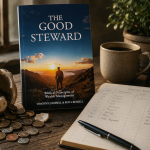
May 14, 2026 Quiet Life Stewardship: Reflections on The Good Steward
Recent Comments
"We can never reflect enough."
The Earth Is the Lord’s: Learning ..."
"Yes!"
The Earth Is the Lord’s: Learning ..."
"As pilgrims on journey we are invited to do further rethinking for the remaining stretch ..."
The Earth Is the Lord’s: Learning ..."
"Not only do other people belong to God, they are loved by God. So we ..."
The Earth Is the Lord’s: Learning ..."
Browse Our Archives
Select a Category A Simple Church Way Hard Conversations Lead A Quiet Life as Resistance Reading in the Trenches Sacred in the Everyday Chaos Series: Advent Series: Bible Study Essentials Series: Four Walls of Gratitude Series: Reading Shelf Series: Sojourn Series: This Is The Lord's Table Series: Year in Review Spiritual Disciplines for Ordinary People The Holy Work of Parenting The Pilgrimage of Jeff McLain Theology in the Wild Uncategorized
Select a Month October 2026 September 2026 August 2026 July 2026 June 2026 May 2026 April 2026 March 2026 February 2026 January 2026 December 2025 November 2025 October 2025 September 2025 August 2025 July 2025 June 2025 May 2025 April 2025 March 2025 February 2025 January 2025 December 2024 November 2024 October 2024 September 2024 August 2024 July 2024 June 2024 May 2024 April 2024 March 2024 February 2024 December 2023 November 2023 October 2023 June 2022
Follow Us!
TAKE THE
Religious Wisdom Quiz
In 2 Peter, what did God not spare when he judged the people of Noah's Time?
Select your answer to see how you score.
Angels who sinned The wicked The ancient world Sodom and Gomorrah
Related posts from Lead a Quiet Life
Learning to Confess and Understand Our Father Even...

How to Discern God’s Will When You Don’t...
Taking Every Thought Captive: Learning Gratitude

Port of Call: Sometimes We Need More Than...
TRENDING AT PATHEOS Evangelical

I was strolling through the top floor of the brand new Parthenon...

What Does Gêvâh Mean For Kimberley Guifoyle &...
This week, a lot of the news is focused on Kimberly Guilfoyle....

INNER CIRCLE: Profound Mystery (Of Christ In All...
Ephesians 5:31-32 “For this reason, a man will leave his father and...

Do Not Rejoice When Your Enemy Falls: The...
Turning an execution into a public spectacle is a disturbing expression of...

'The Chosen' S6 Trailer: The Passion Gets Very...
Not many watching 'The Chosen' worry about spoilers, but just because they...

The purpose-driven labor priest
A labor activist reads Rick Warren and it gets me wondering about...
view all Evangelical blogs
What Are Your Thoughts?leave a comment
Ad-Free & Subscriber Log-In Subscription Support
- About Us
- 2026 Calendar
- Videos
- Podcasts
- Library of World Religions
- Faith In Media Tracker
- Advertise With Us
- Write for Us
- Privacy Policy
- Terms of Service
- Do Not Sell My Data
- Contact Us
- Radiant Digital
- Manage Newsletter Subscriptions
- Unsubscribe From Notifications
- Sitemap
Copyright 2008-2026, Patheos. All rights reserved.
Subscription Support Ad-Free & Subscriber Log-In
Follow Patheos