
BuddhistCatholicContemplativeEvangelicalGeneral ChristianHinduJewishLatter-day SaintMuslimNew VisionsProgressive Christian
Beliefs
- Buddhist
- Catholic
- Contemplative
- Evangelical
- General Christian
- Hindu
- Jewish
- Latter-day Saint
- More Voices
- Muslim
- New Visions
- Pagan
- Progressive Christian
Topics
- Religion News
- Food and Religion
- Sports and Religion
- Religious Art
- Religious Music and Entertainment
- Religious Events
- History and Religion
- Style and Religion
- Politics and Religion
- Women in Religion
- Recreation Outdoors and Religion
- Business Finance and Religion
- Careers Workplace and Religion
- Education and Religion
- Family Parenting and Religion
- Health Fitness and Religion
- Home and Religion
- Relationships and Religion
- Technology and Religion
- Travel and Religion
Columnists
- Buddhist Columnists
- Business Finance and Religion Columnists
- Careers Workplace and Religion Columnists
- Catholic Columnists
- Contemplative Columnists
- Education and Religion Columnists
- Evangelists Columnists
- Family Parenting and Religion Columnists
- General Christian Columnists
- Health Fitness and Religion Columnists
- Hindu Columnists
- History and Religion Columnists
- Home and Religion Columnists
- Jewish Columnists
- More Voices Columnists
- Latter Day Columnists
- Muslim Columnists
- New Visions Columnists
- Nonreligious Columnists
- Pagan Columnists
- Politics and Religion Columnists
- Progressive Columnists
- Recreation Outdoors and Religion Columnists
- Relationships and Religion Columnists
- Religion News Columnists
- Religious Art Columnists
- Religious Events Columnists
- Religious Music and Entertainment Columnists
- Sports and Religion Columnists
- Style and Religion Columnists
- Technology and Religion Columnists
- Travel and Religion Columnists
- Women in Religion Columnists
Resource Library
- 2026 Calendar
- Library of World Religions
- The 100 Most Holy Places on Earth
- Patheos Answers
- Podcasts
- Videos
- Faith Leaders Database
- Anglican Episcopalian
- Bahai
- Baptist
- Buddhism
- Christianity
- Confucianism
- Eastern Orthodoxy
- Hinduism
- Holiness and Pentecostal
- ISKCON
- Islam
- Judaism
- Lutheran
- Methodist
- The Church of Jesus Christ of Latter-day Saints
- New Age
- Paganism
- Presbytarian and Reformed
- Protestantism
- Religion Behind the Scenes
- Roman Catholic
- Scientology
- Shia Islam
- Sikhism
- Sufism
- Sunni Islam
- Taoism
- Zen
- See all religions
Research Tools
 Ad-Free & Subscriber Log-In Subscription Support
Ad-Free & Subscriber Log-In Subscription Support
Follow Patheos 

- Trending:
- Forgiveness
- |
- Marriage
- |
- Consciousness
- |
- Death Penalty
- |
- Election
- |
- Halloween

- Home
- Evangelical
- Careers, Workplace and Religion
- The Stillness Ambition: Living the Lead a Quiet Life Verse
The Stillness Ambition: Living the Lead a Quiet Life Verse
Last updated on: March 10, 2026 at 4:20 pm by Jeff McLain
The Stillness Ambition: Living the Lead a Quiet Life Verse 2026-03-10T16:20:47-04:00 Jeff McLain
Patheos Explore the world's faith through different perspectives on religion and spirituality! Patheos has the views of the prevalent religions and spiritualities of the world.

Photo by Nancy Hughes on Unsplash. The Stillness Ambition: Living the Lead a Quiet Life Verse
In this season of my life, I have identified a singular and driving focus. I want to be okay with living with less. This is not just a minimalist trend for me. It is a spiritual necessity. As part of my rule of life, I have started a weekly practice of throwing one thing away each week. I do not mean trash. I mean something I have collected or valued that no longer serves a good purpose. It is a forced detachment from the noise of accumulation. This isn’t easy, especially with my books and baseball memorabilia. The reality is that everything we own creates either value or distraction. For years, my life fit into a backpack and a suitcase. Since buying a home in 2015, the stuff has multiplied. I have bins of Christmas decorations, old sound equipment from my concert promotion days, and thousands of books. I have realized that this physical clutter is just an external version of the hurry and busyness that drowns out the ability to hear the still small whispers of the Spirit of God. To lead a quiet life is a form of resistance against a culture that defines us by what we have and how busy we are.
Make it Your Ambition
I have always loved how Paul writes to the church in Thessalonica, telling them to make it your ambition to lead a quiet life. This 1 Thessalonians 4:11-12 passage is a powerful reminder of our call. Usually, in the West, our ambition is fueled by the need to accomplish and accumulate, it is directed toward what we do not have. It is driven by a hunger for success or more “stuff.” Paul flips the script in this passage. Paul calls a beat up and bruised church to a new kind of striving. He calls them to an ambition for stillness. As Craig Keener notes, Paul asks his readers to be inconspicuous, not monastic. This is not about running away to a cave. It is about retraining our brains to take every thought captive and making it obedient to Christ (2 Corinthians 10:5). It is an operating system upgrade where our driving force is no longer the values of the world, or being on par with others, but a yearning for the peace of Christ.
The King James Version uses the phrase “study to be quiet.” Study can certainly express ambition. We often develop habits and disciplines around the things we value most. But the Greek word philotimeomai carries a deeper sense than simply studying. It speaks of ambition—an eagerness shaped by a desire for what is honorable.
The word conveys the idea of striving, laboring, and applying oneself toward something meaningful. It combines philos (a love or fondness) and timē (honor or value). In this sense, it describes a person who pursues something worthwhile with intention and devotion. The picture is not passive quietness but a purposeful pursuit. We become ambitious, in the best sense of the word, to live quiet lives.
Lead
“Lead” is a term supplied by translators. The NIV and NASB render the phrase “lead a quiet life,” while the ESV translates it more simply as “live quietly.” The Greek text itself does not contain a separate verb meaning “to lead.” Instead, it uses the phrase philotimeomai hēsychazein, which is best understood as “make it your ambition to be quiet.” English translations add “live” or “lead” to make the expression sound natural, but also to carry the ambitious nature.
The verb hēsychazō carries the sense of settling down, refraining from disturbance, and living with quiet and orderly conduct. In the New Testament it often describes restraint in speech or activity—a calm posture rather than agitation or intrusion.
Yet this kind of life is not passive or insular. In a world shaped by selfish ambition, constant noise, and restless busyness, it is a prophetic way of living. Choosing to settle down, refrain from disturbance, and live quietly becomes its own form of resistance. It is a deliberate refusal to participate in the frantic patterns around us. By making it our ambition to live quietly, to lead quiet lives, we embody a different way of life—one marked by trust in God, attentiveness to our responsibilities, and consideration for others.
This is what I take from this part: we are not just quiet for our own sake. We are showing a way of life to our families, neighbors, and friends. This is missionary work. By following the lead a quiet life verse, we put Jesus on display. We are showing that our dependency is not on the latest gadget or the next promotion, but on the inbreaking of the Kingdom of God. We are settling into and modeling “a way of life,” as the Didache calls it, a way for others to follow.
A Quiet Life
Most of us are terrified of the quiet. We fill the gaps with Netflix, social media, or background noise because the silence can be haunting, lonely, or overwhelming. We are scared of the memories and soundtracks that are playing in our own minds. Paul calls us into that space because it is where distraction dies. This “quiet” reminds me of Psalm 46:10, which tells us to be still and know that I am God. It is a call to perceive with all our senses that He is simply God. In the quiet, like an early morning walk on the beach where the only sound is the thunderous crash of a wave, we find a sense of sustaining presence that more “stuff” and busyness can never provide for us in a contented way.
The word for quiet, hēsychazō, refers to keeping still or refraining from labor, meddling, and busy or noisy speech. It points to a life that settles into stillness—one that falls silent, keeps silent, and moves through the world in a quieter, restrained way. It is a stillness with God, a contentment in life.
This verb appears five times in the New Testament (Greek #2270) and consistently carries the sense of deliberate quietness in speech or activity. Whether describing calm acceptance of God’s will, Sabbath rest, or the rhythm of orderly daily living, the term suggests an inner composure marked by trust in the Lord and consideration for others. In this way, it calls believers toward a quiet life.
Learning to say no to busyness is a first step to discover the life Paul is calling them too. Then learning to put away the noisy distractions needs to happen as well.
Mind Your Own Business
When Paul instructs us to mind your own business, he is inviting us into a specific practice. The Greek words used here are prassō and idios. Together, they imply committing to a set of deeds or a practice that is performed repeatedly and habitually. This is about executing or artfully cultivating a life that is set apart. To mind your own business is to settle down with your own private matters and affairs.
It is a form of spiritual “blinders.” When a horse wears blinders, it is so they do not lose focus on the path directly in front of them. We need those spiritual habits to stop listening to the news, media, and social feeds that tell us what to believe about every problem and person. I can only artfully cultivate my own life and trust the work of the Spirit in my soul.
One of the loudest forms of noise in our lives is the trap of “comparison.” We naturally worry about what the neighbors are doing. We worry how their lives look more curated than ours and whether we are on par for our age. Minding your own business means putting on blinders.
Work With Your Hands as We Told You
Paul calls for an external reality to our internal stillness. He calls for physical labor. There is something profoundly formative and healing about working with your hands. This is the hardest part for me. My house needs repairs I cannot afford and do not know how to do. Furthermore, when I am struggling with the winter of depression, I do not feel like doing anything. But faith is not a feeling. It is putting your hand to the plow. Paul does not want us to be mere intellectuals. He wants people putting faith into action. Stewarding the land and the home we have, even in the small things, anchors us and drives us toward contentment.
The word for work used here is ergazomai. This speaks to a responsibility to a task or an occupation. It is the vocation you are committed to, the labor you perform, and the ministry you work from. It encompasses trade work and business alike. Ironically, while this word can be used to describe working to acquire things, what we are working to acquire in this passage is different.
In John 9, Jesus tells us that we must work while it is day, because a time is coming when no one will be able to work. This is a call to the God given tasks at hand. It is a call to care for ourselves and the ones we are responsible for.
Two Whys
Paul gives us two clear reasons (or “whys”) for this ambitious stillness in 1 Thessalonians 4:11-12. First, it is to win the respect of outsiders. As Gene Green (what a great name!) notes, this is about conducting ourselves with decorum among unbelievers. Brothers and sisters, we should not live in insular Christian bubbles. We need to live at the intersections of life so that people who think, vote, and believe differently can see the goodness of God through our disciplined, quiet lives.
The second “why” Paul gives us to lead quiet lives, is so that you will not be dependent on anybody. Our testimony is distorted when we become dependent on others as a crutch. I will be honest. I have struggled with debt from school and medical bills. I have used short term payday loans like Affirm and I realized I became a slave to the lender (Proverbs 22:7). Keener points out that this is also about avoiding begging (in poverty or as a philosopher). When we live within our means and supply for ourselves, we are free to love others without being a burden to them.
In this current era, our dependency on others has shifted from communal support to a series of subtle, often invisible crutches that distort our witness and erode our peace. We have moved away from the self-sufficiency Paul describes in 1 Thessalonians 4:11-12.
One of the most profound ways we have become dependent is through the “Comparison Trap.” We rely on the curated lives of others—our neighbors, social media influencers, or peers—to define what a successful life should look like. This is a psychological dependency where we cannot find contentment unless we are “on par” with those around us.
On a practical level, we have become dependent through modern financial “solutions” like debt and short-term payday loans. We depend on others to supply our kids with extracurricular activity costs, which is dependency, and a direct contradiction to the call of ergazomai, where we work to supply for ourselves so that we are not a burden. When we rely on these financial crutches, we lose the freedom to live a quiet, independent life that puts the Kingdom of God on display. We must learn to live within our means.
Closing Thoughts
Ironically, just before this passage, Paul commends the Thessalonians for their love. Then he tells them to do it more and more. That more and more love is expressed through less and less noise. Leading a quiet life is the ultimate act of love for God and our neighbor. It is about clearing the shelves and the soul so that when the world looks at us, they do not see our stuff or our busyness. They see the quiet, steady presence of the King.
- On the “Stuff”: I’m finding that my bins are more than just clutter; they are anchors to a noisier version of myself. What is that one category of “stuff” in your home that seems to create the most mental noise or keeps you from feeling truly settled?
- On the “Blinders”: The “Comparison Trap” is such a loud part of our culture. When you think about “minding your own business” as an artful practice (prassō), what is one specific boundary or “blinder” you’ve had to put up lately to protect your peace from the curated lives of others?
- On the “Hands”: Paul’s call to ergazomai—to work with our hands—is a challenge to our “intellectualized” faith. For those of you who also struggle with the “winter” of depression or lack of repair skills, what is one small, physical task you’ve found that helps anchor you back into the present moment?
Thanks for reading. I’m Jeff McLain, and I write the Lead a Quiet Life blog on Patheos, exploring Christian spiritual formation and the call of 1 Thessalonians 4:11–12 to lead a quiet life in a noisy world. If this post resonated, share it, leave a comment, or connect with the Lead a Quiet Life page on Facebook. You can also learn more about me at jeffmclain.com.
General Christian
Careers, Workplace and Religion
Technology and Religion
Lead A Quiet Life as Resistance

About Jeff McLain
Jeff McLain writes the Lead a Quiet Life blog on Patheos, where he explores Christian spiritual formation, the Lord’s Prayer, and the call of 1 Thessalonians 4:11–12 to live faithfully in a noisy world. He serves as Director of Pastoral Ministries at Water Street Mission in Lancaster, Pennsylvania, and pastors River Corner Church. You can read more about the author here.
Previous Post

March 8, 2026
Hard Conversations: We Accept the Already & Not Yet
Next Post
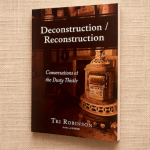
March 11, 2026 Secondhand Smoke: Tri Robinson Discusses Deconstruction
Recent Comments
"We can never reflect enough."
The Earth Is the Lord’s: Learning ..."
"Yes!"
The Earth Is the Lord’s: Learning ..."
"As pilgrims on journey we are invited to do further rethinking for the remaining stretch ..."
The Earth Is the Lord’s: Learning ..."
"Not only do other people belong to God, they are loved by God. So we ..."
The Earth Is the Lord’s: Learning ..."
Browse Our Archives
Select a Category A Simple Church Way Hard Conversations Lead A Quiet Life as Resistance Reading in the Trenches Sacred in the Everyday Chaos Series: Advent Series: Bible Study Essentials Series: Four Walls of Gratitude Series: Reading Shelf Series: Sojourn Series: This Is The Lord's Table Series: Year in Review Spiritual Disciplines for Ordinary People The Holy Work of Parenting The Pilgrimage of Jeff McLain Theology in the Wild Uncategorized
Select a Month October 2026 September 2026 August 2026 July 2026 June 2026 May 2026 April 2026 March 2026 February 2026 January 2026 December 2025 November 2025 October 2025 September 2025 August 2025 July 2025 June 2025 May 2025 April 2025 March 2025 February 2025 January 2025 December 2024 November 2024 October 2024 September 2024 August 2024 July 2024 June 2024 May 2024 April 2024 March 2024 February 2024 December 2023 November 2023 October 2023 June 2022
Follow Us!
TAKE THE
Religious Wisdom Quiz
Which book of the Bible is known as the 'Book of Beginnings'?
Select your answer to see how you score.
Psalms Genesis Exodus Job
Related posts from Lead a Quiet Life

Do Not Rejoice When Your Enemy Falls: The...
Learning to Confess and Understand Our Father Even...

If This Is All That I Have for...

Making Room for the Conversation
TRENDING AT PATHEOS Evangelical

In "Irreplaceable," our book on vocation and technology, Trevor Sutton and I...

I was strolling through the top floor of the brand new Parthenon...

What Does Gêvâh Mean For Kimberley Guifoyle &...
This week, a lot of the news is focused on Kimberly Guilfoyle....

INNER CIRCLE: Profound Mystery (Of Christ In All...
Ephesians 5:31-32 “For this reason, a man will leave his father and...

Do Not Rejoice When Your Enemy Falls: The...
Turning an execution into a public spectacle is a disturbing expression of...

'The Chosen' S6 Trailer: The Passion Gets Very...
Not many watching 'The Chosen' worry about spoilers, but just because they...
view all Evangelical blogs
What Are Your Thoughts?leave a comment
Ad-Free & Subscriber Log-In Subscription Support
- About Us
- 2026 Calendar
- Videos
- Podcasts
- Library of World Religions
- Faith In Media Tracker
- Advertise With Us
- Write for Us
- Privacy Policy
- Terms of Service
- Do Not Sell My Data
- Contact Us
- Radiant Digital
- Manage Newsletter Subscriptions
- Unsubscribe From Notifications
- Sitemap
Copyright 2008-2026, Patheos. All rights reserved.
Subscription Support Ad-Free & Subscriber Log-In
Follow Patheos