
BuddhistCatholicContemplativeEvangelicalGeneral ChristianHinduJewishLatter-day SaintMuslimNew VisionsProgressive Christian
Beliefs
- Buddhist
- Catholic
- Contemplative
- Evangelical
- General Christian
- Hindu
- Jewish
- Latter-day Saint
- More Voices
- Muslim
- New Visions
- Pagan
- Progressive Christian
Topics
- Religion News
- Food and Religion
- Sports and Religion
- Religious Art
- Religious Music and Entertainment
- Religious Events
- History and Religion
- Style and Religion
- Politics and Religion
- Women in Religion
- Recreation Outdoors and Religion
- Business Finance and Religion
- Careers Workplace and Religion
- Education and Religion
- Family Parenting and Religion
- Health Fitness and Religion
- Home and Religion
- Relationships and Religion
- Technology and Religion
- Travel and Religion
Columnists
- Buddhist Columnists
- Business Finance and Religion Columnists
- Careers Workplace and Religion Columnists
- Catholic Columnists
- Contemplative Columnists
- Education and Religion Columnists
- Evangelists Columnists
- Family Parenting and Religion Columnists
- General Christian Columnists
- Health Fitness and Religion Columnists
- Hindu Columnists
- History and Religion Columnists
- Home and Religion Columnists
- Jewish Columnists
- More Voices Columnists
- Latter Day Columnists
- Muslim Columnists
- New Visions Columnists
- Nonreligious Columnists
- Pagan Columnists
- Politics and Religion Columnists
- Progressive Columnists
- Recreation Outdoors and Religion Columnists
- Relationships and Religion Columnists
- Religion News Columnists
- Religious Art Columnists
- Religious Events Columnists
- Religious Music and Entertainment Columnists
- Sports and Religion Columnists
- Style and Religion Columnists
- Technology and Religion Columnists
- Travel and Religion Columnists
- Women in Religion Columnists
Resource Library
- 2026 Calendar
- Library of World Religions
- The 100 Most Holy Places on Earth
- Patheos Answers
- Podcasts
- Videos
- Faith Leaders Database
- Anglican Episcopalian
- Bahai
- Baptist
- Buddhism
- Christianity
- Confucianism
- Eastern Orthodoxy
- Hinduism
- Holiness and Pentecostal
- ISKCON
- Islam
- Judaism
- Lutheran
- Methodist
- The Church of Jesus Christ of Latter-day Saints
- New Age
- Paganism
- Presbytarian and Reformed
- Protestantism
- Religion Behind the Scenes
- Roman Catholic
- Scientology
- Shia Islam
- Sikhism
- Sufism
- Sunni Islam
- Taoism
- Zen
- See all religions
Research Tools
 Ad-Free & Subscriber Log-In Subscription Support
Ad-Free & Subscriber Log-In Subscription Support
Follow Patheos 

- Trending:
- Forgiveness
- |
- Marriage
- |
- Consciousness
- |
- Death Penalty
- |
- Election
- |
- Halloween

- Home
- Evangelical
- Family, Parenting and Religion
- Framing Your Personal Calling: Finding A Quiet Life
Framing Your Personal Calling: Finding A Quiet Life
Last updated on: February 27, 2026 at 7:48 pm by Jeff McLain
Framing Your Personal Calling: Finding A Quiet Life 2026-02-27T19:48:12-05:00 Jeff McLain
Patheos Explore the world's faith through different perspectives on religion and spirituality! Patheos has the views of the prevalent religions and spiritualities of the world.

Photo by In The Making Studio on Unsplash. Framing Your Personal Calling: Finding A Quiet Life.
This leads a quiet life, I feel called to from 1 Thessalonians 4:11–12, is more than a good idea to me; it has become a conviction that governs who I am, what my schedule looks like, and what I say “yes” or “no” to. It shapes my values, my ministry focus, and even my schedule. I understand myself, first and foremost, as a follower of Jesus, drawing near to God and seeking first the Kingdom of God and its right ways (James 4:8; Matthew 6:33). Second, I am focused on my family in light of this verse. This verse affects my life as a father, husband, son, son-in-law, and uncle. It also affects how I focus on myself. I build habits and disciplines that help me practice leading a quiet life, one sustained by both Sabbath and re-creating play. It needs to affect how I pastor and the communities I participate in, it guardrails what I let myself be influenced by, and what I create needs to be a reflection of who I am. This call to lead a quiet life as a follower of Jesus is an identity marker; it is a personal calling that orders everything else. The quiet life is not passive withdrawal but intentional presence—choosing depth over noise, steadiness over platform, faithfulness over visibility.
To do that, I use a dedicated schedule, a rule of life, and ministry philosophies. Over the past year, my Rule of Life has been solid, but many of the other ideas were underdeveloped or not updated for the season I am in. The past six months have been spent ironing this out in a simple way that is true to who God has made me, what He is calling me to do, and where I am going. All of those documents (Personal Philosophy, Personal Ministry Philosophy, Rule of Life, and Weekly Rhythm) have now become one coherent document for me. I wanted to write about it not only because it clarifies how I want to live, but also because I believe there are others who would benefit from developing something similar.
I need this document because I drift all the time. There are days when I do not want to live by these values. There are days when I want to run and do something else, and sometimes the very people I am called to love are the ones I struggle to love well. Reading this document daily and weekly in my office anchors me.
I hope this inspires you to have a helpful document too.
Ministry Philosophy and Structure
J. Robert Clinton’s work on developing a ministry philosophy helped me see that leaders must articulate how God has wired them and what they are called to contribute. That framework pushed me to write not only a personal ministry philosophy but also a personal one, and then to embed both inside a rule of life. For someone committed to two jobs, a family, and doctoral studies, good intentions are not enough. Convictions must become structured. A philosophy without a rule and a schedule becomes aspiration rather than formation.
Clinton believed that “God builds into leaders values – leadership values. These values, while implicit at first, eventually become more explicit and form the foundational drive for leadership. It is this process of identifying values and seeing them become an integrated part of one’s leadership which comprise ministry philosophy.” After fifteen years in ministry, I am finally getting a grasp of the values God has built into me. Naming these sorts of documents also has a formative aspect in terms of effectiveness and transformation. Clinton found out that after “eleven years of comparative study of leaders and their development has resulted in identification of several major leadership lessons. One of those…Effective leaders who are productive over a lifetime have a dynamic ministry philosophy.”
In his resource A Personal Ministry Philosophy, J. Robert Clinton says is research has shown him that “leaders must develop a ministry philosophy which simultaneously honors biblical leadership values, embraces the challenges of the times in which they live, and fits their unique giftedness and personal development if they expect to be productive over a whole lifetime.” Additionally, “Ministry philosophy refers to ideas, values, and principles whether implicit or explicit which a leader uses as guidelines for decision-making, for exercising influence, and for evaluating his/her ministry.” Even more than just leaders, I think all of us would benefit from such a practice. You can learn more from the notes I personally took from A Personal Ministry Philosophy – One Key to Effective Leadership by J. Robert Clinton
Personal Philosophy
For me, a personal philosophy answers a simple question: what anchors you? It is not borrowed language or someone else’s template. It clarifies who you are before God and what kind of life you are actually trying to live. What priorities and values for life has God given you? For me, that includes naming my priorities—family, self, vocation, stewardship, community, and creating—and identifying core values like loving my family well, living theology in ordinary places, and letting simplicity shape my soul. Without this clarity, it becomes easy to drift into someone else’s expectations.
Personal Ministry Philosophy
A personal ministry philosophy narrows the focus further. It reminds you what God has called you to do, not what others assume you should do. It clarifies your unique gifting and paradigm, and it becomes a filter for “yes” and “no.” My core aim in this section was to encourage and resource church communities toward authentic, Scripture-rooted, simple, shared life. Commitments such as presence and proximity, depth and formation, downward mobility, and shared leadership guard me against personality-driven ministry. When opportunities arise, I measure them against that aim. If they align, I lean in. If not, I release them.
Rule of Life
A rule of life asks a more practical question: what daily, weekly, monthly, and annual practices will actually shape this life? In my own rule, daily prayer and Scripture, a 15-minute debrief with Katie, walks at lunch, prioritizing the dinner table, exercise, and evening tea are not accidental; they are chosen. Weekly rhythms include daddy-daughter breakfasts, Friday date nights, gathered worship, creative time, and review. Monthly and annual practices include spiritual direction, retreats, and family vacations. These commitments identify which influences I will prioritize in this season and which I will not.
Weekly Rhythm
The weekly rhythm then aligns the clock with the convictions. My mornings begin at 5:30 a.m., with early writing for doctoral work at Kairos University before leaving for Water Street Mission. Evenings include family dinner, limited church work, exercise, and a consistent wind-down. Friday’s shift toward writing and then date night. Sundays hold worship at River Corner Church, rest, and a nap. If I believe in a quiet life, I must leverage my schedule toward it. Otherwise, the loudest demands (or the most emotional or luring) will always win.
Biblical Foundation
All of these things have biblical roots. The apostles gave written reminders that grounded believers in identity: “you are A CHOSEN RACE” (1 Peter 2:9, NASB), “we are His workmanship” (Ephesians 2:10, NASB), and “if anyone is in Christ, he is a new creature” (2 Corinthians 5:17, NASB). This was because they were in a threatening time of life, and mission drift was possible.
The apostles also modeled clarity of their own calling, which led to the delegation of work for others in their calling. Paul left Titus in Crete “to set in order what remains” (Titus 1:5, NASB). Elders were appointed in every church, so Paul could keep on, keeping on (Acts 14:23). In Acts 6:1–7, the apostles structured leadership so they could stay true to their calling and devote themselves to prayer and the ministry of the word.
Many scriptures speak of the importance of disciplined bodies, surrendered minds, and well-ordered lives. This is about having a life of discipline: “God has not given us a spirit of timidity, but of power and love and discipline” (2 Timothy 1:7, NASB). Habits that bring our lives undercontrol are important: “Like a city that is broken into and without walls is a man who has no control over his spirit” (Proverbs 25:28, NASB). Consider Paul, “I discipline my body and make it my slave” (1 Corinthians 9:27, NASB).
With that, daily and weekly habits are hinted at and assumed: such as meditating on the Law day and night (Joshua 1:8, NASB), ordering prayer in the morning (Psalm 5:3, NASB), and building a way of life that is about praying without ceasing (1 Thessalonians 5:17, NASB). Paul reminds us that we are called to “be transformed by the renewing of your mind,” which is about the Spirit’s work and our ability to pause and surrender to it (Romans 12:2, NASB).
We need theology, disciplines, habits, and practices that stop the drift. That ensures we complete the tasks entrusted to us faithfully. I know for me that a quiet life does not happen by accident. It is built, guarded, and renewed on purpose.
If you want to see what my document looks like, you can see it here.
An Act for Lent
Lent felt like the right season to bring this work to a close, as it is about surrender. It is about confession. It is about rooting ourselves in wilderness moments of dependence on God in a way that prevents a trial from becoming temptation. It is a season that strips away illusion and invites honesty: about who we are, where we are drifting, and what needs to be reordered. Finishing this work during Lent felt fitting because it has required the same surrender, the same clarity, and the same return to dependence.
Closing Thoughts
As I said earlier, I need this document because I drift all the time. There are days when I do not want to live by these values. There are days when I want to run and do something else, and sometimes the very people I am called to love are the ones I struggle to love well. Reading this document daily and weekly in my office anchors me. It calls me back to who I am and what I said yes to. It pushes me toward a better life, I hope. My prayer is that, in a year and in three years, as it continues to grow and sharpen, people will see me maturing and becoming more faithful to who God is calling me to be.
Here are a few questions to consider as you think about your own document:
- What values do you say you believe, and where do they actually show up in your schedule?
- What has God uniquely called you to do in this season, and what expectations need to be released?
- What daily and weekly practices are shaping you right now (for better or for worse)?
- If someone observed your life closely for six months, what would they say anchors you?
General Christian
Family, Parenting and Religion
Home and Religion
Spiritual Disciplines for Ordinary People

About Jeff McLain
Jeff McLain is a pastor and writer who reflects on Scripture, the Lord’s Prayer, spiritual formation, and life with God in the margins. His work invites readers toward a quieter, more intentional faith shaped by patience, gratitude, and presence. Jeff serves at Water Street Mission, walking alongside neighbors experiencing homelessness, and pastors River Corner Church in Lancaster, Pennsylvania—a simple community of Jesus followers seeking a faithful, formative way of being the Church. You can read more about the author here.
Previous Post

February 22, 2026
Hard Conversations: The Spirit Can Create Unity
Next Post

March 1, 2026 Hard Conversations: We Find Our Identity in Christ
Recent Comments
"We can never reflect enough."
The Earth Is the Lord’s: Learning ..."
"Yes!"
The Earth Is the Lord’s: Learning ..."
"As pilgrims on journey we are invited to do further rethinking for the remaining stretch ..."
The Earth Is the Lord’s: Learning ..."
"Not only do other people belong to God, they are loved by God. So we ..."
The Earth Is the Lord’s: Learning ..."
Browse Our Archives
Select a Category A Simple Church Way Hard Conversations Lead A Quiet Life as Resistance Reading in the Trenches Sacred in the Everyday Chaos Series: Advent Series: Bible Study Essentials Series: Four Walls of Gratitude Series: Reading Shelf Series: Sojourn Series: This Is The Lord's Table Series: Year in Review Spiritual Disciplines for Ordinary People The Holy Work of Parenting The Pilgrimage of Jeff McLain Theology in the Wild Uncategorized
Select a Month October 2026 September 2026 August 2026 July 2026 June 2026 May 2026 April 2026 March 2026 February 2026 January 2026 December 2025 November 2025 October 2025 September 2025 August 2025 July 2025 June 2025 May 2025 April 2025 March 2025 February 2025 January 2025 December 2024 November 2024 October 2024 September 2024 August 2024 July 2024 June 2024 May 2024 April 2024 March 2024 February 2024 December 2023 November 2023 October 2023 June 2022
Follow Us!
TAKE THE
Religious Wisdom Quiz
What does Proverbs say about hard work?
Select your answer to see how you score.
It is pointless Lazy people win Sleep always Diligence brings profit
Related posts from Lead a Quiet Life

When Psalm 23 Began Reading Me
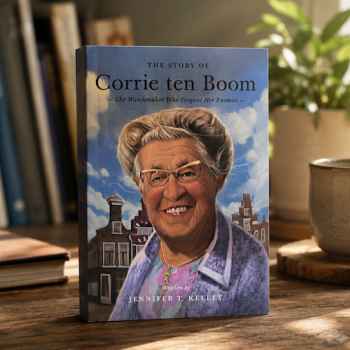
Introducing the Story of Corrie Ten Boom to...

Port of Call: Sometimes We Need More Than...

Owning Things Without Being Owned: The 100 Thing...
TRENDING AT PATHEOS Evangelical

The Sermon on the Mount, Part I: Matthew...
The Sermon on the Mount, Part I (Matthew 4:12-5:12) St. Matthew moves...

What's up from Crossway: Reviewing some of their latest A few weeks...

Janie Learns the Way of the Cross: A...
Teaching children about Jesus' Passion can be challenging. Many parents and educators...

Looking For Good Catholic Writing - October 2026
He alone extends the heavens, and he walks upon the waves of...

In "Irreplaceable," our book on vocation and technology, Trevor Sutton and I...

I was strolling through the top floor of the brand new Parthenon...
view all Evangelical blogs
What Are Your Thoughts?leave a comment
Ad-Free & Subscriber Log-In Subscription Support
- About Us
- 2026 Calendar
- Videos
- Podcasts
- Library of World Religions
- Faith In Media Tracker
- Advertise With Us
- Write for Us
- Privacy Policy
- Terms of Service
- Do Not Sell My Data
- Contact Us
- Radiant Digital
- Manage Newsletter Subscriptions
- Unsubscribe From Notifications
- Sitemap
Copyright 2008-2026, Patheos. All rights reserved.
Subscription Support Ad-Free & Subscriber Log-In
Follow Patheos