
BuddhistCatholicContemplativeEvangelicalGeneral ChristianHinduJewishLatter-day SaintMuslimNew VisionsProgressive Christian
Beliefs
- Buddhist
- Catholic
- Contemplative
- Evangelical
- General Christian
- Hindu
- Jewish
- Latter-day Saint
- More Voices
- Muslim
- New Visions
- Pagan
- Progressive Christian
Topics
- Religion News
- Food and Religion
- Sports and Religion
- Religious Art
- Religious Music and Entertainment
- Religious Events
- History and Religion
- Style and Religion
- Politics and Religion
- Women in Religion
- Recreation Outdoors and Religion
- Business Finance and Religion
- Careers Workplace and Religion
- Education and Religion
- Family Parenting and Religion
- Health Fitness and Religion
- Home and Religion
- Relationships and Religion
- Technology and Religion
- Travel and Religion
Columnists
- Buddhist Columnists
- Business Finance and Religion Columnists
- Careers Workplace and Religion Columnists
- Catholic Columnists
- Contemplative Columnists
- Education and Religion Columnists
- Evangelists Columnists
- Family Parenting and Religion Columnists
- General Christian Columnists
- Health Fitness and Religion Columnists
- Hindu Columnists
- History and Religion Columnists
- Home and Religion Columnists
- Jewish Columnists
- More Voices Columnists
- Latter Day Columnists
- Muslim Columnists
- New Visions Columnists
- Nonreligious Columnists
- Pagan Columnists
- Politics and Religion Columnists
- Progressive Columnists
- Recreation Outdoors and Religion Columnists
- Relationships and Religion Columnists
- Religion News Columnists
- Religious Art Columnists
- Religious Events Columnists
- Religious Music and Entertainment Columnists
- Sports and Religion Columnists
- Style and Religion Columnists
- Technology and Religion Columnists
- Travel and Religion Columnists
- Women in Religion Columnists
Resource Library
- 2026 Calendar
- Library of World Religions
- The 100 Most Holy Places on Earth
- Patheos Answers
- Podcasts
- Videos
- Faith Leaders Database
- Anglican Episcopalian
- Bahai
- Baptist
- Buddhism
- Christianity
- Confucianism
- Eastern Orthodoxy
- Hinduism
- Holiness and Pentecostal
- ISKCON
- Islam
- Judaism
- Lutheran
- Methodist
- The Church of Jesus Christ of Latter-day Saints
- New Age
- Paganism
- Presbytarian and Reformed
- Protestantism
- Religion Behind the Scenes
- Roman Catholic
- Scientology
- Shia Islam
- Sikhism
- Sufism
- Sunni Islam
- Taoism
- Zen
- See all religions
Research Tools
 Ad-Free & Subscriber Log-In Subscription Support
Ad-Free & Subscriber Log-In Subscription Support
Follow Patheos 

- Trending:
- Forgiveness
- |
- Marriage
- |
- Consciousness
- |
- Death Penalty
- |
- Election
- |
- Halloween

- Home
- Evangelical
- Religious Events
- Asteroids, God, and a Chaotic Universe: What It All Means
Asteroids, God, and a Chaotic Universe: What It All Means
Last updated on: February 21, 2025 at 10:04 am by Layne Wallace
Asteroids, God, and a Chaotic Universe: What It All Means 2025-02-21T10:04:45-05:00 Layne Wallace
Patheos Explore the world's faith through different perspectives on religion and spirituality! Patheos has the views of the prevalent religions and spiritualities of the world.
What do asteroids teach about the cosmos and God?
In recent weeks, scientists have alerted the public to a possible upcoming disaster. An asteroid, 2024 YR4, discovered in December 2024, has a possibility of striking the Earth near December 22, 2032. The asteroid is not of the planet-killing variety. It is too small for that. While relatively small, if the asteroid slammed into Earth, it would release approximately 500 times the amount of energy of the atomic bomb dropped on Hiroshima. It could result in the obliteration of cities or massive tsunamis in the “danger corridor.”[1]
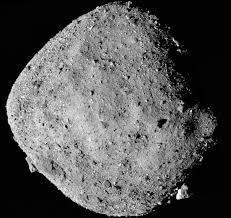
Image courtesy of Wikimedia Commons.
NASA raised the odds of the asteroid 2024 YR4 striking the Earth to 3.1% and subsequently lowered those odds back to 1.5% as of February 19th, 2025. The risk is small, but imagine living in the “danger corridor” for a moment. Imagine reading there is a non-trivial chance that an inferno falling from the sky could eradicate your entire city. The chance might be low, but the anxiety would be high. It is good to note that scientists have been working on technology to divert asteroids for some time.
The Nature of the Risk
While the risk is small, the consequences are dreadful if it does collide with the earth. The possibility of an asteroid strike is consistent with the universe as we know it. Meteors have collided with Earth numerous times throughout its history, often wreaking devastation and loss of life.
While the possible asteroid strike is a scientific phenomenon, a religious and philosophical question necessarily emerges. What does the possibility of a disastrous asteroid collision with Earth teach about the nature of the universe and about God?
Looking at the Heavens Then and Now
An ancient would look in the sky on a cold, clear night, his view only obstructed by the vapor from his exhale, and he would wonder at what he saw. For many ancients, the glimmering diamonds in the dark blue dome overhead were gods, for others, they were signs. The ancients had a limited understanding of the makeup of a planet or a comet. For them, meteors and comets were not just objects in the heavens, they were portents of disaster.
The night sky was not just filled with distant balls of burning gas blasting light from trillions of miles away, they were the realm of the divine. David, the great king of Israel, wrote, “The heavens declare the glory of God, and the skies proclaim the work of his hands…” (Psalm 19 NIV). For David, the heavens were a showcase of God’s power and beauty.

Image courtesy of Wikimedia Commons.
Moderns and the Sky
For moderns, our view of the night sky is obscured by light pollution. Only in limited places can one share the view of the night sky the ancients had. Even sharing that view, sharing their vision is now quite impossible. Moderns have become naturalists, often, even believers share that malady. In modern thought, every event in the sky is the result of natural objects obeying natural laws.
Although bright and beautiful, seldom do people stare at the stars with mouths gaping in wonder. If they do, they are often greeted with derision. Why look up at the sky? It is no more or no less interesting than any other natural phenomenon. Only Karl Sagan, Stephen Hawkins, and other brilliant nerds need to stare into the sky. For moderns, it is only the practical that is interesting. Burning balls of gas are not compelling unless they threaten life.
The Sky and Platitudes
For the ancient mind, the universe was about God. For moderns, the universe is about nothing. Scientists and scientific commentators reject the ancient’s thinking completely. Often, one can hear modern platitudes like, “The universe is ambivalent about life.” That is, of course, true. The universe is an entity without thoughts, feelings, or emotions. It cannot care about life because it has no capacity for caring.
In one sense, the universe is fine-tuned for life. Change any of the small laws of gravity, the weight of atomic particles, the nature of water, and life become impossible. Life is only possible in the universe because the universe is designed in a particular way.
It is also true that the universe is often hostile to life. There are very few locations in the universe that are hospitable for life, at least as far as scientists can determine. Venus is a pressure-cooked hellscape capable of melting metal. Mercury is a blistering inferno in a locked orbit around the sun. Liquid diamonds rain on Uranus and Neptune’s frigid, slushy surface. Life is a rare treasure.
Life On Earth
Even on earth, life is a challenge. Vast swaths of the planet are uninhabitable. The Antarctic’s frozen terrain and the Sahara’s oppressive heat make life there possible only for the most well-adapted creatures. Hurricanes pound trillions of gallons of water onto the surface of the earth, flooding entire cities, and tornados blast homes and buildings into splintery piles of rubble.
Noting how the universe produces disasters, what does that say about God? Why would God create the kind of universe that is hostile to life, and why would God create a world where disasters are common? Why did God not create a better world?
What Kind of World Would a Good God Create?
Reasoning back from how the universe is to saying that a good God would have created it differently is a non-starter logically. One, humans cannot have the perspective that God does to see why God created the universe the way God did. The finite cannot comprehend the infinite. What appears indifferent or callous might be merciful.
Worse, it is to assume that there is a 1 to 1 correlation between the world as it is and the world God intended at creation. Scriptures flatly reject that sentiment. Both the Old and New Testaments are emphatic, this is not the cosmos God created. The Christian faith has argued from its inception that the world is a fallen world. Recognizing there are many differing ways to read the creation narrative in Genesis, the whole of the Christian theological tradition is that there was a fall from a pristine state.[2] Philosopher of religion David Bentley Hart writes it this way,
Perhaps no doctrine strikes non-Christians as more insufferably fabulous than the claim that we exist in the long melancholy aftermath of a primordial catastrophe: that this is a broken and wounded world, that cosmic time is a phantom of true time, that we live in an umbratile interval between creation in its fullness and the nothingness from which it was called, that the universe languishes in bondage to the “powers” and “principalities” of this age, which never cease in their enmity toward the Kingdom of God.[3]
What to Make of Asteroids?
Asteroids are part of the universe. In the event that they collide with a planet, they can cause disaster. Their presence and the possibility of all-natural disasters are reminders that God’s cosmos is ruined.
There is something else to note as well, the New Testament promises a new heaven and a new Earth. The Bible begins and ends with humans living in communion with God in a paradise of God’s creation. There will come a day when the shadow of disaster will be an unpleasant memory, no more potent than a nightmare remembered at noon.
[1] What Happens if an Asteroid 2024 YR4 Strkies Earth, Forbes
[2] Some dissent, notably David Hick. Hick argues that the great Patristic thinker Irenaeus had a different model of the fall. The world was created as it is, he argues. He finds Irenaeus’ model much more in keeping with the teachings of science. The problem is that Hick has misread Irenaeus. Irenaeus thinks of the fall as a disaster.
Another dissenting voice is Karl Barth who argues the world is perfect as it is. Both of these theologians miss the consequences of the fall narrative in Genesis and the subjection language in Romans. In both Romans 5 and Romans 8, Paul describes a world that is broken, and ruined by the curse.
For a fuller discussion, see my article here:
https://www.pharosjot.com/uploads/7/1/6/3/7163688/article_32_vol_104_2__stellenbosch.pdf
[3] Hart, David Bentley. The Doors of the Sea: Where Was God in the Tsunami? (pp. 61-62). Wm. B. Eerdmans Publishing Co.. Kindle Edition.
Also by Layne Wallace
General Christian
Religion News
Previous Post

February 11, 2025
Women Pastors and 1 Timothy 2
Next Post

June 9, 2026 The Problems with Progressive Theology
Recent Comments
Browse Our Archives
Select a Category Biblical Studies Mental Health and Religion News Philosophy of Religion Uncategorized
Select a Month August 2026 July 2026 June 2026 February 2025 January 2025 November 2024 October 2024 September 2024 July 2024 June 2024 May 2024 February 2024 November 2023 October 2023 September 2023 August 2023 July 2023 April 2022 March 2022 December 2021 November 2021 October 2021 September 2021 August 2021 July 2021 June 2021 April 2021 March 2021 February 2021 December 2020 November 2020 October 2020 September 2020 August 2020 March 2020 February 2020 January 2020 December 2019 November 2019 September 2019 August 2019 July 2019 June 2019 May 2019 April 2019 March 2019 February 2019 January 2019 January 2018
Follow Us!
TAKE THE
Religious Wisdom Quiz
Which couple taught Apollos more accurately about Jesus in Ephesus?
Select your answer to see how you score.
Lydia and Titus Ananias and Sapphira Mary and Joseph Priscilla and Aquila
Related posts from Layne Wallace

Insufficient? The Bible and Baptist Progressives

Helene the Horrible: The Windows of the Heavens

Planned Parenthood in the Pulpit
TRENDING AT PATHEOS Evangelical

Letters on Living the Faith by C.S. Lewis
Most of us met C.S. Lewis as a public intellectual. Mere Christianity....

When Halloween Unmasks Married Hearts
Written by Dr. David K. Ewen from Eternal Truth Bible College Behind...

Aristotle. He’s been called the father of logic, the father of the...

Methodist Central Hall and Westminster Abbey
Situated on the same square is Methodist Central Hall and Westminster Abbey. ...

57th Dove Awards Honor Dolly Parton, Crown New...
On gospel music’s biggest night, the 57th annual GMA Dove Awards honored...

The First Eucharistic Controversy: Christ’s Real Presence
For Catholics, the Eucharist is the source and summit of the Christian...
view all Evangelical blogs
What Are Your Thoughts?leave a comment
Ad-Free & Subscriber Log-In Subscription Support
- About Us
- 2026 Calendar
- Videos
- Podcasts
- Library of World Religions
- Faith In Media Tracker
- Advertise With Us
- Write for Us
- Privacy Policy
- Terms of Service
- Do Not Sell My Data
- Contact Us
- Radiant Digital
- Manage Newsletter Subscriptions
- Unsubscribe From Notifications
- Sitemap
Copyright 2008-2026, Patheos. All rights reserved.
Subscription Support Ad-Free & Subscriber Log-In
Follow Patheos