
BuddhistCatholicContemplativeEvangelicalGeneral ChristianHinduJewishLatter-day SaintMuslimNew VisionsProgressive Christian
Beliefs
- Buddhist
- Catholic
- Contemplative
- Evangelical
- General Christian
- Hindu
- Jewish
- Latter-day Saint
- More Voices
- Muslim
- New Visions
- Pagan
- Progressive Christian
Topics
- Religion News
- Food and Religion
- Sports and Religion
- Religious Art
- Religious Music and Entertainment
- Religious Events
- History and Religion
- Style and Religion
- Politics and Religion
- Women in Religion
- Recreation Outdoors and Religion
- Business Finance and Religion
- Careers Workplace and Religion
- Education and Religion
- Family Parenting and Religion
- Health Fitness and Religion
- Home and Religion
- Relationships and Religion
- Technology and Religion
- Travel and Religion
Columnists
- Buddhist Columnists
- Business Finance and Religion Columnists
- Careers Workplace and Religion Columnists
- Catholic Columnists
- Contemplative Columnists
- Education and Religion Columnists
- Evangelists Columnists
- Family Parenting and Religion Columnists
- General Christian Columnists
- Health Fitness and Religion Columnists
- Hindu Columnists
- History and Religion Columnists
- Home and Religion Columnists
- Jewish Columnists
- More Voices Columnists
- Latter Day Columnists
- Muslim Columnists
- New Visions Columnists
- Nonreligious Columnists
- Pagan Columnists
- Politics and Religion Columnists
- Progressive Columnists
- Recreation Outdoors and Religion Columnists
- Relationships and Religion Columnists
- Religion News Columnists
- Religious Art Columnists
- Religious Events Columnists
- Religious Music and Entertainment Columnists
- Sports and Religion Columnists
- Style and Religion Columnists
- Technology and Religion Columnists
- Travel and Religion Columnists
- Women in Religion Columnists
Resource Library
- 2026 Calendar
- Library of World Religions
- The 100 Most Holy Places on Earth
- Patheos Answers
- Podcasts
- Videos
- Faith Leaders Database
- Anglican Episcopalian
- Bahai
- Baptist
- Buddhism
- Christianity
- Confucianism
- Eastern Orthodoxy
- Hinduism
- Holiness and Pentecostal
- ISKCON
- Islam
- Judaism
- Lutheran
- Methodist
- The Church of Jesus Christ of Latter-day Saints
- New Age
- Paganism
- Presbytarian and Reformed
- Protestantism
- Religion Behind the Scenes
- Roman Catholic
- Scientology
- Shia Islam
- Sikhism
- Sufism
- Sunni Islam
- Taoism
- Zen
- See all religions
Research Tools
 Ad-Free & Subscriber Log-In Subscription Support
Ad-Free & Subscriber Log-In Subscription Support
Follow Patheos 

- Trending:
- Forgiveness
- |
- Marriage
- |
- Consciousness
- |
- Death Penalty
- |
- Election
- |
- Halloween

- Home
- Evangelical
- Religious Events
- The Olympic Opening Ceremony and a New Religion
The Olympic Opening Ceremony and a New Religion
Last updated on: July 29, 2024 at 2:09 pm by Layne Wallace
The Olympic Opening Ceremony and a New Religion 2024-07-29T14:09:14-04:00 Layne Wallace
Patheos Explore the world's faith through different perspectives on religion and spirituality! Patheos has the views of the prevalent religions and spiritualities of the world.
What Was That?
The Opening Ceremony of the Olympics generated significant controversy over a performance that looked like it was a blasphemous presentation of The Last Supper. While many will argue about that, what is apparent is that the ceremony was a worship service of a new religion.
The Opening Ceremony of the 2024 Games was shocking and divisive. Among the conflicting reports is hard to know now exactly what Thomas Jolly, the creator of the Opening Ceremony, had in mind. The Catholic Church in France, along with Eastern Orthodox Christians in Europe immediately responded that the table scene he directed was an insult to Christianity and the image was a caricature of the Last Supper.
The Opening Ceremony in the News
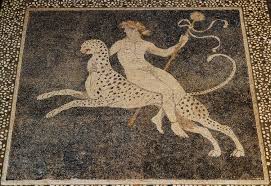
While it certainly looked blasphemous, immediately following expressions of outrage came denials by Olympic officials. Closely following the denials were insults. “Only uneducated rubes could believe something so silly. This was clearly Bacchus/Dionysos,” they sneered. More than one of them lashed out, “…Read a book…”
Since then, other evidence has emerged, however. ESPN reported that it was a parody of the Last Supper, along with some European news sources. There have been unconfirmed reports that Olympic promotional material included reference to DaVinci’s magisterial work.
Also of note is the similarity of the Opening Ceremony to The Wedding at Cana.
The Last Supper, the Opening Ceremony, and the Wedding at Cana
Bacchus/Dionysos
To be charitable for a moment, assume that Jolly was celebrating the Greek god Dionysos (Bacchus is the Roman name for him) as some of his supporters claim. This would be a very strange choice. Dionysos was the god who was associated male fertility, wild animals, drunkenness, and orgies. Somehow the Olympic organizers thought the Olympic games really needed to be started with a celebration of the god of wild, drunken, orgies. Worse, this is their defense. “No, we did not intend to insult Christianity, we just wanted to celebrate the god wild, drunken orgies in front of billions of people including millions of children,” does not help them much.
Whether the show was intended to parody Christian art or was an homage to Dionysos may forever remain a point of contention. What is not in contention is that the garish costumes, transgender dancers, and crass ugliness were repellant. The normal person reacts to such images with revulsion.
Those who claim the ceremony was beautiful or not revolting are living in self-delusion or they have had their moral intuitions crushed out of them. Orwell once said about people who believe absurdities, “One has to belong to the intelligentsia to believe things like that: no ordinary man could be such a fool.”[1] Only one who has shed their inborn intuition about what is good so they can identify with an elite class could find the performance laudable.
This is a New Religion
I do not pretend to be an expert on either Greek mythology or the subject of art. I do, however, have more than a passing knowledge of philosophy and religion. What I observe is that this ceremony was a worship service of a new religion.
Theology of the Body
This new religion has a discinctive theology of the body. The person is his or her sexuality. In Christianity and most monotheistic religions, sexuality is an aspect of the person not the whole of the person. So one’s sexual expression is governed by other commitments. Commitments to God, others, the self, and the society govern sexual expression.
I recall a gay TV news anchor once saying, “everything I do, I do as a gay man.” His point was that rejecting his sexual expression is the equivalent of rejecting his entire person. Often one will hear a member of this new religion saying that disagreeing with their sexuality is denying their right to exist.
Theology of Mind
This new religion has a new theology of the relationship of the mind to the body. A person is what his or her mind is convinced he is regardless of biological facts. A biological male can be a female and vice versa. A human can be a cat, or a mermaid, or a horse.
Christianity, on the other hand, believes that the body is a good part of the created order. Humans cannot transcend biology because their biological makeup is tied essentially to they are. Gender is part of the being and an inescapable part of it.
Theology of Artistic Expression
This new religion has a different view of artistic expression. It views art a means of inclusion. In looking again at the Opening Ceremony, step beyond the blasphemy and notice how ugly it was. Dionysos, nearly naked, was painted in blue much like a glittering Smurf. Wearing a garland of and crown composed of fruit, he performed without any sense that his appearance was unbecoming. A quick look at Greek mythology reveals that Dionysos was young, strikingly attractive, with a soft–even feminine–appearance.[2] If Jolly was trying to incorporate Greek mythology, why use a representation of Dionysos that bears little resemblance to how the Greeks understood him?
Joining Dionysos on the stage was a tall man with long blond hair and a beard. Dressed as a woman in a revealing blue costume, he danced provocatively in celebration. Other men in drag and garishly dressed women filled the scene. Other than the Seine and the Eiffel Tower, there was nothing beautiful about it.
Compare this part of the Opening Ceremony to David, Perseus with the Head of Medusa, or Nike of Samothrace and the point becomes obvious. Beauty was not merely avoided; the entire episode was an expression of ugliness for ugliness’ sake. The performance was to say that this new religion includes even the ugly in its ceremonies.
Beauty
Beauty is hard to define but easy to notice. The human eye naturally turns toward beauty and averts its gaze from the ugly. Notice the cringe at the images, the desire to protect the eyes of children from the observers of the ceremony.
Gravitating toward beauty is part of how God created the universe. Influenced by Greek art and philosophy, Christian artists have long had a sense that beauty is transcendent, along with truth and goodness. Believing that all transcendentals find full expression in God, Christians believe God is truth itself, goodness itself, and beauty itself. To seek beauty is to seek God.
A New Definition of God
More than the visible details, however, this new religion has a different definition of God. The god of this new religion has not been named yet. Often purveyors of the new religion have tried to insert it into Christianity. Christianity defines the Christian God this way, however,
… the infinite fullness of being, omnipotent, omnipresent, and omniscient, from whom all things come and upon whom all things depend every moment for their existence, without whom nothing at all could exist.[3]
Here is an example of how the new religion defines God. A Duke Divinity student prayed in chapel,
Strange one, fabulous one, fluid and ever becoming, do not allow us to make our ideas of you into an idol. You are as close to us as our own breath and yet your essence transcends all that we can imagine. You are mother, father, and parent. You are sister, brother, and sibling. You are drag queen, and trans man, and gender fluid, incapable of limiting your vast expressions of beauty, embodied in us, your creation. We recognize flesh, in all its forms, is made holy in you. With thanksgiving, we celebrate your manifestation in all its glorious forms. Blessed are our bodies, blessed is our love, blessed are we when we celebrate that which the world turns away. Fill our hearts with a pride rooted in resistance to all that seeks to destroy.”[4]
These two definitions are in direct contradiction to each other.
The Emergence of the New Religion
Oddly, the new religion works backwards from how most religions emerge, at least in how I understand the history of religion. In most religions, a deity is discovered and worshipped and only then do the practices and proscriptions of the religion come into view. Think of how Judaism emerged. God called Abram. God called Moses. Moses led the people out of slavery. It was only after God revealed himself that he gave the the Law. God self-reveals first. God commands second.
Not so with this yet-unnamed religion. The practice is first. The practice is the celebration of the ugly, the inclusion of the bizarre, the celebration of the garish. Bodies are irrelevant and fluid. Sexuality is central. Repressed sexuality is verboten. The only sin is exclusion and lack of diversity. Only the unenlightened are shocked and embarrassed. This new religion tolerates no intolerance, and still persecutes anyone who dares disagree with its tenants. Watch what has happened to Christian theologians who have dared disagree with the LGBTQ+ movement in mainline seminaries.
The only thing left is to find a deity who will meet their needs. It cannot be YWHW or a of god of any monotheistic religion, not without cognitive dissonance anyway. Even Dionysos is not particularly promising. I suspect the evangelists of this new religion will simply use the name god and redefine it so thoroughly as to render it useless.
[3] David Bentley Hart, The Experience of God: Being, Consciousness, Bliss (New Haven (Connect.) London: Yale University Press, 2013), 7.
[4] Duke Divinity Calls God Queer? With the UM Split, What Seminary Is YOUR Pastor Coming From?, 2022, https://www.youtube.com/watch?v=CVjAN76MJQU.
Previous Post

June 18, 2024
Mohler, Ware, Nicaea, Heresy: Louisville We Have a Problem
Next Post

September 11, 2024 9/11: 23 Years Later
Recent Comments
Browse Our Archives
Select a Category Biblical Studies Mental Health and Religion News Philosophy of Religion Uncategorized
Select a Month August 2026 July 2026 June 2026 February 2025 January 2025 November 2024 October 2024 September 2024 July 2024 June 2024 May 2024 February 2024 November 2023 October 2023 September 2023 August 2023 July 2023 April 2022 March 2022 December 2021 November 2021 October 2021 September 2021 August 2021 July 2021 June 2021 April 2021 March 2021 February 2021 December 2020 November 2020 October 2020 September 2020 August 2020 March 2020 February 2020 January 2020 December 2019 November 2019 September 2019 August 2019 July 2019 June 2019 May 2019 April 2019 March 2019 February 2019 January 2019 January 2018
Follow Us!
TAKE THE
Religious Wisdom Quiz
What did Samuel's mother promise if God gave her a son?
Select your answer to see how you score.
To dedicate him to the Lord To move to Jerusalem To offer a burnt sacrifice To fast for 40 days
Related posts from Layne Wallace

Insufficient? The Bible and Baptist Progressives

Asteroids, God, and a Chaotic Universe: What It...

Helene the Horrible: The Windows of the Heavens
TRENDING AT PATHEOS Evangelical

The Problem with False Prophets
Miller’s Station UMC| 10/18/26| Anchor Verse: Jeremiah 23: 1, 9-23 I...

Emotion in Early Christianity by Andrew Crislip
Andrew Crislip’s Emotion in Early Christianity examines an often overlooked dimension of...

16 Spiritual Touchstones for a More Grounded Life
After decades of spiritual study, here are 16 principles I try...

Catholic Evangelization: Sharing Your Faith Every Day
Welcome back to the Graceful Awakening mini-series called, “From Faith to Mission.” ...

The Pillar of the Boatmen: the Ancient Monument...
The Pillar of the Boatmen is a Romano-Gaulish sculpture that dates from...

In one sense walking into Westminster Abbey is like walking down the...
view all Evangelical blogs
What Are Your Thoughts?leave a comment
Ad-Free & Subscriber Log-In Subscription Support
- About Us
- 2026 Calendar
- Videos
- Podcasts
- Library of World Religions
- Faith In Media Tracker
- Advertise With Us
- Write for Us
- Privacy Policy
- Terms of Service
- Do Not Sell My Data
- Contact Us
- Radiant Digital
- Manage Newsletter Subscriptions
- Unsubscribe From Notifications
- Sitemap
Copyright 2008-2026, Patheos. All rights reserved.
Subscription Support Ad-Free & Subscriber Log-In
Follow Patheos