
BuddhistCatholicContemplativeEvangelicalGeneral ChristianHinduJewishLatter-day SaintMuslimNew VisionsProgressive Christian
Beliefs
- Buddhist
- Catholic
- Contemplative
- Evangelical
- General Christian
- Hindu
- Jewish
- Latter-day Saint
- More Voices
- Muslim
- New Visions
- Pagan
- Progressive Christian
Topics
- Religion News
- Food and Religion
- Sports and Religion
- Religious Art
- Religious Music and Entertainment
- Religious Events
- History and Religion
- Style and Religion
- Politics and Religion
- Women in Religion
- Recreation Outdoors and Religion
- Business Finance and Religion
- Careers Workplace and Religion
- Education and Religion
- Family Parenting and Religion
- Health Fitness and Religion
- Home and Religion
- Relationships and Religion
- Technology and Religion
- Travel and Religion
Columnists
- Buddhist Columnists
- Business Finance and Religion Columnists
- Careers Workplace and Religion Columnists
- Catholic Columnists
- Contemplative Columnists
- Education and Religion Columnists
- Evangelists Columnists
- Family Parenting and Religion Columnists
- General Christian Columnists
- Health Fitness and Religion Columnists
- Hindu Columnists
- History and Religion Columnists
- Home and Religion Columnists
- Jewish Columnists
- More Voices Columnists
- Latter Day Columnists
- Muslim Columnists
- New Visions Columnists
- Nonreligious Columnists
- Pagan Columnists
- Politics and Religion Columnists
- Progressive Columnists
- Recreation Outdoors and Religion Columnists
- Relationships and Religion Columnists
- Religion News Columnists
- Religious Art Columnists
- Religious Events Columnists
- Religious Music and Entertainment Columnists
- Sports and Religion Columnists
- Style and Religion Columnists
- Technology and Religion Columnists
- Travel and Religion Columnists
- Women in Religion Columnists
Resource Library
- 2026 Calendar
- Library of World Religions
- The 100 Most Holy Places on Earth
- Patheos Answers
- Podcasts
- Videos
- Faith Leaders Database
- Anglican Episcopalian
- Bahai
- Baptist
- Buddhism
- Christianity
- Confucianism
- Eastern Orthodoxy
- Hinduism
- Holiness and Pentecostal
- ISKCON
- Islam
- Judaism
- Lutheran
- Methodist
- The Church of Jesus Christ of Latter-day Saints
- New Age
- Paganism
- Presbytarian and Reformed
- Protestantism
- Religion Behind the Scenes
- Roman Catholic
- Scientology
- Shia Islam
- Sikhism
- Sufism
- Sunni Islam
- Taoism
- Zen
- See all religions
Research Tools
 Ad-Free & Subscriber Log-In Subscription Support
Ad-Free & Subscriber Log-In Subscription Support
Follow Patheos 

- Trending:
- Forgiveness
- |
- Marriage
- |
- Consciousness
- |
- Death Penalty
- |
- Election
- |
- Halloween

- Home
- Catholic
- Religion News
- Martyrdom in Coastal Georgia
Martyrdom in Coastal Georgia
Last updated on: September 28, 2019 at 1:12 pm by Father Pablo Migone
Martyrdom in Coastal Georgia 2019-09-28T13:12:33-05:00 Father Pablo Migone
Patheos Explore the world's faith through different perspectives on religion and spirituality! Patheos has the views of the prevalent religions and spiritualities of the world.
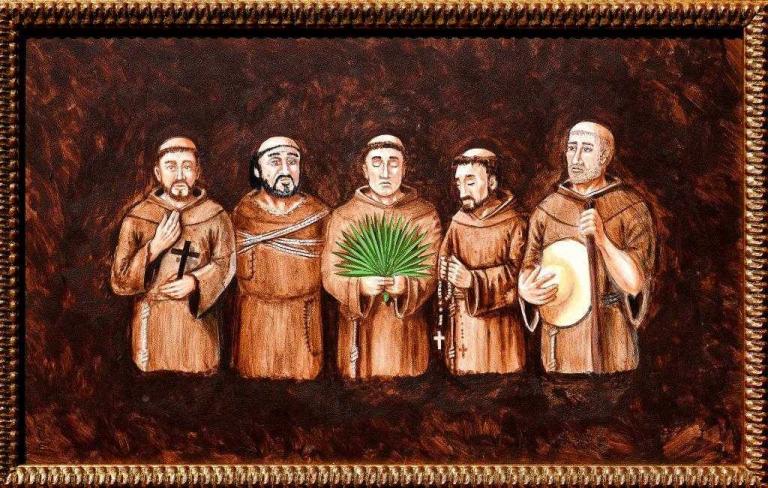
I delivered this homily at Nativity of Our Lady Catholic Church in Darien, Georgia for the 422th anniversary of the death of the Servant of God Friar Pedro de Corpa and Companions.
I have always thought that if God chose and called Saint Paul to play a foundational role in the early Church, God can definitely choose and call whoever he wishes to do whatever he needs to get done.
Paul was not seeking Jesus, but was killing his disciples.
He was not curious about the so-called Messiah, but was passionately crushing his message and memory.
A powerful encounter with Jesus on the road to Damascus transformed Paul, allowing him to write years later in his letter to Timothy: “I am grateful to him who has strengthened me, Christ Jesus our Lord, because he considered me trustworthy in appointing me to the ministry.”
Paul truly meant what he wrote. Everything he accomplished in spreading the Gospel was done through the grace of God – with Jesus strengthening him and directing him.
“I was once a blasphemer and a persecutor and arrogant, but I have been mercifully treated because I acted out of ignorance in my unbelief.”
Saint Paul may be the first flesh-and-bone example of Jesus’ well-known parable of the Prodigal Son. In his own words: “Christ Jesus came into the world to save sinners. Of these I am the foremost.” Paul is the lost sheep, the lost coin, and the lost son.
Paul’s zeal for the Gospel led to his death in Rome in 67AD during the persecution of Christians under Emperor Nero. He became one of thousands who gave the ultimate witness to the Gospel by conforming their lives perfectly to the life of Christ. The early Church praised martyrdom because of all the ways a Christian could become more Christ-like, a death like his was on the top of the list.
The early Christian martyrs witnessed to their faith in Christ with fervent and passionate conviction. There was no room for complacency or indifference. Martyrdom was a special grace given to them.
In the very early 300s, a bishop in Egypt was brought to trial, his name was Phileas. After being threatened with a gruesome death, the Roman prefect asked him, ““Do you wish to die in this way, to no purpose?” to which the bishop answered quickly and bravely, “No, not to no purpose, but for God and for the truth.” The martyrs throughout the centuries have died for God and for the truth.
The same grace from Christ that motivated and strengthened Saint Paul to dedicate his life to the Gospel motivated five young, passionate Franciscan friars in Spain to volunteer to share the Gospel with newly discovered peoples in faraway lands. Like Saint Paul, friars Pedro, Blas, Miguel, Antonio and Francisco left behind the comforts of home and set out in a journey where Jesus transformed them and strengthened them to the point of death for the sake of the Gospel.
The same grace from Christ that allowed Saint Paul and Saint Phileas to persevere to the end and die as martyrs, strengthened the friars 422 years ago, allowing them to remain steadfast in their mission to share the Gospel with the native Guale people of Georgia.
We remember their witness to Christian marriage and their heroic sacrifice that conformed them perfectly to Jesus Christ through a death like his. We pray for their cause for beatification, that the universal Church may officially recognize them as martyrs and blessed among the saints.
Friar Pedro de Corpa from Castile volunteered in 1587 along with 11 friars to come here, to the northernmost province of the Spanish Empire in the New World, La Florida. After a stopover in La Havana, Cuba, he arrived to Saint Augustine. Pedro worked there until more friars arrived, freeing him to move further north to evangelize the Guale natives. We do not know for certain when he was sent to the Mission of Tolomato a few miles north of Darien, Georgia. Tolomato was the main city of the Guale, and its chief was considered the main or principal one among the Guale.
Pedro was a zealous missionary, quickly learning the local language and baptizing many.
A poem written in the early 1600s described Friar Pedro emphasizing his life of poverty, chastity and obedience. The author wrote: “I and the people who accompanied him to the land where we lived together are witnesses of his sanctity. Poverty was his favorite virtue. He admired the chaste and holy angelic choir and he was submissive to his bishop or superior, always demonstrating his obedience by quickly obeying all orders. Being a wise and holy man, the love of God burned in his heart, and by means of prayer, abstinence and self-discipline he gave good example to the Indians of the West (New World) whom he strove to convert.”
When Juanillo, a baptized Christian who was the heir to the chiefdom of Tolomato took a second wife, Friar Pedro admonished Juanillo to adhere to the marriage promises he had made as a baptized Christian. The friar also made known his opposition to Juanillo’s succession as chief due to this situation – an announcement that angered the authorities in Saint Augustine.
Pedro’s defense of the sacrament of marriage led to the organization of a war party by Juanillo. After killing Pedro in Tolomato, the men continued to the mission of Tupiqui a bit further north where Friar Blas was killed.
Juanillo’s war party continued to Saint Catherines Island where Friars Miguel and Antonio worked. The local chief of Saint Catherines begged the two friars to escape before Juanillo arrived. The friars chose to stay dismissing the reports of executions as rumors. They did not want to abandon their people. Both were killed outside the friary.
Friar Francisco was killed as he returned by canoe from Saint Augustine with supplies.
A sixth friar, Francisco de Avila, was held captive for several months and eventually released. He refused to testify for fear of what the government officials in Saint Augustine would do to the natives.
Friar Pedro de Corpa and his companions died as martyrs, witnesses to the indissolubility and permanence of the sacrament of marriage. At a time when society’s understanding of marriage and family has rapidly broken down, we need more than ever before the prayers and intercession of these men. Saint John Paul II pointed out that “[Some families] have become uncertain and bewildered over their role or even doubtful and almost unaware of the ultimate meaning and truth of conjugal and family life.”
The Venerable Pedro de Corpa and his Companions may be martyrs of the 16th century, but their witness is timeless, and is necessary today. It is as timeless and as necessary as the witness of Saint Paul, and the countless martyrs of the early Church.
The strength from Christ the friars received four hundred years ago continues to resound today, and it is our duty to make it known.
May their memory be eternal. Amen.
Previous Post
September 14, 2019
Behold the Cross of the Lord
Next Post
September 30, 2019 He aquí la Cruz del Señor
Browse Our Archives
Select a Category Article Catholic Lima Christmas Commentary History Homily Immigration martyrs Meditation Pope Reflection Saint Story Uncategorized
Select a Month September 2026 August 2026 July 2026 June 2026 May 2026 April 2026 December 2025 November 2025 October 2025 September 2025 August 2025 July 2025 June 2025 May 2025 April 2025 March 2025 February 2025 January 2025 December 2024 November 2024 September 2024 August 2024 July 2024 June 2024 May 2024 April 2024 March 2024 February 2024 January 2024 December 2023 November 2023 October 2023 September 2023 August 2023 June 2023 May 2023 April 2023 February 2023 January 2023 December 2022 November 2022 October 2022 September 2022 August 2022 July 2022 June 2022 May 2022 April 2022 March 2022 February 2022 January 2022 December 2021 November 2021 October 2021 September 2021 August 2021 July 2021 June 2021 May 2021 April 2021 March 2021 February 2021 January 2021 December 2020 November 2020 October 2020 September 2020 August 2020 July 2020 June 2020 May 2020 April 2020 March 2020 February 2020 January 2020 December 2019 November 2019 October 2019 September 2019 August 2019 July 2019 June 2019 May 2019 April 2019 March 2019 February 2019 January 2019 December 2018 November 2018 October 2018 September 2018 August 2018 July 2018 June 2018 May 2018 April 2018 March 2018 February 2018 January 2018 December 2017 November 2017 October 2017 September 2017 August 2017 July 2017 June 2017 May 2017 April 2017 March 2017 February 2017 January 2017 December 2016 November 2016 October 2016 September 2016 August 2016 July 2016 June 2016 May 2016 April 2016 March 2016 February 2016 January 2016 December 2015 November 2015 October 2015 September 2015 August 2015 July 2015 June 2015 May 2015 April 2015 March 2015 February 2015 January 2015 December 2014 November 2014 October 2014 September 2014 August 2014 July 2014 June 2014 May 2014 April 2014 March 2014 February 2014 January 2014 December 2013 November 2013 October 2013 September 2013 August 2013 July 2013 June 2013 May 2013 April 2013 March 2013 February 2013 January 2013 December 2012 November 2012 October 2012 September 2012 August 2012 July 2012 June 2012 May 2012 April 2012 March 2012 February 2012 January 2012 December 2011 November 2011 October 2011 September 2011 August 2011 July 2011 June 2011 May 2011 April 2011 March 2011 February 2011 January 2011 December 2010 November 2010 October 2010 September 2010 August 2010 July 2010 June 2010 May 2010 April 2010 January 2010 June 2009 September 2008 August 2008
TAKE THE
Religious Wisdom Quiz
Who taught, "Love your enemies and pray for those who persecute you"?
Select your answer to see how you score.
John Jesus James Paul
Related posts from Labyrinthine Mind
Greatness in Life and Death: The Georgia Martyrs
Martyrs of the Gospel: Pedro de Corpa and...
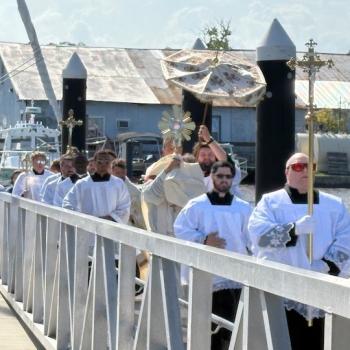
National Eucharistic Pilgrimage Visits Savannah

TRENDING AT PATHEOS Catholic

Swimfan: Forgotten Aughts Pleasures
This is a recovery effort. In 2002, My Big Fat Greek Wedding...

Top Three Anti-Catholic Lies About Catholicism
This is my initial transcript for the video, "THE 3 WORST...

Pope Leo Celebrates Mass for Nurses & Docs...
I don't have any idea how he did it, but Pope Leo...

The Sermon on the Mount, Part I: Matthew...
The Sermon on the Mount, Part I (Matthew 4:12-5:12) St. Matthew moves...

What's up from Crossway: Reviewing some of their latest A few weeks...

Janie Learns the Way of the Cross: A...
Teaching children about Jesus' Passion can be challenging. Many parents and educators...
view all Catholic blogs
Ad-Free & Subscriber Log-In Subscription Support
- About Us
- 2026 Calendar
- Videos
- Podcasts
- Library of World Religions
- Faith In Media Tracker
- Advertise With Us
- Write for Us
- Privacy Policy
- Terms of Service
- Do Not Sell My Data
- Contact Us
- Radiant Digital
- Manage Newsletter Subscriptions
- Unsubscribe From Notifications
- Sitemap
Copyright 2008-2026, Patheos. All rights reserved.
Subscription Support Ad-Free & Subscriber Log-In
Follow Patheos