
BuddhistCatholicContemplativeEvangelicalGeneral ChristianHinduJewishLatter-day SaintMuslimNew VisionsProgressive Christian
Beliefs
- Buddhist
- Catholic
- Contemplative
- Evangelical
- General Christian
- Hindu
- Jewish
- Latter-day Saint
- More Voices
- Muslim
- New Visions
- Pagan
- Progressive Christian
Topics
- Religion News
- Food and Religion
- Sports and Religion
- Religious Art
- Religious Music and Entertainment
- Religious Events
- History and Religion
- Style and Religion
- Politics and Religion
- Women in Religion
- Recreation Outdoors and Religion
- Business Finance and Religion
- Careers Workplace and Religion
- Education and Religion
- Family Parenting and Religion
- Health Fitness and Religion
- Home and Religion
- Relationships and Religion
- Technology and Religion
- Travel and Religion
Columnists
- Buddhist Columnists
- Business Finance and Religion Columnists
- Careers Workplace and Religion Columnists
- Catholic Columnists
- Contemplative Columnists
- Education and Religion Columnists
- Evangelists Columnists
- Family Parenting and Religion Columnists
- General Christian Columnists
- Health Fitness and Religion Columnists
- Hindu Columnists
- History and Religion Columnists
- Home and Religion Columnists
- Jewish Columnists
- More Voices Columnists
- Latter Day Columnists
- Muslim Columnists
- New Visions Columnists
- Nonreligious Columnists
- Pagan Columnists
- Politics and Religion Columnists
- Progressive Columnists
- Recreation Outdoors and Religion Columnists
- Relationships and Religion Columnists
- Religion News Columnists
- Religious Art Columnists
- Religious Events Columnists
- Religious Music and Entertainment Columnists
- Sports and Religion Columnists
- Style and Religion Columnists
- Technology and Religion Columnists
- Travel and Religion Columnists
- Women in Religion Columnists
Resource Library
- 2026 Calendar
- Library of World Religions
- The 100 Most Holy Places on Earth
- Patheos Answers
- Podcasts
- Videos
- Faith Leaders Database
- Anglican Episcopalian
- Bahai
- Baptist
- Buddhism
- Christianity
- Confucianism
- Eastern Orthodoxy
- Hinduism
- Holiness and Pentecostal
- ISKCON
- Islam
- Judaism
- Lutheran
- Methodist
- The Church of Jesus Christ of Latter-day Saints
- New Age
- Paganism
- Presbytarian and Reformed
- Protestantism
- Religion Behind the Scenes
- Roman Catholic
- Scientology
- Shia Islam
- Sikhism
- Sufism
- Sunni Islam
- Taoism
- Zen
- See all religions
Research Tools
 Ad-Free & Subscriber Log-In Subscription Support
Ad-Free & Subscriber Log-In Subscription Support
Follow Patheos 

- Trending:
- Forgiveness
- |
- Marriage
- |
- Consciousness
- |
- Death Penalty
- |
- Election
- |
- Halloween

- Home
- Catholic
- Religion News
- Poverty and Need: A lesson from Rwanda
Poverty and Need: A lesson from Rwanda
Last updated on: February 4, 2017 at 11:47 am by Father Pablo Migone
Poverty and Need: A lesson from Rwanda 2017-02-04T11:47:53-05:00 Father Pablo Migone
Patheos Explore the world's faith through different perspectives on religion and spirituality! Patheos has the views of the prevalent religions and spiritualities of the world.
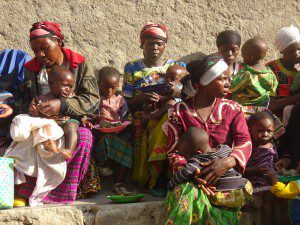
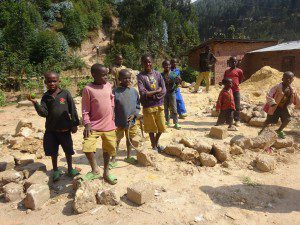
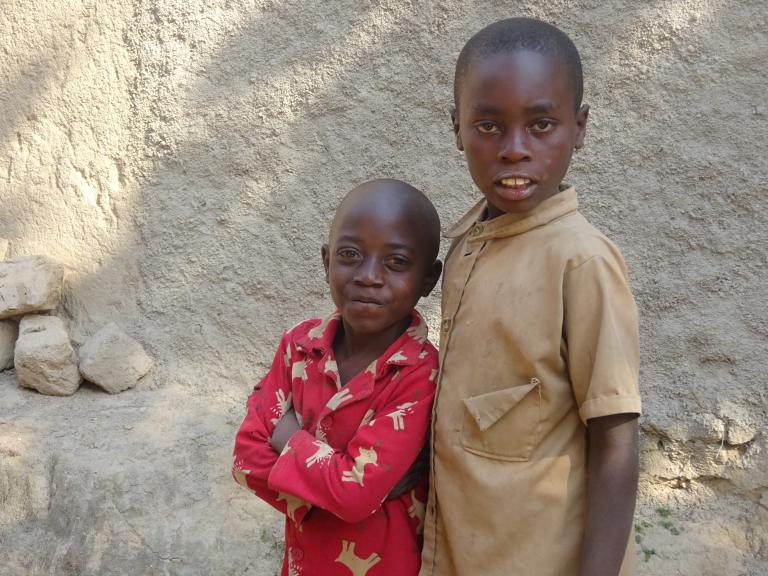
We arrived to the village of Kagano in western Rwanda after a long journey from the capital of Kigali. It had been a lengthy day of traveling first to the District Office of Nyabihu for a meeting with district officials followed by continued journeying deeper into the countryside. Due to unexpected delays, we were unable to have lunch as planned. As our small bus entered the village up through a battered road, many children ran next to us yelling, “abazungu, abazungu.” We soon learned that what we interpreted as words of greeting were actually descriptive words. The excited children were calling out “white people, white people.” A group of white people representing Catholic Relief Services (CRS) had arrived to the village, and since it was four in the afternoon and we had not eaten lunch, the white people were very hungry.
As officials explained the Crops for Health Project, a partnership between the Nyabihu District, the Catholic Diocese of Nyndo and CRS to increase nutritional standards, scores of malnourished children were enjoying a green mush made primarily from beans, small fish, potatoes, and sweet potatoes. The children sat on the laps of the many women present, and across from them sat the hungry white people. I was so hungry that I would have loved trying the green mush which the children ate with glimmering eyes and smiling faces.
As this scene unfolded, a verse from Book of Samuel in the Hebrew Scriptures came to mind, “the well-fed hire themselves out for bread, while the hungry batten on spoil. The barren wife bears seven sons, while the mother of many languishes” (1 Samuel 2,5). As I sat in the village of Kagano, irony enveloped my senses like fog that descends upon a traveler. The malnourished children ate until being filled while the hungry CRS delegation watched them devour the food. The ones who supposedly had plenty were hungry, while the hungry were satisfied. The ones who presumably had everything did not, and the needy had their fill.
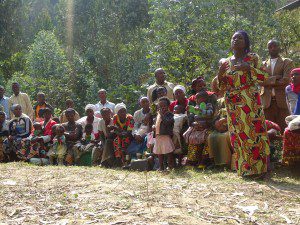
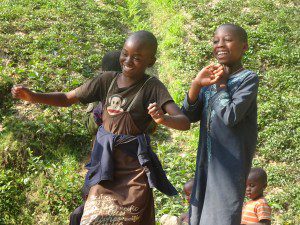
A great lesson unraveled before my eyes. Every human person, even one in great need, contributes to the good of society. The children of Kagano offered excitement and playfulness. The women dressed in beautiful colored dresses exuded hope and joy as they danced and sung. The men proudly displayed great knowledge of innovative farming techniques to increase food productivity. Charitable and developmental programs do not only improve national statistics, but change individual lives – both the lives of the beneficiaries and benefactors. The personal dignity of beneficiaries is affirmed, recognizing that in their need, they point to the poverty of the benefactors. As I watched the children savor green mush, my hungry belly became a vivid reminder of my own poverty and need.
The western Rwandan district of Nyabihu has a population of 295,000 and 90% of its citizens live by subsistence farming. A limited amount of farmland means that on average each family only has 1.2 acres of land to live and farm. A crowded district, there are about 1,376 people per square mile, 65,855 households, and 39.6% of them live below the poverty line. With these demographics, the greatest challenges faced by the district are food insecurity and malnutrition, both which result in the shocking statistic that 59% of the district’s children are stunted.
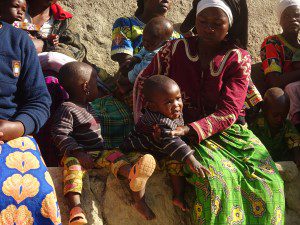
Stunting is the direct consequence of long-term nutritional deprivation and results in hindered physical growth, delayed mental development, poor school performance, and reduced intellectual capacity. When a stunted child reaches adulthood, he or she will be severely limited, thus negatively impacting the overall achievement possible by individuals and society at large. Rwanda faced a national 51% stunting rate of its children in 2011, but through diligent work it has been reduced to 38%. The Nyabihu District however still faces the highest child stunting rate in the country at 59%. These percentages can only be decreased through long-term, persistent attention to malnourished children and those in charge of their nutrition. This is the purpose of the Crops for Health Project which CRS funds and provides expertise for in Rwanda.
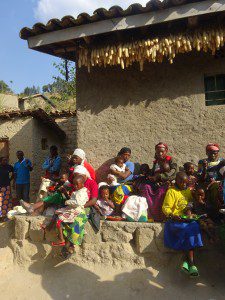
The Crops for Health Program is designed to improve food security, heighten nutritional status, and aid in the economic development of families with children under the age of five or at risk of malnutrition. It promotes traditional crops that have been neglected due to a preference for cash crops. It introduces farmers to crops with a high nutritional value, assists them in diversifying their harvest, and teaches innovative agricultural techniques to maximize limited available land. These in turn improve nutrition, food security, and the livelihood of thousands of families.
The program first identified 7,320 at risk families and divided them into 244 working groups. In order to assist them, Crops for Health trained 488 nutrition leaders at a hospital and fourteen health centers, distributed cooking demonstration kits with basic cooking utensils, and gave small farm animals such as chickens and rabbits to one thousand farmers. Each working group received agricultural tools, seeds and training in new farming techniques.
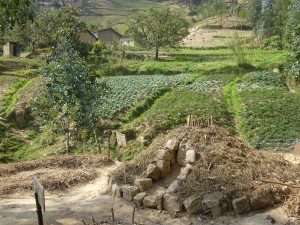
CRS assisted in the creation of Saving Internal Lending Communities in the working groups where farmers are encouraged to save money in a community fund. This not only promotes saving, but allows farmers to borrow money from the common fund at a community agreed-upon interest rate. During our visit to Kagano, farmers proudly presented a large wooden chest locked with three padlocks. Three villagers brought keys and simultaneously unlocked the padlocks revealing the saved money inside. Everybody clapped proudly. A diocesan official shared with me the accounting log of Kagano’s community fund. I was baffled when I realized that most families made saving deposits at increments of 50 Rwandan Francs, or about 7 US cents. This amount of money is considered substantial enough to make a deposit into the bank.
Father Jean Pierre, the Director of Caritas of the Diocese of Nyndo shared that as a child, he ate at his school thanks to the generosity of CRS. “CRS was present in rebuilding the country after the genocide, especially providing agricultural tools. We began life again thanks to Caritas and CRS which provided seeds to restart our livelihood.” Many years have passed since the 1994 genocide, and CRS continues to positively impact the lives of thousands of Rwandans. Poverty cannot be addressed without addressing food insecurity and malnutrition, so the Crops for Health initiative strikes at the root of the problem and does not provide just a band aid solution. The work of CRS in Rwanda and throughout the world continues to transform lives as profound institutional change is facilitated. Crops for Health not only feeds hungry children, but by teaching farming techniques and providing financial stability, assists families to emerge from poverty into a stable, more dignified way of life.
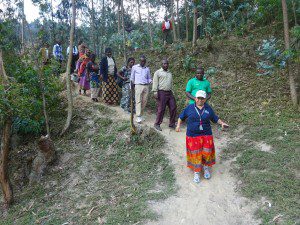
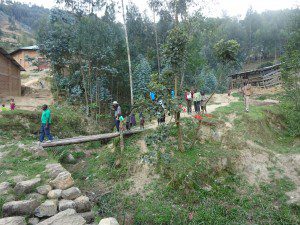
The children of Kagano followed us back to the bus at the entrance of the village. They closely observed us keep our balance while crossing a creek on a wooden plank. They ran through the trees as we carefully followed the cleared path down the hill. They cheered and ran along the dirt road as we left the village on the small, white bus. I may never return to Kagano, but I will never forget the lesson its villagers taught me: every human person, even one in great need, contributes to the good of society. My hungry belly reminded me of our common humanity and of my own poverty and need.
All pictures are mine, all rights reserved.
Previous Post
February 3, 2017
Pobreza y Necesidad: una lección de Ruanda
Next Post

February 16, 2017 Listen more, speak less
Browse Our Archives
Select a Category Article Catholic Lima Christmas Commentary History Homily Immigration martyrs Meditation Pope Reflection Saint Story Uncategorized
Select a Month September 2026 August 2026 July 2026 June 2026 May 2026 April 2026 December 2025 November 2025 October 2025 September 2025 August 2025 July 2025 June 2025 May 2025 April 2025 March 2025 February 2025 January 2025 December 2024 November 2024 September 2024 August 2024 July 2024 June 2024 May 2024 April 2024 March 2024 February 2024 January 2024 December 2023 November 2023 October 2023 September 2023 August 2023 June 2023 May 2023 April 2023 February 2023 January 2023 December 2022 November 2022 October 2022 September 2022 August 2022 July 2022 June 2022 May 2022 April 2022 March 2022 February 2022 January 2022 December 2021 November 2021 October 2021 September 2021 August 2021 July 2021 June 2021 May 2021 April 2021 March 2021 February 2021 January 2021 December 2020 November 2020 October 2020 September 2020 August 2020 July 2020 June 2020 May 2020 April 2020 March 2020 February 2020 January 2020 December 2019 November 2019 October 2019 September 2019 August 2019 July 2019 June 2019 May 2019 April 2019 March 2019 February 2019 January 2019 December 2018 November 2018 October 2018 September 2018 August 2018 July 2018 June 2018 May 2018 April 2018 March 2018 February 2018 January 2018 December 2017 November 2017 October 2017 September 2017 August 2017 July 2017 June 2017 May 2017 April 2017 March 2017 February 2017 January 2017 December 2016 November 2016 October 2016 September 2016 August 2016 July 2016 June 2016 May 2016 April 2016 March 2016 February 2016 January 2016 December 2015 November 2015 October 2015 September 2015 August 2015 July 2015 June 2015 May 2015 April 2015 March 2015 February 2015 January 2015 December 2014 November 2014 October 2014 September 2014 August 2014 July 2014 June 2014 May 2014 April 2014 March 2014 February 2014 January 2014 December 2013 November 2013 October 2013 September 2013 August 2013 July 2013 June 2013 May 2013 April 2013 March 2013 February 2013 January 2013 December 2012 November 2012 October 2012 September 2012 August 2012 July 2012 June 2012 May 2012 April 2012 March 2012 February 2012 January 2012 December 2011 November 2011 October 2011 September 2011 August 2011 July 2011 June 2011 May 2011 April 2011 March 2011 February 2011 January 2011 December 2010 November 2010 October 2010 September 2010 August 2010 July 2010 June 2010 May 2010 April 2010 January 2010 June 2009 September 2008 August 2008
TAKE THE
Religious Wisdom Quiz
What Hebrew word, meaning "vanity" or "meaningless," is frequently used in Ecclesiastes?
Select your answer to see how you score.
Hevel Shalom Torah Ruach
Related posts from Labyrinthine Mind

The Catholic Unity of Faith and Reason
A life of Dedication: Lessons of Father Fred

TRENDING AT PATHEOS Catholic

Letters on Living the Faith by C.S. Lewis
Most of us met C.S. Lewis as a public intellectual. Mere Christianity....

When Halloween Unmasks Married Hearts
Written by Dr. David K. Ewen from Eternal Truth Bible College Behind...

Aristotle. He’s been called the father of logic, the father of the...

Methodist Central Hall and Westminster Abbey
Situated on the same square is Methodist Central Hall and Westminster Abbey. ...

57th Dove Awards Honor Dolly Parton, Crown New...
On gospel music’s biggest night, the 57th annual GMA Dove Awards honored...

The First Eucharistic Controversy: Christ’s Real Presence
For Catholics, the Eucharist is the source and summit of the Christian...
view all Catholic blogs
Ad-Free & Subscriber Log-In Subscription Support
- About Us
- 2026 Calendar
- Videos
- Podcasts
- Library of World Religions
- Faith In Media Tracker
- Advertise With Us
- Write for Us
- Privacy Policy
- Terms of Service
- Do Not Sell My Data
- Contact Us
- Radiant Digital
- Manage Newsletter Subscriptions
- Unsubscribe From Notifications
- Sitemap
Copyright 2008-2026, Patheos. All rights reserved.
Subscription Support Ad-Free & Subscriber Log-In
Follow Patheos