
BuddhistCatholicContemplativeEvangelicalGeneral ChristianHinduJewishLatter-day SaintMuslimNew VisionsProgressive Christian
Beliefs
- Buddhist
- Catholic
- Contemplative
- Evangelical
- General Christian
- Hindu
- Jewish
- Latter-day Saint
- More Voices
- Muslim
- New Visions
- Pagan
- Progressive Christian
Topics
- Religion News
- Food and Religion
- Sports and Religion
- Religious Art
- Religious Music and Entertainment
- Religious Events
- History and Religion
- Style and Religion
- Politics and Religion
- Women in Religion
- Recreation Outdoors and Religion
- Business Finance and Religion
- Careers Workplace and Religion
- Education and Religion
- Family Parenting and Religion
- Health Fitness and Religion
- Home and Religion
- Relationships and Religion
- Technology and Religion
- Travel and Religion
Columnists
- Buddhist Columnists
- Business Finance and Religion Columnists
- Careers Workplace and Religion Columnists
- Catholic Columnists
- Contemplative Columnists
- Education and Religion Columnists
- Evangelists Columnists
- Family Parenting and Religion Columnists
- General Christian Columnists
- Health Fitness and Religion Columnists
- Hindu Columnists
- History and Religion Columnists
- Home and Religion Columnists
- Jewish Columnists
- More Voices Columnists
- Latter Day Columnists
- Muslim Columnists
- New Visions Columnists
- Nonreligious Columnists
- Pagan Columnists
- Politics and Religion Columnists
- Progressive Columnists
- Recreation Outdoors and Religion Columnists
- Relationships and Religion Columnists
- Religion News Columnists
- Religious Art Columnists
- Religious Events Columnists
- Religious Music and Entertainment Columnists
- Sports and Religion Columnists
- Style and Religion Columnists
- Technology and Religion Columnists
- Travel and Religion Columnists
- Women in Religion Columnists
Resource Library
- 2026 Calendar
- Library of World Religions
- The 100 Most Holy Places on Earth
- Patheos Answers
- Podcasts
- Videos
- Faith Leaders Database
- Anglican Episcopalian
- Bahai
- Baptist
- Buddhism
- Christianity
- Confucianism
- Eastern Orthodoxy
- Hinduism
- Holiness and Pentecostal
- ISKCON
- Islam
- Judaism
- Lutheran
- Methodist
- The Church of Jesus Christ of Latter-day Saints
- New Age
- Paganism
- Presbytarian and Reformed
- Protestantism
- Religion Behind the Scenes
- Roman Catholic
- Scientology
- Shia Islam
- Sikhism
- Sufism
- Sunni Islam
- Taoism
- Zen
- See all religions
Research Tools
 Ad-Free & Subscriber Log-In Subscription Support
Ad-Free & Subscriber Log-In Subscription Support
Follow Patheos 

- Trending:
- Forgiveness
- |
- Marriage
- |
- Consciousness
- |
- Death Penalty
- |
- Election
- |
- Halloween

- Home
- Catholic
- Religion News
- Importance of Popular Religiosity or “religion casera” and its role in Latin America.
Importance of Popular Religiosity or “religion casera” and its role in Latin America.
Last updated on: April 8, 2016 at 9:07 am by Father Pablo Migone
Importance of Popular Religiosity or “religion casera” and its role in Latin America. 2016-04-08T09:07:24-05:00 Father Pablo Migone
Patheos Explore the world's faith through different perspectives on religion and spirituality! Patheos has the views of the prevalent religions and spiritualities of the world.
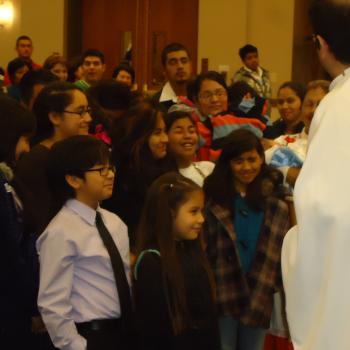
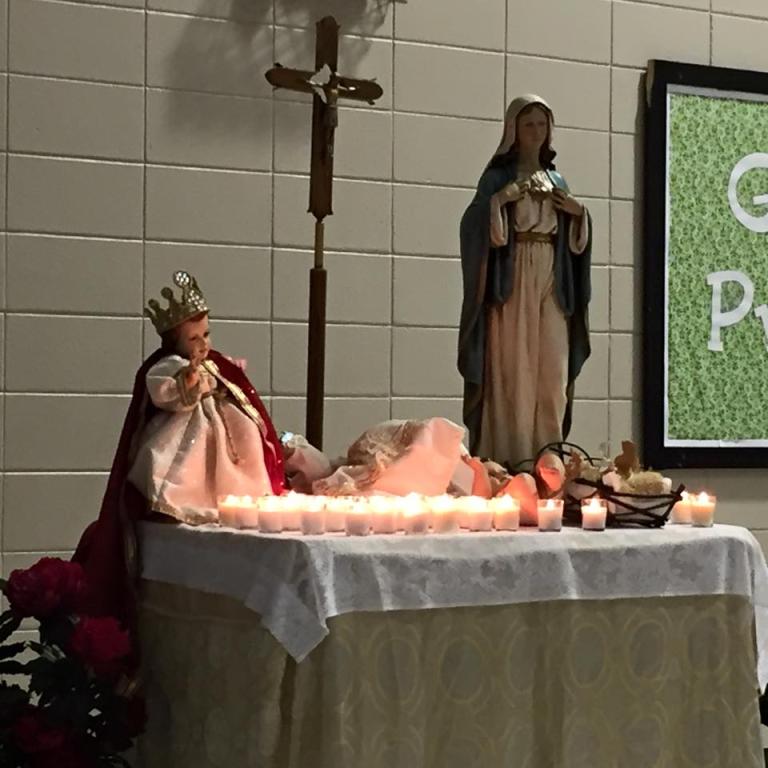 I gave this presentation on popular religiosity and its importance for Latin American Catholics during the Second Diocesan Encuentro of the Diocese of Savannah which took place on January 29th and 30th. The first day, about fifty attended (mostly priests) and Father David Garcia from San Antonio gave a very insightful presentation. The second day, over 250 lay leaders from the whole diocese gathered. It was a magnificent event!
Here’s my presentation which I gave to a group of priests:
Historically, the transmission of the faith in Latin America has not been primarily through the presence of clergy. Priests have been very scarce, so the faith has been passed on mostly through what is experienced at home and through popular religiosity, the traditional public acts of religion such as processions.
In Latin America you do not always use a catechism to evangelize, but it happens naturally through the way children are raised in society. Children participate in popular religious acts and they learn by participating in activities such as Live Stations of the Cross or by dressing up as their favorite saint.
In the Joy of the Gospel, Francis writes, “these acts of popular religiosity have an active evangelizing power which we must not underestimate. To do so, would be to fail to recognize the work of the Holy Spirit. Instead we are called to promote and strengthen it.”
I know of a parish in the United States where the Mexican community showed up at the church on 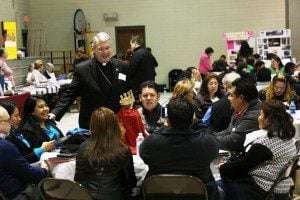 December 12th ready to celebrate Our Lady of Guadalupe and the priest sent them home. It was not on the schedule, he did not understand, so he sent them home and the priest went back to the rectory. For the Mexican community this was incomprehensible. This is like a group of Americans denied a Thanksgiving dinner while living abroad. Wherever Americans go, Thanksgiving will be celebrated. Likewise with these popular expressions of faith since they are part of what you do.
We must be aware that many of these cultural practices are so ingrained in people, so we have to be attentive.
Once, a man showed up after Mass with roses, he came up to me and asked, “where is Our Lady of Guadalupe?” He did not ask “do you have one?” This was a very insightful encounter. The man expected Our Lady of Guadalupe would be in the church, there was no other possibility.
Hispanics from various countries come to the United States and they are mixed together into an artificial community. They bring their own distinct traditions and practices. The vast majority in our diocese are Mexican, so we lean heavy towards traditional Mexican practices like Posadas, Guadalupe, Candelaria etc. We cater to Mexican sensitivities. Within Mexico there are different practices and traditions, so we need to ask and to listen. 
At the same time, we have to be sensitive to the reality that not everyone is Mexican, yet realizing that the vast majority are Mexican, especially in the more rural areas of the diocese. The larger cities have more mixed communities with Puerto Ricans, Colombians, Panamanians, etc. We have to be culturally sensitive to these differences. It is important to ask non-Mexican communities how we can celebrate their traditional feasts.
An equivalent to consider would be this: imagine immigrants abroad are invited to an English Mass, so people from England, Scotland, New Zealand, United States, and South Africa arrive, and they are encouraged to do their “cultural thing together.” The only thing in common is the language they speak and perhaps the faith they share.
At times, parish leadership in Hispanic communities will not be from Mexico, but the majority of the faithful are Mexican. As priests, we must be attentive to this. Your leaders may not understand or know well the needs of the general community.
It is important to ask: How do you celebrate? What do you eat? We should not provide what we think they need, but what they know that they need. Do not assume, but ask.
Oftentimes in the United States, there is a push to celebrate Our Lady of Guadalupe as Our Lady of the Americas, which is fine. Yet, there is a danger to “de-mexicanize” the celebration to the point that the Mexican community (who are the majority) feels out of place. Mexico has particular ways of celebrating her feast day, so I always encourage priests to celebrate the feast as the Mexicans do. Imagine living abroad, and a group of Americans are told that this year for Thanksgiving, pork rather than turkey will be served. We would happily eat the pork, but Thanksgiving is not Thanksgiving without turkey.

We have to be mindful that some traditions have the same name, but are different practices. For example, in the Philippines the Misa de Gallo is a Mass celebrated early in the morning for nine days before Christmas, what in Puerto Rico is called the Misa de Aguinaldos. The Misa de Gallo in most Latin American countries is Christmas midnight Mass. We must ask and be attentive to these traditions: have people tell you. Listen, think about it, and you decide what to do.
Colombians celebrate a novena before Christmas, the Mexicans the Posadas, and Puerto Ricans have parrandas. As a priest, you cannot go to every single thing, but it is important to attend one evening with each different group. Each national group will want to do its own tradition: the Colombians will not mix with the Mexicans, not because they dislike each other, but because they have different traditions.
These traditions cannot be dismissed. For example, you cannot just have a simple Mass for Our Lady of Guadalupe because you will lose an enormous opportunity to evangelize. People show up to these traditional celebrations, even those who never come to Mass. If they feel welcome, they will come back. We must take advantage of opportunities around traditional celebrations to get people in the door. Give out information or booklets with parish information, have tables of parish ministries, etc.
Things can get messy at these celebrations, you have to be patient, but it is always worth doing these larger celebrations. It is a great way to reach people who are distant, to evangelize, and to strengthen the faith. These celebrations are also moving, especially live Stations of the Cross. They allow you to enter into what is happening. At a Posada, you truly feel that you are walking with Mary and Joseph, you feel the rejection, you become part of the action, especially if a real donkey is involved.

Popular religiosity has a way of making moments of salvation history present here and now.
Second generation of immigrants tend to shy away from expressions of popular religiosity as they distance themselves from religion in general. Some of the new generation have no idea why they do these things. There is a need to catechize and teach the faith.
Popular religiosity is effective in transmitting the faith ideally in a context where the faith is not being challenged. When the faith is challenged, the faithful may not be able to express what they believe even though they have great faith. Today in Latin America people are more educated than 25 years ago, remote areas are not as remote, and Protestants and Mormons are present. Popular religiosity is beautiful and must continue since it can transmit the faith in a way that no theological treatise or catechism can transmit, but we must provide catechetical substance.
Popular religiosity is not just an “entry way” to the faith, but is essential.
Pictures: Justin Niederkorn, all rights reserved, used with permission. Taken during the Second Diocesan Encuentro of the Diocese of Savannah, Sacred Heart Parish, Warner Robins, Georgia
Previous Post
March 31, 2016
Gozo Pascual
Next Post
April 10, 2016 What has the Pope given us in Amoris Laetitia?
Browse Our Archives
Select a Category Article Catholic Lima Christmas Commentary History Homily Immigration martyrs Meditation Pope Reflection Saint Story Uncategorized
Select a Month September 2026 August 2026 July 2026 June 2026 May 2026 April 2026 December 2025 November 2025 October 2025 September 2025 August 2025 July 2025 June 2025 May 2025 April 2025 March 2025 February 2025 January 2025 December 2024 November 2024 September 2024 August 2024 July 2024 June 2024 May 2024 April 2024 March 2024 February 2024 January 2024 December 2023 November 2023 October 2023 September 2023 August 2023 June 2023 May 2023 April 2023 February 2023 January 2023 December 2022 November 2022 October 2022 September 2022 August 2022 July 2022 June 2022 May 2022 April 2022 March 2022 February 2022 January 2022 December 2021 November 2021 October 2021 September 2021 August 2021 July 2021 June 2021 May 2021 April 2021 March 2021 February 2021 January 2021 December 2020 November 2020 October 2020 September 2020 August 2020 July 2020 June 2020 May 2020 April 2020 March 2020 February 2020 January 2020 December 2019 November 2019 October 2019 September 2019 August 2019 July 2019 June 2019 May 2019 April 2019 March 2019 February 2019 January 2019 December 2018 November 2018 October 2018 September 2018 August 2018 July 2018 June 2018 May 2018 April 2018 March 2018 February 2018 January 2018 December 2017 November 2017 October 2017 September 2017 August 2017 July 2017 June 2017 May 2017 April 2017 March 2017 February 2017 January 2017 December 2016 November 2016 October 2016 September 2016 August 2016 July 2016 June 2016 May 2016 April 2016 March 2016 February 2016 January 2016 December 2015 November 2015 October 2015 September 2015 August 2015 July 2015 June 2015 May 2015 April 2015 March 2015 February 2015 January 2015 December 2014 November 2014 October 2014 September 2014 August 2014 July 2014 June 2014 May 2014 April 2014 March 2014 February 2014 January 2014 December 2013 November 2013 October 2013 September 2013 August 2013 July 2013 June 2013 May 2013 April 2013 March 2013 February 2013 January 2013 December 2012 November 2012 October 2012 September 2012 August 2012 July 2012 June 2012 May 2012 April 2012 March 2012 February 2012 January 2012 December 2011 November 2011 October 2011 September 2011 August 2011 July 2011 June 2011 May 2011 April 2011 March 2011 February 2011 January 2011 December 2010 November 2010 October 2010 September 2010 August 2010 July 2010 June 2010 May 2010 April 2010 January 2010 June 2009 September 2008 August 2008
TAKE THE
Religious Wisdom Quiz
Who said, "Man shall not live on bread alone, but on every word that comes from the mouth of God"?
Select your answer to see how you score.
David Moses Elijah Jesus
Related posts from Labyrinthine Mind
Una vida de dedicación: Lecciones del Padre Fred
Monsignor Rossetti removed from assignment

Understanding Terminology: Hispanic or Latino?
TRENDING AT PATHEOS Catholic

Jad Gillies on New Hillsong Worship Songs and...
For worship leader Jad Gillies, Hillsong Worship’s next chapter is not about...

Looking at the Largest Orthodox Cathedral on Earth
There is often a considerable amount of anger and, shall we...

The Problem with False Prophets
Miller’s Station UMC| 10/18/26| Anchor Verse: Jeremiah 23: 1, 9-23 I...

Emotion in Early Christianity by Andrew Crislip
Andrew Crislip’s Emotion in Early Christianity examines an often overlooked dimension of...

16 Spiritual Touchstones for a More Grounded Life
After decades of spiritual study, here are 16 principles I try...

Catholic Evangelization: Sharing Your Faith Every Day
Welcome back to the Graceful Awakening mini-series called, “From Faith to Mission.” ...
view all Catholic blogs
Ad-Free & Subscriber Log-In Subscription Support
- About Us
- 2026 Calendar
- Videos
- Podcasts
- Library of World Religions
- Faith In Media Tracker
- Advertise With Us
- Write for Us
- Privacy Policy
- Terms of Service
- Do Not Sell My Data
- Contact Us
- Radiant Digital
- Manage Newsletter Subscriptions
- Unsubscribe From Notifications
- Sitemap
Copyright 2008-2026, Patheos. All rights reserved.
Subscription Support Ad-Free & Subscriber Log-In
Follow Patheos