
BuddhistCatholicContemplativeEvangelicalGeneral ChristianHinduJewishLatter-day SaintMuslimNew VisionsProgressive Christian
Beliefs
- Buddhist
- Catholic
- Contemplative
- Evangelical
- General Christian
- Hindu
- Jewish
- Latter-day Saint
- More Voices
- Muslim
- New Visions
- Pagan
- Progressive Christian
Topics
- Religion News
- Food and Religion
- Sports and Religion
- Religious Art
- Religious Music and Entertainment
- Religious Events
- History and Religion
- Style and Religion
- Politics and Religion
- Women in Religion
- Recreation Outdoors and Religion
- Business Finance and Religion
- Careers Workplace and Religion
- Education and Religion
- Family Parenting and Religion
- Health Fitness and Religion
- Home and Religion
- Relationships and Religion
- Technology and Religion
- Travel and Religion
Columnists
- Buddhist Columnists
- Business Finance and Religion Columnists
- Careers Workplace and Religion Columnists
- Catholic Columnists
- Contemplative Columnists
- Education and Religion Columnists
- Evangelists Columnists
- Family Parenting and Religion Columnists
- General Christian Columnists
- Health Fitness and Religion Columnists
- Hindu Columnists
- History and Religion Columnists
- Home and Religion Columnists
- Jewish Columnists
- More Voices Columnists
- Latter Day Columnists
- Muslim Columnists
- New Visions Columnists
- Nonreligious Columnists
- Pagan Columnists
- Politics and Religion Columnists
- Progressive Columnists
- Recreation Outdoors and Religion Columnists
- Relationships and Religion Columnists
- Religion News Columnists
- Religious Art Columnists
- Religious Events Columnists
- Religious Music and Entertainment Columnists
- Sports and Religion Columnists
- Style and Religion Columnists
- Technology and Religion Columnists
- Travel and Religion Columnists
- Women in Religion Columnists
Resource Library
- 2026 Calendar
- Library of World Religions
- The 100 Most Holy Places on Earth
- Patheos Answers
- Podcasts
- Videos
- Faith Leaders Database
- Anglican Episcopalian
- Bahai
- Baptist
- Buddhism
- Christianity
- Confucianism
- Eastern Orthodoxy
- Hinduism
- Holiness and Pentecostal
- ISKCON
- Islam
- Judaism
- Lutheran
- Methodist
- The Church of Jesus Christ of Latter-day Saints
- New Age
- Paganism
- Presbytarian and Reformed
- Protestantism
- Religion Behind the Scenes
- Roman Catholic
- Scientology
- Shia Islam
- Sikhism
- Sufism
- Sunni Islam
- Taoism
- Zen
- See all religions
Research Tools
 Ad-Free & Subscriber Log-In Subscription Support
Ad-Free & Subscriber Log-In Subscription Support
Follow Patheos 

- Trending:
- Forgiveness
- |
- Marriage
- |
- Consciousness
- |
- Death Penalty
- |
- Election
- |
- Halloween

- Home
- Catholic
- Religion News
- Faith and Understanding: Unlocking the Mystery of the Canaanite Woman
Faith and Understanding: Unlocking the Mystery of the Canaanite Woman
Last updated on: August 14, 2011 at 7:27 pm by Father Pablo Migone
Faith and Understanding: Unlocking the Mystery of the Canaanite Woman 2011-08-14T19:27:00-05:00 Father Pablo Migone
Patheos Explore the world's faith through different perspectives on religion and spirituality! Patheos has the views of the prevalent religions and spiritualities of the world.
I wrote this paper in 2005 for a Principles of Biblical Studies Class with Dr. Scott Hahn. The paper is an attempt at understanding Jesus’ interaction with the Canaanite woman in the Gospel of Saint Matthew, this weekend’s Gospel passage.
Reading over it I noticed a bit of redundancy towards the beginning, that may be evidence of the college student’s art of expanding a paper to reach the required length for the paper.
First you will read the Gospel passage itself, then the paper and finally the bibliography and footnotes. I hope you enjoy it.
———-
Matthew 15:21-28
And Jesus went away from there and withdrew to the district of Tyre and Sidon. And behold, a Canaanite woman from that region came out and cried, “Have mercy on me, O Lord, Son of David; my daughter is severely possessed by a demon.” But he did not answer her a word. And his disciples came and begged him, saying, “Send her away, for she is crying after us.” He answered, “I was sent only to the lost sheep of the house of Israel.” But she came and knelt before him, saying, “Lord, help me.” And he answered, “It is not fair to take the children’s bread and throw it to the dogs.” She said, “Yes, Lord, yet even the dogs eat the crumbs that fall from their master’s table.” Then Jesus answered her, “O woman, great is your faith! Be it done for you as you desire.” And her daughter was healed instantly.
———-
The meeting of Jesus with a Canaanite woman recorded in Matthew 15:21-28 is a puzzling event due to Jesus’ initial silence and his later harsh words directed to the pleading woman. To understand how Jesus’ silence reveals his acknowledgement of Jewish priority in the order of salvation history, and how his harsh words serve as an instrument for the woman to display her faith and understanding of the order of salvation which leads to the miraculous healing of her daughter, two foundational historical truths must be explained. The first is the acute tension that existed between Jews and non-Jews, Gentiles, at the time Jesus lived. The second is the covenantal history of the Hebrew people with God that was fulfilled by Jesus Christ, the Messiah, who stands as the apex of salvation for all nations as restorer of the Davidic kingdom. This puzzling yet moving incident of Matthew’s Gospel is recounted with a “delicate realism” that makes it highly lifelike and very intriguing to interpret and to meditate.[1]
I. Gentile Animosity
The opening verse of the passage “and Jesus went away from there and withdrew to the district of Tyre and Sidon” (Mt 15:21)[2], locates the event in the district of Tyre and Sidon, cities where Gentiles, non-Jews from whom Jews separated themselves, lived. These two cities were located in ancient Phoenicia, Sidon on the coast of modern Lebanon and Tyre on an island off that same coast. Sidon was a wealthy city, a center of commerce and learning, while Tyre’s strategic location on an island had made it a desired location for many empires over the years. The inhabitants of the cities were Gentiles, therefore ostracized by Jews.[3] Jesus’ condemnation in Matthew 11:21-22 recognizes the tension between Jews and these Gentile cities when he proclaimes to the Jewish cities of Chorazin and Bethsaida it “shall be more tolerable on the day of judgment for Tyre and Sidon than for you.” Jesus openly judges these cities as worse than Gentile cities – a great insult for the Jewish inhabitants of Chorazin and Bethida.
A hostile attitude existed between Gentiles and Jews at the time of Jesus, so they deliberately remained separated. Jewish traditions mandated the faithful to remain separated from Gentiles in matters of religion, marriage, and politics. The separateness was stressed through Jewish eating costumes, circumcision, and the avoidance of idolatry which Gentiles practiced.[4] Eckhard Schnabel suggests that “this attitude was the effect of official manipulations of public sentiments in times of crises [from the Gentile’s side], or the result of the provocation which the nonconformist and yet attractive Jewish religion constituted for non-Jews, particularly the refusal to intermarry and the impossibility of cult and table fellowship.”[5] Pharisees, who dominated the following of Jewish law during Jesus’ time, stressed highly the need for faithful Jews to remain separate from Gentiles.
The encounter in the passage therefore is a break from Jewish tradition since a Canaanite, a Gentile, approaches Jesus, recognizes him as Lord and Son of David, asks for a miracle, and the miracle is granted. The unwavering insistence for separateness made Jesus’ parable of the Good Samaritan paradoxical since for Jews no Gentile could be good. Likewise, the only leper who returned of the ten Jesus healed was a Samaritan, presenting a perplexing event for Jews.[6] Samaritans at least shared a common heritage with Jews since they also observed the Torah strictly, but they did not recognize the primacy of Jerusalem to worship Yahweh.[7] The Canaanite woman was not even a Samaritan, but was even more distant from Jewish religion. Despite her being a Gentile, she was surely familiar with Judaism for she addressed Jesus as the ‘Son of David,’ a Jewish title for the Messiah.[8] Mark’s account of the encounter in chapter 7:24-30 identifies her as a Greek, syrophoenician by birth, indicating she was a pagan from Phoenicia.[9] This is consistent with Matthew’s description of her as Canaanite since Canaan included Phoenicia and Greeks lived there. This accentuates even more the radical and nonconformist nature of Jesus’ healing of the woman’s daughter.
II. Jewish Expectations
The two phrases Jesus directs to the woman in response to her request in verses 24 and 26 are very puzzling since he dismisses her plea with very strong language. “He answered, ‘I was sent only to the lost sheep of the house of Israel.’ But she came and knelt before him, saying, ‘Lord, help me.’ And he answered, ‘It is not fair to take the children’s bread and throw it to the dogs’” (Mt 15:24-26). In order to properly understand his reply, an understanding of God’s plan of salvation for humanity must be achieved. The plan had been anticipated through the covenantal history of the Hebrew people and was fulfilled by Jesus Christ, the Messiah foretold by the prophets.
The first covenant God made where he established a chosen people was the covenant with Abraham. In Genesis 22:17-18 God promised, “I will indeed bless you, and I will multiply your descendants as the starts of heaven and as the sand which is on the seashore. And your descendants shall possess the gate of their enemies, and by your descendants shall all the nations of the earth bless themselves, because you have obeyed my voice.” Yahweh promised all the nations to Abraham, not only a group of people or a singular nation, but rather all nations, including Gentiles. Paul in his letter to the Galatians identified the fulfillment of this promise in Christ when he wrote, “So you see that it is men of faith who are the sons of Abraham. And the scripture, foreseeing that God would justify the Gentiles by faith, preached the gospel beforehand to Abraham saying, ‘In you shall all the nations be blessed’” (Gal 3:7-8).
Yahweh foretold a new covenant through his prophets. In chapter 31:31-33, Jeremiah prophesized, “Behold, the days are coming, says the Lord, when I will make a new covenant with the house of Israel and the house of Judah, not like the covenant which I made with their fathers when I took them by the hand to bring them out of the land of Egypt, my covenant which they broke, though I was their husband, says the Lord. But this is the covenant which I will make with the house of Israel after those days, says the Lord: I will put my law within them, and I will write it upon their hearts; and I will be their God, and they shall be my people.” The Mosaic Covenant at Mount Sinai organized Israel into a nation, but did not fulfill the promise to Abraham that all nations would bless themselves in his name. The New Covenant promised to the Israelites would restore the kingdom of David, both the House of Israel and the House of Judah. By the time of Jesus, the only way possible to restore Israel was to convert all Gentiles since Israel had not existed as a political entity for over seven hundred years since its conquering by Assyria in 722 BC and assimilation to Gentile.[10]
A similar prophecy by Isaiah asserted, “It is too light a thing that you should be my servant to raise up the tribes of Jacob and to restore the preserved of Israel; I will give you as a light to the nations, that my salvation may reach to the end of the earth” (Is 49:6). This prophecy was fulfilled in Jesus Christ who instituted a new and everlasting covenant with his blood, restoring the Davidic kingdom. The Psalms written by King David were fulfilled by Jesus, the Messiah promised to David who came to restore the Davidic Kingdom. In Psalm 89, verses 3 and 4, David testifies, “Thou hast said, ‘I have made a covenant with my chosen one, I have sworn to David my servant: I will establish your descendants for ever, and build your throne for all generations.” Psalm 110, verses 1 and 2, refers to David’s lord to whom God speaks. The only lord the King could refer to is Jesus, the Son of God, since no one on earth stands hierarchically superior to the King. “The Lord says to my lord: ‘Sit at my right hand, till I make your enemies your footstool.’ The Lord sends forth from Zion your might scepter. Rule in the midst of all your foes!’” Psalm 2, verses 7 through 9, reveals, “I will tell of the decree of the Lord: He said to me, ‘You are my son, today I have begotten you. Ask of me, and I will make the nations your heritage, and the ends of the earth your possession. You shall break them with a rod of iron, and dash them in pieces like a potter’s vessel.” From this limited selection of psalms it is clear that the promise made to David is of a powerful everlasting kingdom that will reach the ends of the earth.
As it will be shown next, Jesus extended what had been Jewish exclusivity over salvation to the Gentiles, and by doing so, he fulfilled the promise made to David by restoring the House of Israel and the House of Judah. Jesus fulfilled Daniel’s prophecy that “to him was given dominion [the son of man] and glory and kingdom, that all peoples, nations, and languages should serve him; his dominion is an everlasting dominion, which shall not pass away, and his kingdom one that shall not be destroyed” (Dn 7:14).
All these prophecies point that indeed salvation is from the Jews as Jesus confirms in John 4:22. God’s plan for salvation was initiated through the Jews and the New Covenant instituted by Jesus extended salvation to non-Jews. This understanding of salvation history, together with the knowledge of the tension between Gentiles and Jews, will now make it possible to fully appreciate the significance of Jesus’ silence and the confident response of the Canaanite woman to Jesus’ retort.
III. The Silence of Jesus
Saint Hilary of Poitiers held that “the Lord remains silent, reserving the privilege of salvation for Israel”[11] when “he did not answer her a word” (Mt 15:23). Jesus confirms this through his reply. He was sent only to the lost sheep of the house of Israel, remaining faithful to the promises of salvation made to the Jews. Salvation is from the Jews, yet this woman intercedes for her sick gentile daughter. Epiphanius the Latin held that this woman is the mother of all Gentiles entreating Jesus to heal her daughter who has been “led astray by idolatry and sin and [has been] severely possessed by a demon.”[12] The woman did not need healing, her daughter did, and after interceding on her behalf, Jesus healed her. Hilary of Poitiers also acknowledged the woman’s intercession for all Gentiles writing, “she was begging for help for her daughter – that is, the Gentile people in the grips of unclean spirits.”[13] The Canaanite woman may be considered a universal mother interceding for the offering of salvation to her unholy daughter, the Gentiles.
Jesus extended salvation to include all Gentiles at this encounter as he had already done a few chapters earlier in Matthew 8:5-13 by healing a Roman centurion’s servant. The similarities between the two encounters are significant. In both cases Jesus heals an ill person at the request of their guardian (a master and a mother) and both are Gentiles whose faith is praised greatly by Jesus.[14] Jesus’ reply to the centurion seems to allow a singular interpretation: Jesus extends salvation to Gentiles. “Many will come from east and west and sit at table with Abraham, Isaac, and Jacob in the kingdom of heaven, while the sons of the kingdom will be thrown into the outer darkness” (Mt 8:11-12). The expression from east to west denotes people from all the ends of the earth, all the nations that had been promised to Abraham, encompassing Gentiles and fulfilling God’s promise to Abraham. The sons of the kingdom, the Jews who were heirs of the promises made to David, no longer had exclusivity over salvation. The New Kingdom restored by Jesus included all nations, fulfilling the promises made to David.
The silence of Jesus stresses Jewish priority in salvation that is only later extended to Gentiles in the New Covenant. Amy-Jill Levine records that scholar John C. Fenton in his book Saint Matthew holds that “the delay between the request and its answer corresponds to the interval between the mission to the Jews and the admission of gentiles to the church.”[15] Levine accentuates Matthew’s temporal priority for salvation to Jews. Jesus’ first response points to this priority by stating, “I was sent only to the lost sheep of the house of Israel” (Mt 15:24). Jesus will eventually grant the miracle, so the silence, according to Epiphanius the Latin, is so “Jews might have no excuse on the day of judgment, when they might pretend to say, ‘He wanted to come to the Gentiles rather than to us.’”[16] It is simply to preserve Jewish priority in the order of salvation history.
As already seen, during his life, Jesus made it clear he came to fulfill the new covenant by making salvation available to the ends of the earth. Matthew began his Gospel providing a genealogy of Jesus that linked him with Abraham and David. This strengthens the conviction that is through Jesus “who is the messianic king of Israel and heir to the Davidic promises and who is the one through whose ministry God’s promise to the patriarchs that all the nations of the earth will be blessed is being realized.”[17] The words Jesus spoke at the beginning and at the end of his ministry, it may be argued, were inclusive of Gentiles. His first reported words in Matthew’s Gospel in Matthew 4:19 exhort Andrew, James, and John to become fishers of men. His last recorded words in this same Gospel in Matthew 28:18-20, commission his followers to make disciples of all nations. In between, in chapter five at the Sermon on the Mount (Mt 5:13-15), Jesus describes his followers as the salt of the earth and the light of the world, two clear references to the universal dimension of his message. Schnabel concludes from Jesus’ ministry that “Although the Evangelists, particularly Matthew, portray Jesus as limiting his ministry to Israel, they all point out that the vision of Jesus was larger – and not only his vision for the future, but the reality of his ministry as well.”[18] Jesus’ public ministry aimed at gathering Jews and Gentiles together in the kingdom of God.
The apostles spread the Good News of Jesus according to how their teacher instructed them. Jesus said to them before ascending, “but you shall receive power when the Holy Spirit has come upon you; and you shall be my witnesses in Jerusalem and in all Judea and Samaria and to the end of the earth” (Acts 1:8). The Book of the Acts of the Apostles follows this pattern given by Christ to the apostles as they first preached in Jerusalem, followed by Judea, Samaria, and finally Rome, which as the center of the known world, meant the Gospel was being preached to the ends of the earth, Gentiles included. This is confirmed when Peter acknowledges God’s plan of salvation including Gentiles pronouncing, “‘If then God gave the same gift to them [Gentile] as he gave to us when we believed in the Lord Jesus Christ, who was I that I could withstand God?’ When they heard this they were silenced. And they glorified God, saying, ‘Then to the Gentiles also God has granted repentance unto life’” (Acts 11:17-18).
IV. The Miraculous Response
Jesus’ metaphorical response in Matthew 15:26 that “it is not fair to take the children’s bread and throw it to the dogs” seems crude and contrary to his own teaching of loving neighbor as oneself. Two subjects of the metaphor used by Jesus must first be identified: the children and the dogs. Jesus maintains the priority of Israel over other peoples since “the children” are the Jews. The “bread of the children is a symbol of the messianic fulfillment promised to and now in some way being made actual to Israel. It is wrong to throw to dogs what belongs to the children.”[19] The bread for the children then is the Good News of salvation preached by Jesus which must first be heard by Jews. Dogs were viewed with disgust by ancient Hebrews. In the Old Testament, when a person was referred to as a dog, it was a term of disregard and exploitation. The repulsion of dogs by Jews may in part be attributed to the fact that dogs ate refuse, carcasses, vermin, human flesh, and even sometimes licked human blood.[20] Dogs therefore were unclean to the eyes of all faithful Jews as were unclean Gentiles. The dogs in Jesus’ metaphor are the Gentiles; therefore he does not want to offer salvation to the Gentiles because it belongs first to the Jews.
The verse does not contain “ethnic slurs or hints that the Gentiles are perceived by Jesus to be unworthy of his attention… it confirms the doctrine of election and the supersession of Israel over Canaan.”[21] The words of Jesus also lose much of their harshness when the response of the woman is considered where she continues the metaphor begun by Jesus, lessening the shock effect of Jesus’ silence and crudeness. The word used by Jesus for dogs translates better into “little dogs” or “pet dogs,” also lessening the harshness of Jesus’ remark. [22]
The woman recognizes her position in salvation history by continuing the metaphor begun by Jesus, and it is through her humility, perseverance, trust and faith that Jesus grants the healing of her daughter.[23] After imploring Jesus on her knees, she asserts, “Yes, Lord, yet even the dogs eat the crumbs that fall from their master’s table” (Mt 15:27). Her response may be overlooked as a simple reply to continue her supplication to Jesus, but it actually reveals a deep and accurate understanding of salvation.
In her response, the woman “acknowledges that, as a Canaanite, she is not entitled to the privileges of her historical and theological ‘masters,’ the Jewish community.”[24] She understands her position as inferior to Jews in God’s plan for salvation. The woman continues Jesus’ metaphor by recognizing that the dogs are indeed inferior to the master, but that the dogs still eat the crumbs that fall from the master’s table. They may be crumbs, but both master and dogs eat the same food. The master eats first and then the same food falls and is available to the dogs. This “anticipates the social axis when all will have equal access to the mission [of Jesus].”[25] The woman’s conformity to the plan of salvation allows Jesus to grant her the miraculous healing of her daughter. It is clear she understands that salvation first belongs to the Jews (cf. Jn 4:22), so she humbles herself acknowledging “Israel’s covenantal prerogatives and blessings, not arguing against the apparent unfairness of some being children and others being ‘dogs under the table,’ while [trusting] God to extend his mercies even to Gentiles.”[26] Due to her humility to admit this and faith that Jesus could heal her daughter, Jesus exalts her, making the kingdom of heaven hers (cf. Mt 5:3). The law is written in her heart (cf. Jer 31:33) and she becomes a daughter of Abraham through faith (cf. Gal 3:7).
V. Conclusion
The Canaanite woman’s faith and humility shine forth through her clear understanding regarding her position in the order of salvation. Jesus’ harshness decreases after a close analysis of the priority of Jews in salvation and the order of salvation. The woman is a good model of Christian discipleship since humble faith in Jesus and acceptance of His plan ought to be followed by perseverance in prayer and discipleship. The combination of these qualities in the Canaanite woman allowed Jesus to extend his mercy and grace to the woman evidenced by his healing of her daughter. Jesus’ mission on Earth included Jews and non-Jews alike, and this intriguing passage, like the centurion’s passage earlier in Matthew’s Gospel, give confirmation to Jesus’ universal mission that reaches all nations. Jesus is the Messiah, the Son of David, who fulfills the promises made to the Patriarchs and most especially to David as he restores the Davidic Kingdom as promised in David’s Psalms. Jesus extends salvation to all, offering it even to Gentiles such as this woman whose faith and humility are accepted by Christ. Her display of faith and understanding unlock the mystery of Jesus’ silence and seemingly insensitive words and explain how the healing of the daughter becomes a reality.
Works Cited
Ancient Christian Commentary on Scripture New Testament. Manlio Simonetti, ed. Downers Grove, Illinois: Inter Varsity Press, 2002.
Harper Collins Bible Dictionary. Paul Achtemeier, ed. New York City: HarperCollins Publishing, 1996.
Jones, Alexander. The Gospel According to Saint Matthew: A Text and Commentary for Students. New York City: Sheed & Ward, 1965.
Levine, Amy-Jill. The Social and Ethnic Dimensions of Matthean Salvation History. Lewiston, New York: Edwin Mellen Press, 1988.
The Navarre Bible: Gospels & Acts: Text and Commentaries. Princeton: Scepter Publishers, 2002.
Schnabel, Eckhard. “Jesus and the Beginnings of the Mission to the Gentiles” in Jesus of Nazareth: Lord and Christ: Essays on the Historical Jesus and New Testament Christology. Joel B. Green and Max Turner, eds. Grand Rapids, Michigan: William B. Eerdmans Publishing, 1994.
The New Interpreter’s Bible vol. VIII. Leander Keck, ed. Nashville: Abingdon Press, 1995.
World Biblical Commentary vol. 33B. Donald A. Hagner, ed. Dallas: World Books, 1995.
Secondary Bibliography
Filson, Floyd. Black’s New Testament Commentaries: The Gospel According to Saint Matthew. Henry Chadwick, ed. London: Adam & Charles Black, 1971.
Hahn, Scott and Curtis Mitch. The Gospel of Matthew: With Introduction, Commentary, Notes, and with Study Questions. San Francisco: Ignatius Press, 2000.
Pimentel, Stephen. Witnesses of the Messiah. Steubenville, Ohio: Emmaus Road Publishing, 2002.
[1] Alexander Jones, The Gospel According to Saint Matthew: A Text and Commentary for Students (New York City: Sheed & Ward, 1965), 183.
[2] Note: All Biblical citations are taken from the Ignatius Press Revised Standard Version, Catholic Edition.
[3] Harper Collins Bible Dictionary, “Sidon” and “Tyre” (New York City: HarperCollings, 1996) 1021, 1181.
[4] HCBC, “Gentiles,” 369.
[5] Eckhard Schnabel, “Jesus and the Beginnings of the Mission to the Gentiles” in Jesus of Nazareth: Lord and Christ: Essays on the Historical Jesus and New Testament Christology (Grand Rapids, Michigan: William B. Eerdmans Publishing, 1994), 40.
[6] Found in Luke 10:29-37 and Luke 17:18.
[7] HCBD, “Samaritans,” 963.
[8] World Biblical Commentary vol. 33B (Dallas: World Books, 1995), 441.
[9] HCBD, “Syrophoenician,” 1083.
[10] HCBD, “Samaria, district of,” 962.
[11] Ancient Christian Commentary on Scripture New Testament (Downers Grove, Illinois: Inter Varsity Press, 2002) 28.
[12] Ancient Christian Commentary, 28.
[13] Ancient Christian Commentary, 28.
[14] World Biblical Commentary, 440.
[15] Amy-Jill Levine, The Social and Ethnic Dimensions of Matthean Salvation History (Lewiston, New York: Edwin Mellen Press, 1988) 140.
[16] Ancient Christian Commentary, 28.
[17] Schnabel, 43.
[18] Schnabel, 47.
[19] World Biblical Commentary, 442
[20] HCBD, “Dogs,” 245.
[21] Levine, 143.
[22] Jones, 183.
[23] The Navarre Bible: Gospels & Acts: Text and Commentaries (Princeton: Scepter Publishers, 2002), XXX
[24] Levine, 151.
[25] Levine, 152.
[26] Schnabel, 52.
Previous Post

August 14, 2011
Jesus offers Salvation to All Peoples and Nations
Next Post
August 15, 2011 Porque la Biblia catolica tiene mas libros?
Browse Our Archives
Select a Category Article Catholic Lima Christmas Commentary History Homily Immigration martyrs Meditation Pope Reflection Saint Story Uncategorized
Select a Month September 2026 August 2026 July 2026 June 2026 May 2026 April 2026 December 2025 November 2025 October 2025 September 2025 August 2025 July 2025 June 2025 May 2025 April 2025 March 2025 February 2025 January 2025 December 2024 November 2024 September 2024 August 2024 July 2024 June 2024 May 2024 April 2024 March 2024 February 2024 January 2024 December 2023 November 2023 October 2023 September 2023 August 2023 June 2023 May 2023 April 2023 February 2023 January 2023 December 2022 November 2022 October 2022 September 2022 August 2022 July 2022 June 2022 May 2022 April 2022 March 2022 February 2022 January 2022 December 2021 November 2021 October 2021 September 2021 August 2021 July 2021 June 2021 May 2021 April 2021 March 2021 February 2021 January 2021 December 2020 November 2020 October 2020 September 2020 August 2020 July 2020 June 2020 May 2020 April 2020 March 2020 February 2020 January 2020 December 2019 November 2019 October 2019 September 2019 August 2019 July 2019 June 2019 May 2019 April 2019 March 2019 February 2019 January 2019 December 2018 November 2018 October 2018 September 2018 August 2018 July 2018 June 2018 May 2018 April 2018 March 2018 February 2018 January 2018 December 2017 November 2017 October 2017 September 2017 August 2017 July 2017 June 2017 May 2017 April 2017 March 2017 February 2017 January 2017 December 2016 November 2016 October 2016 September 2016 August 2016 July 2016 June 2016 May 2016 April 2016 March 2016 February 2016 January 2016 December 2015 November 2015 October 2015 September 2015 August 2015 July 2015 June 2015 May 2015 April 2015 March 2015 February 2015 January 2015 December 2014 November 2014 October 2014 September 2014 August 2014 July 2014 June 2014 May 2014 April 2014 March 2014 February 2014 January 2014 December 2013 November 2013 October 2013 September 2013 August 2013 July 2013 June 2013 May 2013 April 2013 March 2013 February 2013 January 2013 December 2012 November 2012 October 2012 September 2012 August 2012 July 2012 June 2012 May 2012 April 2012 March 2012 February 2012 January 2012 December 2011 November 2011 October 2011 September 2011 August 2011 July 2011 June 2011 May 2011 April 2011 March 2011 February 2011 January 2011 December 2010 November 2010 October 2010 September 2010 August 2010 July 2010 June 2010 May 2010 April 2010 January 2010 June 2009 September 2008 August 2008
TAKE THE
Religious Wisdom Quiz
How many books are in the Bible?
Select your answer to see how you score.
39 70 66 27
Related posts from Labyrinthine Mind
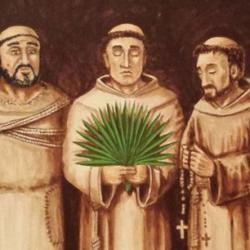
Greatness in Life and Death: The Georgia Martyrs

The Catholic Unity of Faith and Reason

Una vida de dedicación: Lecciones del Padre Fred

A life of Dedication: Lessons of Father Fred
TRENDING AT PATHEOS Catholic

Emotion in Early Christianity by Andrew Crislip
Andrew Crislip’s Emotion in Early Christianity examines an often overlooked dimension of...

16 Spiritual Touchstones for a More Grounded Life
After decades of spiritual study, here are 16 principles I try...

Catholic Evangelization: Sharing Your Faith Every Day
Welcome back to the Graceful Awakening mini-series called, “From Faith to Mission.” ...

The Pillar of the Boatmen: the Ancient Monument...
The Pillar of the Boatmen is a Romano-Gaulish sculpture that dates from...

In one sense walking into Westminster Abbey is like walking down the...

'Super Scam Me' Exposes AI Jon Bon Jovi...
Leslie Pickett believed she was in a relationship with Jon Bon Jovi....
view all Catholic blogs
Ad-Free & Subscriber Log-In Subscription Support
- About Us
- 2026 Calendar
- Videos
- Podcasts
- Library of World Religions
- Faith In Media Tracker
- Advertise With Us
- Write for Us
- Privacy Policy
- Terms of Service
- Do Not Sell My Data
- Contact Us
- Radiant Digital
- Manage Newsletter Subscriptions
- Unsubscribe From Notifications
- Sitemap
Copyright 2008-2026, Patheos. All rights reserved.
Subscription Support Ad-Free & Subscriber Log-In
Follow Patheos