
BuddhistCatholicContemplativeEvangelicalGeneral ChristianHinduJewishLatter-day SaintMuslimNew VisionsProgressive Christian
Beliefs
- Buddhist
- Catholic
- Contemplative
- Evangelical
- General Christian
- Hindu
- Jewish
- Latter-day Saint
- More Voices
- Muslim
- New Visions
- Pagan
- Progressive Christian
Topics
- Religion News
- Food and Religion
- Sports and Religion
- Religious Art
- Religious Music and Entertainment
- Religious Events
- History and Religion
- Style and Religion
- Politics and Religion
- Women in Religion
- Recreation Outdoors and Religion
- Business Finance and Religion
- Careers Workplace and Religion
- Education and Religion
- Family Parenting and Religion
- Health Fitness and Religion
- Home and Religion
- Relationships and Religion
- Technology and Religion
- Travel and Religion
Columnists
- Buddhist Columnists
- Business Finance and Religion Columnists
- Careers Workplace and Religion Columnists
- Catholic Columnists
- Contemplative Columnists
- Education and Religion Columnists
- Evangelists Columnists
- Family Parenting and Religion Columnists
- General Christian Columnists
- Health Fitness and Religion Columnists
- Hindu Columnists
- History and Religion Columnists
- Home and Religion Columnists
- Jewish Columnists
- More Voices Columnists
- Latter Day Columnists
- Muslim Columnists
- New Visions Columnists
- Nonreligious Columnists
- Pagan Columnists
- Politics and Religion Columnists
- Progressive Columnists
- Recreation Outdoors and Religion Columnists
- Relationships and Religion Columnists
- Religion News Columnists
- Religious Art Columnists
- Religious Events Columnists
- Religious Music and Entertainment Columnists
- Sports and Religion Columnists
- Style and Religion Columnists
- Technology and Religion Columnists
- Travel and Religion Columnists
- Women in Religion Columnists
Resource Library
- 2026 Calendar
- Library of World Religions
- The 100 Most Holy Places on Earth
- Patheos Answers
- Podcasts
- Videos
- Faith Leaders Database
- Anglican Episcopalian
- Bahai
- Baptist
- Buddhism
- Christianity
- Confucianism
- Eastern Orthodoxy
- Hinduism
- Holiness and Pentecostal
- ISKCON
- Islam
- Judaism
- Lutheran
- Methodist
- The Church of Jesus Christ of Latter-day Saints
- New Age
- Paganism
- Presbytarian and Reformed
- Protestantism
- Religion Behind the Scenes
- Roman Catholic
- Scientology
- Shia Islam
- Sikhism
- Sufism
- Sunni Islam
- Taoism
- Zen
- See all religions
Research Tools
 Ad-Free & Subscriber Log-In Subscription Support
Ad-Free & Subscriber Log-In Subscription Support
Follow Patheos 

- Trending:
- Forgiveness
- |
- Marriage
- |
- Consciousness
- |
- Death Penalty
- |
- Election
- |
- Halloween
 KiwiMormon
- Home
- Latter-day Saint
- Me and The Book of Mormon: It’s Complicated
Me and The Book of Mormon: It’s Complicated
Last updated on: March 18, 2017 at 12:55 pm by Gina Colvin
Me and The Book of Mormon: It’s Complicated 2017-03-18T12:55:21+13:00 Gina Colvin
Patheos Explore the world's faith through different perspectives on religion and spirituality! Patheos has the views of the prevalent religions and spiritualities of the world.
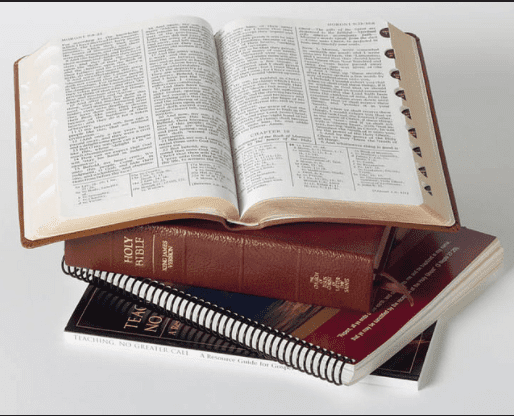
Book of Mormon Scripture
My mother insisted I read The Book of Mormon before my baptism. It was a slow grind, but every morning I would jump into bed with her and snuggle up against her soft, warm body, and we’d make our way through eight verses at a time until it was done. Thinking about it now still arouses feelings of comfort and safety.
I was less active for half of my adolescence, and when I went back to church at 16, I turned to The Book of Mormon, and once again found contentment. I have always loved The Book of Mormon; I suspect because of those early associations with my mother, warm bodies embracing and the intimacy of having deep conversations about spiritual matters as a child.
My early fascination with the characters and stories have since turned into admiration for the way it lays out a rich framework of Christian and theological ethics for modernity. I think it really is a book for our day metaphorically addressing the important moral questions of just war, class society, charitable giving, spiritual transformation, moral leadership, and the fate of societies who commodify religion and embrace rampant materialism. Apparently, we’ll all die violently if we don’t sort ourselves out.
But The Book of Mormon’s theological possibilities have been compromised because of ecclesiastical overreach and wishful thinking. Church leaders made the book into something more than it should have been. One’s acceptance of the The Book of Mormon as a literal translation by Joseph Smith has become a sign of faithfulness and loyalty to the church. But the emotional tax one has to pay for this overreach if you are Indigenous American, or Pasifika is high.
I grew up with the explicit teaching that I was the literal posterity of Lehi. This meant that I had a sacred past; I was valuable in the Mormon present, and promises were awaiting me in the future. Church leader, after church leader, after church leader preached that my ancestral story was told in The Book of Mormon and thus I had a special place in the tradition. For instance;
Hugh B Brown, offering the closing prayer at they laying of the cornerstone of the New Zealand Temple said:
“We humbly thank Thee that this building is erected in this land, so that those faithful Maoris who came here in early days, descendants of Father Lehi, may be remembered by their descendants.”
At the dedication of the New Zealand Temple on April 20, 1958 Gordon Hinckley stated:
“Here are two great strains of the house of Israel and the children of Ephraim from the isles of Britain, and the children of Lehi from the isles of the Pacific.”
Speaking in Samoa in 1976 Spencer Kimball stated:
“And so it seems to me rather clear that your ancestors moved northward and crossed a part of the South Pacific. You did not bring your records with you, but you brought much food and provisions. . . .I would like to say to you brethren and sisters of New Zealand, you are some of Hagoth’s people, and there is No Perhaps about it!”
Except nobody has given us the memo from Salt Lake City, that this is likely no longer the case, they’ve just snuck a silence in there – as they do when things aren’t going their way.
Gone are the emphatic declarations by Church leaders of our literal descent from The Book of Mormon people. Gone is the claim in The Book of Mormon Introduction that the Lamanites are the principle ancestors of Native American People, and gone too is our special status in Mormon covenantal theology.
These sweeping claims have disappeared and the story over the years has been contracted as mounting genetic evidence provides a very different picture of the Indigenous American and Pacific origins. Cultural anthropology, archaeology and linguistics have failed to come up with any substantive evidence to support the proposition. To be fair, the LDS Church has squeaked an essay into their Gospel Topics section wherein they wrangle openly with the mounting genetic contest to the church’s once audacious genealogical claims. I suspect that that too will need to be quietly removed in the years to come. At the very least they will have to do something about Dallin Oaks’ claim:
“It is our position that secular evidence can neither prove nor disprove the authenticity of The Book of Mormon.”27
I imagine if a peer-reviewed study appeared in the Journal of Archeological Science providing definitive evidence to support The Book of Mormon claims, Elder Oaks won’t be trying to settle the excitement down with an appeal to faith and prayer as the final arbiter of Lamanite origins.
I share these musings in light of the fact that yesterday a conference was held at Utah State University in Logan, to discuss “New Perspectives on Joseph Smith and Translation’. I had the opportunity to interview three of the panel members who argued beautifully for a broader application of the word ‘translation’ as a starting place for new discussions. I’m in favour of anything that will move the boundaries of Mormon conversations out further. But I remain ambivalent about endless academic wrangling trying to make The Book of Mormon measure up to a standard that satisfies a Western theoretical framework, because it really complicates things for us so-called Children of Lehi.
The reality is that many Indigenous American and Polynesian Mormons continue to defer to The Book of Mormon as the final word on their origins. Despite evidence that suggests migratory and DNA patterns to the contrary, the Hagoth myth remains unchecked. So the question remains – how are the Church and its ancillary scholarship community going to break it to the people formerly known as Lamanites – that they probably aren’t what they had been lead to believe they were? I don’t sense a depth of awareness that this story for many, has meant everything, and has formed a significant connection between them and their faith.
Yet, holding on to the claim that the BOM is indeed an ancient record of Native American and Pasifika ancestry does violence to Indigenous knowledge. Contemporary scholarship is pointing to the impossibility of the culture described in The Book of Mormon and choosing to see yourself in Book of Mormon ancient identities is often done at the expense of the tribal and cultural identities offered up in the present.
There again, if we Children of Lehi turn our back on The Book of Mormon as pure bunkum and solely embrace ways of understanding our origins that feel more scientifically and culturally trustworthy we risk a wedge being placed between us and our family and religious community.
So, the notion of playing with the idea of ‘translation’ is less important than the spiritual and emotional effect of any shift in Book of Mormon translation discourse. Those very communities, socially constructed as belonging to the Book of Mormon narrative will likely be the first affected but the last invited to the table to share their thoughts on how this whole Book of Mormon conundrum should be dealt with.
So, for what its worth, I feel more and more convinced that The Book of Mormon is a prophecy of America’s future told through a romanticised myth out of Joseph’s imagination about an Iroquois past. Personally, I love it and I believe it – like I believe Māui caught the sun to slow down time. It doesn’t have to be literally true to make it meaningful, and trying to prove truth or fallacy is simply Western nuisance detritus that entirely misses the point of religion and spirituality.
The reality is we shouldn’t have been told it’s a ‘true story’ in the first place.
We should have been asked, ‘What does it mean to you and what wisdom do your people have to add life and relevance to this story?’
The sooner we can get to that conversation the better.
Previous Post

January 16, 2017
When There’s No Turning Back
Next Post

March 22, 2017 The Ugly Cost of Making Temples Pretty
Browse Our Archives
Select a Category A Thoughtful Faith Adultery Apostasy Brigham Young BYU Church Culture Church Leadership Clergy Sex Abuse Community of Christ Divorce Excommunication faith crisis Faith Development Heavenly mother Heresy Indigenous Mormon James Fowler Jesus Christ John Dehlin Joseph Smith Kate Kelly LDS Church Politics LDS doctrine LDS Essays LGTB Maori Mormon marriage and family Mitt Romney Mormon church discourse Mormon church history Mormon Conservatism Mormon corporate culture Mormon Cultural Identity Mormon feminist politics Mormon finances mormon matters podcast Mormon Political Economy Mormons feminism New Zealand and US Mormonism New Zealand Mormon Culture New Zealand Mormon Feminist Thought New Zealand temple Official Declaration Two Ordain Women Pastoral Theology for Mormons phillip barlow Polygamy Practical Theology Prayer Protect LDS Children Racism in the LDS church Sexual Abuse temple recommend temple recommend interview Temples tyranny of certainty Uncategorized why mormons leave
Select a Month April 2020 December 2019 March 2019 December 2018 October 2018 September 2018 June 2018 April 2018 March 2018 February 2018 January 2018 December 2017 November 2017 October 2017 September 2017 July 2017 June 2017 May 2017 March 2017 January 2017 December 2016 November 2016 October 2016 August 2016 May 2016 March 2016 February 2016 January 2016 December 2015 November 2015 October 2015 September 2015 August 2015 June 2015 May 2015 April 2015 March 2015 February 2015 January 2015 December 2014 November 2014 October 2014 September 2014 August 2014 July 2014 June 2014 May 2014 April 2014 March 2014 February 2014 January 2014 December 2013 November 2013 October 2013 September 2013 August 2013 July 2013 June 2013 May 2013 March 2013 January 2013 December 2012 November 2012 October 2012 September 2012 August 2012 July 2012 June 2012 May 2012 April 2012 March 2012 February 2012 January 2012
Follow Us!
TAKE THE
Religious Wisdom Quiz
Which Gospel records the most parables?
Select your answer to see how you score.
John Matthew Mark Luke
Related posts from KiwiMormon

Hoarding the Sacrifices of Ordinary People: A Question...

An Open Letter to the Christchurch Stake on...

When the LDS Church Disciplines a Woman

When Church Leaders are More Important than Church...
TRENDING AT PATHEOS Latter-day Saint

Did Prayer Cure His Cancer? Or Was It...
At 4 AM one morning, Joshua W. Brown’s wife awoke to a...

8 Ways a Near-Death Experience Rewires the Soul
Does Consciousness Survive Physical Death? After 50 Years of Research, Dr. Raymond...

Holy Longing: What Our Restlessness Is Telling Us
“One can find so many pains when the rain is falling.” -John...

What this is NOT about. This blog is definitely not about...

Who said the Israelites were God’s chosen? That’s right, they did. Who...

The Spirit World Is the Real World: God...
A Monk’s Wisdom on Body and Spirit I sit with Brother Martin...
view all Latter-day Saint blogs
Ad-Free & Subscriber Log-In Subscription Support
- About Us
- 2026 Calendar
- Videos
- Podcasts
- Library of World Religions
- Faith In Media Tracker
- Advertise With Us
- Write for Us
- Privacy Policy
- Terms of Service
- Do Not Sell My Data
- Contact Us
- Radiant Digital
- Manage Newsletter Subscriptions
- Unsubscribe From Notifications
- Sitemap
Copyright 2008-2026, Patheos. All rights reserved.
Subscription Support Ad-Free & Subscriber Log-In
Follow Patheos