
BuddhistCatholicContemplativeEvangelicalGeneral ChristianHinduJewishLatter-day SaintMuslimNew VisionsProgressive Christian
Beliefs
- Buddhist
- Catholic
- Contemplative
- Evangelical
- General Christian
- Hindu
- Jewish
- Latter-day Saint
- More Voices
- Muslim
- New Visions
- Pagan
- Progressive Christian
Topics
- Religion News
- Food and Religion
- Sports and Religion
- Religious Art
- Religious Music and Entertainment
- Religious Events
- History and Religion
- Style and Religion
- Politics and Religion
- Women in Religion
- Recreation Outdoors and Religion
- Business Finance and Religion
- Careers Workplace and Religion
- Education and Religion
- Family Parenting and Religion
- Health Fitness and Religion
- Home and Religion
- Relationships and Religion
- Technology and Religion
- Travel and Religion
Columnists
- Buddhist Columnists
- Business Finance and Religion Columnists
- Careers Workplace and Religion Columnists
- Catholic Columnists
- Contemplative Columnists
- Education and Religion Columnists
- Evangelists Columnists
- Family Parenting and Religion Columnists
- General Christian Columnists
- Health Fitness and Religion Columnists
- Hindu Columnists
- History and Religion Columnists
- Home and Religion Columnists
- Jewish Columnists
- More Voices Columnists
- Latter Day Columnists
- Muslim Columnists
- New Visions Columnists
- Nonreligious Columnists
- Pagan Columnists
- Politics and Religion Columnists
- Progressive Columnists
- Recreation Outdoors and Religion Columnists
- Relationships and Religion Columnists
- Religion News Columnists
- Religious Art Columnists
- Religious Events Columnists
- Religious Music and Entertainment Columnists
- Sports and Religion Columnists
- Style and Religion Columnists
- Technology and Religion Columnists
- Travel and Religion Columnists
- Women in Religion Columnists
Resource Library
- 2026 Calendar
- Library of World Religions
- The 100 Most Holy Places on Earth
- Patheos Answers
- Podcasts
- Videos
- Faith Leaders Database
- Anglican Episcopalian
- Bahai
- Baptist
- Buddhism
- Christianity
- Confucianism
- Eastern Orthodoxy
- Hinduism
- Holiness and Pentecostal
- ISKCON
- Islam
- Judaism
- Lutheran
- Methodist
- The Church of Jesus Christ of Latter-day Saints
- New Age
- Paganism
- Presbytarian and Reformed
- Protestantism
- Religion Behind the Scenes
- Roman Catholic
- Scientology
- Shia Islam
- Sikhism
- Sufism
- Sunni Islam
- Taoism
- Zen
- See all religions
Research Tools
 Ad-Free & Subscriber Log-In Subscription Support
Ad-Free & Subscriber Log-In Subscription Support
Follow Patheos 

- Trending:
- Forgiveness
- |
- Marriage
- |
- Consciousness
- |
- Death Penalty
- |
- Election
- |
- Halloween
 KiwiMormon
- Home
- Latter-day Saint
- What will it mean to be Maori and Mormon in 2050?
What will it mean to be Maori and Mormon in 2050?
Last updated on: January 25, 2016 at 10:40 pm by Gina Colvin
What will it mean to be Maori and Mormon in 2050? 2016-01-25T22:40:12+13:00 Gina Colvin
Patheos Explore the world's faith through different perspectives on religion and spirituality! Patheos has the views of the prevalent religions and spiritualities of the world.
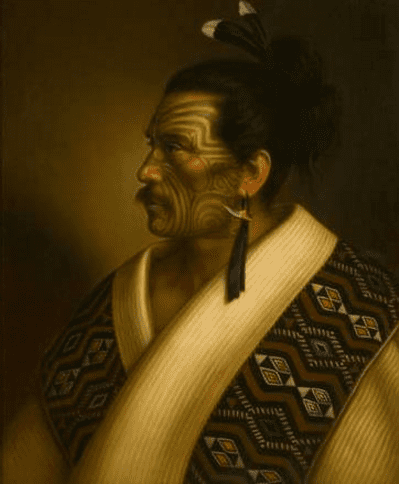
Gina’s Great, Great Grandfather Kamariera Te Hau Takiri Wharepapa.
In November 2014 I was privileged to be asked to be the closing speaker at the inaugural Mormon Studies Symposium hosted by Waikato University. There we celebrated Selwyn Katene’s edited book: Turning the Hearts of the Children: Early Maori Leaders in the Mormon Church. and together explored both the past and future of Mormonism for Maori. It was a terrific event, one that I was pleased to be associated with. I discovered recently that the Public Relations write up about this event left out any reference to my address. I’m not surprised but still disappointed – because its rude and a bit silly. In response to a number of requests for this talk I include it here for your reading pleasure (or not – if you hail from the PR Department) 😉
Tena ra tatou katoa
Toku mihi tuatahi ki te Runga Rawa, me tona tamaiti aroha, ko to tatou kai whakaora, Ko Ihu Karaiti – Tena korua
Ki nga mate kei tua atu i te arai, haere e nga mate, haere, haere, haere
Ki te hau kainga, Tainui Waikato, tena koutou
Ki nga kai korero kua korerotia , he mihi aroha tenei ki a koutou katoa mo a koutou kupu whakapono, kupu ataahua tena koutou
Ki a koe Herewini, Selwyn, me ia kaituhi – He taonga te pukapuka nei
Tena koutou, tena koutou,
Ko Hikurangi te maunga
Ko Waiapu te awa
Ko Ngati Porou te iwi
Ko te Whanau a Ruataupare te hapu
Ko Hau Ruwhiu raua ko Te Here Taiapa oku tipuna matua
Ko Marie Colvin toku whaea
Ko Hemi Ruwhiu toku matua
E ki ana ‘Ko te korero te kai a te rangatira’ Kua huihui mai tatou i tenei ra kei raro i te maru of Waikato Tainui hei korero hei whakamaumahara hoki ki a matou matua tupuna, a tatou rangatira. Kua ki nga ngakau, kua whangaia nga wairua. Engari, i nga ra e heke mai nei, i nga ra i mua i a matou, ka aha? Ko wai tatou – te iwi Maori, Ngati Moromona e te tau rua mano, rima tekau?
It is my ominous privilege to address this heady topic in the spirit of prediction. Who will we be as Mormon and Maori in the year 2050? No offense intended but looking at the age and state of most of us here today it won’t be our pleasure to see this first hand. But while we won’t be around a-tinana to see that day in, how our tamariki and our mokopuna experience the intersection between their whakapapa and their faith in 2050 is entirely up to each one of us i tenei ra.
Mormonism has always been a community of story telling. Our theology, our belief systems, our faith, our culture have always been bound up in stories, official and unofficial. We have a very predictable way of communicating our faith and testimony. How many of us have prepared an exposition for sacrament based on a scripture, have quoted said scripture and then launched into a story which may have nothing to do with the topic at hand. A similar pattern can be seen in our ward councils with stories erupting spontaneously from, (particularly the older male participants) that bear little if no relationship to the agenda item. Open up our church magazines, LDS.org, BYU-TV, a Mormon History Association Conference, go to social media or testimony meeting and you will see that Mormons transmit their theology, their belief systems in story.
We Mormons are story tellers.
And we Maori are story tellers as well. Our ancestors communicated their world in word imagery, the esoteric, the scientific, the spiritual, the sacred, the profane, the political, the cultural, the social and the ecological – our ancestor’s ancient traditions were based upon the intergenerational transmission of community knowledge through stories that were all at the same time sophisticated, complex, soaring, powerful, beautiful, tragic and wonderful. Unfortunately as the vapors of colonization have descended upon they and us, that which held our way of being and knowing has been eroded. Our stories have been forever changed. Colonization has pecked away at an order that once made sense in terms of our language, our land, our sovereignty, and our tikanga Who we once were as a people has been purposely, systemically and institutionally eroded. Thus, who, why, and what we communicated by way of story has incontrovertibly changed.
We cannot tell the Maori story or even the Mormon Maori story without considering the impact of colonization. To be colonized is not a neutral activity nor is it a benevolent activity. Perhaps there were some seductions in what Western civilization has to offer the compliant native, but these seductions have come historically at a high price, to mana, to the health of our people, to their sense of well being. I’m not telling you anything you don’t already know, over the past 175 years – the broad story of tangata whenua echoes back the following topographies.
Maori Social arrangements of New Zealand have been explicitly reorganised to fit colonisers.
Maori land is the historical foundation of settler wealth. 360 acts of parliament specifically intended to acquire Maori land.
Colonization has involved the de-legitimisation of traditional social systems, language, and has stripped Maori of kinship identity.
Maori have been socially reconstituted as a group of people who were ‘Other’ to legitimize their unequal treatment.
Maori have paid the Psycho-social cost of racist evaluative judgments and intergenerational poverty.
Today we see that Maori suffer from inequality across all social indicators
These realities and incursions are central to our story as contemporary Tangata Whenua. We cannot separate ourselves from these realities. Colonization is disastrous for indigenous peoples. In Aotearoa New Zealand the transplantation of Christianity can also be implicated in a ‘civilising mission’ that saw our tupuna perhaps relieved of the harsher aspects of tohungatanga and animism, but it has also come at a high cultural cost. Inasmuch as this is the case it behooves us as concerned intellectuals and scholars to consider Mormonism critically in this regard. I feel that we cannot give Mormonism a pass in terms of its colonizing effects simply because of our personal attachments to it. This is not to say that we use critique as a reason for disaffection and criticism rather it is to say, that in telling the hard stories in the intersection of the social and the religious, whakapapa and faith, race and culture we mature, we find a language that we can pass on to our tamariki to support them in their faith journeys, we hold the institution accountable, we give up naiveté in favour of consciousness, we become agentic and active as opposed to passive and docile, we can make corrections to our course so that the cyclic nature of colonization isn’t repeated upon our children. In the shadows of colonization if we tell all of our stories we can find healing. However we need to do this independent of a religious institution that struggles to see how it is implicated as colonizers, whose fiscal and property development operations are acquisitive, who in the case of the settlement of Utah had a tremendous impact upon the Utes, the Piutes the Shoshone in terms of their settlement, their appropriation of land and food sources and the permanent dislocation of a people. In the case of Iosepa where the LDS church encouraged and facilitated the relocation of 200 Hawaiians to an arid valley in Utah wherein disease, crop failures and lack of resources devastated the group wiping out generations of Hawaiians and separating them forever from their turangawaewae. Or in the case of the Lamanite Placement Programme, as my colleague Elise Boxer a Dakota professor of Native Studies describes it:
In essence, Mormon foster families and their homes served as sites of colonization and became institutions of civilization designed to “eradicate Native thought, language, culture, and education.”[2]
Part of this Mormon colonization process entailed inherent destruction of Indigenous languages, “paganism,” economic, social, cultural, political Indigenous institutions. [3]
Mormonism at the centre has been and continues to be a part of the colonizing enterprise and has done little to understand and respond to the cultural, political, economic and social particularities of the rest of the world – much less those of their indigenous brothers and sisters.
Yet, in 2014 more and more LDS Maori are present in the realm of indigenous politics and activism. Yet we live a double life, where on the one hand we advocate for language revitalization and are working hard to raise a generation of Maori children who are fluent in a dying language but we don’t readily ask for this space at the pulpit, nor do we give our children the language of God in the language of their forebears. While on the one hand we read the gospels and like Te Ua Haumene, Te Kooti, Te Whiti-o-Rongomai, Rua Kenana and Paora Te Potagangaroa we see a story of oppression and suffering, and a glorious redemption from the earths injustices made possible through the political dissident, Jesus Christ, our LDS teachings waver tremulously toward a version of the savior as first and foremost a personal redeemer from personal weakness. And though we shake a fist at the legislative violations that alienated Maori land by the millions of acres, we are inclined to quietly turn a blind eye to the Maori land given up freely to the church for chapels with little recompense, because we have been taught to see this as sacrifice rather than manipulation. And while we rage at the economic exploitation that caused Maori to sink into low paid unskilled work, we glory in the years and years spent by our tipuna who worked as unpaid labour missionaries to build church owned facilities that are now going to be demolished and sold away in perpetuity.
Today our Mormon Maori narrative, if told would be potentially complex, filled with paradox and hard questions that can’t be solved at pulpits, or in announcements made from Salt Lake City. Maori as a people with significance in the Church of Jesus Christ of Latter-day Saints have long been dropped as a concern. While the story of our sea faring relationship to Hagoth have given us some sense of connection with the Semitic whakapapa of the family of Lehi this story has all dropped out of official Mormon discourse. Often stated, but never a doctrine, never said but never repudiated it rests in the archive of prophetic speculation and hardly spoken of as the church rit large grapples with the trouble that DNA evidences and the Book of Mormon has caused their historical Lamanite, Nephite claims. The torch for Mormon Maori are carried by in the reminiscences of the elderly and dying in Utah, while the period wherein New Zealand Mormonism was strictly associated with Maori is fading quickly. We have relied for too long upon the narrative weight of the Utah archive to tell the stories of Maori in the LDS church. Narratives that are largely not our own but belong to others – white Americans – kua mate, who have bequeathed missionary journals and letters to the Church History library. Or well meaning white folk who have pronounced themselves experts in our own histories. This is not to say they haven’t done some wonderful work, but they are, sadly limited. They largely talk about us, not with us, or for us. In an effort to ensure that the story of Mormon Maori adheres to the faithful historical Mormon tradition, much of our story is untold. Our voices are missing, the nuances, complexities and knowledges that only Maori have the understanding to articulate are largely absent in the New Zealand’s Mormon narrative because we have been trained to wait for permission to tell our own complex stories, to be ourselves and to express our truths. Stories that affirm Mormonism but deny it colonial complexities. Maori are a people in diaspora, split apart from each other because of colonization, rendered collectively incoherent by an institution that has culturally developed post-correlation to prefer a single story of all things Mormon. In this American religion wherein we have come see authority, legitimacy and cultural authenticity as something that is first and foremost constituted in Salt Lake City, on Temple Square we have been too silent, too deferent, too colonized to tell our own stories, until today without fear.
WEB Du Bois, speaks beautifully to this condundrum: “It is a peculiar sensation, this double-consciousness, this sense of always looking at one’s self through the eyes of others, of measuring one’s soul by the tape of a world that looks on in amused contempt and pity.”
This is not to suggest that Maori are politically impotent – far from it. Many of us are heavily involved in discussion of cultural and language revitalization, we are involved in protest and in key education, health, justice and development initiatives. Many of us are committed to the Treaty of Waitangi, have marched, are highly politicized and active in Te Ao Maori. Some of us can credit our Mormonism for the social mobility that takes us into these spaces. But this calls upon us reconcile our finely honed political work outside of the church to our religious experience in the church, work that is born out of our hearts and souls.
And don’t imagine that the church in the US is a place of political absence. Try being in American wards during the US presidential elections a couple of years ago. It might be selectively politically neutral about its not politically torpid. US Mormons have quite adeptly refracted their national experience into their religious experience while we sit at the periphery of the church chewing on the inside of our mouths with years and years of curriculum reflections on the American religious experience rather than our own. Our religious and our spiritual maturity is not measured in our willingness to be silent and selective in our engagement with things Maori, but in our willingness to face up to everything that our church has become for better or for worse.
So here is my question: What if that permission never comes? What if nobody from Church Head Office of from the Red Chairs wants to hear the messy, violent and problematic story of Maori that spans generations of colonization. What if nobody in a dark suit asks wahine Maori for their stories – however complex and fraught they might be? What would 2050 look like if we chugged along in this existential wasteland wherein all of the spaces are filled with stories that are not our own. How will our tamariki mokopuna Maori make sense of themselves in Mormon spaces unless we actively leave them with our stories.
So the state of 2050 depends on our motivation to tell, write, publish and proclaim our stories of being Mormon and Maori. It depends on our willingness to tell those stories even though they may seem contradictory, paradoxical, contrary, troubling, problematic. It depends on our willingness to cease looking for a single story, or a single expert to tell a correlated story of Maori within Mormonism. It depends on our willingness to honor everyone’s voices particularly those of our wahine Maori who have been largely invisibilised in the archive. It depends on our willingness to debate, to revive as Maori the art of tautohetanga, to whakarau kakai in the spirit of nonhierarchical inclusivity.
In the wake of a rapidly changing orientation to the question of Mormon cultural and social history bought upon by the scrutiny of the LDS records, we are perfectly poised as a people to engage with Mormonism as more than the purveyors of faith and eternal reward. As Maori we are wonderfully situated to tell stories that disrupt Mormonism’s Americentric simplistic racial narratives and challenge the status quo. And as one of the first non-white groups consistently proselytized by the LDS church we have had enough intergenerational experience to describe the pitfalls, raise warnings as the American church seeks to spread its influence to diverse communities throughout the world. In that respect it behooves us to tell our stories.
I want to leave my tamariki with a rich Mormon identity wherein their political and cultural identities are not placed to the side as superfluous. I want them to draw upon stories of faith, doubt, trouble, love and hope from a diverse range of people. Because I believe that in so doing they will find resources to empower them and help them make sense of the world they live in yesterday, today and tomorrow.
Na reira koutou ma, Ma tou rourou, ma taku rourou ka ora ai te iwi. Tena koutou, tena koutou, tena tatou katoa.
[1]Advances to Settlers Act (1894) Low interest loans made available to white settlers to buy land from the Government
[2] K. Tsianina Lomawaima and Teresa L. McCarty, To Remain an Indian:” Lessons in Democraxy from a Century of Native American Education (New York: Teacher’s College Press, 2006):xxii.
[3] Ibid., 4.
Previous Post

January 19, 2016
There are No Gays in Heaven?
Next Post
January 27, 2016 'Gospel' Culture Shock
Browse Our Archives
Select a Category A Thoughtful Faith Adultery Apostasy Brigham Young BYU Church Culture Church Leadership Clergy Sex Abuse Community of Christ Divorce Excommunication faith crisis Faith Development Heavenly mother Heresy Indigenous Mormon James Fowler Jesus Christ John Dehlin Joseph Smith Kate Kelly LDS Church Politics LDS doctrine LDS Essays LGTB Maori Mormon marriage and family Mitt Romney Mormon church discourse Mormon church history Mormon Conservatism Mormon corporate culture Mormon Cultural Identity Mormon feminist politics Mormon finances mormon matters podcast Mormon Political Economy Mormons feminism New Zealand and US Mormonism New Zealand Mormon Culture New Zealand Mormon Feminist Thought New Zealand temple Official Declaration Two Ordain Women Pastoral Theology for Mormons phillip barlow Polygamy Practical Theology Prayer Protect LDS Children Racism in the LDS church Sexual Abuse temple recommend temple recommend interview Temples tyranny of certainty Uncategorized why mormons leave
Select a Month April 2020 December 2019 March 2019 December 2018 October 2018 September 2018 June 2018 April 2018 March 2018 February 2018 January 2018 December 2017 November 2017 October 2017 September 2017 July 2017 June 2017 May 2017 March 2017 January 2017 December 2016 November 2016 October 2016 August 2016 May 2016 March 2016 February 2016 January 2016 December 2015 November 2015 October 2015 September 2015 August 2015 June 2015 May 2015 April 2015 March 2015 February 2015 January 2015 December 2014 November 2014 October 2014 September 2014 August 2014 July 2014 June 2014 May 2014 April 2014 March 2014 February 2014 January 2014 December 2013 November 2013 October 2013 September 2013 August 2013 July 2013 June 2013 May 2013 March 2013 January 2013 December 2012 November 2012 October 2012 September 2012 August 2012 July 2012 June 2012 May 2012 April 2012 March 2012 February 2012 January 2012
Follow Us!
TAKE THE
Religious Wisdom Quiz
I stood on a wooden platform and read the Law from daybreak till noon, and the people wept. Who am I?
Select your answer to see how you score.
Joshua Nehemiah Ezra Moses
Related posts from KiwiMormon

Hoarding the Sacrifices of Ordinary People: A Question...

An Open Letter to the Christchurch Stake on...

When the LDS Church Disciplines a Woman

When Church Leaders are More Important than Church...
TRENDING AT PATHEOS Latter-day Saint

Did Prayer Cure His Cancer? Or Was It...
At 4 AM one morning, Joshua W. Brown’s wife awoke to a...

8 Ways a Near-Death Experience Rewires the Soul
Does Consciousness Survive Physical Death? After 50 Years of Research, Dr. Raymond...

Holy Longing: What Our Restlessness Is Telling Us
“One can find so many pains when the rain is falling.” -John...

What this is NOT about. This blog is definitely not about...

Who said the Israelites were God’s chosen? That’s right, they did. Who...

The Spirit World Is the Real World: God...
A Monk’s Wisdom on Body and Spirit I sit with Brother Martin...
view all Latter-day Saint blogs
Ad-Free & Subscriber Log-In Subscription Support
- About Us
- 2026 Calendar
- Videos
- Podcasts
- Library of World Religions
- Faith In Media Tracker
- Advertise With Us
- Write for Us
- Privacy Policy
- Terms of Service
- Do Not Sell My Data
- Contact Us
- Radiant Digital
- Manage Newsletter Subscriptions
- Unsubscribe From Notifications
- Sitemap
Copyright 2008-2026, Patheos. All rights reserved.
Subscription Support Ad-Free & Subscriber Log-In
Follow Patheos