
BuddhistCatholicContemplativeEvangelicalGeneral ChristianHinduJewishLatter-day SaintMuslimNew VisionsProgressive Christian
Beliefs
- Buddhist
- Catholic
- Contemplative
- Evangelical
- General Christian
- Hindu
- Jewish
- Latter-day Saint
- More Voices
- Muslim
- New Visions
- Pagan
- Progressive Christian
Topics
- Religion News
- Food and Religion
- Sports and Religion
- Religious Art
- Religious Music and Entertainment
- Religious Events
- History and Religion
- Style and Religion
- Politics and Religion
- Women in Religion
- Recreation Outdoors and Religion
- Business Finance and Religion
- Careers Workplace and Religion
- Education and Religion
- Family Parenting and Religion
- Health Fitness and Religion
- Home and Religion
- Relationships and Religion
- Technology and Religion
- Travel and Religion
Columnists
- Buddhist Columnists
- Business Finance and Religion Columnists
- Careers Workplace and Religion Columnists
- Catholic Columnists
- Contemplative Columnists
- Education and Religion Columnists
- Evangelists Columnists
- Family Parenting and Religion Columnists
- General Christian Columnists
- Health Fitness and Religion Columnists
- Hindu Columnists
- History and Religion Columnists
- Home and Religion Columnists
- Jewish Columnists
- More Voices Columnists
- Latter Day Columnists
- Muslim Columnists
- New Visions Columnists
- Nonreligious Columnists
- Pagan Columnists
- Politics and Religion Columnists
- Progressive Columnists
- Recreation Outdoors and Religion Columnists
- Relationships and Religion Columnists
- Religion News Columnists
- Religious Art Columnists
- Religious Events Columnists
- Religious Music and Entertainment Columnists
- Sports and Religion Columnists
- Style and Religion Columnists
- Technology and Religion Columnists
- Travel and Religion Columnists
- Women in Religion Columnists
Resource Library
- 2026 Calendar
- Library of World Religions
- The 100 Most Holy Places on Earth
- Patheos Answers
- Podcasts
- Videos
- Faith Leaders Database
- Anglican Episcopalian
- Bahai
- Baptist
- Buddhism
- Christianity
- Confucianism
- Eastern Orthodoxy
- Hinduism
- Holiness and Pentecostal
- ISKCON
- Islam
- Judaism
- Lutheran
- Methodist
- The Church of Jesus Christ of Latter-day Saints
- New Age
- Paganism
- Presbytarian and Reformed
- Protestantism
- Religion Behind the Scenes
- Roman Catholic
- Scientology
- Shia Islam
- Sikhism
- Sufism
- Sunni Islam
- Taoism
- Zen
- See all religions
Research Tools
 Ad-Free & Subscriber Log-In Subscription Support
Ad-Free & Subscriber Log-In Subscription Support
Follow Patheos 

- Trending:
- Forgiveness
- |
- Marriage
- |
- Consciousness
- |
- Death Penalty
- |
- Election
- |
- Halloween

-
Categories
-
Christian Living
-
Christology
-
Golf
-
My Books
- Home
- Progressive Christian
- Religion News
- The Palestinian State in Bible Prophecy
The Palestinian State in Bible Prophecy
Last updated on: October 14, 2025 at 7:50 pm by Kermit Zarley
The Palestinian State in Bible Prophecy 2025-10-14T19:50:43-07:00 Kermit Zarley
Patheos Explore the world's faith through different perspectives on religion and spirituality! Patheos has the views of the prevalent religions and spiritualities of the world.
 Palestinians and the Prophecies of Isaiah
Just as the Bible[1] says repeatedly that God gave the Israelites their land, God also says therein, “Did I not bring Israel up from the land of Egypt” to give it land of Canaan, “and the Philistines from Caphtor” (Crete) to give them land of Canaan, too? (Amos 9.7). Yet Philistines disappeared many centuries later. And in 135 CE, the Romans defeated an Israelite uprising, demolished their nation, and forbade Jews to live there. That caused Jews to scatter throughout the world.
And just as the Bible repeatedly predicted about Israel becoming a nation again—which it did over 1,800 years later, in 1948—in other prophecies it predicts the same about the Philistines and their nation of Philistia. Interestingly, Palestinians derive their name from the Philistines.
Biblical scholars generally agree that its prophecies about the end times, called eschatology, are the most difficult genre in the Bible to interpret. To do so, the interpreter must recognize some rules of hermeneutics. First, a text should be understood literally unless its context has markers indicating otherwise. Second, a text may rightly have more than one application or fulfillment. Third, context and fulfillment are determining factors as to whether a text refers to the end times.
In my view, there are about ten prophecies in the Old Testament, which scholars call “the Jewish Bible,” which indicate that during the end of this age, called “the end times,” there will be a Gentile nation on the west side of the State of Israel. Thus, it will be in the coastal plain about where ancient Philistia existed. Some of these texts identify it as “Philistia” and the people living there as “Philistines.” No matter what one thinks of genetics, who can these people be other than Palestinians?
I wrote a book about this thesis published 35 years ago entitled Palestine Is Coming: The Revival of Ancient Philistia. Ever since, events have been proceeding in the direction I lay out in this book. Now, if the Gaza war ceasefire holds, and the war-torn Gaza Strip undergoes a tremendous reconstruction like U.S. President Donald Trump is talking about, this book could be regarded as prescient except that I would argue that I’m only believing in what the Hebrew prophets predicted thousands of years ago. BTW, as far as I know it is the only book ever published with this thesis and the only book that interprets the following biblical texts in this way.
The Book of Isaiah the Prophet
Jews regard three passages in their Bible as foremost about God sending a Messiah to deliver the nation of Israel from its enemies and make it the greatest nation on earth. These texts are Genesis 49.10, Numbers 24.17, and Isaiah 11.1-4. This text in Isaiah begins by mentioning “Jesse,” the father of King David. It says, “A shoot shall come out from the stump of Jesse, and a branch shall grow out of his roots” (Isaiah 11.1), referring to the Messiah. It then says, “The spirit of the LORD shall rest on him” (v. 2). It then provides details and adds, “He shall strike the earth with the rod of his mouth, and with the breath of his lips he shall kill the wicked” (v. 4). The apostle Paul quotes this passage from the Old Greek version and applies it to the Antichrist by saying, “And then the lawless one will be revealed, whom the Lord Jesus will destroy with the breath of his mouth, annihilating him by the manifestation of his coming” (2 Thessalonians 2.8).
Isaiah next describes the succeeding messianic era, when “the wolf shall live with the lamb, the leopard shall lie down with the kid. … They shall not hurt or destroy on all my holy mountain” (Isaiah 11.6, 9). And in verses 10-12, Isaiah predicts God’s ingathering of diaspora Jews.
The ancients thought more topically than chronologically, as we moderns do, and this is often reflected in biblical prophecies. Thus, in Isaiah 11.13-14 the prophet returns to the topic of the messianic destruction by saying the two divisions of the nation of Israel, Ephraim and Judah, will unite and then, “They shall swoop down on the backs of the Philistines in the west.” Some Bible versions better translate katep in the Hebrew text as “slopes” (NASB, NIV), thus referring to the sloping Shephelah that divides the eastern hill country of Judea from the western coastal plain. So, Isaiah 11.14 indicates that “Philistines” will exist in the coastal plain during the end times.
Isaiah has two other texts that support this viewpoint. One is in the so-called “Little Apocalypse of Isaiah,” which is Isaiah 24—27, thereby referring to the end times. The expression, “on that day,” is a repeated key marker in it that refers to the eschatological “Day of the LORD” when God will manifest his great wrath at the end of the age. Afterwards, Isaiah says to God regarding Israel, “You have increased the nation, O LORD, … you have enlarged all the borders of the land” (Isaiah 26.15). This affirms Isaiah 11.14 saying that at the end of the age Israel will attack its neighboring nations to the west and east and incorporate them and their lands. Again, this indicates Israel previously will not then possess the coastal plain lying below the Shephelah.
In Isaiah 54.1-3, the prophet refers to Israel about the beginning of the messianic age, saying, “Sing, O barren one who did not bear.” This refers to the childless progenitors of the nation, Abraham and Sarah, with her beyond child-bearing age (Genesis 12.1, 7; 15.4-6, 18; 17.15-19). He continues, “Enlarge the site of your tent, lengthen your cords and strengthen your stakes. For you will spread out to the right and to the left, and your descendants will possess the nations.” This affirms Isaiah 11.14 and 26.15, saying Israel will expand to the right, thus incorporating present western Jordan, as well as expand to the left by incorporating Philistia.
King David as Psalmist
The Bible’s book of Psalms consists of 150 psalms that were set to music, and King David wrote half of them. David wrote both Psalm 60 and Psalm 108. Psalm 60.5-12 and Psalm 108.6-13 are verbatim. Two elements in Psalm 108 indicate its context applies to the end times. David writes, “I will give thanks to you, O LORD, among the peoples” (v. 3), referring to all of humanity. And he adds, “I will sing praises to you among the nations.” Both statements can refer to none other than the blessed messianic age. David also writes, “Be exalted, O God, above the heavens, and let your glory be over all the earth” (v. 5). This will not occur until the messianic age as well. Obviously, these statements require that David will be among the righteous dead raised at the end of the age and that he will live in the messianic era (e.g., Isaiah 25.8; 26.19; Daniel 12.2-3).
It seems that what David writes next, in both Psalm 60.5-8 and 108.6-9, refers to the end of the age that will precede the messianic destruction and then the blessed messianic age to follow:
Give victory with your right hand, and answer me,
So that those whom you love may be rescued.
God had promised in his sanctuary:
“With exultation I will divide up Shechem,
And portion out the Vale of Succoth.
Gilead is mine; Manasseh is mine;
Ephraim is my helmet; Judah my scepter.
Moab is my washbasin;
On Edom I hurl my shoe;
Over Philistia I shout in triumph.”
There is much history to unpack here, but briefly. Shechem means “shoulder” or “ridge.” It was an ancient Canaanite city on the slopes of Mount Gerizim, thirty miles north of Jerusalem. When Abraham journeyed to Canaan, here at Shechem God promised him, “To your offspring I will give this land” (Genesis 12.7). Succoth, Gilead, and Manasseh are places east of the Jordan River that the ancient Israelite’s first occupied as part of the promised land (Numbers 32).
Soon after the Davidic monarchy, Israel divided into two parts opposed to each other. The Northern Kingdom, which consisted of ten of the original twelve tribes of Israel, was often identified as Ephraim. And the Southern Kingdom, which consisted of the other two tribes, was identified as Judah. They received those names, Ephraim and Judah, because those were the largest tribes of those divisions. The expression, “Ephraim is my helmet,” indicates that portion of the Jewish nation will be heavily involved in the messianic destruction. And the expression, “Judah is my scepter,” refers to the Messiah being from the tribe of Judah and that he will be Israel’s king (Genesis 49.8-10; Numbers 24.17; Matthew 1.3; Luke 3.33).
Moab and Edom were small nations on the eastside of the Jordan River-Dead Sea and south. God’s actions described here indicate they, too, will be part of his land he promised to Israel. Regardless of what one thinks of these names being applied to the end times, “Philistia” ought to be understood as a Gentile nation existing in the coastal plain. What else can it be other than a Palestinian state? Finally, the context can only apply to the dawn of the messianic kingdom.
Zechariah the Prophet
Today’s Palestinians ought not despair about their successors living in the coastal plain and then being attacked by Jews at the end of the age because they will afterwards have a glorious future as part of the messianic kingdom. Zechariah informs about it in Zechariah 9.1-8. Verses 1-4 describe some of this messianic destruction in the coastal plain to the north, and it then says:
5Ashkelon shall see it and be afraid;
Gaza too, and shall writhe in anguish;
Ekron also, because its hopes are withered.
The king shall perish from Gaza;
Ashkelon shall be uninhabited;
6a mongrel people shall settle in Ashdod,
and I will make an end of the pride of Philistia.
7I will take away its blood from its mouth,
and its abominations from between its teeth;
it too shall be a remnant for our God;
it shall be like a clan in Judah,
and Ekron shall be like the Jebusites.
8Then I will encamp at my house as a guard,
so that no one shall march to and fro;
no oppressor shall again overrun them,
for now I have seen with my own eyes.
The nation of Philistia was known for its five city-states that were, from north to south, Ashdod, Askelon, and Gaza on or near the Mediterranean Sea, and Ekron and Gath inland. Them eating meat with blood refer to Jewish dietary laws forbidding such.
This prophetic oracle uttered by the prophet Zechariah cannot possibly apply to any other period than that of the messianic destruction and ensuing messianic kingdom. For, the Philistines never worshipped the God of Israel, Yahweh (Hebrew YHWH), to be “a remnant” for their “God.” And likewise, the Philistines were never regarded as “a clan in Judah,” which is remarkable. As for “Ekron” being “like the Jebusites,” which latter means citizens of Jerusalem, that certainly never happened either. But most of all, Yahweh guarding Israel so that it will never be subjected to an “oppressor” clearly refers to the blessed messianic age.
Alexander the Great attacked the coastal plain in 332 BCE, and Zechariah 9.1-6 fits that later history. But it does not fit verses 7-8 at all. Thus, it can only be at the end of the age when the Messiah of Israel comes to put “make an end of the pride of Philistia,” so that it will “be a remnant for … God” and “be like a clan in Judah.”
Conclusion
In conclusion, these above prophecies indicate that a Gentile people will be living on the coastal plain, likely just south of Tel Aviv, during the end times and that their nation seems comparable to that of the ancient Philistines. Who can these people be other than “Palestinians”?
[1] All biblical quotations are from the New Revised Standard Version (NRSVue).

About Kermit Zarley
Born & reared in Seattle, WA., Kermit lived 38 years in metro Houston, now in Scottsdale, AZ. He graduated from University of Houston w/ BBA in 1963 and played on the PGA Tour full time from 1964-1982 and Senior/Champions Tour in 1991-2001. Kermit co-founded the PGA Tour Bible Study in 1965 and was senior leader most of next 17 years. Kermit has three adult children and six grandchildren. You can read more about the author here.
Previous Post
October 13, 2025
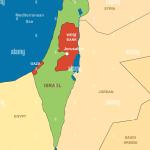
Will Peace in Gaza Result in a Palestinian State There?
Next Post

October 14, 2025 Congratulations to President Trump for Gaza Ceasefire!
Recent Comments
"Glen, you seem to be advocating a preterist viewpoint, with which I disagree." I'm a ..."
Family Estrangement Versus Honoring Father and ..."
"THESIS is a SCRIPTURE QUOTE.“Remember the predictions foretold by the holy prophets and by the ..."
Family Estrangement Versus Honoring Father and ..."
"How are they going to answer it. They don't have unlimited financial resources. They're trying ..."
Israeli-Palestinian Conflict Getting Much Worse
"...but isn't that an important question to answer?"
Israeli-Palestinian Conflict Getting Much Worse
Browse Our Archives
Select a Category Angels Billy Graham Blog Description Book Reviews Christian Living Christianity Christology Church History Current Events Deity of Christ? Disarmament Eschatology Evangelicalism Ezekiel 38-39 Film Reviews God Golf Gospel Harmonization Health History Holy Spirit Incarnation? Interview Islam Israeli-Palestinian Conflict Jesus Last Empire Literary Announcements Major Championship Winners Masters Monotheism My Books New Testament Old Testament Politics Primitive Weapons Ryder Cup Science Society of Biblical Literature The Bible The Restitution of Jesus Christ Trinitarianism Trinity? Uncategorized Unconditional Love? War on Terrorism
Select a Month October 2026 September 2026 August 2026 July 2026 June 2026 May 2026 April 2026 March 2026 February 2026 January 2026 December 2025 November 2025 October 2025 September 2025 August 2025 July 2025 June 2025 May 2025 April 2025 March 2025 February 2025 January 2025 December 2024 November 2024 October 2024 September 2024 August 2024 July 2024 June 2024 May 2024 April 2024 March 2024 February 2024 January 2024 December 2023 November 2023 October 2023 September 2023 August 2023 July 2023 June 2023 May 2023 April 2023 March 2023 February 2023 January 2023 December 2022 November 2022 October 2022 September 2022 August 2022 July 2022 June 2022 May 2022 April 2022 March 2022 February 2022 January 2022 December 2021 November 2021 October 2021 September 2021 August 2021 July 2021 June 2021 May 2021 April 2021 March 2021 February 2021 January 2021 December 2020 November 2020 October 2020 September 2020 August 2020 July 2020 June 2020 May 2020 April 2020 March 2020 February 2020 January 2020 December 2019 November 2019 October 2019 September 2019 August 2019 July 2019 June 2019 May 2019 April 2019 March 2019 February 2019 January 2019 December 2018 November 2018 October 2018 September 2018 August 2018 July 2018 June 2018 May 2018 April 2018 March 2018 February 2018 January 2018 December 2017 November 2017 October 2017 September 2017 August 2017 July 2017 June 2017 May 2017 April 2017 March 2017 February 2017 January 2017 December 2016 November 2016 October 2016 September 2016 August 2016 July 2016 June 2016 May 2016 April 2016 March 2016 February 2016 January 2016 December 2015 November 2015 October 2015 September 2015 August 2015 July 2015 June 2015 May 2015 April 2015 March 2015 February 2015 January 2015 December 2014 November 2014 October 2014 September 2014 July 2014 June 2014 May 2014 April 2014 March 2014 February 2014 January 2014 December 2013 November 2013 October 2013 September 2013 August 2013 July 2013 June 2013 May 2013 April 2013
Follow Us!
TAKE THE
Religious Wisdom Quiz
Which Old Testament prophet called fire down from heaven?
Select your answer to see how you score.
Elisha Elijah Moses Isaiah
Books by This Author Books by Kermit Zarley Blog
Related posts from Kermit Zarley Blog

Trump's Desperate Moves Before Mid-Term Election Are Hurting
Israeli-Palestinian Conflict Getting Much Worse

Stephen Hawking Said "Losers" Boast about IQ—That's Trump
Americans Now Favor Palestinians Over Israelis
TRENDING AT PATHEOS Progressive Christian

In "Irreplaceable," our book on vocation and technology, Trevor Sutton and I...

I was strolling through the top floor of the brand new Parthenon...

What Does Gêvâh Mean For Kimberley Guifoyle &...
This week, a lot of the news is focused on Kimberly Guilfoyle....

INNER CIRCLE: Profound Mystery (Of Christ In All...
Ephesians 5:31-32 “For this reason, a man will leave his father and...

Do Not Rejoice When Your Enemy Falls: The...
Turning an execution into a public spectacle is a disturbing expression of...

'The Chosen' S6 Trailer: The Passion Gets Very...
Not many watching 'The Chosen' worry about spoilers, but just because they...
view all Progressive Christian blogs
What Are Your Thoughts?leave a comment
Ad-Free & Subscriber Log-In Subscription Support
- About Us
- 2026 Calendar
- Videos
- Podcasts
- Library of World Religions
- Faith In Media Tracker
- Advertise With Us
- Write for Us
- Privacy Policy
- Terms of Service
- Do Not Sell My Data
- Contact Us
- Radiant Digital
- Manage Newsletter Subscriptions
- Unsubscribe From Notifications
- Sitemap
Copyright 2008-2026, Patheos. All rights reserved.
Subscription Support Ad-Free & Subscriber Log-In
Follow Patheos