
BuddhistCatholicContemplativeEvangelicalGeneral ChristianHinduJewishLatter-day SaintMuslimNew VisionsProgressive Christian
Beliefs
- Buddhist
- Catholic
- Contemplative
- Evangelical
- General Christian
- Hindu
- Jewish
- Latter-day Saint
- More Voices
- Muslim
- New Visions
- Pagan
- Progressive Christian
Topics
- Religion News
- Food and Religion
- Sports and Religion
- Religious Art
- Religious Music and Entertainment
- Religious Events
- History and Religion
- Style and Religion
- Politics and Religion
- Women in Religion
- Recreation Outdoors and Religion
- Business Finance and Religion
- Careers Workplace and Religion
- Education and Religion
- Family Parenting and Religion
- Health Fitness and Religion
- Home and Religion
- Relationships and Religion
- Technology and Religion
- Travel and Religion
Columnists
- Buddhist Columnists
- Business Finance and Religion Columnists
- Careers Workplace and Religion Columnists
- Catholic Columnists
- Contemplative Columnists
- Education and Religion Columnists
- Evangelists Columnists
- Family Parenting and Religion Columnists
- General Christian Columnists
- Health Fitness and Religion Columnists
- Hindu Columnists
- History and Religion Columnists
- Home and Religion Columnists
- Jewish Columnists
- More Voices Columnists
- Latter Day Columnists
- Muslim Columnists
- New Visions Columnists
- Nonreligious Columnists
- Pagan Columnists
- Politics and Religion Columnists
- Progressive Columnists
- Recreation Outdoors and Religion Columnists
- Relationships and Religion Columnists
- Religion News Columnists
- Religious Art Columnists
- Religious Events Columnists
- Religious Music and Entertainment Columnists
- Sports and Religion Columnists
- Style and Religion Columnists
- Technology and Religion Columnists
- Travel and Religion Columnists
- Women in Religion Columnists
Resource Library
- 2026 Calendar
- Library of World Religions
- The 100 Most Holy Places on Earth
- Patheos Answers
- Podcasts
- Videos
- Faith Leaders Database
- Anglican Episcopalian
- Bahai
- Baptist
- Buddhism
- Christianity
- Confucianism
- Eastern Orthodoxy
- Hinduism
- Holiness and Pentecostal
- ISKCON
- Islam
- Judaism
- Lutheran
- Methodist
- The Church of Jesus Christ of Latter-day Saints
- New Age
- Paganism
- Presbytarian and Reformed
- Protestantism
- Religion Behind the Scenes
- Roman Catholic
- Scientology
- Shia Islam
- Sikhism
- Sufism
- Sunni Islam
- Taoism
- Zen
- See all religions
Research Tools
 Ad-Free & Subscriber Log-In Subscription Support
Ad-Free & Subscriber Log-In Subscription Support
Follow Patheos 

- Trending:
- Forgiveness
- |
- Marriage
- |
- Consciousness
- |
- Death Penalty
- |
- Election
- |
- Halloween

-
Categories
-
Christian Living
-
Christology
-
Golf
-
My Books
- Home
- Progressive Christian
- Religion News
- Does God’s Goodness Need Defending Due to Evil Angels?
Does God’s Goodness Need Defending Due to Evil Angels?
Last updated on: May 28, 2022 at 7:39 pm by Kermit Zarley
Does God’s Goodness Need Defending Due to Evil Angels? 2022-05-28T19:39:24-07:00 Kermit Zarley
Patheos Explore the world's faith through different perspectives on religion and spirituality! Patheos has the views of the prevalent religions and spiritualities of the world.
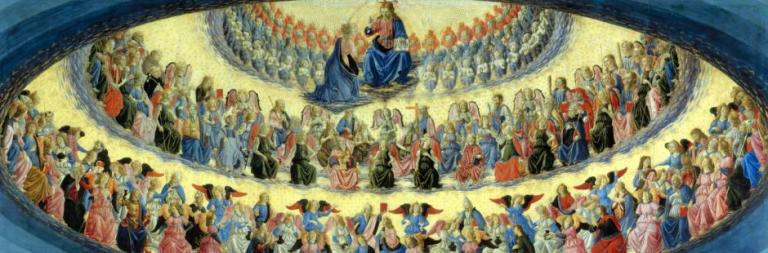
Religious people usually have a theological framework upon which they base their belief in some kind of worldview, even if they’re not very aware of it. It certainly is true of Christianity. Many Christians adopt some type of systematic theology upon which they base their religious beliefs. And in the case of Christians and some religious Jews, they view their sacred text, the Bible, in this way as well.
It thus becomes difficult for especially Christians to read the Bible apart from their preconceived notions based on their theological system. To do otherwise is called “critical thinking.” That is, people with preconceived beliefs who are critical thinkers can still, to some degree, lay aside their biases temporarily and think “outside the box.” Such critical thinking can be difficult for most people to do and even takes practice. For most, they find comfort in not having to challenge anything about their theological framework, and to do so might become disturbing to them. They might say, “Leave me alone; I know what I believe.”
For example, the Bible has much information about angels. Most Christians who believe that the Bible is true, and that there really are angels, usually have some further beliefs about them. For instance, some Christians believe all angels are good and that they reside in heaven with God. But actually, the Bible relates that there are two types of angels: good and bad (e.g., Revelation 12.7-9). In most Christian theological systems, they accurately present good angels as belonging to God and evil angels as belonging to Satan, also called the Devil in the Bible.
This truth about the existence of a Devil and his evil angels arouses the questions of how and when they became evil. But the Bible does not have any information that might answer these two questions. The reason Christians might focus on this dilemma is that their theological framework provides that everything and everyone, including both humans, angels, and Satan, were creating by God. Yet the Bible never says this either. Many Christians think that God must have created the angels or else he wouldn’t be God. What they mean by this is that their theological system says God is sovereign. They mean that due to divine providence, nothing could exist apart from God bringing it into existence. But the Bible nowhere says this, either.
I have blogged before on this subject with a post, “The Bible Does Not Say God
Created the Angels.” Christians have two main biblical texts they cite to support their belief that God created the angels. Psalm 148 is probably the main one. It begins in the NRSV, “Praise the LORD! Praise the LORD from the heavens; praise him in the heights! Praise him, all his angels; praise him, all his host!” The 150 psalms in the Bible are lyrics set to music. There likely are seven stanzas in Psalm 148, and this is the first.
The second stanza in Psalm 148 is in vv. 3-4 (NRSV), “Praise him, sun and moon; praise him, all you shining stars! Praise him, you highest heavens, and you waters above the heavens!” So, all these inanimate objects are God’s creation in his universe.
The third stanza in Psalm 148 is in vv. 5-6. Verse 5 says, “Let them praise the name of the LORD, for he commanded and they were created.” Christians who cite this text to support their belief that God created the angels claim that this means God created all that is mentioned so far in this psalm, which includes angels and hosts, which latter are a certain class of angels. In saying, “they were created,” the psalmist probably refers only to the inanimate objects of the previous, second, stanza, thus not all in both.
Moreover, saying God “commanded and they were created” alludes to Genesis 1. It tells only about God creating the earth, its water, light, darkness, sky, stars, etc. And how does the author of this text say God did that? The same way the psalmist says he did it–by commanding them into existence. But in Genesis 1-2 and all other biblical texts that mention anything about God creating the universe or portions of it, the Bible never says God also created the angels.
Then we read of the second half of the third stanza in Psalm 148, which is v. 6, “He established them forever and ever; he fixed their bounds, which cannot be passed.” That can only refer to the inanimate objects aforementioned in this psalm. That is, it refers to our moon, the stars, and and our sky that have fixed boundaries.
Angels don’t have fixed boundaries since they come and go. For example, when Satan appeared before God in heaven during the days of Job we read twice, “The LORD said to Satan, ‘Where have you come from?’ Satan answered the LORD, ‘From going to and fro on the earth, and from walking up and down on it'” (Job 1.7; 2.2).
Thus, I think we must conclude that Psalm 148.1-6 does not mean God created angels.
Another biblical text some Christians cite to support their view that God created the angels is Jude 6. It reads, “And the angels who did not keep their own position, but left their proper dwelling, he has kept in eternal chains.” I have an unpublished book that has a chapter solely about this verse. I won’t go into detail about this here except to say I suspect this reading is not translated properly due to verbal aspect in Koine Greek, which is a rather new endeavor that New Testament Greek scholars have been involved in during the past 30+ years.
But those Christians who cite Jude 6 for support read it as translated above. Notice that it says some angels “did not keep their own position, but left their proper dwelling.” Yet those same Christians cite Psalm 148.6 mentioned above and apply it to angels, which says, “he fixed their bounds, which cannot be passed.” Those two concepts contradict.
So, the teaching that God created the angels is not affirmed in the Bible. The Jewish Encyclopedia well observes, “Upon the important problem of the origin of angels Biblical writers do not touch; but it is inferred [in the Jewish Bible] that angels existed before the Creation (Gen. i. 26; Job, xxxviii. 7).”
And most Christians further believe that Satan and his angels had a fall into sin at some certain time in the past, and this is why they call them “fallen angels.” But neither does the Bible says anything such thing.
Some Christians cite another Old Testament text to more specifically support their view that God created Satan. Some church fathers, including Jerome, interpreted the king of Tyre in Ezekiel 28 as Satan, the Devil. Some also interpreted the prince of Tyre therein as Satan as well. Ezekiel probably means that the prince in vv. 1-10 later became the king in vv. 11-19.
God says through Ezekiel concerning the prince of Tyre, “you have said, ‘I am a god; I sit in the seat of the gods, in the heart of the seas,’ you you are but a mortal, and no god” (Eze 28.2a). The NRSV translates the Hebrew word adam, here, as “mortal,” whereas it more literally means “man,” and that is how most Bible versions translate it. Thus, God through Ezekiel calls this prince of Tyre a “man,” which must rule out the Satan interpretation of him. Furthermore, Ezekiel says of this prince of Tyre, “you compare your mind with the mind of a god” (v. 2b), which distinguishing of the two further indicates this prince is a man.
God says through Ezekiel concerning the king of Tyre, “the day that you were created” (Eze 28.13). If the king of Tyre was Satan, that would have to mean that God created Satan. I was taught this viewpoint in my early theological education. But I abandoned it in the 1970s after studying this subject and reading Bible commentaries about it.
A large majority of Old Testament scholars nowadays agree–the king of Tyre in Ezekiel 28 refers to an actual king and thus not Satan the Devil. However, some might say that such a prideful human king could have been influenced by Satan, to which I agree.
The King James Version translates Ezekiel 28.14, “Thou art the anointed cherub that covereth,” thereby identifying the king of Tyre as a cherub, which is an angel. Most modern Bible versions translate likewise. However, the NIV and ESV have a footnote explaining that the meaning of this Hebrew phrase is “uncertain.” And the JPS Tanakh in English, the premiere Jewish Bible translation in English, also has such a footnote.
For many decades, the English Bible version that has been preferred by Bible scholars has been the RSV and NRSV (New Revised Standard Version). Ezekiel 28.14 reads in both versions, “On the day that you were created they were prepared. With an anointed cherub as guardian I placed you.” Accordingly, God directed this angel to guard the king; thus, we might call him “a guardian angel.” But due to the king’s excessive pride, God says through Ezekiel “the guardian drove you out” (v 16). Moreover, v. 18 has God saying to this king that fire consumed him, that “I turned you to ashes on the earth . . . you have come to a dreadful end and shall be no more forever” (vv. 18-19). All of this can only be said of a human being, not Satan.
However, C. F. Keil–the German, esteemed, Old Testament scholar of a previous generation–has an entirely different take on this text, though it neither identifies this prince-king of Tyre as Satan. Plus, Keil, a very thorough commentator, even omits mention of this teaching. Keil disagrees with the translation of Eze 28.14 that says, “On the day you were created.” Instead, he says, “Ezekiel calls this the day of his creation, with special reference to the fact that it was God who appointed him king,” thus referring to the day God created him king, thus his royal inauguration. Keil further states, “the king of Tyre is called a cherub, because, as an anointed king, he covered or overshadowed a sanctuary, like the cherubim upon the ark of the covenant.”
Some Christians also cite “the king of Babylon” inIsaiah 14 to support their view that Ezekiel 28 indicates God created Satan. Although this text does not say God created this king, these Christians cite it because they think Isaiah indicates this king of Babylon is Satan and that there is a similarity between him and the king of Tyre in Ezekiel 28. But Isaiah indicates this king of Babylon will be killed and his soul “brought down to Sheol [=Hades], to the depths of the Pit. Those who see you will stare at you, and ponder over you; ‘Is this the man who made the earth tremble, who shook kingdoms'”? (Isaiah 14.15-16). Plus, v. 21 says he had “sons.” So, this king of Babylon is a “man” who has “sons.”
Thus, I agree with most Old Testament scholars that this king of Babylon in Isaiah 14 is not identified as Satan but a human king. And I believe this is an unfulfilled prophecy that will be fulfilled in the end times by the Antichrist. Some may object by citing the so-called “Five I Wills” in Isaiah 14.13-14 that this king will utter, arguing that those prideful claims cannot be said of anyone other than Satan. I have an unpublished book manuscript about the Antichrist in which I devote an entire chapter to this king of Babylon in Isaiah 14 to show that it does indeed refer to the future, final Antichrist.
Since the existence of angels is a pretty important topic for those who have a worldview that includes angels in it, as I do, the fact that the Bible never says God created the angels or that some of them fell into sin after having been good leads me to think that neither of these things happened. To hold this viewpoint as I do takes a lot of stress off of theodicy. Theodicy means the defense of God’s goodness despite evil among angels and humans. If God didn’t create angels, at least there is no necessity to defend God due to the evil of Satan and his angels.
Previous Post

May 26, 2022
China's Pride in Refusing mRNA Vaccines for COVID-19 Is Devastating
Next Post

May 29, 2022 Sam Burns Wins Charles Schwab
Browse Our Archives
Select a Category Angels Billy Graham Blog Description Book Reviews Christian Living Christianity Christology Church History Current Events Deity of Christ? Disarmament Eschatology Evangelicalism Ezekiel 38-39 Film Reviews God Golf Gospel Harmonization Health History Holy Spirit Incarnation? Interview Islam Israeli-Palestinian Conflict Jesus Last Empire Literary Announcements Major Championship Winners Masters Monotheism My Books New Testament Old Testament Politics Primitive Weapons Ryder Cup Science Society of Biblical Literature The Bible The Restitution of Jesus Christ Trinitarianism Trinity? Uncategorized Unconditional Love? War on Terrorism
Select a Month October 2026 September 2026 August 2026 July 2026 June 2026 May 2026 April 2026 March 2026 February 2026 January 2026 December 2025 November 2025 October 2025 September 2025 August 2025 July 2025 June 2025 May 2025 April 2025 March 2025 February 2025 January 2025 December 2024 November 2024 October 2024 September 2024 August 2024 July 2024 June 2024 May 2024 April 2024 March 2024 February 2024 January 2024 December 2023 November 2023 October 2023 September 2023 August 2023 July 2023 June 2023 May 2023 April 2023 March 2023 February 2023 January 2023 December 2022 November 2022 October 2022 September 2022 August 2022 July 2022 June 2022 May 2022 April 2022 March 2022 February 2022 January 2022 December 2021 November 2021 October 2021 September 2021 August 2021 July 2021 June 2021 May 2021 April 2021 March 2021 February 2021 January 2021 December 2020 November 2020 October 2020 September 2020 August 2020 July 2020 June 2020 May 2020 April 2020 March 2020 February 2020 January 2020 December 2019 November 2019 October 2019 September 2019 August 2019 July 2019 June 2019 May 2019 April 2019 March 2019 February 2019 January 2019 December 2018 November 2018 October 2018 September 2018 August 2018 July 2018 June 2018 May 2018 April 2018 March 2018 February 2018 January 2018 December 2017 November 2017 October 2017 September 2017 August 2017 July 2017 June 2017 May 2017 April 2017 March 2017 February 2017 January 2017 December 2016 November 2016 October 2016 September 2016 August 2016 July 2016 June 2016 May 2016 April 2016 March 2016 February 2016 January 2016 December 2015 November 2015 October 2015 September 2015 August 2015 July 2015 June 2015 May 2015 April 2015 March 2015 February 2015 January 2015 December 2014 November 2014 October 2014 September 2014 July 2014 June 2014 May 2014 April 2014 March 2014 February 2014 January 2014 December 2013 November 2013 October 2013 September 2013 August 2013 July 2013 June 2013 May 2013 April 2013
Follow Us!
TAKE THE
Religious Wisdom Quiz
What does "Beersheba" mean?
Select your answer to see how you score.
House of the King Blessed Field Valley of Water Well of the Oath
Books by This Author Books by Kermit Zarley Blog
Related posts from Kermit Zarley Blog
The Angelic Conflict Among the Nations

Did God Protect Trump from that Assassin's Bullet?
USA Again Denies UFOs Are Aliens

Jesus Was Not "One Like a Human Being"
TRENDING AT PATHEOS Progressive Christian

In "Irreplaceable," our book on vocation and technology, Trevor Sutton and I...

I was strolling through the top floor of the brand new Parthenon...

What Does Gêvâh Mean For Kimberley Guifoyle &...
This week, a lot of the news is focused on Kimberly Guilfoyle....

INNER CIRCLE: Profound Mystery (Of Christ In All...
Ephesians 5:31-32 “For this reason, a man will leave his father and...

Do Not Rejoice When Your Enemy Falls: The...
Turning an execution into a public spectacle is a disturbing expression of...

'The Chosen' S6 Trailer: The Passion Gets Very...
Not many watching 'The Chosen' worry about spoilers, but just because they...
view all Progressive Christian blogs
Ad-Free & Subscriber Log-In Subscription Support
- About Us
- 2026 Calendar
- Videos
- Podcasts
- Library of World Religions
- Faith In Media Tracker
- Advertise With Us
- Write for Us
- Privacy Policy
- Terms of Service
- Do Not Sell My Data
- Contact Us
- Radiant Digital
- Manage Newsletter Subscriptions
- Unsubscribe From Notifications
- Sitemap
Copyright 2008-2026, Patheos. All rights reserved.
Subscription Support Ad-Free & Subscriber Log-In
Follow Patheos