
BuddhistCatholicContemplativeEvangelicalGeneral ChristianHinduJewishLatter-day SaintMuslimNew VisionsProgressive Christian
Beliefs
- Buddhist
- Catholic
- Contemplative
- Evangelical
- General Christian
- Hindu
- Jewish
- Latter-day Saint
- More Voices
- Muslim
- New Visions
- Pagan
- Progressive Christian
Topics
- Religion News
- Food and Religion
- Sports and Religion
- Religious Art
- Religious Music and Entertainment
- Religious Events
- History and Religion
- Style and Religion
- Politics and Religion
- Women in Religion
- Recreation Outdoors and Religion
- Business Finance and Religion
- Careers Workplace and Religion
- Education and Religion
- Family Parenting and Religion
- Health Fitness and Religion
- Home and Religion
- Relationships and Religion
- Technology and Religion
- Travel and Religion
Columnists
- Buddhist Columnists
- Business Finance and Religion Columnists
- Careers Workplace and Religion Columnists
- Catholic Columnists
- Contemplative Columnists
- Education and Religion Columnists
- Evangelists Columnists
- Family Parenting and Religion Columnists
- General Christian Columnists
- Health Fitness and Religion Columnists
- Hindu Columnists
- History and Religion Columnists
- Home and Religion Columnists
- Jewish Columnists
- More Voices Columnists
- Latter Day Columnists
- Muslim Columnists
- New Visions Columnists
- Nonreligious Columnists
- Pagan Columnists
- Politics and Religion Columnists
- Progressive Columnists
- Recreation Outdoors and Religion Columnists
- Relationships and Religion Columnists
- Religion News Columnists
- Religious Art Columnists
- Religious Events Columnists
- Religious Music and Entertainment Columnists
- Sports and Religion Columnists
- Style and Religion Columnists
- Technology and Religion Columnists
- Travel and Religion Columnists
- Women in Religion Columnists
Resource Library
- 2026 Calendar
- Library of World Religions
- The 100 Most Holy Places on Earth
- Patheos Answers
- Podcasts
- Videos
- Faith Leaders Database
- Anglican Episcopalian
- Bahai
- Baptist
- Buddhism
- Christianity
- Confucianism
- Eastern Orthodoxy
- Hinduism
- Holiness and Pentecostal
- ISKCON
- Islam
- Judaism
- Lutheran
- Methodist
- The Church of Jesus Christ of Latter-day Saints
- New Age
- Paganism
- Presbytarian and Reformed
- Protestantism
- Religion Behind the Scenes
- Roman Catholic
- Scientology
- Shia Islam
- Sikhism
- Sufism
- Sunni Islam
- Taoism
- Zen
- See all religions
Research Tools
 Ad-Free & Subscriber Log-In Subscription Support
Ad-Free & Subscriber Log-In Subscription Support
Follow Patheos 

- Trending:
- Forgiveness
- |
- Marriage
- |
- Consciousness
- |
- Death Penalty
- |
- Election
- |
- Halloween

-
Categories
-
Christian Living
-
Christology
-
Golf
-
My Books
- Home
- Progressive Christian
- Religion News
- 200th Anniversary of The Jefferson Bible
200th Anniversary of The Jefferson Bible
Last updated on: October 23, 2020 at 12:01 pm by Kermit Zarley
200th Anniversary of The Jefferson Bible 2020-10-23T12:01:08-07:00 Kermit Zarley
Patheos Explore the world's faith through different perspectives on religion and spirituality! Patheos has the views of the prevalent religions and spiritualities of the world.
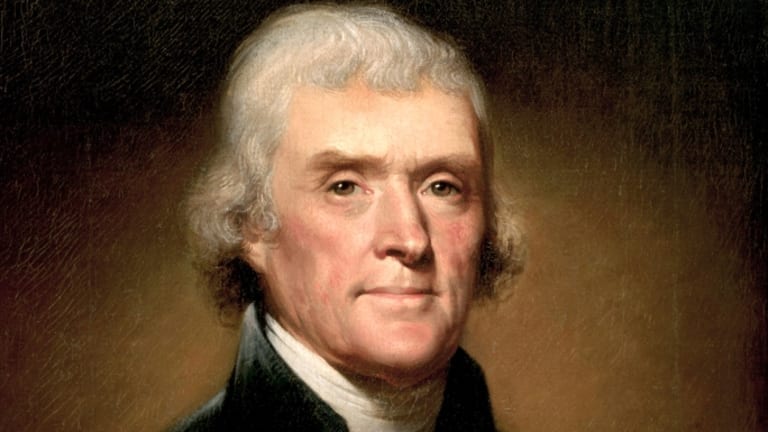 This year is the 200th anniversary of “The Jefferson Bible” as it is popularly called. But it really is entitled The Life and Morals of Jesus of Nazareth. It was compiled, thus not actually authored, by the third U.S. president, Thomas Jefferson, in 1820. Jefferson did something similar to what I did in compiling my first book, The Gospel (237 pp., softcover, but no longer in print). This book was published in about May of 1987. But I also made it a part of my two-part book, The Gospels Interwoven (415 pp., hardcover) published one month later and endorsed by my friend Evangelist Billy Graham.
My book, The Gospel, is a single-narrative harmony of the four New Testament (NT) gospels in the New International Version of the Bible. Thus, I joined all four gospels together in one reading, leaving nothing out while deleting repetition since two or more of these gospels often report the same acts and sayings in Jesus’ ministry. You could say that Jefferson and I did the same thing in taking a Bible, cutting up its four gospels, and pasting portions together. But there is one huge difference between our compilations.
Thomas Jefferson had a high regard for Jesus except that Jefferson–a very learned man and widely read–was a typical rationalist and Deist of his time and therefore a product of Enlightenment. So, Jefferson did not believe Jesus did any of those miracles that are said of him in all four NT gospels, nor did he believe those gospels were right in narrating that Jesus literally arose from the dead. Thus, that’s where Jefferson’s scissors and paste came in even more handy that they did for me. That is, Thomas meticulously cut out all of that material in the gospels and tossed it in his trash can, but he pasted just about everything else into his Jefferson Bible.
John Adams was Vice President to our first president, George Washington, in 1789-1797, and then became our second president in 1797-1801. Thomas Jefferson was our third president, in 1801-1809. Jefferson compiled his Jefferson Bible in his old age. In 1814, Jefferson wrote to his friend, former President John Adams, who was a Unitarian who also had high regard for Jesus but did not believe in his miracles or resurrection. Jefferson wrote to Adams, saying of those portions in the four NT gospels, “It is as easy to separate those parts as to pick out diamonds from dunghill.” Now, I have a certain respect for Thomas Jefferson, but him using the metaphor “dunghill” to refer to Jesus’ alleged miracles and resurrection in the NT gospels makes me aghast.
I have written in books, “If Jesus did not arise from the dead, there never would have been any Christianity.” Actually, I have a subhead on “Deism” in my book, The Restitution of Jesus Christ (pp. 91-92, written with the pseudonym “Servetus the Evangelical”), that tells about Thomas Jefferson and his Jefferson Bible as follows:
Deism began in England in the mid-17th century. It spread throughout Europe and North America, flourishing there for about a century. Deism grew out of Enlightenment, partly in reaction to the religious intolerance of the Reformation. Deism consisted of an intellectual rationalism that was based solely on reason and natural law. Thus, Deism was anti-supernaturalistic, generally skeptical of divine revelation and therefore the Bible, and generally opposed to orthodox Christianity.
“Pure Deists believed in a personal, transcendent Supreme Being who created a “clockwork universe,” meaning that He did not afterwards intervene in human affairs. Moderate Deists, however, postulated that God was immanent in the individual human conscience, if not active in human affairs. Regarding theological dogma, all Deists were known most for rejecting the Christian doctrines of the incarnation and the Trinity. Some of them were a bit hazy on whether the one God was a personal being. They frequently employed the words “Providence,” “God of Nature,” or “the Deity” rather than “God.”
Deism remained an ideological movement that never formed into a particular school of thought or cultus. Actually, classical Deists were opposed to organized, institutional religion. Yet many of those who declared themselves as Deists were not without influence in society. Several founding forefathers of the USA were Deists. Thomas Jefferson (1743-1826), the author of the U.S. Declaration of Independence and the third U.S. president, was a thorough-going Deist. (Some authorities, however, claim that it is more accurate to classify him as “a Freethinker.”) Moderate Deists included George Washington (1732-1799), the first U.S. president, and Benjamin Franklin (1706-1790), the great inventor, publisher, politician, and Renaissance man.
Thomas Jefferson opposed much of organized Christian religion when he helped get “the establishment clause” into the First Amendment to the U.S. Constitution. It reads, “Congress shall make no law respecting an establishment of religion.” Jefferson was most opposed to Presbyterianism. In his writings, he frequently denounces John Calvin, calling him an “Atheist.” Jefferson later wrote the following harshly rhetorical attack on Presbyterianism, citing the Servetus episode:
The Presbyterian clergy are the loudest, the most intolerant of all sects; the most tyrannical and ambitious, ready at the word of the law-giver, if such a word could now be obtained, to put their torch to the pile, and to rekindle in this virgin hemisphere the flame in which their oracle, Calvin, consumed the poor Servetus, because he could not subscribe to the proposition of Calvin, that magistrates have a right to exterminate all heretics to the Calvinistic creed! They pant to re-establish by law that holy inquisition which they can now only infuse into public opinion.
Later, in Germany, Deism helped stir the emergence of both biblical criticism and the History of Religions School. In the U.S., Thomas Jefferson became one of the first biblical critics among American Deists when, in the winter of 1819-1820, he produced a composite harmony of the four NT gospels. Entitled The Life and Morals of Jesus of Nazareth, it was published posthumously, in 1904. It emphasizes the ethical teachings of Jesus. But as a purely rationalistic work, it excludes all gospel narrative that depicts Jesus as a healer and miracle-worker, and it excises his resurrection and post- resurrection appearances as well.
Previous Post

October 22, 2020
It Was a Real Debate This Time
Next Post

October 25, 2020 Cantlay Wins Zozo Championship
Browse Our Archives
Select a Category Angels Billy Graham Blog Description Book Reviews Christian Living Christianity Christology Church History Current Events Deity of Christ? Disarmament Eschatology Evangelicalism Ezekiel 38-39 Film Reviews God Golf Gospel Harmonization Health History Holy Spirit Incarnation? Interview Islam Israeli-Palestinian Conflict Jesus Last Empire Literary Announcements Major Championship Winners Masters Monotheism My Books New Testament Old Testament Politics Primitive Weapons Ryder Cup Science Society of Biblical Literature The Bible The Restitution of Jesus Christ Trinitarianism Trinity? Uncategorized Unconditional Love? War on Terrorism
Select a Month October 2026 September 2026 August 2026 July 2026 June 2026 May 2026 April 2026 March 2026 February 2026 January 2026 December 2025 November 2025 October 2025 September 2025 August 2025 July 2025 June 2025 May 2025 April 2025 March 2025 February 2025 January 2025 December 2024 November 2024 October 2024 September 2024 August 2024 July 2024 June 2024 May 2024 April 2024 March 2024 February 2024 January 2024 December 2023 November 2023 October 2023 September 2023 August 2023 July 2023 June 2023 May 2023 April 2023 March 2023 February 2023 January 2023 December 2022 November 2022 October 2022 September 2022 August 2022 July 2022 June 2022 May 2022 April 2022 March 2022 February 2022 January 2022 December 2021 November 2021 October 2021 September 2021 August 2021 July 2021 June 2021 May 2021 April 2021 March 2021 February 2021 January 2021 December 2020 November 2020 October 2020 September 2020 August 2020 July 2020 June 2020 May 2020 April 2020 March 2020 February 2020 January 2020 December 2019 November 2019 October 2019 September 2019 August 2019 July 2019 June 2019 May 2019 April 2019 March 2019 February 2019 January 2019 December 2018 November 2018 October 2018 September 2018 August 2018 July 2018 June 2018 May 2018 April 2018 March 2018 February 2018 January 2018 December 2017 November 2017 October 2017 September 2017 August 2017 July 2017 June 2017 May 2017 April 2017 March 2017 February 2017 January 2017 December 2016 November 2016 October 2016 September 2016 August 2016 July 2016 June 2016 May 2016 April 2016 March 2016 February 2016 January 2016 December 2015 November 2015 October 2015 September 2015 August 2015 July 2015 June 2015 May 2015 April 2015 March 2015 February 2015 January 2015 December 2014 November 2014 October 2014 September 2014 July 2014 June 2014 May 2014 April 2014 March 2014 February 2014 January 2014 December 2013 November 2013 October 2013 September 2013 August 2013 July 2013 June 2013 May 2013 April 2013
Follow Us!
TAKE THE
Religious Wisdom Quiz
Who was healed from leprosy after obeying Elisha's command to wash in the Jordan?
Select your answer to see how you score.
Naaman Jehu Jeroboam Hazael
Books by This Author Books by Kermit Zarley Blog
Related posts from Kermit Zarley Blog

What Is "Easy Believism" that Is Rampant in...
When Romans 13 Meets Tyranny: Interpreting Obedience

Trump's "America First" Policy May Make "America Last"
Is "the Word" in John 1.1-3 an "it"...
TRENDING AT PATHEOS Progressive Christian

How to Make a Decision When You Can't...
Main point: It’s much more valuable to stay close to God so...

Archdiocese Hosts Military Marriage Retreat in Germany
RASTATT, Germany — The transient military lifestyle, with its frequent deployments and...

Nearly every morning, I make the drive to Detroit with my high-school-age...

The Real AI Story Is Adoption Without Trust
Artificial intelligence has crossed a political threshold. It is no longer a...

A new article, written by Jeff Lindsay and Gale L. Pooley,...

Swimfan: Forgotten Aughts Pleasures
This is a recovery effort. In 2002, My Big Fat Greek Wedding...
view all Progressive Christian blogs
Ad-Free & Subscriber Log-In Subscription Support
- About Us
- 2026 Calendar
- Videos
- Podcasts
- Library of World Religions
- Faith In Media Tracker
- Advertise With Us
- Write for Us
- Privacy Policy
- Terms of Service
- Do Not Sell My Data
- Contact Us
- Radiant Digital
- Manage Newsletter Subscriptions
- Unsubscribe From Notifications
- Sitemap
Copyright 2008-2026, Patheos. All rights reserved.
Subscription Support Ad-Free & Subscriber Log-In
Follow Patheos