
BuddhistCatholicContemplativeEvangelicalGeneral ChristianHinduJewishLatter-day SaintMuslimNew VisionsProgressive Christian
Beliefs
- Buddhist
- Catholic
- Contemplative
- Evangelical
- General Christian
- Hindu
- Jewish
- Latter-day Saint
- More Voices
- Muslim
- New Visions
- Pagan
- Progressive Christian
Topics
- Religion News
- Food and Religion
- Sports and Religion
- Religious Art
- Religious Music and Entertainment
- Religious Events
- History and Religion
- Style and Religion
- Politics and Religion
- Women in Religion
- Recreation Outdoors and Religion
- Business Finance and Religion
- Careers Workplace and Religion
- Education and Religion
- Family Parenting and Religion
- Health Fitness and Religion
- Home and Religion
- Relationships and Religion
- Technology and Religion
- Travel and Religion
Columnists
- Buddhist Columnists
- Business Finance and Religion Columnists
- Careers Workplace and Religion Columnists
- Catholic Columnists
- Contemplative Columnists
- Education and Religion Columnists
- Evangelists Columnists
- Family Parenting and Religion Columnists
- General Christian Columnists
- Health Fitness and Religion Columnists
- Hindu Columnists
- History and Religion Columnists
- Home and Religion Columnists
- Jewish Columnists
- More Voices Columnists
- Latter Day Columnists
- Muslim Columnists
- New Visions Columnists
- Nonreligious Columnists
- Pagan Columnists
- Politics and Religion Columnists
- Progressive Columnists
- Recreation Outdoors and Religion Columnists
- Relationships and Religion Columnists
- Religion News Columnists
- Religious Art Columnists
- Religious Events Columnists
- Religious Music and Entertainment Columnists
- Sports and Religion Columnists
- Style and Religion Columnists
- Technology and Religion Columnists
- Travel and Religion Columnists
- Women in Religion Columnists
Resource Library
- 2026 Calendar
- Library of World Religions
- The 100 Most Holy Places on Earth
- Patheos Answers
- Podcasts
- Videos
- Faith Leaders Database
- Anglican Episcopalian
- Bahai
- Baptist
- Buddhism
- Christianity
- Confucianism
- Eastern Orthodoxy
- Hinduism
- Holiness and Pentecostal
- ISKCON
- Islam
- Judaism
- Lutheran
- Methodist
- The Church of Jesus Christ of Latter-day Saints
- New Age
- Paganism
- Presbytarian and Reformed
- Protestantism
- Religion Behind the Scenes
- Roman Catholic
- Scientology
- Shia Islam
- Sikhism
- Sufism
- Sunni Islam
- Taoism
- Zen
- See all religions
Research Tools
 Ad-Free & Subscriber Log-In Subscription Support
Ad-Free & Subscriber Log-In Subscription Support
Follow Patheos 

- Trending:
- Forgiveness
- |
- Marriage
- |
- Consciousness
- |
- Death Penalty
- |
- Election
- |
- Halloween

-
Categories
-
Christian Living
-
Christology
-
Golf
-
My Books
- Home
- Progressive Christian
- Religion News
- Which Is the Best Golf Swing: Closed or Open?
Which Is the Best Golf Swing: Closed or Open?
Last updated on: July 10, 2020 at 8:31 am by Kermit Zarley
Which Is the Best Golf Swing: Closed or Open? 2020-07-10T08:31:36-07:00 Kermit Zarley
Patheos Explore the world's faith through different perspectives on religion and spirituality! Patheos has the views of the prevalent religions and spiritualities of the world.
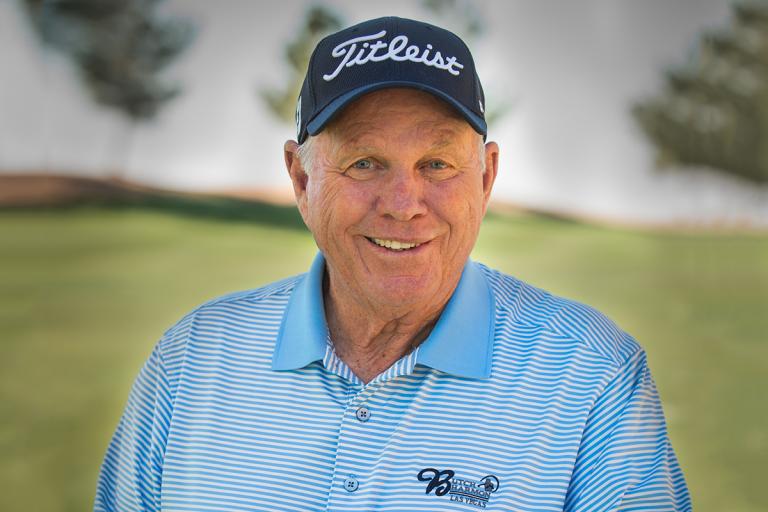
I regard Butch Harmon, whom I’ve known a very long time, to be the best swing coach on the PGA Tour, thus pretty much in the world. Butch used to be the swing instructor of Greg Norman and Tiger Woods. If Tiger would have never left Butch in a huff, I think Tiger would have surpassed Jack Nicklaus’ #1 record of 18 majors that he won. Tiger lost his swing for several years. But the Tiger has now regained his swing, and he won the Masters last year to get to 15 majors. The big question in golf is can Tiger catch Jack’s 18 majors?
Yesterday, Golf online published an article involving an interview with Butch Harmon about whether or not it is better to swing the golf club with a closed clubface in the backswing or an open clubface. Butch gave swing tips that included answering this.
A good reason for asking Butch that question is that he is the swing coach/instructor for three of the best pros on the PGA Tour and thus in the world now–Brooks Koepka, Dustin Johnson, and John Rahm. All three of them swing with a very noticeable closed clubface on the backswing. The best way to tell this is to watch their clubface at the top of their backswing. A closed clubface results in the clubface (more noticeable on long irons or the driver) aims up at the sky. When you do that, you have to open the clubface on the downswing and follow through in order to keep the ball from starting left of your target and then hooking to the left. It’s called a closed-to-open swing. Swinging with an open clubface on the backswing results in the clubhead at the top of the backswing hanging almost straight down at the ground. It is easier to tell either clubface position at the top of the backswing with a still picture or at least slow motion.
In my day, the two best players who swung the golf club closed-to-open were Arnold Palmer and Lee Trevino. One time I was playing with Arnie in a PGA Tour tournament at the famed Pinehurst No. 2 course. I’ve blogged about this before. Walking up the 18th fairway, I asked Arnie why he swings closed-to-open. He was not offended in the least at my question, as I thought a player could be. He said, “When I was young, I learned that I could drive the ball straighter by swinging that way.” I believe Arnold was the straightest driver of the ball in my day who still hit the ball a long distance. It was generally thought that players who swung the club closed-to-open could not hit high shots well or at least hit high long iron shots, and their wedge game was not as good. For such a great player as Arnold Palmer, I believe that was true of him. And Lee Trevino, he practically hit the ball underground he hit it so low, having groomed his game where the wind blows so much the birds can’t fly–El Paso, Texas.
I was sitting in the lunch room at the 1970 U.S. Open at Hazeltine, Minnesota, that Tony Jacklin won. Dan Sikes was discussing with us a photo on the front cover of Golf Digest magazine that was Jack Nicklaus’ swing at the top of his backswing. The caption said, “Does this man swing square-to-square.” That was new language for swinging “closed-to-open.” The theme of that issue of Golf Digest was about a supposedly new way to swing the club. It wasn’t new at all, but a closed-to-open swing that was just dressed up with new language. The magazine was suggesting that maybe Jack Nicklaus really swings “square-to-square.” Dan Sikes was challenging that with us, and most of us were agreeing with him.
Jack Nicklaus then walked into the room. Dan held up the magazine, showing Jack his picture and said, “Jack, is this true, that you swing square-to-square.” Jack said, “what’s that?” Dan explained it and Jack said, “That and a dime will get you a cup of coffee.” In other words, there wasn’t any truth in it about his swing. In fact, in Jack’s later book, Golf My Way, I think it’s in that book that he explains about the clubface being closed, neutral, or open at the top. Jack therein says that neutral is best, open is second best, and closed is the worst. Jack Nicklaus swung a lot like Sam Snead, in which both at a big whole body turn on the backswing and lifted their left heel way off the ground at the top of the their backswing when swinging a driver.
I never saw anyone who could ever hit such high long iron shots at Jack Nicklaus. Like Sam, he could do that because he had a big turn and released the clubhead on the downswing a lot. The greatest shot I ever saw under the circumstances was on the 17th hole on Sunday on the Senior Tour at the Ford Players Championship at Dearborn, Michigan. I was playing with Jack in the last group, and he was two strokes behind Jesse Snead, who finished ahead of us as the leader. The 17th hole is a par five with a lake in front of a small green. Jack had 234 yards to the pin, which was tucked somewhat on the front, near the water. He hit his one iron (Lee Trevino used to say that only God and Jack Nicklaus can hit a one iron) way up in the air, right at the pin. As I remember the ball hit on the front portion of the firm green and would up about ten feet or more from the pin. I don’t think Jack made that putt. But he left his 30+ foot birdie on the front lip of cup on the 18th hole to lose to Jesse by one stroke. That one iron shot on 17th, of all the players in the field, is a shot that only Jack Nicklaus would try. But then, like the Supermex, most of the players didn’t even have a one iron.
Butch Harmon’s #2 tip of the six is, “A clubface too closed is better than too open.” Butch explains, “If you had to error, I’d rather see someone shut at the top then [sic.] wide open, because if you’re shut at the top and have any strength at all, you can hold [the clubface] off as you go through, or you can let it release if you want to hit a draw. If it’s wide open at the top, you need to do a lot of catching up with your hands and it disrupts the timing of the golf swing.”
Butch Harmon is the son of Claude Harmon, who was a renown golf swing instructor, head pro at the famed Winged Foot where the U.S. Open will be played this year. Claude Harmon’s also won the Masters in 1948 by five strokes. As I recall, Claude Harmon was known for teaching a somewhat closed clubface in the backswing even though he was a friend of Ben Hogan.
Last week, in this same publication, Golf online, they published an interview of my friend Bob Toski, a former PGA Tour player who used to be more renown as a swing instructor than Butch Harmon was, but then there is an age difference there. Bob was quoted as saying that Ben Hogan–the greatest ball striker ever and winner of nine majors, thus tied for third place behind Jack Nicklaus and Tiger Woods in that category and considered to have understood the golf swing better than anybody ever did–said he never saw a really good player who swung closed-to-open or something like that.
Hogan was always tight-lipped about the golf swing except when he wrote a book about it. Frank Stranahan, heir of Champion spark plugs, outstanding amateur, and then a pro on the PGA Tour, once asked Ben Hogan for golf lessons, telling him he could write any figure on the check he wanted to. Ben reportedly said, “Son, do you have a shag bag?” In those days, we didn’t have all these golf balls at driving ranges, so you had to bring your own balls in a shag bag in order to practice. Frank answered, “Yes sir.” Ben then said, “Go use it.” That was Hogan. His attitude was that he had to learn how to “dig it out of the dirt,” as he called it, so everybody else should too.
In Hogan’s main book, Five Lessons: The Modern Fundamentals of Golf, he explains how he discovered something in the golf swing that led to his success more than anything else. He called it “supination.” Ben Hogan was only 5′, 8″ tall, yet early in his career he hit the ball very far for his size. To do so, he swung the club way, way, past parallel at the top of his backswing. But he had trouble with some big hooked drives. He did two things to correct this and became known as a slight fader of the ball, something that hardly no pro did in Hogan’s day. That is how many of the best PGA Tour players play the game nowadays. Hogan was way ahead of his time in so many ways about his swing. Another was that he restricted his lower body movement on his backswing, so that he kept his left heel planted on the ground or he barely let daylight show.
But in Five Lessons, supination was what came to be called “the Hogan secret.” He explained that when he drew the clubhead back early in his backswing, he cupped his left wrist very noticeably. The result was that his clubface did what pros call “opening the clubface.” But he did it without fanning the clubface, and that was something you just never saw any Tour pro do. The result was that at the top of Hogan’s backswing, even though it was an extremely flat swing due to his short height and long arms, his clubface pointed up to the sky. Then in his downswing he purposely reduced that cupping formation in his left wrist so that at impact his hands were slightly ahead of his clubhead and his left wrist was a little bowed, just the opposite of being cupped. Then, on Hogan’s follow through, his clubhead did not pass his hands hardly at all, called “releasing the club.” That restriction of release is what made Ben Hogan so accurate.
These pros on Tour who swing closed-to-open, with the exception of Dustin Johnson, often have a similar upswing as Hogan did in that they prevent the clubhead of releasing much. Many of them punch their iron shots, resulting in a considerable divot and an abbreviated finish.
Butch Harmon is certainly right when he says there is more than one way to swing a golf club and be one of the best players ever. And while I respect Butch as perhaps the best of swing instructor, this is one place where I would differ with him and side with Hogan. I believe there have been more great players who played open-to-closed, thus with a big release on the follow through, than closed-to-open. The first I would name is Bobby Jones. The next is Sam Snead. When you look at still photos of their swings at the top of their backswings, their clubhead hung down at the ground. And in my day, the best players who also did that would include Lannie Watkins and Johnnie Miller. That’s why Sam Snead was so good at hitting a driver off the fairway and getting the ball up in the air as if it was a three-wood shot. The open clubface all0wed Sam, if fact, force Sam to release the clubhead a lot on his downswing. There was never a prettier golf swing in my day than that of Sam Snead, and Ernie Els has come the closest to it.
But I agree wholeheartedly with four of Butch’s other swing tips, such as (1) firm left wrist at impact, (2) teach the pupil and not a certain swing, (3) it’s all about repetition of the swing, and (4) make the game simple. Butch’s sixth and last tip is about how to correct that nemesis that many golfers experience at some time in their lives, and hopefully not always–the shank. If you want to trash on the golf course, “shank” is the best trash word in the book. Butch says, “Most shanks with a full swing are hit with a closed clubface.” Butch also blames the shank mostly swinging over the top. That definitely can do it.
For me, the first place you have to check when a golfer gets the shanks is his or her head position at address and then at impact. If your head is positioned more over your toes than it was at address, that likely is the reason you are shanking. The second place you check is how the player is starting his or her backswing. Shankers often close the clubface, like Butch says, but I think it is most often done by fanning the clubface plus closing it.
I got into the shanks once when I was a freshman in college. Talk about frustration! I discovered that I was doing the opposite of what Hogan taught about cupping the left wrist early in the backswing. Doing what Hogan says is what got me out of the shanks, and never had trouble with that again. In fact, I never shanked a ball in my entire professional golf career.
Previous Post

July 9, 2020
Tiger Could Have Won a Lot More Majors If . . .
Next Post
July 11, 2020 Brandel Chamblee Speaks to Haters Discrediting His Tour Career
Browse Our Archives
Select a Category Angels Billy Graham Blog Description Book Reviews Christian Living Christianity Christology Church History Current Events Deity of Christ? Disarmament Eschatology Evangelicalism Ezekiel 38-39 Film Reviews God Golf Gospel Harmonization Health History Holy Spirit Incarnation? Interview Islam Israeli-Palestinian Conflict Jesus Last Empire Literary Announcements Major Championship Winners Masters Monotheism My Books New Testament Old Testament Politics Primitive Weapons Ryder Cup Science Society of Biblical Literature The Bible The Restitution of Jesus Christ Trinitarianism Trinity? Uncategorized Unconditional Love? War on Terrorism
Select a Month October 2026 September 2026 August 2026 July 2026 June 2026 May 2026 April 2026 March 2026 February 2026 January 2026 December 2025 November 2025 October 2025 September 2025 August 2025 July 2025 June 2025 May 2025 April 2025 March 2025 February 2025 January 2025 December 2024 November 2024 October 2024 September 2024 August 2024 July 2024 June 2024 May 2024 April 2024 March 2024 February 2024 January 2024 December 2023 November 2023 October 2023 September 2023 August 2023 July 2023 June 2023 May 2023 April 2023 March 2023 February 2023 January 2023 December 2022 November 2022 October 2022 September 2022 August 2022 July 2022 June 2022 May 2022 April 2022 March 2022 February 2022 January 2022 December 2021 November 2021 October 2021 September 2021 August 2021 July 2021 June 2021 May 2021 April 2021 March 2021 February 2021 January 2021 December 2020 November 2020 October 2020 September 2020 August 2020 July 2020 June 2020 May 2020 April 2020 March 2020 February 2020 January 2020 December 2019 November 2019 October 2019 September 2019 August 2019 July 2019 June 2019 May 2019 April 2019 March 2019 February 2019 January 2019 December 2018 November 2018 October 2018 September 2018 August 2018 July 2018 June 2018 May 2018 April 2018 March 2018 February 2018 January 2018 December 2017 November 2017 October 2017 September 2017 August 2017 July 2017 June 2017 May 2017 April 2017 March 2017 February 2017 January 2017 December 2016 November 2016 October 2016 September 2016 August 2016 July 2016 June 2016 May 2016 April 2016 March 2016 February 2016 January 2016 December 2015 November 2015 October 2015 September 2015 August 2015 July 2015 June 2015 May 2015 April 2015 March 2015 February 2015 January 2015 December 2014 November 2014 October 2014 September 2014 July 2014 June 2014 May 2014 April 2014 March 2014 February 2014 January 2014 December 2013 November 2013 October 2013 September 2013 August 2013 July 2013 June 2013 May 2013 April 2013
Follow Us!
TAKE THE
Religious Wisdom Quiz
Who tricked Isaac into giving him Esau's blessing?
Select your answer to see how you score.
Jacob Rebekah Laban Leah
Books by This Author Books by Kermit Zarley Blog
Related posts from Kermit Zarley Blog

First Review of My Golf Book on Amazon

Scottie Scheffler Wins Memorial Tournament Again
Scottie Scheffler Travels to His Sixth Win This...
Scottie Scheffler Leads Memorial Tournament by Four Strokes
TRENDING AT PATHEOS Progressive Christian

The Sermon on the Mount, Part I: Matthew...
The Sermon on the Mount, Part I (Matthew 4:12-5:12) St. Matthew moves...

What's up from Crossway: Reviewing some of their latest A few weeks...

Janie Learns the Way of the Cross: A...
Teaching children about Jesus' Passion can be challenging. Many parents and educators...

Looking For Good Catholic Writing - October 2026
He alone extends the heavens, and he walks upon the waves of...

In "Irreplaceable," our book on vocation and technology, Trevor Sutton and I...

I was strolling through the top floor of the brand new Parthenon...
view all Progressive Christian blogs
Ad-Free & Subscriber Log-In Subscription Support
- About Us
- 2026 Calendar
- Videos
- Podcasts
- Library of World Religions
- Faith In Media Tracker
- Advertise With Us
- Write for Us
- Privacy Policy
- Terms of Service
- Do Not Sell My Data
- Contact Us
- Radiant Digital
- Manage Newsletter Subscriptions
- Unsubscribe From Notifications
- Sitemap
Copyright 2008-2026, Patheos. All rights reserved.
Subscription Support Ad-Free & Subscriber Log-In
Follow Patheos