
BuddhistCatholicContemplativeEvangelicalGeneral ChristianHinduJewishLatter-day SaintMuslimNew VisionsProgressive Christian
Beliefs
- Buddhist
- Catholic
- Contemplative
- Evangelical
- General Christian
- Hindu
- Jewish
- Latter-day Saint
- More Voices
- Muslim
- New Visions
- Pagan
- Progressive Christian
Topics
- Religion News
- Food and Religion
- Sports and Religion
- Religious Art
- Religious Music and Entertainment
- Religious Events
- History and Religion
- Style and Religion
- Politics and Religion
- Women in Religion
- Recreation Outdoors and Religion
- Business Finance and Religion
- Careers Workplace and Religion
- Education and Religion
- Family Parenting and Religion
- Health Fitness and Religion
- Home and Religion
- Relationships and Religion
- Technology and Religion
- Travel and Religion
Columnists
- Buddhist Columnists
- Business Finance and Religion Columnists
- Careers Workplace and Religion Columnists
- Catholic Columnists
- Contemplative Columnists
- Education and Religion Columnists
- Evangelists Columnists
- Family Parenting and Religion Columnists
- General Christian Columnists
- Health Fitness and Religion Columnists
- Hindu Columnists
- History and Religion Columnists
- Home and Religion Columnists
- Jewish Columnists
- More Voices Columnists
- Latter Day Columnists
- Muslim Columnists
- New Visions Columnists
- Nonreligious Columnists
- Pagan Columnists
- Politics and Religion Columnists
- Progressive Columnists
- Recreation Outdoors and Religion Columnists
- Relationships and Religion Columnists
- Religion News Columnists
- Religious Art Columnists
- Religious Events Columnists
- Religious Music and Entertainment Columnists
- Sports and Religion Columnists
- Style and Religion Columnists
- Technology and Religion Columnists
- Travel and Religion Columnists
- Women in Religion Columnists
Resource Library
- 2026 Calendar
- Library of World Religions
- The 100 Most Holy Places on Earth
- Patheos Answers
- Podcasts
- Videos
- Faith Leaders Database
- Anglican Episcopalian
- Bahai
- Baptist
- Buddhism
- Christianity
- Confucianism
- Eastern Orthodoxy
- Hinduism
- Holiness and Pentecostal
- ISKCON
- Islam
- Judaism
- Lutheran
- Methodist
- The Church of Jesus Christ of Latter-day Saints
- New Age
- Paganism
- Presbytarian and Reformed
- Protestantism
- Religion Behind the Scenes
- Roman Catholic
- Scientology
- Shia Islam
- Sikhism
- Sufism
- Sunni Islam
- Taoism
- Zen
- See all religions
Research Tools
 Ad-Free & Subscriber Log-In Subscription Support
Ad-Free & Subscriber Log-In Subscription Support
Follow Patheos 

- Trending:
- Forgiveness
- |
- Marriage
- |
- Consciousness
- |
- Death Penalty
- |
- Election
- |
- Halloween

-
Categories
-
Christian Living
-
Christology
-
Golf
-
My Books
- Home
- Progressive Christian
- Religion News
- COVID-19: Part 9: Jesus Did Not Abolish the Mosaic Food Laws
COVID-19: Part 9: Jesus Did Not Abolish the Mosaic Food Laws
Last updated on: June 20, 2022 at 11:29 pm by Kermit Zarley
COVID-19: Part 9: Jesus Did Not Abolish the Mosaic Food Laws 2022-06-20T23:29:12-07:00 Kermit Zarley
Patheos Explore the world's faith through different perspectives on religion and spirituality! Patheos has the views of the prevalent religions and spiritualities of the world.
I think whether or not Jesus abolished the Mosaic food laws, as set forth in Leviticus 11 and Deuteronomy 14 in the Jewish Bible (Old Testament), may be relevant to the deadly COVID-19 pandemic the world is now suffering. This virus is believed to have originated by a pathogen being transmitted from bats to humans and perhaps via an intermediate animal, such as a pangolin. I have been posting about this subject in this series. These biblical texts say God gave these food laws to Moses, and Moses then gave them to Israel. Scholars include these food laws in the wider concept of purity laws in the Torah (generally, the first five books of the Bible), which are mostly in Leviticus 11–19.
What these food laws say is that God divides animals into two categories that he calls “clean” and “unclean.” The clean animals he allows the Hebrews/Jews to eat, whereas the unclean animals he forbids them to eat. Plus, God even says that if a Hebrew/Jew touches an unclean dead animal, or that dead animal touches the clothing of a person, that person must wash his/her body and/or clothing and then isolate until evening before joining in community. I think this latter injunction especially indicates that God intends a hygienic character to these laws. That is, it suggests some of unclean animals carry many pathogens detrimental to human health. This is the case with the “bat.”
These two divine divisions of animals into clean and unclean are based on two factors: clean animals both divide the hoof and chew the cud whereas unclean animals do not. The laws then list some animals in both categories. Clean animals include calves, sheep, goats, and deer. Unclean animals include pigs, badgers, camels, and bats.
Bats have been the source of several virus epidemics in the past. Genetic sequencing has almost certainly proved that bats were the original source of COVID-19, the name of this coronavirus, but more particularly SARS-CoV-2. China’s government has said it was first contracted by a human or humans at the Huanan Seafood Wholesale Market in the megacity of Wuhan in China. (Huanan means “South China.”)
I believe humans should pay attention to these Mosaic food laws because of the possibility that they have hygienic value, but not that we all should eat completely kosher. These Mosaic food laws were given to Hebrew/Jews, and there is nothing in the Bible’s New Testament that says Gentile Christians must keep these laws. Most modern Bible scholars, however, have not believed the Mosaic food laws in Leviticus 11 and Deuteronomy 14 have any significance for human health.
Moreover, throughout the history of Christianity, most Christians have been taught that Jesus abolished these food laws established by Moses. The gospels of Matthew and Mark record an incident in which some Pharisees and scribes questioned Jesus about eating with unwashed hands. Mark explains that Jews “do not eat unless they thoroughly wash their hands, thus observing the tradition of the elders; and they do not eat anything from the market unless they wash it” (Mk 7.3-4 NRSV).
Mark then relates, “So the Pharisees and the scribes asked him [Jesus], ‘Why do your disciples not live according to the tradition of the elders, but eat with defiled hands?’ (Mk 7.5). Jesus’ answer gets pretty complicated because he cites an example in which they had wrongly interpreted another Mosaic law. He said by doing so they were “making void the word of God through your tradition that you have handed on. And you do many things like this” (v. 13). Jesus meant the same about their objection to eating food with unwashed hands.
Then we read, “When he [Jesus] had left the crowd and entered the house, his disciples asked him about the parable. He said to them, ‘Then do you also fail to understand? Do you not see that whatever goes into a person from outside cannot defile, since it enters, not the heart but the stomach, and goes out into the sewer?'” (Mk 7.17-19). Then the text in the NRSV adds this parenthetical sentence in v. 19b, “(Thus he declared all foods clean.)” This sentence appears in the Gospel of Mark but not in the Gospel of Matthew. Jesus then explained that it is evil that comes out of a person’s heart that defiles, and he gave several examples of it.
I was first taught by my pastor, a graduate of Dallas Theological Seminary, that Jesus abolished the Mosaic food laws during this episode recorded in Matthew 15.1-29 and Mark 7.1-23. In the two-volume The Bible Knowledge Commentary: An Exposition of the Scriptures by Dallas Seminary Faculty (1983), it says at Mk 7.19b, “The concluding sentence of verse 19 is an editorial comment by Mark . . . to emphasize the significance of Jesus’ statement for his Christian readers in Rome, some of whom may have been confused over Jewish food laws . . . He simply pointed out that Jesus declared all foods ‘clean’ for Christians. The early church was slow to grasp this truth (cf. Acts 10; 15 [sic and author’s emphasis]).” This interpretation ofMark 7.19b is common among biblical commentaries on the Gospel of Mark.
Likewise, the Old Testament volume of this Dallas Seminary commentary says at Deuteronomy 14.21, “in the New Testament God abolished the food laws of the Old Testament (Mark 7:14-23; Acts 10:9-23).” There are multiple problems with this interpretation of Mk 7.19b, which is shared by many Christian Bible teachers.
First, the main issue is that these Jews and Jesus were not talking about eating only meat mentioned in the Mosaic food laws, but all foods, thus likely grains and perhaps vegetables and fruit, with unwashed hands. To insert the concept that Jesus declared all animal meats “clean”–thus the previously “unclean” he now declares “clean”–is contrary to the context of this narrative. It is obvious that both the Pharisees and Jesus are assuming that the food the disciples ate was permitted by the Mosaic food laws. The Pharisees did not believe the food the disciples ate was unclean in itself; they believed the food was “unclean,” “common” (due to the LXX), or “defiled” because the disciples had touched and eaten it with unwashed, thus “defiled,” hands.
Jesus explained that eating food does not make people unclean, but sins that originate from the heart, the inner soul, is what makes them unclean. Then Jesus enumerates several sins that result. Mark has Jesus concluding, “All these evil things come from within, and they defile a person” (Mk 7.23). But Matthew has Jesus concluding, “These are what defile a person, but to eat with unwashed hands does not defile” (Mt 15.20). Mark does not include this last independent clause, just as Matthew does not include the Jesus’ dependent clause in Mk 7.19b–“Thus he declared all foods clean.”
Second, this dependent clause in Mk 7.19b in the NRSV translates panta ta bromata katharizon in the Greek text. Most English Bible versions render it as here, in the NRSV (e.g., NASB, NIV, ESV), in which it represents an explanatory comment by the author, Mark. But some English Bible versions do not translate it this way. Moreover, they treat it as words spoken by Jesus. For example, the KJV views it as the words of Jesus and translates it, “purging all meats.” It is rendered the same in the Greek-English New Testament. This means Jesus explained that all appropriate food that Jews eat with unwashed hands is still permitted by God.
The major English versions are inconsistent about what Jesus’ disciples ate. The Greek texts of both Mt 15.2 and Mk 7.2 reveal that the Pharisees said Jesus’ disciples did not eat their artos with unwashed hands. Artos means “bread” or “food” in general. But both the NRSV and ESV don’t even translate the artos in both texts, thus ignoring it. The NIV ignores it in Mt 15.2 and translates it “food” in Mk 7.2. The NASB translates it “bread” in both texts. The Greek word broma in Mk 7.19b means “food” or “meat.”
Third, this interpretation of Mk 7.19b is further affirmed by recognizing that these Jews had accused Jesus’ disciples of eating food with “defiled hands” because they had not washed them. Their accusation was that the food was defiled only because they ate it with defiled hands. That is what Jesus addresses with his answer, not that the food itself, whether eaten with washed hands or unwashed hands, was previously unclean, thus defiled.
Fourth, if Mk 7.19b is a parenthetical remark by Mark the author, and he means that Jesus thereby abolished the Mosaic food laws regarding unclean animals, declaring them clean as others, then this concept is more important than Jesus teaching therein that eating with unwashed hands does not defile the eater. Why? The former opposes the clear teaching of Moses, which was given to him by God and became holy scripture in Leviticus 11 an Deuteronomy 14, whereas the latter merely opposes the tradition of the elders. Jesus sometimes taught that the Pharisees, scribes, and/or elders got their teaching wrong according to Torah. Yet, the parallel account of Mark 7.1-23, which is Matthew 15.1-29, does not contain the clause we are considering in Mark 7.19b–“Thus he declared all foods clean.” This omission in Matthew strongly suggests that this clause was not important to the narrative, which further suggests that it does not mean Jesus abolished the Mosaic food laws.
According to this understanding, what Jesus said in Mk 7.19b has nothing to do with the Mosaic food laws of Leviticus 11 and Deuteronomy 14. Thus, the NRSV translation, and all others like it–“he declared all foods clean”–is misleading, as if Jesus abolished the Mosaic distinction between clean and unclean animals. That concept does not fit the context of what both Jesus and his interlocutors were talking about. That is, Jesus was opposing their tradition of eating with unwashed hands, not opposing Moses’ institution of food laws in which he declared some animals clean and others unclean.
Fifth, there is some evidence of early anti-Semitism in this interpretation that Jesus abolished the Mosaic food laws. The word “declared” in Mk 7.19b in the NRSV translates katharizon in the Greek text. Bruce Metzger, in his authoritative A Textual Commentary on the Greek New Testament (p. 95), relates that there is manuscript variance for this word in this text. This means the many ancient Greek manuscripts vary concerning what word is here. But Metzger reveals, “The overwhelming weight of manuscript evidence supports the reading katharizon. The difficulty of construing this word in the sentence prompted copyists to attempt various corrections and ameliorations.”
Moreover, Metzger also reveals in a footnote, here, “Many modern scholars, following the interpretation suggested by Origen and Chrysostom, regard katharizon as connected grammatically with legei in ver. 18, and take it as the evangelist’s comment on the implications of Jesus’ words concerning Jewish dietary laws.” John Chrysostom (c. 347-407) was called “Golden mouth” because he excelled all church fathers as a preacher. Yet of all patristic authors, Chrysostom was by far the most anti-Semitic. Church fathers were apt to choose an interpretation of a New Testament text that appeared anti-Semitic, as this one does, by opposing a unique Jewish tradition.
Sixth, Jesus had said at the beginning of his ministry, in his Sermon on the Mount, “Do not think that I have come to abolish the law or the prophets; I have come not to abolish but to fulfill” (Mt 5.17). Jesus, here, indicates that he will not teach anything contrary to the Law of Moses, which is scripture. Thus, Jesus could not have said something that would have overturned the Mosaic food laws. If he had, his opponents would have jumped all over him right when he said it.
Seventh, if what Jesus said to the crowd–eating food with unwashed hands–represents a disavowal of the Mosaic food laws, that surely would have been mentioned when Jesus was arrested and questioned by the Sanhedrin shortly before his death. It would have been cited as prime evidence of their charge of blasphemy, for which they called for his death. The fact that Sanhedrin members did not mention it reveals that they rightly discerned that Jesus had not abolished the Mosaic food laws.
(See tomorrow’s post, “COVID-19: Part 10: Peter Did not Abolish the Mosaic Food Laws.”)
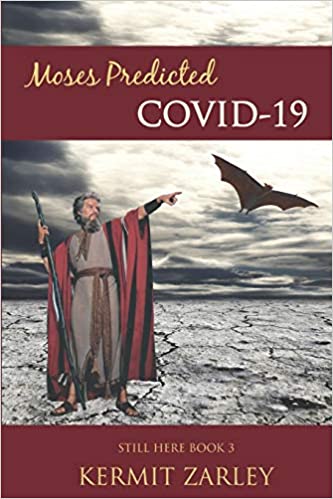
[See my book at amazon.com, Moses Predicted COVID-19, published June 1, 2020.]
Previous Post

April 11, 2020
Historicity in the Gospel of John
Next Post
April 13, 2020 COVID-19: Part 10: Peter Did Not Abolish the Mosaic Food Laws
Browse Our Archives
Select a Category Angels Billy Graham Blog Description Book Reviews Christian Living Christianity Christology Church History Current Events Deity of Christ? Disarmament Eschatology Evangelicalism Ezekiel 38-39 Film Reviews God Golf Gospel Harmonization Health History Holy Spirit Incarnation? Interview Islam Israeli-Palestinian Conflict Jesus Last Empire Literary Announcements Major Championship Winners Masters Monotheism My Books New Testament Old Testament Politics Primitive Weapons Ryder Cup Science Society of Biblical Literature The Bible The Restitution of Jesus Christ Trinitarianism Trinity? Uncategorized Unconditional Love? War on Terrorism
Select a Month October 2026 September 2026 August 2026 July 2026 June 2026 May 2026 April 2026 March 2026 February 2026 January 2026 December 2025 November 2025 October 2025 September 2025 August 2025 July 2025 June 2025 May 2025 April 2025 March 2025 February 2025 January 2025 December 2024 November 2024 October 2024 September 2024 August 2024 July 2024 June 2024 May 2024 April 2024 March 2024 February 2024 January 2024 December 2023 November 2023 October 2023 September 2023 August 2023 July 2023 June 2023 May 2023 April 2023 March 2023 February 2023 January 2023 December 2022 November 2022 October 2022 September 2022 August 2022 July 2022 June 2022 May 2022 April 2022 March 2022 February 2022 January 2022 December 2021 November 2021 October 2021 September 2021 August 2021 July 2021 June 2021 May 2021 April 2021 March 2021 February 2021 January 2021 December 2020 November 2020 October 2020 September 2020 August 2020 July 2020 June 2020 May 2020 April 2020 March 2020 February 2020 January 2020 December 2019 November 2019 October 2019 September 2019 August 2019 July 2019 June 2019 May 2019 April 2019 March 2019 February 2019 January 2019 December 2018 November 2018 October 2018 September 2018 August 2018 July 2018 June 2018 May 2018 April 2018 March 2018 February 2018 January 2018 December 2017 November 2017 October 2017 September 2017 August 2017 July 2017 June 2017 May 2017 April 2017 March 2017 February 2017 January 2017 December 2016 November 2016 October 2016 September 2016 August 2016 July 2016 June 2016 May 2016 April 2016 March 2016 February 2016 January 2016 December 2015 November 2015 October 2015 September 2015 August 2015 July 2015 June 2015 May 2015 April 2015 March 2015 February 2015 January 2015 December 2014 November 2014 October 2014 September 2014 July 2014 June 2014 May 2014 April 2014 March 2014 February 2014 January 2014 December 2013 November 2013 October 2013 September 2013 August 2013 July 2013 June 2013 May 2013 April 2013
Follow Us!
TAKE THE
Religious Wisdom Quiz
Who said, "Faith without works is dead"?
Select your answer to see how you score.
Peter Paul John James
Books by This Author Books by Kermit Zarley Blog
Related posts from Kermit Zarley Blog

Trump's Desperate Moves Before Mid-Term Election Are Hurting

Do Plants Experience Consciousness?

Christians Are Not Sexual Prudes as the Media...

Israeli-Palestinian Conflict Getting Much Worse
TRENDING AT PATHEOS Progressive Christian

Nearly every morning, I make the drive to Detroit with my high-school-age...

The Real AI Story Is Adoption Without Trust
Artificial intelligence has crossed a political threshold. It is no longer a...

A new article, written by Jeff Lindsay and Gale L. Pooley,...

Swimfan: Forgotten Aughts Pleasures
This is a recovery effort. In 2002, My Big Fat Greek Wedding...

Top Three Anti-Catholic Lies About Catholicism
This is my initial transcript for the video, "THE 3 WORST...

Pope Leo Celebrates Mass for Nurses & Docs...
I don't have any idea how he did it, but Pope Leo...
view all Progressive Christian blogs
Ad-Free & Subscriber Log-In Subscription Support
- About Us
- 2026 Calendar
- Videos
- Podcasts
- Library of World Religions
- Faith In Media Tracker
- Advertise With Us
- Write for Us
- Privacy Policy
- Terms of Service
- Do Not Sell My Data
- Contact Us
- Radiant Digital
- Manage Newsletter Subscriptions
- Unsubscribe From Notifications
- Sitemap
Copyright 2008-2026, Patheos. All rights reserved.
Subscription Support Ad-Free & Subscriber Log-In
Follow Patheos