
BuddhistCatholicContemplativeEvangelicalGeneral ChristianHinduJewishLatter-day SaintMuslimNew VisionsProgressive Christian
Beliefs
- Buddhist
- Catholic
- Contemplative
- Evangelical
- General Christian
- Hindu
- Jewish
- Latter-day Saint
- More Voices
- Muslim
- New Visions
- Pagan
- Progressive Christian
Topics
- Religion News
- Food and Religion
- Sports and Religion
- Religious Art
- Religious Music and Entertainment
- Religious Events
- History and Religion
- Style and Religion
- Politics and Religion
- Women in Religion
- Recreation Outdoors and Religion
- Business Finance and Religion
- Careers Workplace and Religion
- Education and Religion
- Family Parenting and Religion
- Health Fitness and Religion
- Home and Religion
- Relationships and Religion
- Technology and Religion
- Travel and Religion
Columnists
- Buddhist Columnists
- Business Finance and Religion Columnists
- Careers Workplace and Religion Columnists
- Catholic Columnists
- Contemplative Columnists
- Education and Religion Columnists
- Evangelists Columnists
- Family Parenting and Religion Columnists
- General Christian Columnists
- Health Fitness and Religion Columnists
- Hindu Columnists
- History and Religion Columnists
- Home and Religion Columnists
- Jewish Columnists
- More Voices Columnists
- Latter Day Columnists
- Muslim Columnists
- New Visions Columnists
- Nonreligious Columnists
- Pagan Columnists
- Politics and Religion Columnists
- Progressive Columnists
- Recreation Outdoors and Religion Columnists
- Relationships and Religion Columnists
- Religion News Columnists
- Religious Art Columnists
- Religious Events Columnists
- Religious Music and Entertainment Columnists
- Sports and Religion Columnists
- Style and Religion Columnists
- Technology and Religion Columnists
- Travel and Religion Columnists
- Women in Religion Columnists
Resource Library
- 2026 Calendar
- Library of World Religions
- The 100 Most Holy Places on Earth
- Patheos Answers
- Podcasts
- Videos
- Faith Leaders Database
- Anglican Episcopalian
- Bahai
- Baptist
- Buddhism
- Christianity
- Confucianism
- Eastern Orthodoxy
- Hinduism
- Holiness and Pentecostal
- ISKCON
- Islam
- Judaism
- Lutheran
- Methodist
- The Church of Jesus Christ of Latter-day Saints
- New Age
- Paganism
- Presbytarian and Reformed
- Protestantism
- Religion Behind the Scenes
- Roman Catholic
- Scientology
- Shia Islam
- Sikhism
- Sufism
- Sunni Islam
- Taoism
- Zen
- See all religions
Research Tools
 Ad-Free & Subscriber Log-In Subscription Support
Ad-Free & Subscriber Log-In Subscription Support
Follow Patheos 

- Trending:
- Forgiveness
- |
- Marriage
- |
- Consciousness
- |
- Death Penalty
- |
- Election
- |
- Halloween

-
Categories
-
Christian Living
-
Christology
-
Golf
-
My Books
- Home
- Progressive Christian
- Religion News
- Dunn Says Jesus Didn’t Say the “I Am” Sayings in John
Dunn Says Jesus Didn’t Say the “I Am” Sayings in John
Last updated on: May 4, 2019 at 9:15 pm by Kermit Zarley
Dunn Says Jesus Didn’t Say the “I Am” Sayings in John 2019-05-04T21:15:51-07:00 Kermit Zarley
Patheos Explore the world's faith through different perspectives on religion and spirituality! Patheos has the views of the prevalent religions and spiritualities of the world.
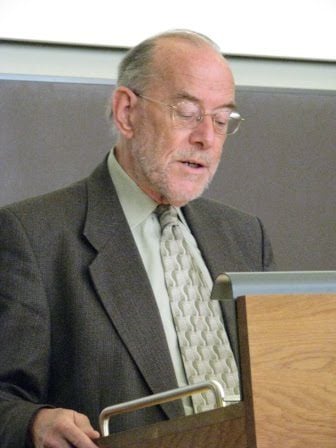 Dr. James D. G. Dunn is one of the foremost New Testament scholars in the world. And he is a friend of mine. I love Jimmy Dunn. I have learned so much from the times I’ve been with him, but especially from his voluminous writings. Jimmy is such a careful scholar. He is now retired but still writing. He is an Englishman, a Methodist, and a moderate evangelical.
Dr. Dunn has a new book out entitled Jesus According to the New Testament (Eerdmans, Jan. 2019). I am looking forward to reading it.
The two biggest differences in Jesus’ teaching between the synoptic gospels (Matthew, Mark, and Luke) and the Gospel of John are (1) the synoptics mostly present Jesus teaching parables while John has no such parables, and (2) John has Jesus saying several “I am” (Greek ego eimi) statements about his identity whereas the synoptics have none of them. These differences have perplexed Christians and their scholars.
I notice in Jimmy’s new book that he briefly addresses these two differences. He quotes most of Jesus’ “I am” sayings having a predicate in the Gospel of John (Jn 6.35; 8.12, 58; 10.11; 11.25; 14.6; 15.1), I think leaving out only Jn 10.7, 9, “I am the gate/door.” Jimmy then says of the Gospel of John (pp. 54-55), “It is a striking fact that these ‘I am’ sayings appear only in the Fourth Gospel. It is almost impossible to believe that there were such sayings in the Jesus tradition, sayings that Jesus was remembered as uttering about himself, and yet all three synoptic evangelists ignored them completely. Much the more obvious explanation is that they were sayings attributed to Jesus by John not because he was remembered as uttering them, but because they brought out the significance of Jesus and his ministry like nothing else in the Jesus tradition.”
So, Dunn suggests that Jesus didn’t actually say any of the “I am” sayings with predicates in the Gospel of John because none of them are recorded in any of the synoptics, nor do they have any similar self-identification sayings of Jesus.
I can’t accept this. I think the main reason the Gospel of John presents a different picture of Jesus than that in the synoptic gospels is that Jesus’ ministry reported in the synoptics is primarily in Galilee, and some in Perea, whereas nearly all of the material about Jesus in the Gospel of John has him attending the feasts at Jerusalem. Thus, in the Galilean ministry portrayed in the synoptics, Jesus addresses common folk; but in Jesus’ Johannine sayings uttered mostly at the feasts at Jerusalem, and often at the temple, Jesus sometimes encountered religious authorities. Yet most of those sayings were delivered privately to his disciples. Thus, John reports a different segment of Jesus’ ministry than the synoptics do. Plus, all of John 12–20 is about Passion Week, which was at Jerusalem.
This question–about this difference of Jesus “I am” sayings with a predicate in John and nothing like it in the synoptics–relates to how we got the New Testament gospels. The synoptics record mostly meticulous oral tradition handed down by church communities that eventually was written. Ancients mostly were illiterate. Historians claims that in the Mediterranean world during the first century, only about 5% of the people were literate, and these were mostly the elite and politicians. It is possible that Jews in Israel had a higher literacy rate, due to being taught the Torah. But most scholars claim it wouldn’t have been more than 10-15%. I think Craig Evans is one of the few who thinks it was that high or higher. Nevertheless, most people were illiterate.
Thus, oral tradition was of the utmost importance to most people, not written tradition since they could not read or write. Even when Christians gathered together as a congregation on Sundays in the first century, they got their teaching by listening, not by reading. Therefore, the synoptic gospels came into existence as mostly compilations, not authored books. Mark may have gotten most of his material from listening to Peter preaching, as Papias claims, but Matthew and Luke surely collected oral tradition from church communities and perhaps some writings containing oral tradition (cf. Lk 1.1-4).
But that is not how the Gospel of John came into existence. It seems to be mostly the recollections of “the beloved disciple.” Later church tradition identified him as the Apostle John and that he wrote the gospel that is named after him. But the Fourth Gospel is more likely the remembrance of John (yes, I think he probably was the beloved disciple) that was written down by others.
So, I think the answer to why the difference between John and the synoptics is this: different time, different place. And because of it, Jesus spoke mostly to different people and thus he ministered accordingly. In the Galilean and Perean ministry, he revealed his wisdom in teaching to crowds, and he demonstrated the power of God in him to heal others. But at Jerusalem, being often before the religious authorities, Jesus said a lot about his identity, however obscurely.
So, I don’t like to disagree with my favorite Bible teacher, Jimmy Dunn, but I think Jesus did utter the “I am” sayings with predicates that are attributed to him in the Gospel of John.
Previous Post

April 29, 2019
Dr. Daniel I. Block Tells How the Bible Defines "Worship"?
Next Post
May 1, 2019 Attorney General William Barr's Congressional Testimony Today
Browse Our Archives
Select a Category Angels Billy Graham Blog Description Book Reviews Christian Living Christianity Christology Church History Current Events Deity of Christ? Disarmament Eschatology Evangelicalism Ezekiel 38-39 Film Reviews God Golf Gospel Harmonization Health History Holy Spirit Incarnation? Interview Islam Israeli-Palestinian Conflict Jesus Last Empire Literary Announcements Major Championship Winners Masters Monotheism My Books New Testament Old Testament Politics Primitive Weapons Ryder Cup Science Society of Biblical Literature The Bible The Restitution of Jesus Christ Trinitarianism Trinity? Uncategorized Unconditional Love? War on Terrorism
Select a Month October 2026 September 2026 August 2026 July 2026 June 2026 May 2026 April 2026 March 2026 February 2026 January 2026 December 2025 November 2025 October 2025 September 2025 August 2025 July 2025 June 2025 May 2025 April 2025 March 2025 February 2025 January 2025 December 2024 November 2024 October 2024 September 2024 August 2024 July 2024 June 2024 May 2024 April 2024 March 2024 February 2024 January 2024 December 2023 November 2023 October 2023 September 2023 August 2023 July 2023 June 2023 May 2023 April 2023 March 2023 February 2023 January 2023 December 2022 November 2022 October 2022 September 2022 August 2022 July 2022 June 2022 May 2022 April 2022 March 2022 February 2022 January 2022 December 2021 November 2021 October 2021 September 2021 August 2021 July 2021 June 2021 May 2021 April 2021 March 2021 February 2021 January 2021 December 2020 November 2020 October 2020 September 2020 August 2020 July 2020 June 2020 May 2020 April 2020 March 2020 February 2020 January 2020 December 2019 November 2019 October 2019 September 2019 August 2019 July 2019 June 2019 May 2019 April 2019 March 2019 February 2019 January 2019 December 2018 November 2018 October 2018 September 2018 August 2018 July 2018 June 2018 May 2018 April 2018 March 2018 February 2018 January 2018 December 2017 November 2017 October 2017 September 2017 August 2017 July 2017 June 2017 May 2017 April 2017 March 2017 February 2017 January 2017 December 2016 November 2016 October 2016 September 2016 August 2016 July 2016 June 2016 May 2016 April 2016 March 2016 February 2016 January 2016 December 2015 November 2015 October 2015 September 2015 August 2015 July 2015 June 2015 May 2015 April 2015 March 2015 February 2015 January 2015 December 2014 November 2014 October 2014 September 2014 July 2014 June 2014 May 2014 April 2014 March 2014 February 2014 January 2014 December 2013 November 2013 October 2013 September 2013 August 2013 July 2013 June 2013 May 2013 April 2013
Follow Us!
TAKE THE
Religious Wisdom Quiz
Who said, "He must increase, but I must decrease"?
Select your answer to see how you score.
Peter John the Baptist Elijah Paul
Books by This Author Books by Kermit Zarley Blog
Related posts from Kermit Zarley Blog

Stephen Hawking Said "Losers" Boast about IQ—That's Trump

Trump Should Retake his Old Name Drumpf that...
Counting the Cost Before Going to War
Financial Disclosure: Trump Profits Billions as President
TRENDING AT PATHEOS Progressive Christian

Looking at the Largest Orthodox Cathedral on Earth
There is often a considerable amount of anger and, shall we...

The Problem with False Prophets
Miller’s Station UMC| 10/18/26| Anchor Verse: Jeremiah 23: 1, 9-23 I...

Emotion in Early Christianity by Andrew Crislip
Andrew Crislip’s Emotion in Early Christianity examines an often overlooked dimension of...

16 Spiritual Touchstones for a More Grounded Life
After decades of spiritual study, here are 16 principles I try...

Catholic Evangelization: Sharing Your Faith Every Day
Welcome back to the Graceful Awakening mini-series called, “From Faith to Mission.” ...

The Pillar of the Boatmen: the Ancient Monument...
The Pillar of the Boatmen is a Romano-Gaulish sculpture that dates from...
view all Progressive Christian blogs
Ad-Free & Subscriber Log-In Subscription Support
- About Us
- 2026 Calendar
- Videos
- Podcasts
- Library of World Religions
- Faith In Media Tracker
- Advertise With Us
- Write for Us
- Privacy Policy
- Terms of Service
- Do Not Sell My Data
- Contact Us
- Radiant Digital
- Manage Newsletter Subscriptions
- Unsubscribe From Notifications
- Sitemap
Copyright 2008-2026, Patheos. All rights reserved.
Subscription Support Ad-Free & Subscriber Log-In
Follow Patheos