
BuddhistCatholicContemplativeEvangelicalGeneral ChristianHinduJewishLatter-day SaintMuslimNew VisionsProgressive Christian
Beliefs
- Buddhist
- Catholic
- Contemplative
- Evangelical
- General Christian
- Hindu
- Jewish
- Latter-day Saint
- More Voices
- Muslim
- New Visions
- Pagan
- Progressive Christian
Topics
- Religion News
- Food and Religion
- Sports and Religion
- Religious Art
- Religious Music and Entertainment
- Religious Events
- History and Religion
- Style and Religion
- Politics and Religion
- Women in Religion
- Recreation Outdoors and Religion
- Business Finance and Religion
- Careers Workplace and Religion
- Education and Religion
- Family Parenting and Religion
- Health Fitness and Religion
- Home and Religion
- Relationships and Religion
- Technology and Religion
- Travel and Religion
Columnists
- Buddhist Columnists
- Business Finance and Religion Columnists
- Careers Workplace and Religion Columnists
- Catholic Columnists
- Contemplative Columnists
- Education and Religion Columnists
- Evangelists Columnists
- Family Parenting and Religion Columnists
- General Christian Columnists
- Health Fitness and Religion Columnists
- Hindu Columnists
- History and Religion Columnists
- Home and Religion Columnists
- Jewish Columnists
- More Voices Columnists
- Latter Day Columnists
- Muslim Columnists
- New Visions Columnists
- Nonreligious Columnists
- Pagan Columnists
- Politics and Religion Columnists
- Progressive Columnists
- Recreation Outdoors and Religion Columnists
- Relationships and Religion Columnists
- Religion News Columnists
- Religious Art Columnists
- Religious Events Columnists
- Religious Music and Entertainment Columnists
- Sports and Religion Columnists
- Style and Religion Columnists
- Technology and Religion Columnists
- Travel and Religion Columnists
- Women in Religion Columnists
Resource Library
- 2026 Calendar
- Library of World Religions
- The 100 Most Holy Places on Earth
- Patheos Answers
- Podcasts
- Videos
- Faith Leaders Database
- Anglican Episcopalian
- Bahai
- Baptist
- Buddhism
- Christianity
- Confucianism
- Eastern Orthodoxy
- Hinduism
- Holiness and Pentecostal
- ISKCON
- Islam
- Judaism
- Lutheran
- Methodist
- The Church of Jesus Christ of Latter-day Saints
- New Age
- Paganism
- Presbytarian and Reformed
- Protestantism
- Religion Behind the Scenes
- Roman Catholic
- Scientology
- Shia Islam
- Sikhism
- Sufism
- Sunni Islam
- Taoism
- Zen
- See all religions
Research Tools
 Ad-Free & Subscriber Log-In Subscription Support
Ad-Free & Subscriber Log-In Subscription Support
Follow Patheos 

- Trending:
- Forgiveness
- |
- Marriage
- |
- Consciousness
- |
- Death Penalty
- |
- Election
- |
- Halloween

-
Categories
-
Christian Living
-
Christology
-
Golf
-
My Books
- Home
- Progressive Christian
- Religion News
- Reconciling “You shall die” in Gen 2.17
Reconciling “You shall die” in Gen 2.17
Last updated on: November 13, 2018 at 10:42 pm by Kermit Zarley
Reconciling “You shall die” in Gen 2.17 2018-11-13T22:42:24-07:00 Kermit Zarley
Patheos Explore the world's faith through different perspectives on religion and spirituality! Patheos has the views of the prevalent religions and spiritualities of the world.
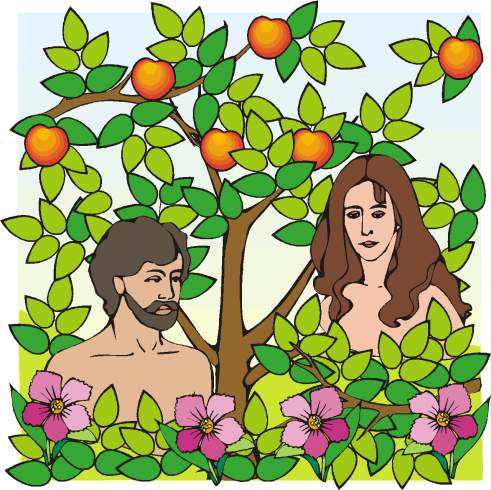 In the book of Genesis we read, “The LORD God took the man and put him in the garden of Eden to till it and keep it. And the LORD God commanded the man, ‘You may freely eat of every tree of the garden; but of the tree of the knowledge of good and evil you shall not eat, for in the day that you eat of it you shall die” (Gen 2.15-17).
Then the text says God made Eve (Gen 2.18-24). But it does not say anything about either God or Adam telling Eve about the command not to eat fruit from the forbidden tree.
In the next chapter, in Genesis 3, the serpent appears and tempts Eve to take fruit from the forbidden tree and eat it. She replies by telling the serpent that God has told them not to do that (Gen 3.1-3). Thus, the reader must understand that most likely Adam, but perhaps God, told this to Eve. This is an example of how some information in biblical narratives, especially those in Genesis because they need to be brief, is intended by the author for the reader to assume. The reason is obvious. It often was imperative for ancient documents to be written in short compass.
Then when Adam and Eve ate fruit of the forbidden tree, they did not immediately die as most readers of Genesis have expected and that God predicted they would. There is no problem for readers regarding Eve’s remark, that “you shall die” (Gen 3.3). Why? It does not specify a certain time they would die. In contrast, God earlier had specified the time they would die by saying to Adam, “in the day that you eat of it you shall die.”
But Adam and Eve did not die the day they ate of the forbidden fruit. Rather, they lived hundreds of years later until they died. Regarding Adam alone, we read later, “Thus all the days that Adam lived were nine hundred thirty years; and he died” (Gen 5.5).
So, both Bible scholars and general readers of the Bible have regarded this scenario in the book of Genesis about initial death to be a conundrum that needs some kind of explanation or else it must be dismissed as a discrepancy. Well, there have been many suggestions about how to do this–how to reconcile Gen 2.17 with the fact that Adam ate of the forbidden tree but didn’t die until perhaps nearly a thousand years later.
I am a member of the Society of Biblical Literature (SBL). Every year for nearly the past twenty years I have attended SBL’s Annual Meeting. It is always scheduled in a different, large North American city the weekend prior to Thanksgiving. Its primary feature is that so many scholars deliver papers, being about 20-30 minutes in length, at hundreds of sessions, and almost all of it is about the Bible.
I just glanced through the program for this year’s SBL Annual Meeting and noticed that Professor Jason A. Riley of Fuller Theological Seminary (Pasadena, CA) will be delivering a 30-minute paper entitled “The Legal Loophole in Gen 2:17: ‘You Shall Die’ but you Shall Not Live.” The following is his abstract describing the paper’s content:
“The delay of the death sentence in Genesis 2-3 has been a source of consternation for readers of the Bible as early as the second century B.C. (e.g., the book of Jubilees might provide the earliest interpretation of the death sentence; see Jub 4:29-30). Over the past two-thousand years, scholars have attempted to explain the apparent contradiction between the explicit death sentence in Gen 2:17 and the fact that Adam and Eve do not die on the day in which they ate the fruit of the tree of good and evil. Explanations range widely, e.g., (1) Yhwh meant that Adam and Eve would become mortal, (2) the punishment only seemed delayed but was ultimately carried out because of the meaning of the infinitive absolute (Hamilton, Speiser) or because a day to God is like a thousand years and Adam only lived 930 years (Jubilees), (3) the death that Yhwh referred to was spiritual death (Augustine), (4) Yhwh demonstrated mercy by not killing Adam and Eve, (5) withdrawing the possibility of rejuvenation by the tree of life (Sarna) by (6) expulsion from the garden was more catastrophic than death (Sarna, Wenham), or that (7) God simply changed his mind (Skinner). Many explanations for the apparent contradiction in the text are often influenced by the interpreters’ theological presuppositions and rarely incorporate comparative data from the ancient Near East. This paper will argue that there is a simple literary explanation for the fact that the death sentence is not immediately carried out, and that this literary reason is made possible by the legal language used by Yhwh in Gen 2:17. The legal phrase ‘you shall die’ is understood by comparison with legal terminology used throughout the ancient Near East and in the Hebrew Bible, first employed in the Laws of Eshnunna.”
I don’t know about the legal language he mentions, so maybe I will attend this lecture. However, I notice that among the many interpretations he mentions that have been offered throughout church history to try to solve this puzzle, he does not mention the one I have been believing for many years now. And I don’t know if there are scholars who propose it. I haven’t read it in any of my commentaries on Genesis.
Here it is: Adam and Eve began to die on the very day they ate of the forbidden fruit because that is when the death principle entered into their bodies. What is the death principle? Cells in our bodies are dying every day. Fortunately, new cells naturally are being created to take their places. But when we grow old, more cells are dying than new cells are being generated to take their places. Thus, when Adam and Eve ate of the forbidden fruit, for the first time cells in their bodies began to die. That is what God meant when he said, “in the day that you eat of it you shall die.” Yet it took hundreds of years before enough body cells were dying that brought the death of the entire body of Adam and the body of Eve.
Your thoughts!
Previous Post

June 4, 2018
Jews Must Repent for Jesus to Return
Next Post
June 9, 2018 Putin Has a Grip on Trump
Browse Our Archives
Select a Category Angels Billy Graham Blog Description Book Reviews Christian Living Christianity Christology Church History Current Events Deity of Christ? Disarmament Eschatology Evangelicalism Ezekiel 38-39 Film Reviews God Golf Gospel Harmonization Health History Holy Spirit Incarnation? Interview Islam Israeli-Palestinian Conflict Jesus Last Empire Literary Announcements Major Championship Winners Masters Monotheism My Books New Testament Old Testament Politics Primitive Weapons Ryder Cup Science Society of Biblical Literature The Bible The Restitution of Jesus Christ Trinitarianism Trinity? Uncategorized Unconditional Love? War on Terrorism
Select a Month October 2026 September 2026 August 2026 July 2026 June 2026 May 2026 April 2026 March 2026 February 2026 January 2026 December 2025 November 2025 October 2025 September 2025 August 2025 July 2025 June 2025 May 2025 April 2025 March 2025 February 2025 January 2025 December 2024 November 2024 October 2024 September 2024 August 2024 July 2024 June 2024 May 2024 April 2024 March 2024 February 2024 January 2024 December 2023 November 2023 October 2023 September 2023 August 2023 July 2023 June 2023 May 2023 April 2023 March 2023 February 2023 January 2023 December 2022 November 2022 October 2022 September 2022 August 2022 July 2022 June 2022 May 2022 April 2022 March 2022 February 2022 January 2022 December 2021 November 2021 October 2021 September 2021 August 2021 July 2021 June 2021 May 2021 April 2021 March 2021 February 2021 January 2021 December 2020 November 2020 October 2020 September 2020 August 2020 July 2020 June 2020 May 2020 April 2020 March 2020 February 2020 January 2020 December 2019 November 2019 October 2019 September 2019 August 2019 July 2019 June 2019 May 2019 April 2019 March 2019 February 2019 January 2019 December 2018 November 2018 October 2018 September 2018 August 2018 July 2018 June 2018 May 2018 April 2018 March 2018 February 2018 January 2018 December 2017 November 2017 October 2017 September 2017 August 2017 July 2017 June 2017 May 2017 April 2017 March 2017 February 2017 January 2017 December 2016 November 2016 October 2016 September 2016 August 2016 July 2016 June 2016 May 2016 April 2016 March 2016 February 2016 January 2016 December 2015 November 2015 October 2015 September 2015 August 2015 July 2015 June 2015 May 2015 April 2015 March 2015 February 2015 January 2015 December 2014 November 2014 October 2014 September 2014 July 2014 June 2014 May 2014 April 2014 March 2014 February 2014 January 2014 December 2013 November 2013 October 2013 September 2013 August 2013 July 2013 June 2013 May 2013 April 2013
Follow Us!
TAKE THE
Religious Wisdom Quiz
True or False: In Revelation, the New Jerusalem has ten gates, each made of a single pearl.
Select your answer to see how you score.
FALSE TRUE
Books by This Author Books by Kermit Zarley Blog
Related posts from Kermit Zarley Blog

Acclaimed Author Kurt Andersen Identifies Trump as a...
Why The World's Population Replacement Rates Are in...

Tucker Carlson Apologizes to America for Helping Elect...

Fitzpatrick Wins RBC Heritage in Playoff with Scheffler
TRENDING AT PATHEOS Progressive Christian

Pope Leo Celebrates Mass for Nurses & Docs...
I don't have any idea how he did it, but Pope Leo...

The Sermon on the Mount, Part I: Matthew...
The Sermon on the Mount, Part I (Matthew 4:12-5:12) St. Matthew moves...

What's up from Crossway: Reviewing some of their latest A few weeks...

Janie Learns the Way of the Cross: A...
Teaching children about Jesus' Passion can be challenging. Many parents and educators...

Looking For Good Catholic Writing - October 2026
He alone extends the heavens, and he walks upon the waves of...

In "Irreplaceable," our book on vocation and technology, Trevor Sutton and I...
view all Progressive Christian blogs
Ad-Free & Subscriber Log-In Subscription Support
- About Us
- 2026 Calendar
- Videos
- Podcasts
- Library of World Religions
- Faith In Media Tracker
- Advertise With Us
- Write for Us
- Privacy Policy
- Terms of Service
- Do Not Sell My Data
- Contact Us
- Radiant Digital
- Manage Newsletter Subscriptions
- Unsubscribe From Notifications
- Sitemap
Copyright 2008-2026, Patheos. All rights reserved.
Subscription Support Ad-Free & Subscriber Log-In
Follow Patheos