
BuddhistCatholicContemplativeEvangelicalGeneral ChristianHinduJewishLatter-day SaintMuslimNew VisionsProgressive Christian
Beliefs
- Buddhist
- Catholic
- Contemplative
- Evangelical
- General Christian
- Hindu
- Jewish
- Latter-day Saint
- More Voices
- Muslim
- New Visions
- Pagan
- Progressive Christian
Topics
- Religion News
- Food and Religion
- Sports and Religion
- Religious Art
- Religious Music and Entertainment
- Religious Events
- History and Religion
- Style and Religion
- Politics and Religion
- Women in Religion
- Recreation Outdoors and Religion
- Business Finance and Religion
- Careers Workplace and Religion
- Education and Religion
- Family Parenting and Religion
- Health Fitness and Religion
- Home and Religion
- Relationships and Religion
- Technology and Religion
- Travel and Religion
Columnists
- Buddhist Columnists
- Business Finance and Religion Columnists
- Careers Workplace and Religion Columnists
- Catholic Columnists
- Contemplative Columnists
- Education and Religion Columnists
- Evangelists Columnists
- Family Parenting and Religion Columnists
- General Christian Columnists
- Health Fitness and Religion Columnists
- Hindu Columnists
- History and Religion Columnists
- Home and Religion Columnists
- Jewish Columnists
- More Voices Columnists
- Latter Day Columnists
- Muslim Columnists
- New Visions Columnists
- Nonreligious Columnists
- Pagan Columnists
- Politics and Religion Columnists
- Progressive Columnists
- Recreation Outdoors and Religion Columnists
- Relationships and Religion Columnists
- Religion News Columnists
- Religious Art Columnists
- Religious Events Columnists
- Religious Music and Entertainment Columnists
- Sports and Religion Columnists
- Style and Religion Columnists
- Technology and Religion Columnists
- Travel and Religion Columnists
- Women in Religion Columnists
Resource Library
- 2026 Calendar
- Library of World Religions
- The 100 Most Holy Places on Earth
- Patheos Answers
- Podcasts
- Videos
- Faith Leaders Database
- Anglican Episcopalian
- Bahai
- Baptist
- Buddhism
- Christianity
- Confucianism
- Eastern Orthodoxy
- Hinduism
- Holiness and Pentecostal
- ISKCON
- Islam
- Judaism
- Lutheran
- Methodist
- The Church of Jesus Christ of Latter-day Saints
- New Age
- Paganism
- Presbytarian and Reformed
- Protestantism
- Religion Behind the Scenes
- Roman Catholic
- Scientology
- Shia Islam
- Sikhism
- Sufism
- Sunni Islam
- Taoism
- Zen
- See all religions
Research Tools
 Ad-Free & Subscriber Log-In Subscription Support
Ad-Free & Subscriber Log-In Subscription Support
Follow Patheos 

- Trending:
- Forgiveness
- |
- Marriage
- |
- Consciousness
- |
- Death Penalty
- |
- Election
- |
- Halloween

-
Categories
-
Christian Living
-
Christology
-
Golf
-
My Books
- Home
- Progressive Christian
- Religion News
- Martin Luther’s Anti-Semitic Legacy
Martin Luther’s Anti-Semitic Legacy
Last updated on: March 1, 2018 at 1:19 am by Kermit Zarley
Martin Luther’s Anti-Semitic Legacy 2018-03-01T01:19:31-07:00 Kermit Zarley
Patheos Explore the world's faith through different perspectives on religion and spirituality! Patheos has the views of the prevalent religions and spiritualities of the world.
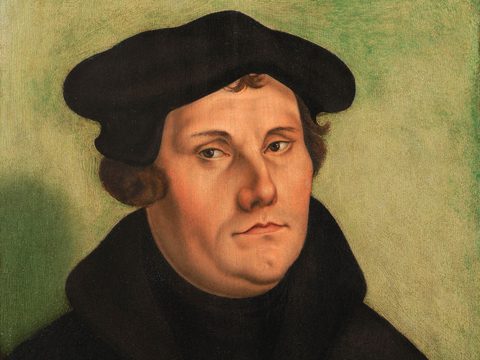 Today (2/28/18), I attended two lectures on “Luther and the Legacy of Anti-Semitism” held at the Arizona State University in Tempe, Arizona, which is ASU’s main campus. It was sponsored by two ASU organizations: the Center for the Study of Religion and Conflict and the Center f0r Jewish Studies. The two speakers were Gary McCluskey, pastor of the local University Lutheran Church and director of its Campus Ministry at ASU, and Volker Benkert, ASU professor of the School of Historical, Philosophical and Religious Studies. The University Lutheran Church is a member of the Lutheran Church of America, which is the largest Lutheran denomination in the world.
Gary McCluskey spoke first for 30 minutes. He provided a slew of facts as follows:
Martin Luther was born in Germany in 1483 and died in 1546. He entered a monastery in 1505. He became a professor mostly of Old Testament in a small college town of Wittenberg, Germany. He nailed his famed “95 Theses” to the Wittenberg Church door in 1917. Modern scholars largely denied he actually nailed it there, but some recent scholars affirm it. This was an unexpected moment that started the Protestant Reformation. Luther only wanted to challenge others to debate him mostly regarding the abusive Roman Catholic practice of indulgences, as this brief document says often.
What was Martin Luther like? He had poor health, being troubled by kidney stones and two heart attacks. He was “idealistic, optimistic, bombastic, and vitriolic.” Early in his career, Luther was especially incensed against Anabaptists, the forerunners of modern Baptists. Also early in his career, Luther was obsessed with sparking the conversion of Jews to Christianity. This was strange since there were no Jews in Wittenberg, and Luther never had much contact with Jews even though Germany had many.
Martin Luther had a strong belief that the world was going to end soon, in which Jesus literally would return. [McCluskey did not says this: I think Luther also believed it would be preceded by a conversion of Jews to Christianity. Many Christians have thought this is indicated in Luther’s favorite Bible book, the book of Romans, in Romans 11.25-27.]
Anti-Semitism was quite pervasive in Germany both before and during Luther’s life. So, he was affected by his culture in this. By 1530, Luther changed when he became frustrated with Jews for not becoming Christians. For the next and last sixteen years of Luther’s life, he became increasingly anti-Semitic.
Europe had many restrictions against Jews. These were imposed upon them especially by the Roman Catholic Church (RCC). Many Jews worked in banking, and they charged interest on loans. Hitherto, Christians had regarded that as usery and thus a sin. One reason Jews gravitated to banking is that European governments forbade them to work in manufacturing or real estate. In fact, European states restricted the Jews’ clothing, with some requiring that they wear yellow to identify themselves as Jews. By the 13th century, Vienna became the first place that required Jews to live in ghettos. The RCC had a Constitution for Jews to suppress them.
Luther believed the typical European rumors about Jews, that they poisoned water wells and sacrificed children to use their blood in rituals. Luther also accepted the RCC’s designation of Jews as “Christ-killers,” blaming only them for the death of Jesus.
Not long after the Protestant Reformation began, Luther’s Church condemned and excommunicated him. For several years, Luther’s life was in danger. Pope Leo X demanded that Luther cease his writings. Martin refused and eventually translated the entire Bible into German, which was a first. He also was the first German professor to learn Hebrew sufficiently in order to translate the Old Testament.
Luther’s first mention of Jews in his writings is in his commentary on the Psalms, published in 1515. He struggled with the book of Romans saying God still has a covenant with Jews even though they reject Jesus as Israel’s Messiah. In 1523, Luther wrote and published a pamphlet entitled “Jesus Christ was born a Jew,” citing only Old Testament texts which was also a first. In it, he said Christians need to treat Jews fairly as neighbors. But by 1538, Luther had become so hardened against Jews that he wrote and published “Against the Sabbatarians.” These were Christians who worshiped on the Jewish Sabbath–Saturday. In this document, Luther blamed Jews for this.
But the most damning writing against Martin Luther for his growing anti-Semitic vitriolic was his 1543 publication “On the Jews and Their Lies.” In it, he exhorts people to literally burn Jews’ houses, burn synagogues, and for the German government to expel all Jews. But it should be known that Luther was responding in this booklet to a Jewish document published recently in Germany which claimed that Jesus’ mother, Mary, was a prostitute, that Jesus never did miracles, and that he did not literally arise from the dead, which latter has always been a main tenant of Christian doctrine.
Most German princes ignored Martin Luther and his malice, especially that against Jews. Yet Luther had become one of the most famous people in Germany. Orthodox Lutherans unashamedly came to like Luther’s anti-Semitism.
Pastor McCluskey concluded his lecture with these two poignant remarks: “You can explain Luther, but not defend him. We Lutherans have to admit his faults and take responsibility for Martin Luther.”
Volker Benkert then spoke, also for about 30 minutes. Volker is Roman Catholic. He said, “Martin Luther is a national icon” for Germany. Volker made these remarks:
With Luther’s German translation of the Bible, he created a German language that helped unify Germans. The Hollywood movie entitled “Luther” that was released in 2003 presents an apologetic view of Martin Luther which omits his anti-Semitism. (It was produced by Protestant churches.) Many Lutherans make a distinction about Luther’s career with the year 1530 as critical, when his anti-Semitism first emerged. These Lutherans therefore identify “Luther 1,” whom they like, and “Luther 2,” whom they don’t like. Some of these Lutherans would have preferred that Martin had died in 1530. Luther viewed Turks, Muslims, and Jews as less than equal to other humans.
How does Martin Luther relate to Germany’s Nazi Party and the Holocaust? The Nazis cited some of Luther’s anti-Semitic remarks from his writings. Yet the anti-Semitism of Martin Luther and that of the Nazi Party were different. Luther’s anti-Semitism was only religious; the Nazis’ anti-Semitism was racial.
The Protestant Church split in Germany during the Nazi era. Bonhoeffer led the split from Orthodox Lutherans, which was called “the Confessing Church” of Lutherans. Orthodox Lutherans cited Martin Luther’s anti-Semitism in calling for a “cleansing” of Jews from Germany, which led to the Nazi’s extermination of them in the Holocaust.
Professor Benkert concluded his lecture by saying that after WWII, “German Lutherans have had to grapple with Martin’s Luther’s anti-Semitic legacy.”
A Question and Answer period then ensued. I thought all of the questions asked were quite good and that it shows that the audience of about 100 people were fairly educated and somewhat elderly. The Q&A went as follows:
Question: What did Bonhoeffer think of Luther’s theology? Benkert said Bonhoeffer respected Luther’s strong belief in “individual conscience.” McCluskey said Bonhoeffer lived in New York City and felt called [by God] to return to Germany to affect positive change there. Benkert added that Luther’s primary importance [in history] was his highlighting the need for reform in the RCC.
Question: How did Orthodox Lutherans reconcile their support of Nazi anti-Semitism with the teachings of Jesus? Benkert said they wrongly perceived Jews as dangerous, powerful people who represented an attack on Germany. In reality, German Jews were a somewhat small group.
Question: Why did Luther care about Jews? McCluskey said there were no Jews in Wittenberg. Yet Luther accepted the anti-Semitic culture of Germany. He was paranoid about it. Luther would have profited from more exposure to Jews. [How about this for application to ourselves.] McCluskey at some point said Luther disliked the term “Lutheran.”
Question: How do Jews regard Luther? The moderator spoke, saying, Luther expected mass conversion of Jews. His disappointment on this led to his anti-Semitism.
Question: How did the Catholic Church respond to the Nazis’ anti-Semitism? McCluskey said, except for some Catholic individuals, it failed to protect Jews or oppose Nazis about it.
Question by a Jew who born in Germany in 1933 and emigrated to the U.S. in 1939: Why doesn’t the church speak out today against hatred toward Jews and Muslims? McCluskey said the media doesn’t report Christian opposition to anti-Semitism and that of the Nazis. Church pastors don’t say much about it, which may be partly due to financial pressure–there would be less monetary donations to the church.
The moderator concluded the event by saying, “Anti-Semitism is still very alive.” Benkert added, “especially by Muslims.”
See my following additional posts about Martin Luther since last fall was the 500th anniversary of the Protestant Reformation, which he started:
“500 Years Since Martin Luther Hatched His Protestant Plot with ’95 Theses’”
“Indulgences and Purgatory in Martin Luther’s 95 Thesis”
“The Many Faces of Martin Luther”
Previous Post

February 27, 2018
Exorcisms on the Rise
Browse Our Archives
Select a Category Angels Billy Graham Blog Description Book Reviews Christian Living Christianity Christology Church History Current Events Deity of Christ? Disarmament Eschatology Evangelicalism Ezekiel 38-39 Film Reviews God Golf Gospel Harmonization Health History Holy Spirit Incarnation? Interview Islam Israeli-Palestinian Conflict Jesus Last Empire Literary Announcements Major Championship Winners Masters Monotheism My Books New Testament Old Testament Politics Primitive Weapons Ryder Cup Science Society of Biblical Literature The Bible The Restitution of Jesus Christ Trinitarianism Trinity? Uncategorized Unconditional Love? War on Terrorism
Select a Month October 2026 September 2026 August 2026 July 2026 June 2026 May 2026 April 2026 March 2026 February 2026 January 2026 December 2025 November 2025 October 2025 September 2025 August 2025 July 2025 June 2025 May 2025 April 2025 March 2025 February 2025 January 2025 December 2024 November 2024 October 2024 September 2024 August 2024 July 2024 June 2024 May 2024 April 2024 March 2024 February 2024 January 2024 December 2023 November 2023 October 2023 September 2023 August 2023 July 2023 June 2023 May 2023 April 2023 March 2023 February 2023 January 2023 December 2022 November 2022 October 2022 September 2022 August 2022 July 2022 June 2022 May 2022 April 2022 March 2022 February 2022 January 2022 December 2021 November 2021 October 2021 September 2021 August 2021 July 2021 June 2021 May 2021 April 2021 March 2021 February 2021 January 2021 December 2020 November 2020 October 2020 September 2020 August 2020 July 2020 June 2020 May 2020 April 2020 March 2020 February 2020 January 2020 December 2019 November 2019 October 2019 September 2019 August 2019 July 2019 June 2019 May 2019 April 2019 March 2019 February 2019 January 2019 December 2018 November 2018 October 2018 September 2018 August 2018 July 2018 June 2018 May 2018 April 2018 March 2018 February 2018 January 2018 December 2017 November 2017 October 2017 September 2017 August 2017 July 2017 June 2017 May 2017 April 2017 March 2017 February 2017 January 2017 December 2016 November 2016 October 2016 September 2016 August 2016 July 2016 June 2016 May 2016 April 2016 March 2016 February 2016 January 2016 December 2015 November 2015 October 2015 September 2015 August 2015 July 2015 June 2015 May 2015 April 2015 March 2015 February 2015 January 2015 December 2014 November 2014 October 2014 September 2014 July 2014 June 2014 May 2014 April 2014 March 2014 February 2014 January 2014 December 2013 November 2013 October 2013 September 2013 August 2013 July 2013 June 2013 May 2013 April 2013
Follow Us!
TAKE THE
Religious Wisdom Quiz
Who said, "Naked I came from my mother’s womb, and naked I shall return"?
Select your answer to see how you score.
David Elijah Solomon Job
Books by This Author Books by Kermit Zarley Blog
Related posts from Kermit Zarley Blog
Family Estrangement Versus Honoring Father and Mother

Christians Are Not Sexual Prudes as the Media...

Scottie Scheffler Wins the Tour Championship

Wyndam Clark Wins BMW Championship
TRENDING AT PATHEOS Progressive Christian

'Super Scam Me' Exposes AI Jon Bon Jovi...
Leslie Pickett believed she was in a relationship with Jon Bon Jovi....

The Brazilian Remake of Kendricks' 'Flywheel' Opens in...
“Flywheel,” the story that launched the Kendrick Brothers’ filmmaking career is getting...

The Dangers of Gradual Accommodation (Winking at Sin)
Recently, the “law of gradualness” resurfaced during the opening of a weeklong,...

The Iron Gates and the Lion of the...
Yesterday, I didn't finish my report about, well, yesterday. So I'll...

The Image: On the Horror of Capitalism and...
The Image Then went the Pharisees, and took counsel how they might...

We are approaching the date of our new American national holiday: October...
view all Progressive Christian blogs
Ad-Free & Subscriber Log-In Subscription Support
- About Us
- 2026 Calendar
- Videos
- Podcasts
- Library of World Religions
- Faith In Media Tracker
- Advertise With Us
- Write for Us
- Privacy Policy
- Terms of Service
- Do Not Sell My Data
- Contact Us
- Radiant Digital
- Manage Newsletter Subscriptions
- Unsubscribe From Notifications
- Sitemap
Copyright 2008-2026, Patheos. All rights reserved.
Subscription Support Ad-Free & Subscriber Log-In
Follow Patheos