
BuddhistCatholicContemplativeEvangelicalGeneral ChristianHinduJewishLatter-day SaintMuslimNew VisionsProgressive Christian
Beliefs
- Buddhist
- Catholic
- Contemplative
- Evangelical
- General Christian
- Hindu
- Jewish
- Latter-day Saint
- More Voices
- Muslim
- New Visions
- Pagan
- Progressive Christian
Topics
- Religion News
- Food and Religion
- Sports and Religion
- Religious Art
- Religious Music and Entertainment
- Religious Events
- History and Religion
- Style and Religion
- Politics and Religion
- Women in Religion
- Recreation Outdoors and Religion
- Business Finance and Religion
- Careers Workplace and Religion
- Education and Religion
- Family Parenting and Religion
- Health Fitness and Religion
- Home and Religion
- Relationships and Religion
- Technology and Religion
- Travel and Religion
Columnists
- Buddhist Columnists
- Business Finance and Religion Columnists
- Careers Workplace and Religion Columnists
- Catholic Columnists
- Contemplative Columnists
- Education and Religion Columnists
- Evangelists Columnists
- Family Parenting and Religion Columnists
- General Christian Columnists
- Health Fitness and Religion Columnists
- Hindu Columnists
- History and Religion Columnists
- Home and Religion Columnists
- Jewish Columnists
- More Voices Columnists
- Latter Day Columnists
- Muslim Columnists
- New Visions Columnists
- Nonreligious Columnists
- Pagan Columnists
- Politics and Religion Columnists
- Progressive Columnists
- Recreation Outdoors and Religion Columnists
- Relationships and Religion Columnists
- Religion News Columnists
- Religious Art Columnists
- Religious Events Columnists
- Religious Music and Entertainment Columnists
- Sports and Religion Columnists
- Style and Religion Columnists
- Technology and Religion Columnists
- Travel and Religion Columnists
- Women in Religion Columnists
Resource Library
- 2026 Calendar
- Library of World Religions
- The 100 Most Holy Places on Earth
- Patheos Answers
- Podcasts
- Videos
- Faith Leaders Database
- Anglican Episcopalian
- Bahai
- Baptist
- Buddhism
- Christianity
- Confucianism
- Eastern Orthodoxy
- Hinduism
- Holiness and Pentecostal
- ISKCON
- Islam
- Judaism
- Lutheran
- Methodist
- The Church of Jesus Christ of Latter-day Saints
- New Age
- Paganism
- Presbytarian and Reformed
- Protestantism
- Religion Behind the Scenes
- Roman Catholic
- Scientology
- Shia Islam
- Sikhism
- Sufism
- Sunni Islam
- Taoism
- Zen
- See all religions
Research Tools
 Ad-Free & Subscriber Log-In Subscription Support
Ad-Free & Subscriber Log-In Subscription Support
Follow Patheos 

- Trending:
- Forgiveness
- |
- Marriage
- |
- Consciousness
- |
- Death Penalty
- |
- Election
- |
- Halloween

-
Categories
-
Christian Living
-
Christology
-
Golf
-
My Books
- Home
- Progressive Christian
- Religion News
- All Christians Should Scrutinize the Doctrine of the Trinity
All Christians Should Scrutinize the Doctrine of the Trinity
Last updated on: April 28, 2025 at 1:50 pm by Kermit Zarley
All Christians Should Scrutinize the Doctrine of the Trinity 2025-04-28T13:50:48-07:00 Kermit Zarley
Patheos Explore the world's faith through different perspectives on religion and spirituality! Patheos has the views of the prevalent religions and spiritualities of the world.
 Christians generally claim that they base their beliefs on the Bible. What about the church teaching of the doctrine of the Trinity? Is that based on the Bible?
For the first three centuries of Christianity, no one had ever heard of the doctrine of the Trinity. That’s because there wasn’t any. Oh, you can go back to church father Tertullian, who was a lawyer and not really a churchman. Some Christians think he taught the doctrine of the Trinity. But that’s not right. He was the first known to use the word trinitas but merely said the Father was Almighty God and Jesus and the Holy Spirit were also divine, but of a lesser divinity.
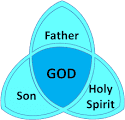 That is not the doctrine of the Trinity that the Catholic Church made official at its Second Ecumenical Council, held in Constantinople in 381. It means that the Father, Jesus the Son, and the Holy Spirit are all equally God. And that council took the Nicene Creed, which had been drafted at the First Ecumenical Council, held at Nicea in 325, deleted part of it and altered some of what remained. Yet neither the Nicene Creed nor the later Constantinople Creed included the word “Trinity.” The main thing was the Nicene Creed declared that Jesus was “very God of very God.” It also pronounced multiple anathemas (condemnations to hell) upon anyone who said otherwise.
That second creed didn’t have the word “Trinity” because it is not in the Bible, and those drafters knew it. And like I said, Christians like to say that they base their beliefs on the Bible. Well then, let’s consider some other words or phrases Trinitarians use to describe such belief. How about the popular phrase “the deity of Christ”? That’s not in the Bible either. Or what about “God the Son”? Nope!
Oh, here’s a big one. Most Trinitarians say Jesus claimed to be God. Oh yeah! Where is that in the Bible? Interestingly, C. S. Lewis in his mega-selling book Mere Christianity and Josh McDowell in his More than a Carpenter (and I think in two Evidence books also) repeatedly assert Jesus claimed to be God without citing biblical evidence of it. Folks, that is pretty shabby teaching. If you’re going to make some declaration like that, which I think is the most important self-declaration ever made in the world since Jesus is the most famous person who ever lived–you better back it up with that book on which you claim to base your beliefs.
Some Trinitarians who know their Bible fairly well do so by saying, “Jesus claimed to be God in John 10.30.” Well, what did he say. He said, “The Father and I are one.”
I was a Trinitarian Christian for twenty-two years, from age eighteen to age forty. All that time I was a pretty serious student of the Bible. For most of those years, I also had Christian ministry. I co-founded the PGA Tour Bible Study (which thrives today with several spawned ministries) in my second year on the PGA Tour, in 1965. Thereafter, I gave leadership to the group. For those first twenty years in which I believed in the doctrine of the Trinity, I never doubted it. I just did like most Christians do–I accepted what my teachers, such as pastors, had taught me. Almost all Christians believe it. You just naturally think it must be right since almost all Christians believe it.
Then one day in my study, I had a moment of enlightenment while reading Jesus’ Olivet Discourse in Matthew 24 (also in Mark 13 and Luke 21). I read Jesus’ statement about his yet future return with his glorious kingdom, saying, “But about that day and hour no one knows, neither the angels of heaven, nor the Son [referring to himself], but only the Father” (Matt. 24.36). I knew that discourse, and that particular statement, well. For twenty years I had specialized in the study of biblical prophecy because of a prayer promise I made to God in a prayer group when I was eighteen years old.
Now, like many Trinitarians, I also had been taught “the hypostatic union of Christ.” It means Jesus had two natures: a human nature and a divine nature. And I was taught that when we read about Jesus in the four New Testament gospels about some act that Jesus did or something he said, he did that or said that from the source of one of his two natures, either his human nature or his divine nature. For example, when Jesus said on the cross, “I thirst,” he said that from the perspective of his human nature. But when Jesus healed someone, he did that from the source of his divine nature.
However, just as with “the Trinity,” “the deity of Christ,” and “God the Son,” there is no such thing about “the hypostatic union of Christ” in the Bible. But I don’t mean only this language, but it’s teaching as well. Moreover, there isn’t even anything in the Bible that says Jesus had two natures, let alone identifying them as human and divine. All of these beliefs and their language were created by men who lived many years after Jesus lived here, after the apostolic age, and after the first century.
So, when I read that saying of Jesus in his Olivet Discourse–that he did not know the time of his yet future return–I exclaimed to myself out loud, alone in my study room, “That makes Jesus look like a liar. He said he didn’t know, but according to the hypostatic union he did know because he is God.” I pondered that a few minutes and then said again to myself, “Not going there anymore! I will stand on the integrity of Jesus. I must look into this.”
And did I ever. To begin what I eventually called “my quest for the real Jesus,” I thought the most important thing to do, thus the place to start my quest, was to read what Jesus said about himself in the NT gospels. So, I bought a red letter NT (all of Jesus’ sayings are in red). I was shocked when I finished reading them to discover that Jesus never said he was God.
Until that time, if someone would have asked me why I believed Jesus was God, I probably would have answered, “He said so in John 10.30, ‘I and the Father are one.'” But a close examination of its prior context shows that Jesus was merely explaining that he and the Father were united in their mission of making disciples (vv. 27-29), 36), and in the subsequent context he answered the Jews’ charge of “making yourself God” by saying he only claimed to be “God’s Son” (vv. 33, 36).
But after reading that red letter Bible I said to myself concerning Jesus’ saying in John 10.31, “If that’s the strongest evidence we Trinitarians have for proving that Jesus claimed to be God, the case looks pretty weak.”
The next thing I did in the beginning of my quest for the real Jesus was that I decided the second most important thing to do is to read in the Bible what the first Christians said about Jesus identity. That would be, first and foremost, the book of Acts. It tells about many acts of the apostles, especially Peter and Paul, in their efforts to spread the gospel–the good news about Jesus. What was that good news? It sure wasn’t that Jesus is God. What! If Jesus was and is God, there wouldn’t be anything more important to tell the world about him than that! Folks, there is nothing in there about it.
In fact, it’s just the opposite. Those apostles of Jesus tell about him being a man through whom God revealed himself par excellence. For example, Peter preached his first evangelistic sermon, on the Day of Pentecost, proclaiming to Jews in Jerusalem, “Jesus of Nazareth, a man attested to you by God with deeds of power, wonders, and signs that God did through him among you, as you yourselves know–this man, handed over to you by the definite plan and foreknowledge of God, you crucified and killed by the hands of those outside the law [Gentile Romans]. But God raised him up” (Acts 2.22-24).
Notice that in this sermon Peter here twice calls Jesus a “man” and never God. And he says Jesus did all of his miracles by the power of God that was given to him, not by a supposed divine nature that constituted his very being. In fact, Luke has recorded over twenty evangelistic sermons or summaries of them in his book of Acts that were delivered to people by these first Christians, and nowhere therein it is said that Jesus is God. This is a glaring omission if Jesus was God.
Moreover, I think it impossible for Luke not to have recorded something about opposition from Jews if the apostles had proclaimed that Jesus was God since Jews were defined mostly by their unique practice of worshipping only one God and believing that he is the only God and creator of the universe. Saying Jesus was also God along with God the Father could not have escaped the charge of believing in two Gods.
Soon after this we read in Acts that God healed someone through Peter’s proclamation (Acts 3). Then the religious authorities arrested Peter and John for preaching Jesus to him and the people (Acts 4). They warned them not to preach anymore “in this name” (v. 17). “But Peter and John answered them, ‘Whether it is right in God’s sight to listen to you rather than God, you must judge'” (v. 19).
I look at that nowadays and think of whether it was right for me to listen to church fathers, and the church ever since, or believe the Bible about whether or not Jesus is God, or God is three persons, if there is a difference between these two. I think there is and that I was right in deciding that I must reject what church fathers say about that and believe the Bible.
For the next twenty-eight years, from 1980 to 2008, I estimate that I read about a thousand books on the identity of Jesus, most of them written by reputable scholars. And I went to libraries all over the U.S., looking at hundreds and hundreds of Bible commentaries, scouring the dozens of critical biblical texts to see what those experts said about them.
Then, in 2008, I self-published my writings on this subject. It is a 600-page book, The Restitution of Jesus Christ (available for now only at kermitzarley.com), wherein I cite over 400 scholars. Not only didn’t Jesus claim to be God, but nowhere in the original languages of the Bible does it say Jesus is God, and neither does it say God is three persons.
Of course, I realize that most Christians do not have the capacity or energy to do any kind of investigation about these matters as I did. Yet I believe every Christian should look into this matter somewhat for themselves. It is especially so since those church fathers in the fourth and fifth centuries laid down these teachings that are still foundational today, and they declared that anyone who rejects them is not a Christian. I say that is the teaching of men and not of God.
Raymond E. Brown was one of my favorite New Testament scholars who wrote many books and NT commentaries. He was a Roman Catholic. Time magazine claimed he was the preeminent NT scholar of the second half of the twentieth century in the world. I quote him in my book as follows, “Christian believers whose spiritual lives should be shaped by the Master, if they have not wrestled in some mature way with the identity of Jesus, are in danger of constructing a fictional Jesus … most people answer the question of the identity of Jesus without any real struggle to gain precision about what the NT says…. Christology is so important an issue for religious adherence that one should not express judgments without seriously looking at the evidence.”[1]
[1] Raymond E. Brown, An Introduction to New Testament Christology (New York: Paulist, 1994), vi, 10-11.
………………
To see a list of titles of 130+ posts (2-3 pages) that are about Jesus not being God in the Bible, with a few about God not being a Trinity, at Kermit Zarley Blog click “Chistology” in the header bar. Most are condensations of my book, The Restitution of Jesus Christ. See my website servetustheevangelical.com, which is all about this book, with reviews, etc. Learn about my books and purchase them at kermitzarley.com.
Is Jesus God? Is God Three Persons
Previous Post

November 25, 2017
Golf Exposes Trump's Lying
Next Post

November 28, 2017 The Trinity Doctrine Did Not Exist Until the Late Fourth Century
Recent Comments
"Glen, you seem to be advocating a preterist viewpoint, with which I disagree." I'm a ..."
Family Estrangement Versus Honoring Father and ..."
"THESIS is a SCRIPTURE QUOTE.“Remember the predictions foretold by the holy prophets and by the ..."
Family Estrangement Versus Honoring Father and ..."
"How are they going to answer it. They don't have unlimited financial resources. They're trying ..."
Israeli-Palestinian Conflict Getting Much Worse
"...but isn't that an important question to answer?"
Israeli-Palestinian Conflict Getting Much Worse
Browse Our Archives
Select a Category Angels Billy Graham Blog Description Book Reviews Christian Living Christianity Christology Church History Current Events Deity of Christ? Disarmament Eschatology Evangelicalism Ezekiel 38-39 Film Reviews God Golf Gospel Harmonization Health History Holy Spirit Incarnation? Interview Islam Israeli-Palestinian Conflict Jesus Last Empire Literary Announcements Major Championship Winners Masters Monotheism My Books New Testament Old Testament Politics Primitive Weapons Ryder Cup Science Society of Biblical Literature The Bible The Restitution of Jesus Christ Trinitarianism Trinity? Uncategorized Unconditional Love? War on Terrorism
Select a Month October 2026 September 2026 August 2026 July 2026 June 2026 May 2026 April 2026 March 2026 February 2026 January 2026 December 2025 November 2025 October 2025 September 2025 August 2025 July 2025 June 2025 May 2025 April 2025 March 2025 February 2025 January 2025 December 2024 November 2024 October 2024 September 2024 August 2024 July 2024 June 2024 May 2024 April 2024 March 2024 February 2024 January 2024 December 2023 November 2023 October 2023 September 2023 August 2023 July 2023 June 2023 May 2023 April 2023 March 2023 February 2023 January 2023 December 2022 November 2022 October 2022 September 2022 August 2022 July 2022 June 2022 May 2022 April 2022 March 2022 February 2022 January 2022 December 2021 November 2021 October 2021 September 2021 August 2021 July 2021 June 2021 May 2021 April 2021 March 2021 February 2021 January 2021 December 2020 November 2020 October 2020 September 2020 August 2020 July 2020 June 2020 May 2020 April 2020 March 2020 February 2020 January 2020 December 2019 November 2019 October 2019 September 2019 August 2019 July 2019 June 2019 May 2019 April 2019 March 2019 February 2019 January 2019 December 2018 November 2018 October 2018 September 2018 August 2018 July 2018 June 2018 May 2018 April 2018 March 2018 February 2018 January 2018 December 2017 November 2017 October 2017 September 2017 August 2017 July 2017 June 2017 May 2017 April 2017 March 2017 February 2017 January 2017 December 2016 November 2016 October 2016 September 2016 August 2016 July 2016 June 2016 May 2016 April 2016 March 2016 February 2016 January 2016 December 2015 November 2015 October 2015 September 2015 August 2015 July 2015 June 2015 May 2015 April 2015 March 2015 February 2015 January 2015 December 2014 November 2014 October 2014 September 2014 July 2014 June 2014 May 2014 April 2014 March 2014 February 2014 January 2014 December 2013 November 2013 October 2013 September 2013 August 2013 July 2013 June 2013 May 2013 April 2013
Follow Us!
TAKE THE
Religious Wisdom Quiz
This shortest book in the Old Testament prophesies judgment on Edom for violence against Judah. How many verses does it contain?
Select your answer to see how you score.
12 verses 30 verses 21 verses 15 verses
Books by This Author Books by Kermit Zarley Blog
Related posts from Kermit Zarley Blog

New Book Affirms John's Gospel Is Historically Reliable

Did Jesus Literally Come Down from Heaven?

Church Majority on Jesus Being God Doesn't Make...

The Irony of Celebrating the Nicene Creed in...
TRENDING AT PATHEOS Progressive Christian

Janie Learns the Way of the Cross: A...
Teaching children about Jesus' Passion can be challenging. Many parents and educators...

Looking For Good Catholic Writing - October 2026
He alone extends the heavens, and he walks upon the waves of...

In "Irreplaceable," our book on vocation and technology, Trevor Sutton and I...

I was strolling through the top floor of the brand new Parthenon...

What Does Gêvâh Mean For Kimberley Guifoyle &...
This week, a lot of the news is focused on Kimberly Guilfoyle....

INNER CIRCLE: Profound Mystery (Of Christ In All...
Ephesians 5:31-32 “For this reason, a man will leave his father and...
view all Progressive Christian blogs
What Are Your Thoughts?leave a comment
Ad-Free & Subscriber Log-In Subscription Support
- About Us
- 2026 Calendar
- Videos
- Podcasts
- Library of World Religions
- Faith In Media Tracker
- Advertise With Us
- Write for Us
- Privacy Policy
- Terms of Service
- Do Not Sell My Data
- Contact Us
- Radiant Digital
- Manage Newsletter Subscriptions
- Unsubscribe From Notifications
- Sitemap
Copyright 2008-2026, Patheos. All rights reserved.
Subscription Support Ad-Free & Subscriber Log-In
Follow Patheos