
BuddhistCatholicContemplativeEvangelicalGeneral ChristianHinduJewishLatter-day SaintMuslimNew VisionsProgressive Christian
Beliefs
- Buddhist
- Catholic
- Contemplative
- Evangelical
- General Christian
- Hindu
- Jewish
- Latter-day Saint
- More Voices
- Muslim
- New Visions
- Pagan
- Progressive Christian
Topics
- Religion News
- Food and Religion
- Sports and Religion
- Religious Art
- Religious Music and Entertainment
- Religious Events
- History and Religion
- Style and Religion
- Politics and Religion
- Women in Religion
- Recreation Outdoors and Religion
- Business Finance and Religion
- Careers Workplace and Religion
- Education and Religion
- Family Parenting and Religion
- Health Fitness and Religion
- Home and Religion
- Relationships and Religion
- Technology and Religion
- Travel and Religion
Columnists
- Buddhist Columnists
- Business Finance and Religion Columnists
- Careers Workplace and Religion Columnists
- Catholic Columnists
- Contemplative Columnists
- Education and Religion Columnists
- Evangelists Columnists
- Family Parenting and Religion Columnists
- General Christian Columnists
- Health Fitness and Religion Columnists
- Hindu Columnists
- History and Religion Columnists
- Home and Religion Columnists
- Jewish Columnists
- More Voices Columnists
- Latter Day Columnists
- Muslim Columnists
- New Visions Columnists
- Nonreligious Columnists
- Pagan Columnists
- Politics and Religion Columnists
- Progressive Columnists
- Recreation Outdoors and Religion Columnists
- Relationships and Religion Columnists
- Religion News Columnists
- Religious Art Columnists
- Religious Events Columnists
- Religious Music and Entertainment Columnists
- Sports and Religion Columnists
- Style and Religion Columnists
- Technology and Religion Columnists
- Travel and Religion Columnists
- Women in Religion Columnists
Resource Library
- 2026 Calendar
- Library of World Religions
- The 100 Most Holy Places on Earth
- Patheos Answers
- Podcasts
- Videos
- Faith Leaders Database
- Anglican Episcopalian
- Bahai
- Baptist
- Buddhism
- Christianity
- Confucianism
- Eastern Orthodoxy
- Hinduism
- Holiness and Pentecostal
- ISKCON
- Islam
- Judaism
- Lutheran
- Methodist
- The Church of Jesus Christ of Latter-day Saints
- New Age
- Paganism
- Presbytarian and Reformed
- Protestantism
- Religion Behind the Scenes
- Roman Catholic
- Scientology
- Shia Islam
- Sikhism
- Sufism
- Sunni Islam
- Taoism
- Zen
- See all religions
Research Tools
 Ad-Free & Subscriber Log-In Subscription Support
Ad-Free & Subscriber Log-In Subscription Support
Follow Patheos 

- Trending:
- Forgiveness
- |
- Marriage
- |
- Consciousness
- |
- Death Penalty
- |
- Election
- |
- Halloween

-
Categories
-
Christian Living
-
Christology
-
Golf
-
My Books
- Home
- Progressive Christian
- Religion News
- Christian Theological Trends in 2017
Christian Theological Trends in 2017
Last updated on: November 23, 2017 at 2:36 pm by Kermit Zarley
Christian Theological Trends in 2017 2017-11-23T14:36:03-07:00 Kermit Zarley
Patheos Explore the world's faith through different perspectives on religion and spirituality! Patheos has the views of the prevalent religions and spiritualities of the world.
 Last Saturday through Monday, I attended the joint Annual Meeting of the Society of Biblical Literature and the American Academy of Religion. This year, it was held at the downtown Hyde Convention Center in Boston. The location for this event rotates throughout the years between about ten, large, North American cities. The main qualification is that they must have a large convention center that can accommodate. Both SBL and AAR have about 9,000 members each, and perhaps half of them attend the Annual Meeting. A large majority of SBL members are professors with PhDs.
Even though I’m not a professor and don’t have a PhD, my close friend Professor Scot McKnight convinced me to join SBL in 1999 because I write theological books. I’ve only missed one Annual Meeting since then. This event is usually a highlight of my year. This year was no different except I didn’t see quite as many friends as usual.
This annual conference, which is for members only, consists mostly of two parts: (1) each of the hundreds of member groups hold perhaps two or three sessions lasting 2.5 hours in which scholars/professors read papers they researched and wrote, and (2) members scour the book exhibit located in a huge hall in which religious publishers have booths where they offer their books for sale as about half off their retail prices.
One of the multiple reasons I attend this gathering is to stay informed of what is going on in the academic arena regarding Christian theology and biblical studies. (The academy distinguishes these two genres.) And what is that?
When I first joined SBL, the subject that was head-and-shoulders above all else–and closely watched and reported by the media–was what is called “the quest for the historical Jesus.” One reason for that was the emergence of the liberal Jesus Seminar during the 1990s. And SBL had a section/group called The Historical Jesus. (This section was closely associated with SBL’s Christian Origins section.) It consisted of a panel of about eight scholars who were leading Jesus researchers. At that time the panel members included N. T. (Tom) Wright, James (Jimmy) D. G. Dunn, Marcus Borg, John Dominic Crossan, and my friend Scot McKnight. E. P. Sanders had been a panel member previously. (Borg and Crossan also were Jesus Seminar members.) Panel members remained for about seven years and then others took their places.
It was really exciting for me to attend those historical Jesus sessions during the early 2000s and listen to those scholars deliver papers and hold Q&A with the audience. Sometimes, attendees numbered 400-500 or more. A highlight session for me was when my friend Jimmy Dunn read his paper on orality as a prime basis for the origin of the New Testament gospels. That was because when I researched and wrote my first book, The Gospels Interwoven (1987), I kept saying the most popular theory about the origin of at least the synoptic gospels–the Two Source Hypothesis which involves the Gospel of Mark and Q, a hypothetical and early Jesus saying source–just couldn’t be completely right. What Dunn was saying, I thought, provided evidence that I was right.
Well, The Historical Jesus section of SBL has since declined immensely in popularity in the last ten years, but you could say the study of orality and memory regarding the origin of the New Testament gospels has taken its place. I think it is the preeminent subject in biblical studies now. Werner H. Kelber is a pioneer in these studies. Dunn has followed him and written extensively now on this subject. It means that the earliest Christians who knew and/or heard and saw Jesus during his itinerant ministry–people who generally were illiterate and as ancients were rather skilled in oral memory–created oral tradition of the sayings and deeds of Jesus as they remembered them. This oral tradition was passed down from generation to generation even though much it was eventually written down and thereby became a primary source of the synoptic gospels. In my opinion, this understanding of Christian Origins makes Christian Faith more historical reliable and thus trustworthy than an exclusively literary dependency such as the Two Source Hypothesis or Four Source Hypothesis put forward by B. H. Streeter.
So, what else is trending in theological academia? You may already know that many books are being written about Islam. It is not only because of radical, professing Muslims committing so many atrocities in recent years throughout much of the world, which includes suicidal bombings. It is also because Islam has been the fastest growing religion in the world in recent decades. However, this increased terrorism is giving Islam a bad name in much of the world, and books are being written about that, too. Also, some Middle East Muslims are questioning their religious roots and how to stop this terrorism. (See recent post, “Religious Freedom Is Coming to the Middle East.”)
A growing trend in New Testament studies is The New Perspective on Paul. Jimmy Dunn, an authority on the Apostle Paul, coined this label several years ago. It is a revised viewpoint on divine justification that centers on the proper meaning of Paul’s phrase “the works of the law” (Romans 3.20, 28; Galatians 2.16; 3.2, 5, 10). Proponents of this viewpoint, such as Dunn and Tom Wright, believe it refers exclusively to certain physical characteristics of ancient Judaism such as male circumcision, dietary laws, and holy days, thus not the moral imperatives of the Law of Moses, which preceded it. Although I haven’t read a lot on this viewpoint, so far I am convinced of it. This New Perspective on Paul represents a somewhat revised viewpoint of divine justification as was taught by Martin Luther, who started the Protestant Reformation 500 years ago.
Another trend that continues in Christianity, but also in Judaism and Islam, is the question of the proper role of women in relationship to men and the involvement of women in Christian ministry. In Christianity, this question is known as the debate between Complementarians and Egalitarians. From the divine perspective, are women totally equal to men or are women equal only in dignity but limited to certain roles in society and in religious ministry in which men supersede them in both?
These are some of recent theological trends in Christianity. I noticed them especially by perusing books at the book exhibit hall at the SBL/AAR Annual Meeting–Boston last week.
Society of Biblical Literature
Previous Post

November 12, 2017
Sutherland Wins Charles Schwab Cup Championship
Next Post

November 24, 2017 "The Many Faces of Martin Luther"
Browse Our Archives
Select a Category Angels Billy Graham Blog Description Book Reviews Christian Living Christianity Christology Church History Current Events Deity of Christ? Disarmament Eschatology Evangelicalism Ezekiel 38-39 Film Reviews God Golf Gospel Harmonization Health History Holy Spirit Incarnation? Interview Islam Israeli-Palestinian Conflict Jesus Last Empire Literary Announcements Major Championship Winners Masters Monotheism My Books New Testament Old Testament Politics Primitive Weapons Ryder Cup Science Society of Biblical Literature The Bible The Restitution of Jesus Christ Trinitarianism Trinity? Uncategorized Unconditional Love? War on Terrorism
Select a Month October 2026 September 2026 August 2026 July 2026 June 2026 May 2026 April 2026 March 2026 February 2026 January 2026 December 2025 November 2025 October 2025 September 2025 August 2025 July 2025 June 2025 May 2025 April 2025 March 2025 February 2025 January 2025 December 2024 November 2024 October 2024 September 2024 August 2024 July 2024 June 2024 May 2024 April 2024 March 2024 February 2024 January 2024 December 2023 November 2023 October 2023 September 2023 August 2023 July 2023 June 2023 May 2023 April 2023 March 2023 February 2023 January 2023 December 2022 November 2022 October 2022 September 2022 August 2022 July 2022 June 2022 May 2022 April 2022 March 2022 February 2022 January 2022 December 2021 November 2021 October 2021 September 2021 August 2021 July 2021 June 2021 May 2021 April 2021 March 2021 February 2021 January 2021 December 2020 November 2020 October 2020 September 2020 August 2020 July 2020 June 2020 May 2020 April 2020 March 2020 February 2020 January 2020 December 2019 November 2019 October 2019 September 2019 August 2019 July 2019 June 2019 May 2019 April 2019 March 2019 February 2019 January 2019 December 2018 November 2018 October 2018 September 2018 August 2018 July 2018 June 2018 May 2018 April 2018 March 2018 February 2018 January 2018 December 2017 November 2017 October 2017 September 2017 August 2017 July 2017 June 2017 May 2017 April 2017 March 2017 February 2017 January 2017 December 2016 November 2016 October 2016 September 2016 August 2016 July 2016 June 2016 May 2016 April 2016 March 2016 February 2016 January 2016 December 2015 November 2015 October 2015 September 2015 August 2015 July 2015 June 2015 May 2015 April 2015 March 2015 February 2015 January 2015 December 2014 November 2014 October 2014 September 2014 July 2014 June 2014 May 2014 April 2014 March 2014 February 2014 January 2014 December 2013 November 2013 October 2013 September 2013 August 2013 July 2013 June 2013 May 2013 April 2013
Follow Us!
TAKE THE
Religious Wisdom Quiz
How many chapters are in Proverbs?
Select your answer to see how you score.
50 27 22 31
Books by This Author Books by Kermit Zarley Blog
Related posts from Kermit Zarley Blog
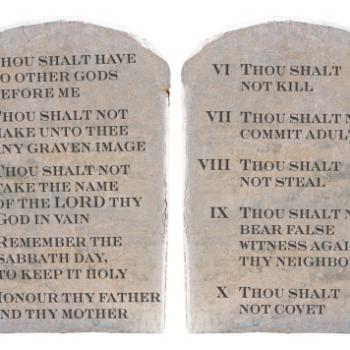
Family Estrangement Versus Honoring Father and Mother

Christians Are Not Sexual Prudes as the Media...

Scottie Scheffler Wins the Tour Championship

Wyndam Clark Wins BMW Championship
TRENDING AT PATHEOS Progressive Christian

The Sermon on the Mount, Part I: Matthew...
The Sermon on the Mount, Part I (Matthew 4:12-5:12) St. Matthew moves...

What's up from Crossway: Reviewing some of their latest A few weeks...

Janie Learns the Way of the Cross: A...
Teaching children about Jesus' Passion can be challenging. Many parents and educators...

Looking For Good Catholic Writing - October 2026
He alone extends the heavens, and he walks upon the waves of...

In "Irreplaceable," our book on vocation and technology, Trevor Sutton and I...

I was strolling through the top floor of the brand new Parthenon...
view all Progressive Christian blogs
Ad-Free & Subscriber Log-In Subscription Support
- About Us
- 2026 Calendar
- Videos
- Podcasts
- Library of World Religions
- Faith In Media Tracker
- Advertise With Us
- Write for Us
- Privacy Policy
- Terms of Service
- Do Not Sell My Data
- Contact Us
- Radiant Digital
- Manage Newsletter Subscriptions
- Unsubscribe From Notifications
- Sitemap
Copyright 2008-2026, Patheos. All rights reserved.
Subscription Support Ad-Free & Subscriber Log-In
Follow Patheos