
BuddhistCatholicContemplativeEvangelicalGeneral ChristianHinduJewishLatter-day SaintMuslimNew VisionsProgressive Christian
Beliefs
- Buddhist
- Catholic
- Contemplative
- Evangelical
- General Christian
- Hindu
- Jewish
- Latter-day Saint
- More Voices
- Muslim
- New Visions
- Pagan
- Progressive Christian
Topics
- Religion News
- Food and Religion
- Sports and Religion
- Religious Art
- Religious Music and Entertainment
- Religious Events
- History and Religion
- Style and Religion
- Politics and Religion
- Women in Religion
- Recreation Outdoors and Religion
- Business Finance and Religion
- Careers Workplace and Religion
- Education and Religion
- Family Parenting and Religion
- Health Fitness and Religion
- Home and Religion
- Relationships and Religion
- Technology and Religion
- Travel and Religion
Columnists
- Buddhist Columnists
- Business Finance and Religion Columnists
- Careers Workplace and Religion Columnists
- Catholic Columnists
- Contemplative Columnists
- Education and Religion Columnists
- Evangelists Columnists
- Family Parenting and Religion Columnists
- General Christian Columnists
- Health Fitness and Religion Columnists
- Hindu Columnists
- History and Religion Columnists
- Home and Religion Columnists
- Jewish Columnists
- More Voices Columnists
- Latter Day Columnists
- Muslim Columnists
- New Visions Columnists
- Nonreligious Columnists
- Pagan Columnists
- Politics and Religion Columnists
- Progressive Columnists
- Recreation Outdoors and Religion Columnists
- Relationships and Religion Columnists
- Religion News Columnists
- Religious Art Columnists
- Religious Events Columnists
- Religious Music and Entertainment Columnists
- Sports and Religion Columnists
- Style and Religion Columnists
- Technology and Religion Columnists
- Travel and Religion Columnists
- Women in Religion Columnists
Resource Library
- 2026 Calendar
- Library of World Religions
- The 100 Most Holy Places on Earth
- Patheos Answers
- Podcasts
- Videos
- Faith Leaders Database
- Anglican Episcopalian
- Bahai
- Baptist
- Buddhism
- Christianity
- Confucianism
- Eastern Orthodoxy
- Hinduism
- Holiness and Pentecostal
- ISKCON
- Islam
- Judaism
- Lutheran
- Methodist
- The Church of Jesus Christ of Latter-day Saints
- New Age
- Paganism
- Presbytarian and Reformed
- Protestantism
- Religion Behind the Scenes
- Roman Catholic
- Scientology
- Shia Islam
- Sikhism
- Sufism
- Sunni Islam
- Taoism
- Zen
- See all religions
Research Tools
 Ad-Free & Subscriber Log-In Subscription Support
Ad-Free & Subscriber Log-In Subscription Support
Follow Patheos 

- Trending:
- Forgiveness
- |
- Marriage
- |
- Consciousness
- |
- Death Penalty
- |
- Election
- |
- Halloween

-
Categories
-
Christian Living
-
Christology
-
Golf
-
My Books
- Home
- Progressive Christian
- Religion News
- Important New Book about Sir Isaac Newton’s Theology
Important New Book about Sir Isaac Newton’s Theology
Last updated on: November 23, 2018 at 11:11 am by Kermit Zarley
Important New Book about Sir Isaac Newton’s Theology 2018-11-23T11:11:10-07:00 Kermit Zarley
Patheos Explore the world's faith through different perspectives on religion and spirituality! Patheos has the views of the prevalent religions and spiritualities of the world.
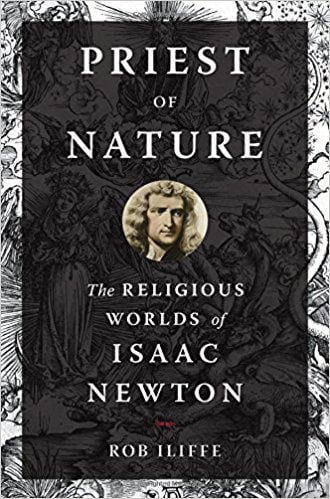 Dr. Ron Iliffe, Oxford professor of History of Science, has written an important book published this summer by Oxford University Press about Sir Isaac Newton (1646-1723), especially his theological beliefs. It is entitled Priest of Nature: The Religious Worlds of Isaac Newton (536 pp.) Dr. Iliffe’s duties include being Co-Director of the Oxford Centre for the History of Science, Medicine and Technology and his beingGeneral Editor of the Newton Project. The latter includes the work of sixteen academics. So, while Iliffe is not a theologian in the academy, he must be one of the world’s leading authorities on Sir Isaac Newton. This book is getting high marks already. However, it is not for the novice. It will be supportive of my 600 pp. book, The Restitution of Jesus Christ (2008). Tomorrow, I will post about a page from my book that is about Newton’s theology. The following are some quotes from Priest of Nature:
“His writings in natural philosophy were marked by his strict division between what could be proved with mathematical certainty, and what was merely conjectural or hypothetical. Among the latter he classed the systems of Aristotle and Descartes, as well as any scientific theories that lacked empirical support. (15)
“Although he denied that religious truths could be proved with mathematical certainty, he drew an almost identical distinction between what was really in Scripture and what was added to it by false traditions or by the artificial productions of the human imagination. (15)
“Indeed, his extensive analysis of the early Christian Church was premised on the view that the greatest and most audacious conspiracy of all time—the joint introduction into Christianity of the doctrine of the Trinity and of various beliefs and practices that would form the basis of Roman Catholicism—had corrupted the true religion to the core. The manner in which he investigated the early church owed much to his underlying character, but this, in turn, was both shaped by his immersion in a bygone textual world and fueled by his relations with those around him. (6)
“Newton’s religious values governed his conduct not only in religious study but also in his other intellectual arenas. In the introduction to the same prophetic treatise in which he stated that religious truths could not be mathematically demonstrated, he argued that only a special, select cadre of experts was capable of properly understanding difficult things—the strong ‘meat’ of technically demanding doctrine. Such people were not led ‘by interest, education, or human authorities,’ and they ‘set themselves sincerely & earnestly to search after truth.’ (15)
“Indeed, the very fact that his papers survived his death, that is, the fact that he did not burn the most egregiously heterodox texts, indicates something about his understanding both of their significance and their intended audience. It is probable that he believed that the content of these papers would have some beneficial effect long after he had died, when his work would conceivably form part of the great dispersion of the gospel that would precede Christ’s Second Coming. (10)
“Newton’s extensive writings on the Trinitarian corruption of Christianity are among the most daring works of any writer in the early modern period, and they would merit careful study even if they had not been composed by the author of the Principia. (10)
“However, what marks out Newton’s writings are the independence of thought they display. If they had been unveiled to the Republic of Letters when he wrote them, and his authorship revealed, he would now be part of an elite pantheon of original thinkers who are lauded as part of a Radical Reformation or Radical Enlightenment. However, like William Whiston, his successor in the Lucasian chair, he would have been immediately expelled from his college. He would never have had the chance to write the Principia or Opticks , and much, if not all, of his pioneering work on the calculus might have been lost. (10)
“Newton saw himself predominantly as a devout Christian, whose calling was to use his intelligence to discern the truth in whatever field he studied. He repeatedly stated his opinion, and let it be known, that there was nothing more important for a Christian than the study of the Bible, the interpretation of prophecy, and the examination of church history. (23)
“He also found that he had a particular gift for studying mathematics and natural philosophy to an extraordinarily high level, but most of his working life was spent studying religious topics. He believed that he had a fundamental obligation to use his formidable reasoning powers to divine the truth, and he deployed these faculties as much in his study of the visions of Revelation as he did in creating the theories and techniques underlying calculus and universal gravitation. In so doing, he set out to address the great questions about the origins and nature of the universe, the place of humans within it, and the meaning of their lives, all of which—in his time—were inevitably posed and solved within a religious framework. (23)
“Newton believed that the perfection of the understanding involved the relentless study of sacred texts and the rational examination of the cosmos. His preface to his early treatise on the Apocalypse was saturated with scriptural references to the understanding, for he believed that God had given his people prophesies so that they might be understood in the latter times. (399)
“Daniel had foretold (12:4, 9-10) that at the end of time, the wise, and not the wicked, would understand, and from this Newton inferred that true understanding could only be achieved by the pure of heart who had attained real wisdom. The godly, he said, should engage in the constant study of Scripture in order to fully understand their faith, so that they might choose and profess that religion they judged to be the most true. Acquiring a mature and more perfect understanding through constant reading and meditation would add assurance and vigour to faith. (399)
“This work was a necessary but not sufficient condition for grasping core truths, since human wisdom was ineffective without God’s help. As Newton put it, it was difficult for the wise to understand the truths of religion, given that they were so ‘prepossest’ with their own imaginations and too engrossed with worldly designs. Ultimately, true understanding of prophecy was a gift of God; if the wise were to understand, they had to purify themselves from sin before they could accept God’s offer. (399)
”Ultimately, Newton’s early life (to say nothing of his last three decades) was suffused with an overriding religious purpose. Convinced that he had been created in the Image of God, his scholarly life was in part an exercise in examining how he measured up to his maker. As such, it focussed both on perfecting himself and on understanding the works of God.
”Accordingly, he strove to make his life that of a godly man, avoiding the temptations of the imagination and its chief effects, idolatry, idleness, and lust. He condemned the imaginary products of human artifice and instead nurtured his understanding so that he could dedicate himself to studying the divine truths of Scripture and Nature.
”The relentless cultivation of his own intellect was the precondition for gaining a mature wisdom, along with a purified will that could make the correct choice between good and evil, and between true and false religion. It was also this heroic intellectual labour that produced the monumental works in theology, natural philosophy, and mathematics that survive today.”
………………
To see a list of titles of 130+ posts (2-3 pages) that are about Jesus not being God in the Bible, with a few about God not being a Trinity, at Kermit Zarley Blog click “Chistology” in the header bar. Most are condensations of my book, The Restitution of Jesus Christ. See my website servetustheevangelical.com, which is all about this book, with reviews, etc. Learn about my books and purchase them at kermitzarley.com.
Previous Post

October 3, 2017
Trump Continues to Disparage San Juan Mayor
Next Post

October 4, 2017 Tillerson Reportedly Called Trump "a Moron"
Browse Our Archives
Select a Category Angels Billy Graham Blog Description Book Reviews Christian Living Christianity Christology Church History Current Events Deity of Christ? Disarmament Eschatology Evangelicalism Ezekiel 38-39 Film Reviews God Golf Gospel Harmonization Health History Holy Spirit Incarnation? Interview Islam Israeli-Palestinian Conflict Jesus Last Empire Literary Announcements Major Championship Winners Masters Monotheism My Books New Testament Old Testament Politics Primitive Weapons Ryder Cup Science Society of Biblical Literature The Bible The Restitution of Jesus Christ Trinitarianism Trinity? Uncategorized Unconditional Love? War on Terrorism
Select a Month October 2026 September 2026 August 2026 July 2026 June 2026 May 2026 April 2026 March 2026 February 2026 January 2026 December 2025 November 2025 October 2025 September 2025 August 2025 July 2025 June 2025 May 2025 April 2025 March 2025 February 2025 January 2025 December 2024 November 2024 October 2024 September 2024 August 2024 July 2024 June 2024 May 2024 April 2024 March 2024 February 2024 January 2024 December 2023 November 2023 October 2023 September 2023 August 2023 July 2023 June 2023 May 2023 April 2023 March 2023 February 2023 January 2023 December 2022 November 2022 October 2022 September 2022 August 2022 July 2022 June 2022 May 2022 April 2022 March 2022 February 2022 January 2022 December 2021 November 2021 October 2021 September 2021 August 2021 July 2021 June 2021 May 2021 April 2021 March 2021 February 2021 January 2021 December 2020 November 2020 October 2020 September 2020 August 2020 July 2020 June 2020 May 2020 April 2020 March 2020 February 2020 January 2020 December 2019 November 2019 October 2019 September 2019 August 2019 July 2019 June 2019 May 2019 April 2019 March 2019 February 2019 January 2019 December 2018 November 2018 October 2018 September 2018 August 2018 July 2018 June 2018 May 2018 April 2018 March 2018 February 2018 January 2018 December 2017 November 2017 October 2017 September 2017 August 2017 July 2017 June 2017 May 2017 April 2017 March 2017 February 2017 January 2017 December 2016 November 2016 October 2016 September 2016 August 2016 July 2016 June 2016 May 2016 April 2016 March 2016 February 2016 January 2016 December 2015 November 2015 October 2015 September 2015 August 2015 July 2015 June 2015 May 2015 April 2015 March 2015 February 2015 January 2015 December 2014 November 2014 October 2014 September 2014 July 2014 June 2014 May 2014 April 2014 March 2014 February 2014 January 2014 December 2013 November 2013 October 2013 September 2013 August 2013 July 2013 June 2013 May 2013 April 2013
Follow Us!
TAKE THE
Religious Wisdom Quiz
Who became king after David and built the first Temple in Jerusalem?
Select your answer to see how you score.
Rehoboam Adonijah Solomon Absalom
Books by This Author Books by Kermit Zarley Blog
Related posts from Kermit Zarley Blog

New Book Affirms John's Gospel Is Historically Reliable
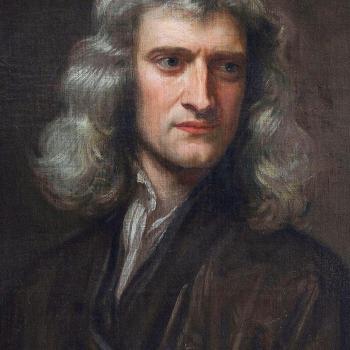
Sir Isaac Newton's Simplicity of the Christian Gospel
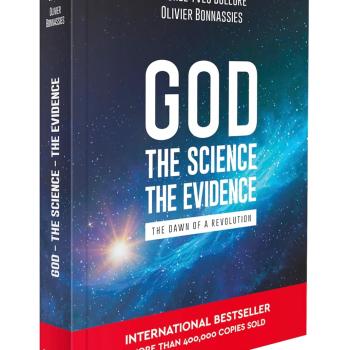
New Book a Powerful Witness that Science Indicates...
Misbehavior of Ryder Cup Fans in New York...
TRENDING AT PATHEOS Progressive Christian

In "Irreplaceable," our book on vocation and technology, Trevor Sutton and I...

I was strolling through the top floor of the brand new Parthenon...

What Does Gêvâh Mean For Kimberley Guifoyle &...
This week, a lot of the news is focused on Kimberly Guilfoyle....

INNER CIRCLE: Profound Mystery (Of Christ In All...
Ephesians 5:31-32 “For this reason, a man will leave his father and...

Do Not Rejoice When Your Enemy Falls: The...
Turning an execution into a public spectacle is a disturbing expression of...

'The Chosen' S6 Trailer: The Passion Gets Very...
Not many watching 'The Chosen' worry about spoilers, but just because they...
view all Progressive Christian blogs
Ad-Free & Subscriber Log-In Subscription Support
- About Us
- 2026 Calendar
- Videos
- Podcasts
- Library of World Religions
- Faith In Media Tracker
- Advertise With Us
- Write for Us
- Privacy Policy
- Terms of Service
- Do Not Sell My Data
- Contact Us
- Radiant Digital
- Manage Newsletter Subscriptions
- Unsubscribe From Notifications
- Sitemap
Copyright 2008-2026, Patheos. All rights reserved.
Subscription Support Ad-Free & Subscriber Log-In
Follow Patheos