
BuddhistCatholicContemplativeEvangelicalGeneral ChristianHinduJewishLatter-day SaintMuslimNew VisionsProgressive Christian
Beliefs
- Buddhist
- Catholic
- Contemplative
- Evangelical
- General Christian
- Hindu
- Jewish
- Latter-day Saint
- More Voices
- Muslim
- New Visions
- Pagan
- Progressive Christian
Topics
- Religion News
- Food and Religion
- Sports and Religion
- Religious Art
- Religious Music and Entertainment
- Religious Events
- History and Religion
- Style and Religion
- Politics and Religion
- Women in Religion
- Recreation Outdoors and Religion
- Business Finance and Religion
- Careers Workplace and Religion
- Education and Religion
- Family Parenting and Religion
- Health Fitness and Religion
- Home and Religion
- Relationships and Religion
- Technology and Religion
- Travel and Religion
Columnists
- Buddhist Columnists
- Business Finance and Religion Columnists
- Careers Workplace and Religion Columnists
- Catholic Columnists
- Contemplative Columnists
- Education and Religion Columnists
- Evangelists Columnists
- Family Parenting and Religion Columnists
- General Christian Columnists
- Health Fitness and Religion Columnists
- Hindu Columnists
- History and Religion Columnists
- Home and Religion Columnists
- Jewish Columnists
- More Voices Columnists
- Latter Day Columnists
- Muslim Columnists
- New Visions Columnists
- Nonreligious Columnists
- Pagan Columnists
- Politics and Religion Columnists
- Progressive Columnists
- Recreation Outdoors and Religion Columnists
- Relationships and Religion Columnists
- Religion News Columnists
- Religious Art Columnists
- Religious Events Columnists
- Religious Music and Entertainment Columnists
- Sports and Religion Columnists
- Style and Religion Columnists
- Technology and Religion Columnists
- Travel and Religion Columnists
- Women in Religion Columnists
Resource Library
- 2026 Calendar
- Library of World Religions
- The 100 Most Holy Places on Earth
- Patheos Answers
- Podcasts
- Videos
- Faith Leaders Database
- Anglican Episcopalian
- Bahai
- Baptist
- Buddhism
- Christianity
- Confucianism
- Eastern Orthodoxy
- Hinduism
- Holiness and Pentecostal
- ISKCON
- Islam
- Judaism
- Lutheran
- Methodist
- The Church of Jesus Christ of Latter-day Saints
- New Age
- Paganism
- Presbytarian and Reformed
- Protestantism
- Religion Behind the Scenes
- Roman Catholic
- Scientology
- Shia Islam
- Sikhism
- Sufism
- Sunni Islam
- Taoism
- Zen
- See all religions
Research Tools
 Ad-Free & Subscriber Log-In Subscription Support
Ad-Free & Subscriber Log-In Subscription Support
Follow Patheos 

- Trending:
- Forgiveness
- |
- Marriage
- |
- Consciousness
- |
- Death Penalty
- |
- Election
- |
- Halloween

-
Categories
-
Christian Living
-
Christology
-
Golf
-
My Books
- Home
- Progressive Christian
- Religion News
- The Ascending/Descending Motif in the Fourth Gospel
The Ascending/Descending Motif in the Fourth Gospel
Last updated on: November 23, 2018 at 11:09 am by Kermit Zarley
The Ascending/Descending Motif in the Fourth Gospel 2018-11-23T11:09:10-07:00 Kermit Zarley
Patheos Explore the world's faith through different perspectives on religion and spirituality! Patheos has the views of the prevalent religions and spiritualities of the world.
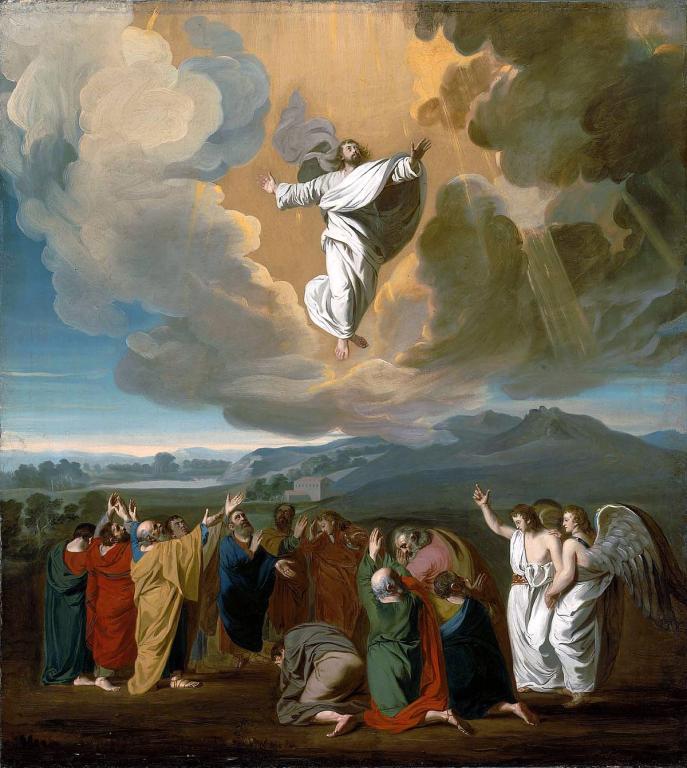 The Gospel of John contains a motif about Jesus that nearly all scholars claim is a descending/ascending motif regarding heaven. That is partly because most scholars believe in the church teaching of the doctrine of the Trinity. Accordingly, as one of the three co-equal and co-eternal members of the Triune God, Jesus preexisted as God and came down to earth to become a man in what the church calls The Incarnation. By laying out this Johannine motif as Jesus first descending from heaven and thereafter ascending to heaven forty days after his resurrection, these scholars affirm an important element of their Trinitarian belief and, more particularly, The Incarnation, that Jesus preexisted in heaven which indicates that he was God.
Especially in modern times, many New Testament (NT) scholars have written books about this supposed descent/ascent narrative in the Gospel of John. A new one is Susan Elizabeth Humble’s A Divine Round Trip: The Literary and Christological Function of the Descent/Ascent Leitmotif in the Gospel of John (Peeters Publishers, 2016, 238 pp.). William Loader of Murdoch University–who has also published on this subject–has recently reviewed Humble’s book in Review of Biblical Literature, an organ of the Society of Biblical Literature. Both writers approach this subject without even discussing the possibility that this important motif in determining the identity of the Johannine Jesus should be understood as first ascent and later descent, therefore ascending/descending, which does not affirm that Jesus preexisted. I think this is quite surprising and that it reveals how entrenched a person can become in their theology so that it influences their exegesis of scripture. But this is common in scholarship regarding this particular subject. Furthermore, both Humble and Loader repeatedly assume that Jesus’ post-resurrection ascension was a “return” to heaven even though the NT never says this. (I read Loader’s review but have not read Humble’s book.)
I hesitate to be critical of NT scholars about this since I am only a lay NT scholar, thus with no PhD. But I have written a well-researched, biblically in-depth book on Jesus’ identity entitled The Restitution of Jesus Christ (now available only at my website at kermitzarley.com). I have a portion in it in which I address this subject. The following is a part of it (Bible quotations are from the NASB unless otherwise stated):
Jesus Ascending and Descending in John 3.13
This ascending/descending motif in Jn 1.51 surfaces again in John’s gospel in Jesus’ conversation with Nicodemus, recorded in Jn 3.13. But this time Jesus expressly applies the ascending/descending motif to Himself. This verse reads as follows in the AV (=KJV): “And no man hath ascended up to heaven, but he that came down from heaven, even the Son of man which is in heaven.” Traditionalists cite this verse in support of two of their christological precepts, the preexistence and omnipresence of Jesus, and they insist that both of these precepts indicate that Jesus is God. We will first consider preexistence.
Rudolf Bultmann acknowledged the difficulty in interpreting the identity of Jesus in the Fourth Gospel, and he called this problem the “Johannine puzzle.” He insisted that, in order for this puzzle to be solved, the attempt must begin with the ascending and descending of Jesus as the Son of Man.[1] Indeed, this theme is an important key to discovering the identity of the Johannine Jesus.[2] But Bultmann, like most scholars, reversed the ascending/descending order of Jn 3.13 and thereby affirmed the traditional incarnation/ascension scenario.[3] He also interpreted that the Evangelist was influenced by Gnosticism, having used the Gnostic Redeemer myth as his source. But this myth was later discovered to be anachronistic and abandoned by scholars as an interpretation here.
Nevertheless, most scholars, including traditionalists and non-traditionalists, have thought that Jesus’ words in Jn 3.13 require that the descent precedes the ascent and that emphasis is on the descent. So, they have interpreted that the first clause refers implicitly to Jesus’ upcoming ascension into heaven and the second clause refers to His already past descent from heaven to earth at His incarnation. But there are several problems with this interpretation: (1) it does not fit the prior context, (2) it reverses the chronological order of the ascending and descending in Jn 1.51 and 3.13, (3) the use of the Greek verb anabebeken (“has ascended”) is inexplicable if its perfect tense is taken as a completed action in the past, since Jesus’ ascension had not yet occurred,[4] (4) it is without parallel in the NT,[5] and (5) it does not correlate with the overall biblical pattern, in which the righteous Servant-Son of Man must first suffer before He is not only exalted and glorified but even experiences any such thing. Traditionalist R.N. Longenecker cites a textual “ambivalence that defies precise designation of the nature of the descent involved.”[6]
Much more compelling is the interpretation that accepts the ascending/descending order as it stands in the text because it fits the context. The context of Jn 3.13 is that Jesus is in the midst of giving a discourse to Nicodemus, a member of the Sanhedrin and a distinguished Torah teacher in Israel (Jn 3.1, 10). Jesus informs Nicodemus that he must be born “from above” (Gr. anothen), i.e., anew in spirit, in order to enter the kingdom of God (vv. 3, 7). Perplexed, Nicodemus responds crassly, as most people usually did to the Johannine Jesus: he interprets Jesus literally and thus misunderstands Him (vv. 3-9).
Jesus now speaks to Nicodemus about seeing spiritual things. He says, “we speak that which we know and bear witness of that which we have seen, and you [plural] do not receive our witness” (Jn 3.11). “We” may refer to Jesus and John the Baptist, but perhaps His genuine apostles also. The Fourth Evangelist later relates that John the Baptist spoke similarly of Jesus, “What He has seen and heard, of that He bears witness; and no man receives His witness” (v. 32; cf. 1.11-12). The Evangelist later amplifies this theme by quoting Jesus as saying, “the Son can do nothing of Himself, unless it is something He sees the Father doing;… For the Father loves the Son, and shows Him all things that He Himself is doing” (Jn 5.19-20). Jesus adds, “No man has seen God at any time,” i.e., “except the One who is from God, He has seen the Father” (Jn 1.18; 6.46).
Therefore, Jesus sees, hears, and bears witness to heavenly things, even to God’s activities. What Jesus sees is not literal but spiritual. He further explained to Nicodemus, “If I told you earthly things and you do not believe, how shall you believe if I tell you heavenly things?” (v. 12). In this first clause, Jesus refers to what He has just told Nicodemus about the new birth. Although the nature of the new birth is spiritual, being accomplished “from above” by “the Spirit” (vv. 3, 5), Jesus nevertheless categorizes it as an earthly phenomenon. Nicodemus, like all other men except the Son of Man, is both physically and spiritually confined to the earth with all of his life experiences.[7] John the Baptist testified the same concerning himself by saying, “he who is of the earth is from the earth” (v. 31). He added that only Jesus is “from above,” meaning that only Jesus has spiritual access into heaven and thereby spiritually sees, hears, and knows things there.
When Jesus says in the first clause of Jn 3.13, “no man has ascended up to heaven,”[8] He alludes to certain pre-Christian legends prevalent in Jewish apocalyptic literature. These legends characterized past heroic saints as having “ascended into heaven,”[9] some having received divine revelation (heavenly things) there and having brought it back to earth to expound it to others. Jesus also may have had in mind Jewish Merkabah mysticism, which advocated meditating on the chariot-throne vision of Eze 1 in order to conjure up a similar visionary ascent into heaven. But Jesus implicitly rejects all of these legends as well as their import. Instead, He makes the astounding claim that only He spiritually ascends into heaven to obtain heavenly secrets, and it happens on account of His being the Son of Man. Such a rich experience of acquiring this esoteric knowledge, consisting of secret things in heaven, was probably like literally being there.
All such legends—about holy men going to heaven to obtain some portion of wisdom and/or knowledge there and bringing it back to earth—are exactly what the sage surmises in Prov 30.3-4. He states therein, “Neither have I learned wisdom, nor do I have the knowledge of the Holy One. Who has ascended into heaven and descended? Who has gathered the wind in His fists?” etc. (Notice the ascent/descent order.) The writer means that no man so far had attained anywhere near the fullness of the wisdom and knowledge of God, let alone gone up to heaven to get any of it and brought it back to earth. This proverb, written in about 1,000 bce, unwittingly anticipates these later, Jewish legends as well as Daniel’s account of the ascending/descending Son of Man and thus Jesus. The Johannine Jesus is the personified Wisdom/Logos of God of pre-Christian Judaism.[10] R.E. Brown states regarding Jewish Wisdom Literature, “Wisdom is described as having descended from heaven to dwell with men … The function of Wisdom among men is to teach them of the things that are above (Job 11.6-7; Wis 9.16-18), to utter truth (Prov 8.7; Wis 6.22),… This is precisely the function of Jesus as revealer, as portrayed in numerous passages in John.”[11] The Apostle Paul writes likewise of Jesus, “in whom are hidden the treasures of wisdom and knowledge” (Col 2.3; cf. 1 Cor 1.24, 30).
Jesus identifies Himself as “the Son of Man” twelve times in the Fourth Gospel. The first two are recorded in Jn 1.51 and 3.13. In Jn 3.13, He clearly presents Himself as the ascending/descending Son of Man. Recall from Chapter Four that Daniel’s Son of Man first ascends on heavenly clouds to God in heaven to receive a kingdom; then He implicitly descends to earth to establish that kingdom with the saints. So, Daniel presents the Son of Man as first ascending and later descending, the same order as Jesus states in Jn 3.13 regarding Himself. This chronological order, of course, is the opposite of the incarnation/ascension scenario. And it seems that when the Johannine Jesus designates Himself as the Son of Man, He usually intends to be understood according to Dan 7.[12]
Just as Jesus’ saying in Jn 1.51 has both a literal and a spiritual connotation, so it seems to be the case with His saying in Jn 3.13. A one-time literal ascending of the Son of Man in Jn 3.13 is implied in the next verse, in which Jesus says, “And as Moses lifted up the serpent in the wilderness, even so must the Son of Man be lifted up” (v. 14). Here, Jesus speaks of His future crucifixion by being lifted up on the cross. This lifting up of the Son of Man is another Johannine theme (Jn 8.28; 12.32, 34; cf. Isa 52.13). For the Fourth Evangelist, Jesus’ crucifixion signifies His glory by becoming a prelude to His glorious resurrection and ascension into heaven. Later, Jesus will even describe both this scandalous lifting up on the cross and subsequent heavenly ascension as “the Son of Man ascending [Gr. anabainonta] where He was before” (Jn 6.62).[13]
Now let us examine this ascending and descending of the Son of Man from a grammatical perspective. The English words in Jn 3.13, “came down” from heaven, are past tense and therefore also give the impression that the descent must precede the ascent, thus favoring the traditional view. But these words translate the aorist participle katabas in the Greek text, which derives from the verb katabaino (“I go/come down”). The Greek aorist tense only indicates kind of action, not time of action. However, grammarians used to think that one of the rules of Greek grammar was that the action of an aorist participle precedes in time the action of the main verb. Accordingly, Jn 3.13 would have to be understood as descent/ascent, favoring the incarnation/ascension scenario. But it has recently been discovered that this is incorrect and that the tense of a Greek aorist participle is determined just as with an English participle: according to its context.
So, what is the context of Jn 3.13? Jesus’ identification of Himself as the Son of Man in this verse indicates that He intends to be understood in accordance with Daniel’s prophecy of the Son of Man in Dan 7. Daniel’s Son of Man presumably is literally going to come down from heaven on the eschatological Day with His kingdom. Daniel 7 thus requires that katabas in Jn 3.13 be translated “coming down” or “(the one who) comes down” or the like, which is compatible with a future tense, but not “came down” or “descended,” which is past tense. Thus, Jesus means in Jn 3.13 that the One who will descend from heaven on the eschatological Day is the One who now ascends spiritually into heaven and descends spiritually as well, so that this ascent precedes the descent, just as Dan 7 suggests.[14] Furthermore, R.E. Brown insists concerning the tense of these verb forms for ascent and descent, “In the Johannine references to Jesus there is a strange timelessness or indifference to normal time sequence that must be reckoned with.”[15]
In conclusion, Jn 3.13 ought to be understood according to the background of the Son of Man in Dan 7 and that that figure’s descent is therein implied, so that His literal ascent precedes His literal descent. It also needs to be recognized that whenever this ascent-descent motif is expressly stated in Scripture,[16] it is always in this order and never in the reverse. Accordingly, Jesus’ ascent/descent in Jn 3.13 refers to His spiritual access to heavenly secrets and bringing them down to earth as well as His later, literal ascension into heaven and subsequent literal descent from heaven to earth at His second coming.
Now we will consider the supposed omnipresence of Jesus in the last clause of Jn 3.13 in the AV. Many traditionalists have endorsed these words as authentic, interpreting them to mean that at the moment Jesus uttered them He also existed in His human nature simultaneously in heaven and presumably throughout the entire universe.[17] But this idea is unprecedented in the NT, let alone the sayings of Jesus. Most contemporary scholars therefore dismiss this AV clause as nonsensical and inauthentic.
Indeed, manuscript attestation for retaining the last phrase in Jn 3.13—“which is in heaven”—is weak.[18] English versions are about evenly divided on including it or not. The committee for the United Bible Societies’ Greek NT, though divided, dismissed it as spurious.[19] A majority of the members were impressed with its omission in the external evidence. Thus, they deemed it “an interpretative gloss, reflecting later christological development.”[20] Accordingly, some textual critics have suggested that it is a later scribal assimilation to the questionable reading of theos in Jn 1.18>. However, the clause could be authentic if it means no more than that Jesus had constant spiritual access to heaven.
[1] Rudolf Bultmann, “Die Bedeutung der neuerschlossenen mandaischen und manichaischen Quellen fur das Verstandnis des Johannesevangeliums,” ZNW 24 (1925), 102 (repr. Exegetica [Tubingen: Mohr, 1967], 57). Taken from W.A. Meeks, “The Man from Heaven in Johannnine Sectarianism,” 47n12.
[2] W.A. Meeks, “The Man from Heaven in Johannine Sectarianism,” 60-61.
[3] R. Bultmann, John, 147-51.
[4] H.A.W. Meyer, MCNT, 3:128. R.E. Brown [John (i-xii), 132] admits concerning this incarnation and ascension interpretation, “The use of the perfect tense is a difficulty, for it seems to imply that the Son of Man has already ascended into heaven.”
[5] Ephesians 4.10 is not a parallel because v. 9 shows that Paul refers to Jesus’ descent into Sheol at death.
[6] R.N. Lonenecker, The Christology of Early Jewish Christianity, 62.
[7] Cf. R.E. Brown, John (i-xii), 132.
[8] Second Kings 2.11 states, “Elijah went up by a whirlwind to heaven” (cf. v. 1). If this means Elijah went to the heaven where God dwells, as commonly understood, it conflicts with Jesus’ remark here in Jn 3.13. But it might mean that Elijah was only taken up into the earth’s atmosphere, not heaven where God dwells.
[9] J.D.G. Dunn (“Let John Be John,” 306) lists some of these legends contained in ancient Jewish sources that postulate a heavenly ascension for the following figures: Adam (Life of Adam and Eve 25-29), Enoch (1 En. 14.8ff.; 39.3ff.; 70-71; 2 En. 3ff.), Abraham (Test. Abr. 10ff.; Apoc. Abr. 15ff.; cf. 4 Ezra 3.14; 2 Bar. 4.4), Levi (Test. Levi 2.5ff.), Baruch (2 Bar. 76; 3 Bar.), Isaiah (Ascen. Isa. 7ff.; cf. Sir. 48.24-25). Add to this list Moses on Mt. Sinai (Philo, Vita Mosis, I.158). Although some of this literature is not pre-Christian, it contains legends that no doubt were pre-Christian in origin.
[10] J.D.G. Dunn, “Let John Be John,” 314.
[11] R.E. Brown, John (i-xii), cxxiii.
[12] W.A. Meeks (“The Man from Heaven in Johannine Sectarianism,” 52) states, “There is a curiously close connection throughout the gospel [of John] between this title and the descent/ascent language.” Indeed, although Meeks writes constantly of a descent/ascent order instead of the ascent/descent order in the text.
[13] E.g., R. Bultmann, John, 445; G.R. Beasley-Murray, John, 96.
[14] J.D.G. Dunn (“Let John Be John,” 313n76) cites J.A. Buhner (Der Gesandte und sein Weg im 4. Evangelium, 1977, 353-62), who insists the language in Jn 3.13 implies that ascent precedes descent.
[15] R.E. Brown, John (i-xii), 132.
[16] E.g., Gen 28.12; Prov 30.4; cf. Deut 30.12; Ps 68.18; Eph 4.8.
[17] E.g., C.K. Barrett, John, 73; M. Harris, 3 Crucial Questions, 67.
[18] It is only included in a few late Greek mss and Syriac versions.
[19] See B.M. Metzger, Textual Commentary, 203-04. Both UBS1 and UBS2 render it “virtually certain” as being spurious; but UBS3 admits to “a considerable degree of doubt” in rejecting it.
[20] B.M. Metzger, Textual Commentary, 204.
………………
To see a list of titles of 130+ posts (2-3 pages) that are about Jesus not being God in the Bible, with a few about God not being a Trinity, at Kermit Zarley Blog click “Chistology” in the header bar. Most are condensations of my book, The Restitution of Jesus Christ. See my website servetustheevangelical.com, which is all about this book, with reviews, etc. Learn about my books and purchase them at kermitzarley.com.
Previous Post

October 28, 2017
"The Protestant Reformation and the Modern World"
Next Post

October 31, 2017 Another Radical Muslim Terrorist Act in NYC
Browse Our Archives
Select a Category Angels Billy Graham Blog Description Book Reviews Christian Living Christianity Christology Church History Current Events Deity of Christ? Disarmament Eschatology Evangelicalism Ezekiel 38-39 Film Reviews God Golf Gospel Harmonization Health History Holy Spirit Incarnation? Interview Islam Israeli-Palestinian Conflict Jesus Last Empire Literary Announcements Major Championship Winners Masters Monotheism My Books New Testament Old Testament Politics Primitive Weapons Ryder Cup Science Society of Biblical Literature The Bible The Restitution of Jesus Christ Trinitarianism Trinity? Uncategorized Unconditional Love? War on Terrorism
Select a Month October 2026 September 2026 August 2026 July 2026 June 2026 May 2026 April 2026 March 2026 February 2026 January 2026 December 2025 November 2025 October 2025 September 2025 August 2025 July 2025 June 2025 May 2025 April 2025 March 2025 February 2025 January 2025 December 2024 November 2024 October 2024 September 2024 August 2024 July 2024 June 2024 May 2024 April 2024 March 2024 February 2024 January 2024 December 2023 November 2023 October 2023 September 2023 August 2023 July 2023 June 2023 May 2023 April 2023 March 2023 February 2023 January 2023 December 2022 November 2022 October 2022 September 2022 August 2022 July 2022 June 2022 May 2022 April 2022 March 2022 February 2022 January 2022 December 2021 November 2021 October 2021 September 2021 August 2021 July 2021 June 2021 May 2021 April 2021 March 2021 February 2021 January 2021 December 2020 November 2020 October 2020 September 2020 August 2020 July 2020 June 2020 May 2020 April 2020 March 2020 February 2020 January 2020 December 2019 November 2019 October 2019 September 2019 August 2019 July 2019 June 2019 May 2019 April 2019 March 2019 February 2019 January 2019 December 2018 November 2018 October 2018 September 2018 August 2018 July 2018 June 2018 May 2018 April 2018 March 2018 February 2018 January 2018 December 2017 November 2017 October 2017 September 2017 August 2017 July 2017 June 2017 May 2017 April 2017 March 2017 February 2017 January 2017 December 2016 November 2016 October 2016 September 2016 August 2016 July 2016 June 2016 May 2016 April 2016 March 2016 February 2016 January 2016 December 2015 November 2015 October 2015 September 2015 August 2015 July 2015 June 2015 May 2015 April 2015 March 2015 February 2015 January 2015 December 2014 November 2014 October 2014 September 2014 July 2014 June 2014 May 2014 April 2014 March 2014 February 2014 January 2014 December 2013 November 2013 October 2013 September 2013 August 2013 July 2013 June 2013 May 2013 April 2013
Follow Us!
TAKE THE
Religious Wisdom Quiz
What does "Beersheba" mean?
Select your answer to see how you score.
House of the King Blessed Field Valley of Water Well of the Oath
Books by This Author Books by Kermit Zarley Blog
Related posts from Kermit Zarley Blog

The Nicene Creed's Birthplace Is Found Buried in...

God Is the Father Alone, and Jesus Is...

New Book Affirms John's Gospel Is Historically Reliable

Did Jesus Literally Come Down from Heaven?
TRENDING AT PATHEOS Progressive Christian

In "Irreplaceable," our book on vocation and technology, Trevor Sutton and I...

I was strolling through the top floor of the brand new Parthenon...

What Does Gêvâh Mean For Kimberley Guifoyle &...
This week, a lot of the news is focused on Kimberly Guilfoyle....

INNER CIRCLE: Profound Mystery (Of Christ In All...
Ephesians 5:31-32 “For this reason, a man will leave his father and...

Do Not Rejoice When Your Enemy Falls: The...
Turning an execution into a public spectacle is a disturbing expression of...

'The Chosen' S6 Trailer: The Passion Gets Very...
Not many watching 'The Chosen' worry about spoilers, but just because they...
view all Progressive Christian blogs
Ad-Free & Subscriber Log-In Subscription Support
- About Us
- 2026 Calendar
- Videos
- Podcasts
- Library of World Religions
- Faith In Media Tracker
- Advertise With Us
- Write for Us
- Privacy Policy
- Terms of Service
- Do Not Sell My Data
- Contact Us
- Radiant Digital
- Manage Newsletter Subscriptions
- Unsubscribe From Notifications
- Sitemap
Copyright 2008-2026, Patheos. All rights reserved.
Subscription Support Ad-Free & Subscriber Log-In
Follow Patheos