
BuddhistCatholicContemplativeEvangelicalGeneral ChristianHinduJewishLatter-day SaintMuslimNew VisionsProgressive Christian
Beliefs
- Buddhist
- Catholic
- Contemplative
- Evangelical
- General Christian
- Hindu
- Jewish
- Latter-day Saint
- More Voices
- Muslim
- New Visions
- Pagan
- Progressive Christian
Topics
- Religion News
- Food and Religion
- Sports and Religion
- Religious Art
- Religious Music and Entertainment
- Religious Events
- History and Religion
- Style and Religion
- Politics and Religion
- Women in Religion
- Recreation Outdoors and Religion
- Business Finance and Religion
- Careers Workplace and Religion
- Education and Religion
- Family Parenting and Religion
- Health Fitness and Religion
- Home and Religion
- Relationships and Religion
- Technology and Religion
- Travel and Religion
Columnists
- Buddhist Columnists
- Business Finance and Religion Columnists
- Careers Workplace and Religion Columnists
- Catholic Columnists
- Contemplative Columnists
- Education and Religion Columnists
- Evangelists Columnists
- Family Parenting and Religion Columnists
- General Christian Columnists
- Health Fitness and Religion Columnists
- Hindu Columnists
- History and Religion Columnists
- Home and Religion Columnists
- Jewish Columnists
- More Voices Columnists
- Latter Day Columnists
- Muslim Columnists
- New Visions Columnists
- Nonreligious Columnists
- Pagan Columnists
- Politics and Religion Columnists
- Progressive Columnists
- Recreation Outdoors and Religion Columnists
- Relationships and Religion Columnists
- Religion News Columnists
- Religious Art Columnists
- Religious Events Columnists
- Religious Music and Entertainment Columnists
- Sports and Religion Columnists
- Style and Religion Columnists
- Technology and Religion Columnists
- Travel and Religion Columnists
- Women in Religion Columnists
Resource Library
- 2026 Calendar
- Library of World Religions
- The 100 Most Holy Places on Earth
- Patheos Answers
- Podcasts
- Videos
- Faith Leaders Database
- Anglican Episcopalian
- Bahai
- Baptist
- Buddhism
- Christianity
- Confucianism
- Eastern Orthodoxy
- Hinduism
- Holiness and Pentecostal
- ISKCON
- Islam
- Judaism
- Lutheran
- Methodist
- The Church of Jesus Christ of Latter-day Saints
- New Age
- Paganism
- Presbytarian and Reformed
- Protestantism
- Religion Behind the Scenes
- Roman Catholic
- Scientology
- Shia Islam
- Sikhism
- Sufism
- Sunni Islam
- Taoism
- Zen
- See all religions
Research Tools
 Ad-Free & Subscriber Log-In Subscription Support
Ad-Free & Subscriber Log-In Subscription Support
Follow Patheos 

- Trending:
- Forgiveness
- |
- Marriage
- |
- Consciousness
- |
- Death Penalty
- |
- Election
- |
- Halloween

-
Categories
-
Christian Living
-
Christology
-
Golf
-
My Books
- Home
- Progressive Christian
- Religion News
- Trinitarians Believe What Jesus’ Enemies Claimed More than They Believe Jesus about His Identity
Trinitarians Believe What Jesus’ Enemies Claimed More than They Believe Jesus about His Identity
Last updated on: November 23, 2018 at 11:15 am by Kermit Zarley
Trinitarians Believe What Jesus’ Enemies Claimed More than They Believe Jesus about His Identity 2018-11-23T11:15:19-07:00 Kermit Zarley
Patheos Explore the world's faith through different perspectives on religion and spirituality! Patheos has the views of the prevalent religions and spiritualities of the world.
Trinitarians believe Jesus is God just as much as God the Father is God. They support this viewpoint by citing three major, biblical texts in which Jesus’ opponents alleged that he claimed to be God, or the like, whereas each time Jesus denied this allegation. So, in each case Trinitarians believe Jesus’ opponents and not Jesus. These texts are Mark 2.1-12, John 5.17-47, 10.30-38.
First, Mark 2.1-12 (cf. Matt. 9.1-8; Luke 5.17-26) says Jesus came home to Cape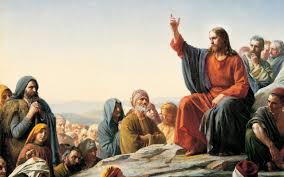 rnaum and entered a crowded house. He told a paralytic man, “‘Son, your sins are forgiven.’ Now some of the scribes were sitting there, questioning in their hearts, ‘Why does this fellow speak in this way? It is blasphemy! Who can forgive sins but God alone?'” (vv. 5-7). But these scribes wrongly thought forgiveness was a prerogative that belonged only to God, and Trinitarians have believed likewise. We shall soon see Jesus taught fully to the contrary, that God gave him this authority as the Son of Man.
Trinitarians claim that these scribes were correct–that only God can forgive sins. Thus, they reason that if Jesus can forgive sins, then he must be God. But in the remainder of this narrative, Jesus denies this allegation by scribes. For we read next, “At once Jesus perceived in his spirit that they were discussing these questions among themselves; and he said to them, ‘Why do you raise such questions in your hearts? Which is easier, to say to the paralytic, “Your sins are forgiven,” or to say, “Stand up and take your mat and walk”? But so that you may know that the Son of Man [referring to himself] has authority on earth to forgive sins’–he said to the paralytic–‘I say to you, stand up, take your mat and go to your home.’ And he stood up, and immediately took the mat and went out before all of them; so that they were amazed and glorified God, saying, ‘We have never seen anything like this!'” (vv. 8-12). Notice that Jesus says he has this authority to forgive sins because he is the Son of Man. More on this later.
These scribes must have thought it is just as impossible for a man to heal a paralytic as for him to forgive that man’s sins. When Jesus healed him, that suggested Jesus also had authority to forgive the man’s sins. So, Trinitarians and these scribes only disagree as to whether or not this indicates Jesus was God.
Second, John 5.1-47 tells about Jesus encountering a man who had been an invalid for thirty-eight years. He was lying beside a pool of water near the temple at Jerusalem. We read, “‘Jesus said to him, ‘Stand up, take your mat and walk.’ At once the man was made well, and he took up his mat and began to walk. Now that day was a sabbath. So the Jews said to the man who had been cured, ‘It is the sabbath; it is not lawful for you to carry your mat'” (vv. 5.8-10). The Jews had 39 laws about what you could do and not do on the sabbath.
Then we read next, in John 5.15-18: 15 “The man went away and told the Jews that it was Jesus who had made him well. 16 Therefore the Jews started persecuting Jesus because he was doing such things on the sabbath. 17 But Jesus answered them, ‘My Father is still working, and I also am working.’ 18 For this reason the Jews were seeking all the more to kill him, because he was not only breaking the sabbath, but was also calling God his own Father, thereby making himself equal to God” (vv. 15-18).
Second Temple Jewish literature reveals that Jews disagreed on whether or not healing on the sabbath was breaking it. It appears Sanhedrin members didn’t think it was or they likely would have mentioned it as evidence against Jesus when they later interrogated and condemned him.
Trinitarians believe that in John 5.18, those Jewish opponents of Jesus were correct in claiming he was “making himself equal to God.” Trinitarians furthermore believe this statement represents the viewpoint of the author. Not at all! In all of v. 18, the author is relating what Jesus’ opponents believe about him, all of which is wrong.
Now, Trinitarians do not think those Jews were right in accusing Jesus of so breaking the sabbath. Neither do Trinitarians believe Jesus was wrong to call God his “Father.” All Christians do that, and they don’t think they thereby claim to be equal to God. Yet Trinitarians believe those Jewish opponents of Jesus were correct in claiming Jesus was making himself equal to God, yet Trinitarians reject the two reasons those Jews had for making their allegation. That doesn’t make any sense.
Nevertheless, Jesus then gave a lengthy refutation of this charge that he was “making himself equal to God.” And he didn’t even do it by arguing against their two reasons. Trinitarians fail miserably here by not realizing that Jesus’ response in John 5.19-47 is a refutation of the charge in v. 18, and a multi-faceted refutation at that.
Jesus first says he “can do nothing on his own” (v. 19, cf. v. 30). He means he cannot do his miracles, such as healing, “but only what he sees the Father doing.” He soon says they are “the works that the Father has given me” (v. 36). So, Jesus does not do miracles because he is divine as is commonly believed by many untaught Trinitarians.
Jesus next says the Father gives him authority to raise the dead and has “given all judgment to the Son” (John 5.22), referring to himself. He further explains that he will “execute judgment, because he is the Son of Man” (vv. 22-27). So, just as in Mark 2.10, Jesus has authority to forgives sins, heal people, raise the dead, and conduct the future Judgment because he is “the Son of Man” of Daniel 7.13-14, thus not because he is God. Jesus then describes his Father as “the one who alone is God” (John 5.44). That is a direct denial of the Jews’ accusation that Jesus “makes himself equal to God.”
In sum, Trinitarians do not comprehend that in John 5.19-47, Jesus denies he makes himself equal to God and explains that all of supernatural power and authority that he possesses is derived from God. Thus, Jesus is essentially subordinate to God.
Third, John 10.30-38 is preceded by Jesus explaining in vv. 25-29 that he and the Father work together in giving his genuine disciples, whom he calls “sheep,” eternal life and protecting them so “no one can snatch them out of my hand” and “the Father’s hand.”
Then Jesus says next, “I and the Father are one” (John 10.30). Many Christians cite this saying to support their claim that Jesus claimed to be God. But Jesus says nothing of the kind. This interpretation removes this saying from its previous context. Rather, Jesus here means that he and the Father are unified in their work. Jesus later uses the same word “one” (Greek hen) in his so-called High Priestly prayer when he says concerning his disciples, “Holy Father, protect them you your name that you have given me, so that they may be one, as we are one…. that they may all be one…. so that they may be one, as we are one, I in them and you in me, that they may be completely one” (17.11, 21-23). If Jesus means in 10.30 that he is God due to his oneness with the Father, then the disciples must be gods/Gods also due to their oneness, which is ludicrous.
After Jesus says, “I and the Father are one,” we read, “The Jews took up stones again to stone him. Jesus replied, ‘I have shown you many good works from the Father. For which of these are you going to stone me?’ The Jews answered, ‘It is not for a good work that we are going to stone you, but for blasphemy, because you, though only a human being, are making yourself God'” (John 10.31-33).
Here, Trinitarians commit a grave error again by believing these Jewish enemies of Jesus are right in accusing him of making himself God. On the contrary, Jesus then refutes their charge in what follows. We read, “Jesus answered, ‘Is it not written in your law, “I said you are gods”? If those to whom this word of God came were called “gods”–and the scripture cannot be annulled–can you say that the one whom the Father has sanctified and sent into the world is blaspheming because I said, “I am God’s Son”? If I am not doing the works of my Father, then do not believe me. But if I do them, even though you do not believe me, believe the works, so that you may know and understand that the Father is in me and I am in the Father'” (John 10.34-38; cf. 14.10-11; 17.21).
Jesus herein refers to Psalm 82.6, in which the God-inspired psalmist called Jewish religious leaders “gods” (Hebrew elohim). Jesus reasoned that if that was so, surely it would be okay to call Jesus that too. Yet Jesus then says he only claims to be the Son of God, not a god or God. He finishes this refutation by explaining what he met in v. 30 by saying, “the Father is in me and I am in the Father.” This is not an admission that he is God but that God indwells him. Scholars call this concept “the Mutual Indwelling.” There is a great difference between identifying Jesus as God and merely saying God indwells Jesus and Jesus indwells God.
To sum, in all three of these biblical narratives in which Trinitarians have believed that Jesus’ enemies rightly accused him of claiming to possess a divine prerogative that was thought to belong only to God, or making himself equal to God, or making himself God, each time Jesus clearly denied these allegations. Yet Trinitarians have ignored these denials by Jesus and believed Jesus’ opponents. I know about this from experience, for I was a Trinitarian for twenty-two years who did this very thing.
…………….
To see a list of titles of 130+ posts (2-3 pages) that are about Jesus not being God in the Bible, with a few about God not being a Trinity, at Kermit Zarley Blog click “Chistology” in the header bar. Most are condensations of my book, The Restitution of Jesus Christ. See my website servetustheevangelical.com, which is all about this book, with reviews, etc. Learn about my books and purchase them at kermitzarley.com. I was a Trinitarian for 22 years before reading myself out of it in the Bible.
Previous Post

August 13, 2017
Justin Thomas Wins PGA
Next Post

August 16, 2017 Korean Kim Mixed with Trump Implosion Could Be a Bad Cocktail
Browse Our Archives
Select a Category Angels Billy Graham Blog Description Book Reviews Christian Living Christianity Christology Church History Current Events Deity of Christ? Disarmament Eschatology Evangelicalism Ezekiel 38-39 Film Reviews God Golf Gospel Harmonization Health History Holy Spirit Incarnation? Interview Islam Israeli-Palestinian Conflict Jesus Last Empire Literary Announcements Major Championship Winners Masters Monotheism My Books New Testament Old Testament Politics Primitive Weapons Ryder Cup Science Society of Biblical Literature The Bible The Restitution of Jesus Christ Trinitarianism Trinity? Uncategorized Unconditional Love? War on Terrorism
Select a Month October 2026 September 2026 August 2026 July 2026 June 2026 May 2026 April 2026 March 2026 February 2026 January 2026 December 2025 November 2025 October 2025 September 2025 August 2025 July 2025 June 2025 May 2025 April 2025 March 2025 February 2025 January 2025 December 2024 November 2024 October 2024 September 2024 August 2024 July 2024 June 2024 May 2024 April 2024 March 2024 February 2024 January 2024 December 2023 November 2023 October 2023 September 2023 August 2023 July 2023 June 2023 May 2023 April 2023 March 2023 February 2023 January 2023 December 2022 November 2022 October 2022 September 2022 August 2022 July 2022 June 2022 May 2022 April 2022 March 2022 February 2022 January 2022 December 2021 November 2021 October 2021 September 2021 August 2021 July 2021 June 2021 May 2021 April 2021 March 2021 February 2021 January 2021 December 2020 November 2020 October 2020 September 2020 August 2020 July 2020 June 2020 May 2020 April 2020 March 2020 February 2020 January 2020 December 2019 November 2019 October 2019 September 2019 August 2019 July 2019 June 2019 May 2019 April 2019 March 2019 February 2019 January 2019 December 2018 November 2018 October 2018 September 2018 August 2018 July 2018 June 2018 May 2018 April 2018 March 2018 February 2018 January 2018 December 2017 November 2017 October 2017 September 2017 August 2017 July 2017 June 2017 May 2017 April 2017 March 2017 February 2017 January 2017 December 2016 November 2016 October 2016 September 2016 August 2016 July 2016 June 2016 May 2016 April 2016 March 2016 February 2016 January 2016 December 2015 November 2015 October 2015 September 2015 August 2015 July 2015 June 2015 May 2015 April 2015 March 2015 February 2015 January 2015 December 2014 November 2014 October 2014 September 2014 July 2014 June 2014 May 2014 April 2014 March 2014 February 2014 January 2014 December 2013 November 2013 October 2013 September 2013 August 2013 July 2013 June 2013 May 2013 April 2013
Follow Us!
TAKE THE
Religious Wisdom Quiz
James compares faith without works to what?
Select your answer to see how you score.
A tree without fruit A house without foundation A body without spirit (dead) A lamp without oil
Books by This Author Books by Kermit Zarley Blog
Related posts from Kermit Zarley Blog

The Nicene Creed's Birthplace Is Found Buried in...

God Is the Father Alone, and Jesus Is...

New Book Affirms John's Gospel Is Historically Reliable

Did Jesus Literally Come Down from Heaven?
TRENDING AT PATHEOS Progressive Christian

Janie Learns the Way of the Cross: A...
Teaching children about Jesus' Passion can be challenging. Many parents and educators...

Looking For Good Catholic Writing - October 2026
He alone extends the heavens, and he walks upon the waves of...

In "Irreplaceable," our book on vocation and technology, Trevor Sutton and I...

I was strolling through the top floor of the brand new Parthenon...

What Does Gêvâh Mean For Kimberley Guifoyle &...
This week, a lot of the news is focused on Kimberly Guilfoyle....

INNER CIRCLE: Profound Mystery (Of Christ In All...
Ephesians 5:31-32 “For this reason, a man will leave his father and...
view all Progressive Christian blogs
Ad-Free & Subscriber Log-In Subscription Support
- About Us
- 2026 Calendar
- Videos
- Podcasts
- Library of World Religions
- Faith In Media Tracker
- Advertise With Us
- Write for Us
- Privacy Policy
- Terms of Service
- Do Not Sell My Data
- Contact Us
- Radiant Digital
- Manage Newsletter Subscriptions
- Unsubscribe From Notifications
- Sitemap
Copyright 2008-2026, Patheos. All rights reserved.
Subscription Support Ad-Free & Subscriber Log-In
Follow Patheos