
BuddhistCatholicContemplativeEvangelicalGeneral ChristianHinduJewishLatter-day SaintMuslimNew VisionsProgressive Christian
Beliefs
- Buddhist
- Catholic
- Contemplative
- Evangelical
- General Christian
- Hindu
- Jewish
- Latter-day Saint
- More Voices
- Muslim
- New Visions
- Pagan
- Progressive Christian
Topics
- Religion News
- Food and Religion
- Sports and Religion
- Religious Art
- Religious Music and Entertainment
- Religious Events
- History and Religion
- Style and Religion
- Politics and Religion
- Women in Religion
- Recreation Outdoors and Religion
- Business Finance and Religion
- Careers Workplace and Religion
- Education and Religion
- Family Parenting and Religion
- Health Fitness and Religion
- Home and Religion
- Relationships and Religion
- Technology and Religion
- Travel and Religion
Columnists
- Buddhist Columnists
- Business Finance and Religion Columnists
- Careers Workplace and Religion Columnists
- Catholic Columnists
- Contemplative Columnists
- Education and Religion Columnists
- Evangelists Columnists
- Family Parenting and Religion Columnists
- General Christian Columnists
- Health Fitness and Religion Columnists
- Hindu Columnists
- History and Religion Columnists
- Home and Religion Columnists
- Jewish Columnists
- More Voices Columnists
- Latter Day Columnists
- Muslim Columnists
- New Visions Columnists
- Nonreligious Columnists
- Pagan Columnists
- Politics and Religion Columnists
- Progressive Columnists
- Recreation Outdoors and Religion Columnists
- Relationships and Religion Columnists
- Religion News Columnists
- Religious Art Columnists
- Religious Events Columnists
- Religious Music and Entertainment Columnists
- Sports and Religion Columnists
- Style and Religion Columnists
- Technology and Religion Columnists
- Travel and Religion Columnists
- Women in Religion Columnists
Resource Library
- 2026 Calendar
- Library of World Religions
- The 100 Most Holy Places on Earth
- Patheos Answers
- Podcasts
- Videos
- Faith Leaders Database
- Anglican Episcopalian
- Bahai
- Baptist
- Buddhism
- Christianity
- Confucianism
- Eastern Orthodoxy
- Hinduism
- Holiness and Pentecostal
- ISKCON
- Islam
- Judaism
- Lutheran
- Methodist
- The Church of Jesus Christ of Latter-day Saints
- New Age
- Paganism
- Presbytarian and Reformed
- Protestantism
- Religion Behind the Scenes
- Roman Catholic
- Scientology
- Shia Islam
- Sikhism
- Sufism
- Sunni Islam
- Taoism
- Zen
- See all religions
Research Tools
 Ad-Free & Subscriber Log-In Subscription Support
Ad-Free & Subscriber Log-In Subscription Support
Follow Patheos 

- Trending:
- Forgiveness
- |
- Marriage
- |
- Consciousness
- |
- Death Penalty
- |
- Election
- |
- Halloween

-
Categories
-
Christian Living
-
Christology
-
Golf
-
My Books
- Home
- Progressive Christian
- Religion News
- Did Haddon Robinson “Go Home to God”?
Did Haddon Robinson “Go Home to God”?
Last updated on: August 26, 2017 at 4:36 pm by Kermit Zarley
Did Haddon Robinson “Go Home to God”? 2017-08-26T16:36:33-07:00 Kermit Zarley
Patheos Explore the world's faith through different perspectives on religion and spirituality! Patheos has the views of the prevalent religions and spiritualities of the world.
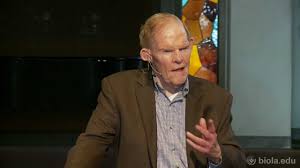 Dr. Haddon W. Robinson died eleven days ago, on July 22, at 86 years of age. He was known as an accomplished preacher. But throughout his career, he mostly taught the craft of preaching to young men in seminary who aspired to be preachers as well. There are many preachers today, worldwide, whom Dr. Robinson taught how to preach.
I knew Dr. Robinson, though not well, many years ago. It was during the early part of his career when he was a professor at Dallas Theological Seminary. He was a warm and friendly person. At DTS, he became an extension of Professor Howard Hendricks, who was so beloved by students as a Bible teacher and preacher there.
In the following years, Haddon Robinson moved on to become president of Denver Seminary and then interim president at Gordon-Conwell Seminary. Yet, all this time amidst his administrative duties, he always remained a professor of preaching as well. That was the nucleus of his ministry. In 2006, he was recognized by Christianity Today in the top 10 of its “25 Most Influential Preachers of the Past 50 Years.” He wrote over a dozen books. His best one is Biblical Preaching, which is still used as a textbook in seminaries and Bible colleges worldwide.
Haddon Robinson was known for crafting sermons based on a single theme in the Bible or a single biblical text. So, he taught making the Bible the main basis of preaching. That is what I have always liked as a Christian going back to my late teen years. Since then, I have always attended churches in the Bible church movement that specialize in what Dr. Robinson did, either in preaching or teaching, especially from the pulpit.
I would prefer only to honor and pay tribute to a godly man like Haddon Robinson. Instead, I will only raise a point of critique about one of his beliefs which almost all Christians hold in common, which puts me in the distinct minority. Yet I believed that same way for over thirty years until I became challenged on it from people who showed me several Bible texts. One was John 14.1-4 which involves death and resurrection.
Dr. Haddon Robinson, like many other theologians of his stature, also wrote articles for theological journals and Christian magazines. One of them was an article on Psalm 49 that was published by Christianity Today in 2000. In this article Dr. Robinson says, “For the believer in Jesus Christ, for the righteous person, we do not go out into death and into darkness. Instead, we go home to God.”
By saying this, Dr. Robinson indicated that he believed in the belief held by most Christians that when a believer dies, that person’s immortal soul immediately goes to heaven to enjoy conscious bliss in the presence of God and Jesus. But I don’t think the Bible teaches this. Instead, the Old Testament teaches a lot about what happens to all people when they die, that their souls go to the same place–Sheol.
This word Sheol occurs 67 times in the Hebrew Old Testament. Some English version transliterate it Sheol, as I think it should be done. But other versions render it by various other words, such as “grave,” “pit,” etc. On the contrary, the OT is pretty clear about this, that “the place of the dead,” meaning the souls of humans who died on earth, is Sheol, which ancients called “the underworld” and Greeks named “Hades,” which is comparable to “Sheol,” which is the Hebrews’ name for that place. Yes, it is a place, and I this the OT locates it deep within the earth. For more on this, see my post on 3/6/2014: “Anthropology, the Intermediate State, and Sheol/Hades.”
So, there are many dozens of texts in the OT that I think make clear that human souls are not immortal and at physical death they go down to Sheol to await the resurrection. The foremost book on this subject is by Dr. Alan Segal entitled Life After Death: A History of the Afterlife in Western Religion (Doubleday, 2004, 866 pp.). He shows that the early Christians did not believe in the immortality of the soul, that this belief had originated earlier with Greek philosophers, and that Greeks ridiculed Jews for their then opposing belief in the resurrection of the body (cf. Acts 17.30-32). Centuries later, most Christians believed both as Christians have ever since to this day.
As for the New Testament, Christians who believe it teaches that at human death their immortal souls immediately go to heaven can cite only a bare few texts to support their position. It is mostly Philippians 1.21-23 and 2 Corinthians 5.1-8. But see above post.
On the contrary, there are several NT texts that support what I am saying. One is Jesus’ saying in John 14.1-4. The occasion was the end of the Last Supper, thus only hours before Jesus was to be crucified. Here is how it reads in the NRSV as he speaks to those eleven apostles: “Do not let your hearts be troubled. Believe in God, believe also in me. In my Father’s house there are many dwelling places. If it were not so, would I have told you that I go to prepare a place for you? And if I go and prepare a place for, I will come again and will take you to myself, so that where I am, there you may be also.”
Here in John 14.1-4, Jesus speaks about his heavenly ascension, depicted in Acts 1.9, that will follow his death and resurrection. He means that he literally will ascend to heaven to be with God, who is the Father, “in the Father’s house.” This refers to the city of God in heaven which is described in Revelation 21-22.
When Jesus says, “I will come again and will take you to myself,” he refers to his yet future, glorious, second coming and the simultaneous resurrection of his people from the dead. They will arise from their graves and go up in the air to meet Jesus in the sky, who has just then come from heaven.
But notice Jesus says to his apostles that at that time he will “take you to myself.” How can that be if those men were with him, as conscious souls, all that time in heaven since they had died? On the contrary, their souls were not with him, but in Sheol awaiting this grand event that was their hope for victory over death. This teaching of Jesus confirms that when believers die, their souls do not then “go home to God” but to Sheol to await their resurrection when they will join Jesus in the sky.
As I like to say to my Christians friends when we depart from having fellowship and go our separate ways, “See you in the sky, and see you forever.”
Previous Post

August 1, 2017
A Witch Hunt?
Next Post

August 3, 2017 The Biblical Jesus Versus the Christianized Christ
Browse Our Archives
Select a Category Angels Billy Graham Blog Description Book Reviews Christian Living Christianity Christology Church History Current Events Deity of Christ? Disarmament Eschatology Evangelicalism Ezekiel 38-39 Film Reviews God Golf Gospel Harmonization Health History Holy Spirit Incarnation? Interview Islam Israeli-Palestinian Conflict Jesus Last Empire Literary Announcements Major Championship Winners Masters Monotheism My Books New Testament Old Testament Politics Primitive Weapons Ryder Cup Science Society of Biblical Literature The Bible The Restitution of Jesus Christ Trinitarianism Trinity? Uncategorized Unconditional Love? War on Terrorism
Select a Month October 2026 September 2026 August 2026 July 2026 June 2026 May 2026 April 2026 March 2026 February 2026 January 2026 December 2025 November 2025 October 2025 September 2025 August 2025 July 2025 June 2025 May 2025 April 2025 March 2025 February 2025 January 2025 December 2024 November 2024 October 2024 September 2024 August 2024 July 2024 June 2024 May 2024 April 2024 March 2024 February 2024 January 2024 December 2023 November 2023 October 2023 September 2023 August 2023 July 2023 June 2023 May 2023 April 2023 March 2023 February 2023 January 2023 December 2022 November 2022 October 2022 September 2022 August 2022 July 2022 June 2022 May 2022 April 2022 March 2022 February 2022 January 2022 December 2021 November 2021 October 2021 September 2021 August 2021 July 2021 June 2021 May 2021 April 2021 March 2021 February 2021 January 2021 December 2020 November 2020 October 2020 September 2020 August 2020 July 2020 June 2020 May 2020 April 2020 March 2020 February 2020 January 2020 December 2019 November 2019 October 2019 September 2019 August 2019 July 2019 June 2019 May 2019 April 2019 March 2019 February 2019 January 2019 December 2018 November 2018 October 2018 September 2018 August 2018 July 2018 June 2018 May 2018 April 2018 March 2018 February 2018 January 2018 December 2017 November 2017 October 2017 September 2017 August 2017 July 2017 June 2017 May 2017 April 2017 March 2017 February 2017 January 2017 December 2016 November 2016 October 2016 September 2016 August 2016 July 2016 June 2016 May 2016 April 2016 March 2016 February 2016 January 2016 December 2015 November 2015 October 2015 September 2015 August 2015 July 2015 June 2015 May 2015 April 2015 March 2015 February 2015 January 2015 December 2014 November 2014 October 2014 September 2014 July 2014 June 2014 May 2014 April 2014 March 2014 February 2014 January 2014 December 2013 November 2013 October 2013 September 2013 August 2013 July 2013 June 2013 May 2013 April 2013
Follow Us!
TAKE THE
Religious Wisdom Quiz
How many chapters are in Proverbs?
Select your answer to see how you score.
50 27 22 31
Books by This Author Books by Kermit Zarley Blog
Related posts from Kermit Zarley Blog

Trump's Desperate Moves Before Mid-Term Election Are Hurting

Do Plants Experience Consciousness?

Israeli-Palestinian Conflict Getting Much Worse

Americans Now Favor Palestinians Over Israelis
TRENDING AT PATHEOS Progressive Christian

The Sermon on the Mount, Part I: Matthew...
The Sermon on the Mount, Part I (Matthew 4:12-5:12) St. Matthew moves...

What's up from Crossway: Reviewing some of their latest A few weeks...

Janie Learns the Way of the Cross: A...
Teaching children about Jesus' Passion can be challenging. Many parents and educators...

Looking For Good Catholic Writing - October 2026
He alone extends the heavens, and he walks upon the waves of...

In "Irreplaceable," our book on vocation and technology, Trevor Sutton and I...

I was strolling through the top floor of the brand new Parthenon...
view all Progressive Christian blogs
Ad-Free & Subscriber Log-In Subscription Support
- About Us
- 2026 Calendar
- Videos
- Podcasts
- Library of World Religions
- Faith In Media Tracker
- Advertise With Us
- Write for Us
- Privacy Policy
- Terms of Service
- Do Not Sell My Data
- Contact Us
- Radiant Digital
- Manage Newsletter Subscriptions
- Unsubscribe From Notifications
- Sitemap
Copyright 2008-2026, Patheos. All rights reserved.
Subscription Support Ad-Free & Subscriber Log-In
Follow Patheos